Executive Overview
In the sprawling, hyper-connected landscape of modern digital culture, physical intimacy has become the ultimate luxury. On a breezy evening in Beverly Hills, PAPER Español curated an extraordinary convergence of talent, setting aside the endless scroll of social media feeds and the transactional nature of red carpets in favor of something far more enduring: human connection.
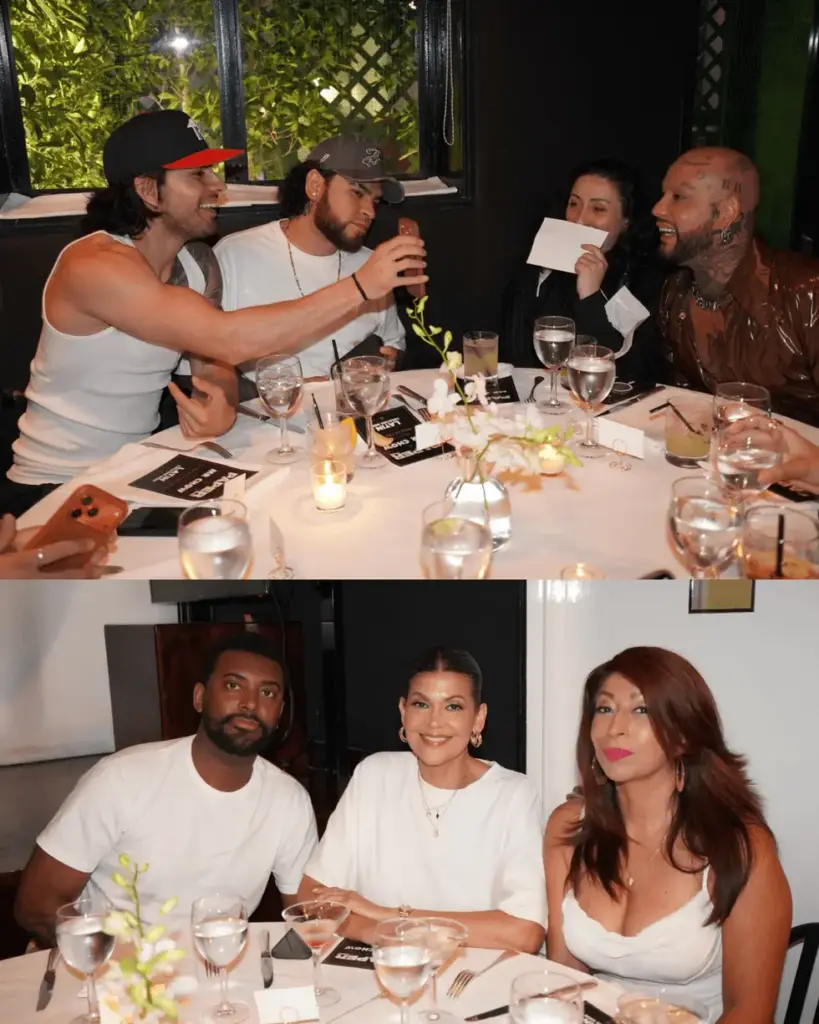
As a crown jewel event of Latin Creators Week, an intimate private dinner was hosted at the iconic Mr. Chow, bringing together an elite cross-section of the most influential figures in music, fashion, entertainment, and digital media. The guest list read as a who’s who of contemporary Latin excellence. Regional Mexican powerhouse Fuerza Regida—represented by members JOP, Pelón, and Moisés—mingled effortlessly with global multimedia juggernaut Lele Pons, sharp-witted comedian Aida Rodriguez, and lyrical heavyweight Snow Tha Product.
Yet, the magic of the evening extended far beyond marquee names. Designed under the gracious stewardship of host Vanessa Chow, the gathering was deliberately engineered to transcend traditional industry silos. Producers, stylists, Indigenous culinary anthropologists, top-tier photographers, and digital-native creators broke bread together, exchanging ideas far removed from the glaring lights of television studios or the rigid confines of corporate boardrooms.
This article explores the anatomy of that historic evening, examining how PAPER Español successfully orchestrated an environment of radical cross-pollination. Through detailed chronologies, insider perspectives, contextual analysis of the booming Latin digital economy, and forward-looking commentary, we investigate why gathering around a table remains the most powerful catalyst for the next wave of global cultural dominance.
Detailed Chronology: An Evening of Organic Convergence
Phase I: Arrival and the Decompression of Beverly Hills
As dusk settled over Beverly Hills, the exterior of Mr. Chow transformed into a discreet epicenter of cultural gravity. Eschewing the frantic, flashing-bulb chaos typical of Hollywood galas, the arrival process was designed to disarm. Guests bypassed the usual press lines, stepping straight from the Southern California evening air into the sleek, minimalist interior of the legendary dining establishment.
Host Vanessa Chow stood at the threshold, welcoming artists, designers, and digital pioneers with an warmth that immediately set the tone for the night. The immediate sensation was one of decompression. For creators whose lives are dictated by metrics, content calendars, and the relentless velocity of the internet, stepping into Mr. Chow felt like crossing a threshold into a sanctuary.
Early arrivals began the vital work of bridging digital worlds with physical reality. Digital creator Andrew Davila and multimedia icon Lele Pons shared an easy, laughter-filled exchange near the reception area, quickly joined by producer Lil Eddie Serrano and rising artist DobleU. Conversations sparked organically, bypassing the superficial pleasantries of networking events in favor of immediate, substantive dialogue about the realities of modern fame and artistic autonomy.
Phase II: The Culinary Catalyst and Interdisciplinary Dialogue
Once seated, the culinary experience—courtesy of Mr. Chow’s world-renowned kitchen—served as a social lubricant, dissolving remaining barriers between disparate creative factions. The seating arrangement was a masterclass in strategic juxtaposition, engineered to force unexpected pairings and spark creative friction.
At one end of the primary dining salon, the conversation hummed with the electric energy of musical reinvention. JOP, Pelón, and Moisés of Fuerza Regida—architects of the massive global surge in Regional Mexican music—shared table space with legendary producer Lil Eddie Serrano. Their discussion bridged the gap between traditional instrumentation and modern studio production, touching on how genres once pigeonholed as regional are now dominating global streaming charts.
Simultaneously, the intersection of comedy, social commentary, and hip-hop took center stage nearby. Rapper Snow Tha Product and comedian Aida Rodriguez engaged in a profound reflection on the evolution of Latino voices in entertainment. Both women, known for their unfiltered authenticity and refusal to pander to archaic industry standards, dissected the hurdles and triumphs of carving out unapologetic spaces in mainstream media.
Further down the table, the visual architects of culture held court. Designer Rio, founder of the boundary-pushing label RioWorld, locked into an intense dialogue with celebrity stylist Joshua Alan Clark, master makeup artist David Velásquez, and visionary fashion photographer Jora Frantzis. Here, the discourse pivoted toward visual storytelling, exploring how the aesthetic language of the Latin diaspora is continually redefined through high fashion, editorial imagery, and digital styling.
Adding an invaluable layer of depth to the evening was Dr. Claudia Serrato, an Indigenous chef and culinary anthropologist. Her presence served as a poignant reminder that Latin creativity cannot—and should not—be boxed into standard pop-culture categories. By bridging ancestral indigenous knowledge with contemporary creative spaces, Dr. Serrato anchored the evening in a historical consciousness, emphasizing that storytelling lives just as vividly on a plate as it does in a lyric or on a screen.
Phase III: Late-Night Synthesis and the Birth of Future Collaborations
As the plates were cleared and the ambient lighting dimmed, the dinner transitioned into a free-flowing salon. The rigid boundaries between "musician," "influencer," "designer," and "executive" completely dissolved.
Digital creators like Michelle Jenae and Jojo Sim found themselves trading conceptual ideas with high-end photographers and film directors. Producers whispered project pitches to fashion designers over espresso. It was the physical manifestation of what industry insiders call "cross-pollination"—the deliberate crashing together of separate creative ecosystems to see what new life forms emerge.
Crucially, the evening lacked the performative networking that plagues modern entertainment circles. There were no pitched business cards, no aggressive manager interventions, and no corporate presentations. Instead, there was simply mutual respect among peers who recognized that they are all building the same architectural framework for the future of global entertainment. By the time guests began drifting out into the cool Los Angeles night, the groundwork for numerous future collaborations, cross-genre tracks, capsule collections, and multimedia projects had been quietly, effortlessly laid.
Supporting Context & Metrics: The Engine Behind Latin Creators Week
To fully grasp the cultural and economic significance of PAPER Español’s private dinner, one must examine the broader macro-environment in which it took place. Latin Creators Week is not merely a celebration; it is a strategic response to one of the most powerful demographic and economic shifts in modern history.
The Economic Might of the Latino Digital Consumer
For decades, mainstream media underestimated the purchasing power and cultural influence of the Latino demographic in the United States and across the Americas. Today, those outdated assumptions have been shattered by undeniable data:
- Economic Footprint: If the U.S. Latino population were an independent nation, it would represent one of the top ten largest economies in the world, boasting a GDP exceeding $3.2 trillion.
- Digital Consumption: Latinos over-index significantly in digital media consumption, mobile-first engagement, and social media adoption. They are not just consumers of content; they are digital pioneers setting the trends that mainstream platforms eventually adopt.
- Streaming Dominance: Genres like Urbano, Reggaeton, and Regional Mexican (championed by guests like Fuerza Regida) have transitioned from niche markets to global streaming titans, regularly dominating Billboard charts and Spotify global playlists.
The Evolution of the Creator Economy
The traditional gatekeepers of Hollywood and the legacy music industry—executives sitting in distant boardrooms who historically dictated what "Latino representation" looked like—have been entirely circumvented by the creator economy.
Platforms like TikTok, YouTube, Instagram, and specialized independent channels have allowed artists like Lele Pons, Snow Tha Product, and independent creators to build direct, unfiltered relationships with millions of fans. This decentralized model empowers creators to own their likeness, dictate their artistic direction, and command high-value brand partnerships without asking for permission from traditional studios.
However, this hyper-digital existence comes with a distinct set of challenges. Creators often operate in isolation, chained to content output algorithms, analytics dashboards, and relentless release schedules. They communicate through screens, metrics, and short-form video loops.
This is precisely where initiatives like PAPER Español’s Latin Creators Week dinner derive their vital importance. By yanking these digital dynamos out of the virtual ether and placing them around a physical table, PAPER provided a much-needed infrastructural anchor. It recognized that sustainable cultural movements require physical communities—spaces where creators can commiserate, share intelligence, build solidarity, and forge alliances that outlast the lifespan of a viral trend or a single algorithm update.
Official Statements and Cultural Commentary
Reflecting on the ethos of the event, the underlying philosophy shared by organizers, hosts, and attendees highlights a unified vision for the future of Latin representation.
Vanessa Chow, reflecting on her role as host of the Beverly Hills gathering, emphasized the intentionality behind the space:
"When you bring people together who are actively writing the playbook for contemporary culture, the most important thing you can do is get out of their way. Great food, a beautiful room, and a deliberate absence of corporate pressure—that’s all it takes for magic to happen. These creators spend their lives behind screens. Giving them a room to just breathe, look each other in the eye, and talk shop is a radical act in today’s digital age."
Industry analysts observing the convergence noted the strategic brilliance of mixing disciplines. By placing Indigenous culinary anthropologists alongside trap-infused regional Mexican superstars and avant-garde fashion designers, PAPER Español challenged the monolithic view of "Latin culture" held by traditional media.
As one prominent creative director in attendance noted off-the-record:
"For the longest time, media corporations tried to package Latin culture into a single, easily digestible box—usually a telenovela trope or a recycled pop stereotype. What you see in this room tonight is the complete dismantling of that box. We are Indigenous, we are high fashion, we are underground hip-hop, we are Silicon Beach tech innovators, we are regional folkloric traditions reimagined for stadiums. We are infinite. And nights like this prove that we recognize that power in each other."
Furthermore, the participation of legacy disruptors like Aida Rodriguez and Snow Tha Product underscored the generational bridge being built. Both artists have spent years fighting for authentic, uncompromised storytelling in industries historically hostile to outspoken Latina women. Seeing them counsel and laugh with younger digital-native creators like Andrew Davila and Michelle Jenae illustrated a seamless passing of the torch—and, more importantly, a pooling of tactical wisdom.
Future Outlook: What’s Next for the Latin Creative Vanguard?
As the dust settles on Latin Creators Week and the attendees of the PAPER Español dinner return to their respective studios, writing rooms, fashion ateliers, and global tours, the ripples of this intimate gathering will be felt across the entertainment landscape for months to come.
1. The Death of Silos in Entertainment
The traditional walls separating the music industry, the fashion world, digital content creation, and high art are crumbling. The conversations sparked over dinner at Mr. Chow point toward an immediate future defined by hyper-collaborative cross-media projects. Expect to see high fashion brands partnering directly with Regional Mexican music icons, digital creators producing narrative feature films with indie arthouse directors, and culinary artists integrating into live music festivals as core cultural curators.
2. Deepening Institutional Independence
As Latin creators continue to amass massive global audiences, their reliance on legacy media infrastructure diminishes. Gatherings like the PAPER dinner serve as decentralized strategy rooms where talent shares institutional knowledge regarding equity ownership, independent distribution, direct-to-consumer brand building, and intellectual property protection. This solidarity will likely result in more artist-owned labels, independent production houses, and creator-led venture initiatives.
3. Redefining Global Cultural Hegemony
We are witnessing the permanent decentralization of cultural power. No longer is global taste dictated solely by legacy hubs in New York or Los Angeles; it is being shaped in real-time by a dynamic, interconnected network of creators spanning the Americas and the global diaspora. Events like those hosted by PAPER Español act as the cultural glue holding this vast network together, fostering a sense of collective identity and shared ambition.
Conclusion
Long after the social media posts from Latin Creators Week have cycled out of feeds and the press coverage has faded, the true legacy of the night will live on in the partnerships forged over shared plates and late-night conversations.
In an era dominated by algorithmic algorithms and digital detachment, PAPER Español reminded the cultural vanguard of a timeless truth: the most profound creative revolutions do not start in sterile corporate boardrooms or via pixelated video calls. They start, as they always have, when extraordinary people sit down at a table together and begin to imagine what is possible.