For decades, conventional fitness wisdom has treated high-impact activities—such as running, jumping, and plyometrics—as primary culprits behind joint degradation and osteoarthritis. Fitness enthusiasts have long been steered away from dynamic, high-force movements toward low-impact alternatives like swimming, cycling, and elliptical training to preserve cartilage and protect knees.
However, emerging insights from physical therapy and sports science reveal a more nuanced reality. While excessive, unmanaged load can indeed harm vulnerable joints, a strategic dose of moderate-impact exercise is not only safe for most people; it is fundamentally necessary for skeletal health.
According to Kelton Cullenberg, a physical therapist, running coach, and co-founder and CEO of Steady State Health, the human skeleton operates on a principle of adaptive response. "Bone is living tissue that adapts to what you ask of it," Cullenberg explains. "When you load it with impact and quick changes of direction that are more than it’s used to, it responds by building more density and getting stronger over time."
Far from spelling doom for your knees and hips, brief, controlled bouts of moderate-impact exercises—specifically heel drops, skater jumps, and jogging in place—can serve as a powerful, proactive defense against osteoporosis. By introducing targeted mechanical force to the legs, hips, and spine, individuals can stimulate osteogenesis (bone formation) without requiring heavy weights or complicated gym equipment. This article examines the physiological mechanisms of bone adaptation, outlines a targeted three-move home routine, and details how to safely integrate impact training into a comprehensive, long-term health regimen.
Detailed Chronology: The Evolution of Skeletal Health and Exercise Science
To understand why modern physical therapists are advocating for impact, it is helpful to trace how exercise science has viewed skeletal stress over the past century.
The Mid-to-Late 20th Century: The Era of Joint Caution
In the latter half of the 20th century, as running booms and aerobics crazes swept across Western nations, sports medicine clinicians witnessed a corresponding rise in overuse injuries. Tendinopathies, meniscus tears, and early-onset osteoarthritis became common complaints among recreational athletes.
In response, the medical community heavily emphasized joint preservation. Exercise prescriptions pivoted toward low-impact modalities. While this protected soft tissue and cartilage for aging populations, it inadvertently fostered a generation of adults whose skeletal systems were under-stimulated. Without sufficient mechanical loading, bone mineral density (BMD) began to decline earlier in life, laying the groundwork for the modern osteoporosis epidemic.
The Turn of the Millennium: Embracing Wolff’s Law
By the early 2000s, researchers increasingly turned their attention back to a 19th-century anatomical principle formulated by German surgeon and anatomist Julius Wolff. Wolff’s Law dictates that bone in a healthy person or animal will adapt to the loads under which it is placed. If loading increases, the bone remodels itself over time to become stronger to resist that sort of loading.
Molecular biologists and bone specialists discovered that osteocytes—the primary cells found in mature bone—act as mechanical sensors. When subjected to physical strain and fluid movement within the bone matrix, osteocytes signal osteoblasts (bone-forming cells) to lay down new mineral scaffolding. Conversely, a sedentary lifestyle or pure low-impact exercise (where gravitational and muscular forces are minimal) signals the body that heavy skeletal mass is metabolically expensive and unnecessary, leading to bone resorption by osteoclasts.
The Present Day: Targeted Moderate-Impact Protocols
Today, clinical exercise physiology bridges the gap between joint safety and skeletal stimulation. Rather than prescribing blanket high-intensity routines that risk injury, modern practitioners like Cullenberg advocate for micro-dosing impact. By isolating specific, highly controllable moderate-impact movements—such as letting gravity drop the heels or performing short lateral hops—practitioners can trigger the necessary mechanotransduction pathways in the hip, spine, and lower extremities while keeping injury risks exceptionally low.
Supporting Context & Metrics: The Anatomy of Osteoporosis and Bone Density
Osteoporosis is often referred to as a "silent disease" because bone loss occurs without symptoms until a sudden fracture occurs. Understanding the sheer scale of the condition underscores why preventive mechanical loading is vital.
The Statistical Landscape of Bone Health
Prevalence: According to the International Osteoporosis Foundation, osteoporosis causes more than 8.9 million fractures annually worldwide, resulting in an osteoporotic fracture every 3 seconds.
Demographic Impact: Women are disproportionately affected, particularly post-menopause due to the sharp decline in estrogen—a hormone that helps protect bone density. Globally, approximately 1 in 3 women over the age of 50 will experience osteoporotic fractures, compared to 1 in 5 men.
Vulnerable Sites: The regions most prone to debilitating osteoporotic fractures are the hip, spine, and wrists. These areas feature high concentrations of trabecular (spongy) bone, which turns over more rapidly and is highly sensitive to mechanical unloading.
How Mechanical Force Builds Bone
Bones are dynamic composite structures made of a collagen matrix hardened by calcium phosphate crystals. When you engage in high- or moderate-impact exercise, the mechanical force travels upward through the skeletal system.
[Foot Strike / Impact]
       │
       ▼
[Force Travels Up Legs, Hips, & Spine]
       │
       ▼
[Bone Matrix Flexes Microscopically]
       │
       ▼
[Osteocytes Detect Strain & Signal Osteoblasts]
       │
       ▼
[New Mineral Scaffolding Laid Down ➔ Increased Density]
Cullenberg points out that these precise pathways make targeted movements indispensable. "[These moves] send force up through your legs, hips, and spine, which are the exact places osteoporosis tends to cause issues," he notes. Because these exercises require no specialized equipment, they democratize bone health, making preventative care accessible outside of clinical gym environments.
Official Statements and Expert Guidance
Implementing impact-based routines requires careful adherence to clinical guidelines. Kelton Cullenberg emphasizes that exercise prescriptions must be tailored to an individual’s baseline health history and fitness level.
Screening and Medical Clearance
"If you already have diagnosed osteoporosis or a history of fragility fractures, it’s best to first get cleared by your doctor or a physical therapist," Cullenberg advises.
While moderate-impact loading builds bone, individuals with compromised bone architecture must avoid excessive shear forces or unmanaged torsion until a healthcare professional evaluates their bone mineral density T-scores and structural integrity.
The Principle of Progressive Overload
A common pitfall in exercise prescription is assuming that what works for a sedentary individual works equally well for an active athlete. Cullenberg highlights the physiological reality of adaptation:
"Bone only adapts to a load that is greater than what it already handles. For a regular runner, jogging in place is already less than a normal run, so it likely won’t add anything for their bones. If that’s you, you would need to progress to something more demanding."
For seasoned runners or heavy lifters, standard bodyweight impact drills may fall below the threshold required to elicit new bone growth. These populations require higher-magnitude forces, such as heavy resistance training or advanced plyometrics, to continue stimulating osteogenesis.
Frequency, Consistency, and Timeline
Building bone density is a marathon, not a sprint. Skeletal tissue remodels at a significantly slower rate than muscular tissue. Cullenberg outlines the ideal dosage for beginners looking to adopt the three-move routine:
Initial Protocol: Complete two sets of 10 repetitions for each exercise, performed three to four times per week.
Progression: As strength and tissue tolerance improve, increase to three sets and execute the routine five to seven times per week.
Frequency over Volume: "Doing these moves nearly every day is much more beneficial than doing them a couple of times a week," Cullenberg stresses.
The Long-Term Commitment: "You need to stay with it for at least a few months before your bones have made significant changes."
Furthermore, impact exercises should not exist in a vacuum. To build a truly resilient skeletal and muscular framework, these drills must be integrated into a broader program that incorporates progressive strength training (such as squats, deadlifts, and resistance work) at least a couple of days a week.
How to Do Three Bone-Building Exercises
To help you put these concepts into practice, here is a detailed, step-by-step breakdown of the three moderate-impact exercises recommended by Cullenberg. None of these require equipment, making them ideal for home workouts.
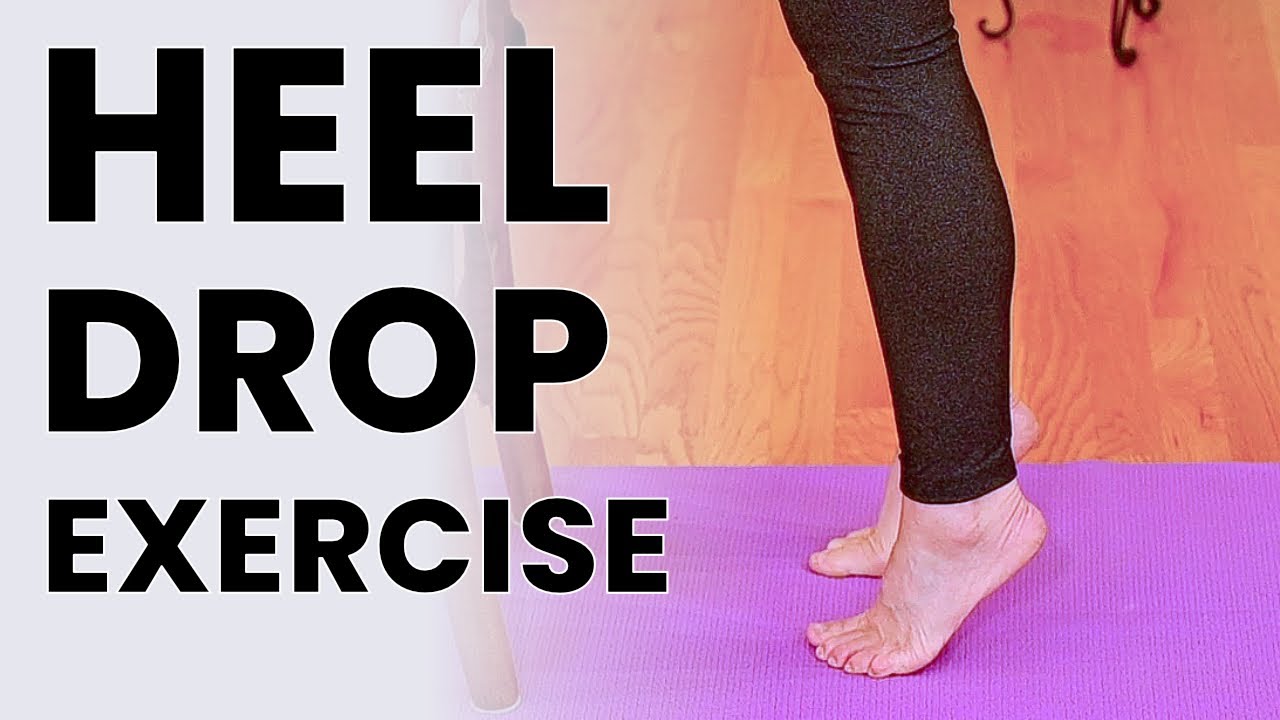
1. The Heel Drop
The heel drop is a foundational exercise designed to send a sharp, vertical shockwave up through the calcaneus (heel bone), tibia, femur, and into the lumbar spine and hips.
Starting Position: Stand tall next to a wall, sturdy chair, or kitchen counter for light balance support. Keep your feet hip-width apart and your posture stacked (ears over shoulders, shoulders over hips).
The Elevation: Rise up onto the balls of both feet, lifting your heels a few inches off the floor as high as comfortable.
The Drop: Allow gravity to pull your heels down quickly and firmly so they strike the floor at the same time with a distinct thud.
Expert Tips:
Embrace the Thud: "The bone benefit comes from the drop itself, that firm thud traveling up through your legs, so let gravity bring your heels down quickly rather than lowering them slow and controlled," says Cullenberg.
Avoid the Calf Raise Trap: If you lower yourself slowly, you convert the movement into an eccentric calf raise. While great for lower leg muscular endurance, slow descents dissipate the impact force, reducing the mechanical signal sent to your bones.
Pace Your Intensity: Keep your posture tall so the force can travel uninterrupted to your hips and spine. If you are new to the movement, build up the force of the drop gradually over several weeks rather than slamming your heels down with maximum force on day one.
2. The Skater Jump
Skater jumps introduce a lateral (side-to-side) loading vector. Most daily movements occur in the sagittal plane (forward and backward); training in the frontal plane challenges the hip joints and lateral malleoli in ways that prevent bone loss across varied angles of stress.
┌────────────────────────────────────────────────────────┐
│                   SKATER JUMP ROUTINE                  │
│  • Sets: 2       • Reps: 10 per side                   │
└────────────────────────────────────────────────────────┘
Step-by-Step Instructions:
Starting Position: Stand on your right foot with your right knee and hip slightly bent, and your left foot hovering just off the floor behind you or to the side.
The Lateral Drive: Push off explosively with your right leg, bounding laterally to your left.
The Soft Landing: Land lightly on your left foot, allowing your left knee and hip to bend gracefully to absorb the momentum. Sweep your right foot behind your left ankle for balance.
The Return: Immediately or after a brief stabilization pause, push off with your left leg and bound back to the right.
Expert Tips:
Absorb the Impact: "Push off sideways from one leg and land softly on the other, letting your hip and knee bend to absorb the landing," Cullenberg advises.
Progress the Distance: Do not attempt massive leaps right away. "Start with small hops close together and build the distance as you get comfortable."
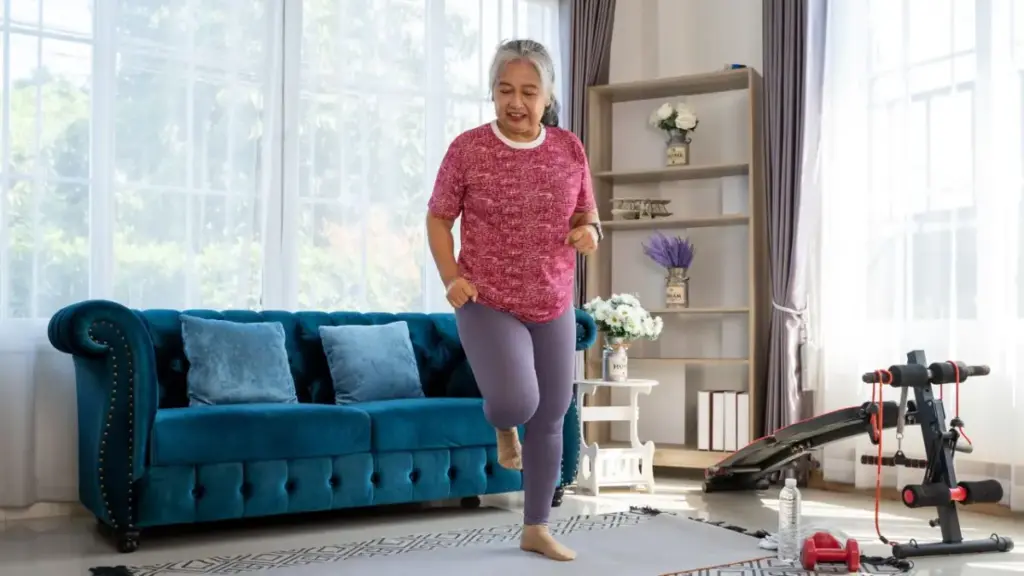
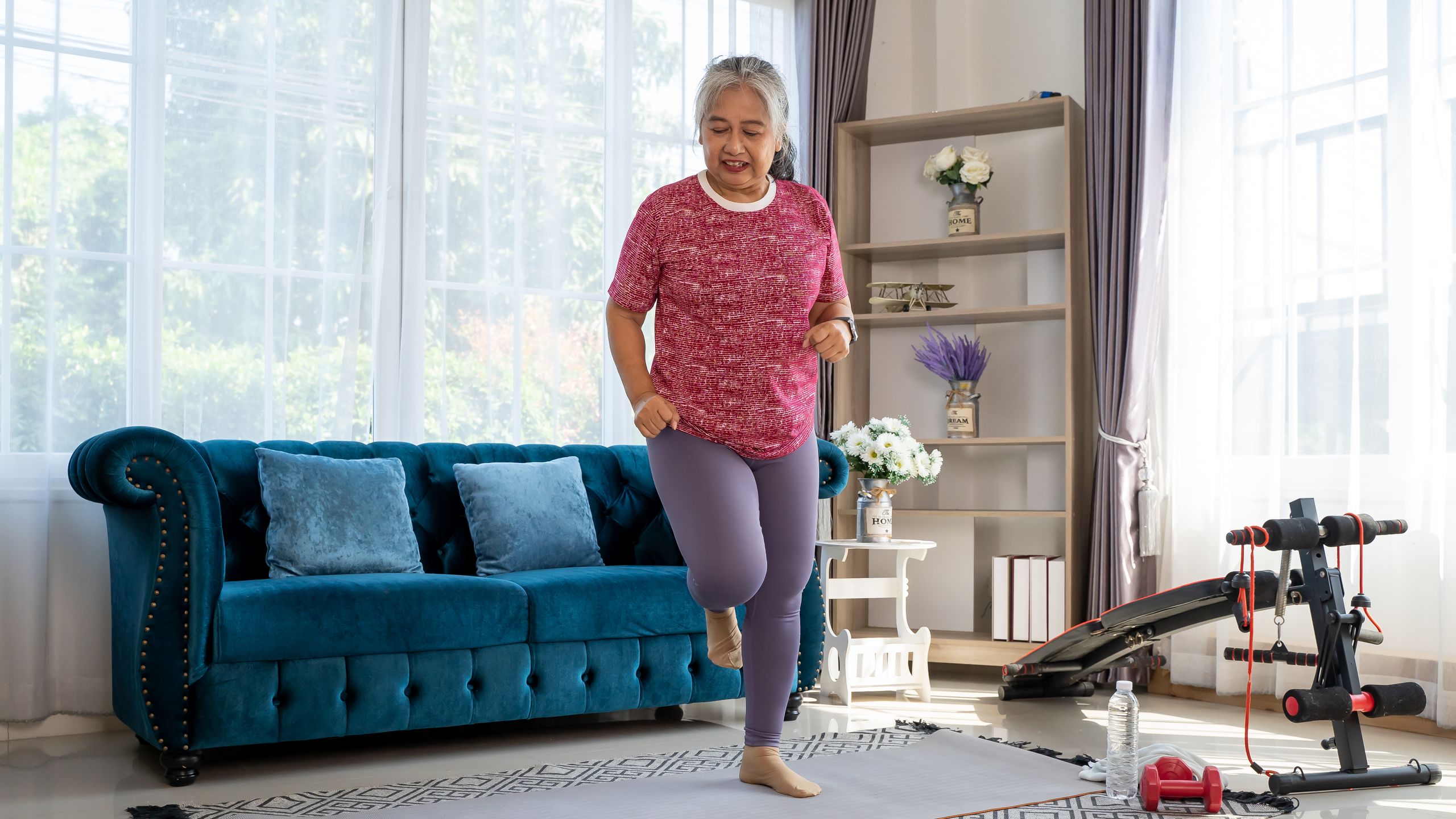
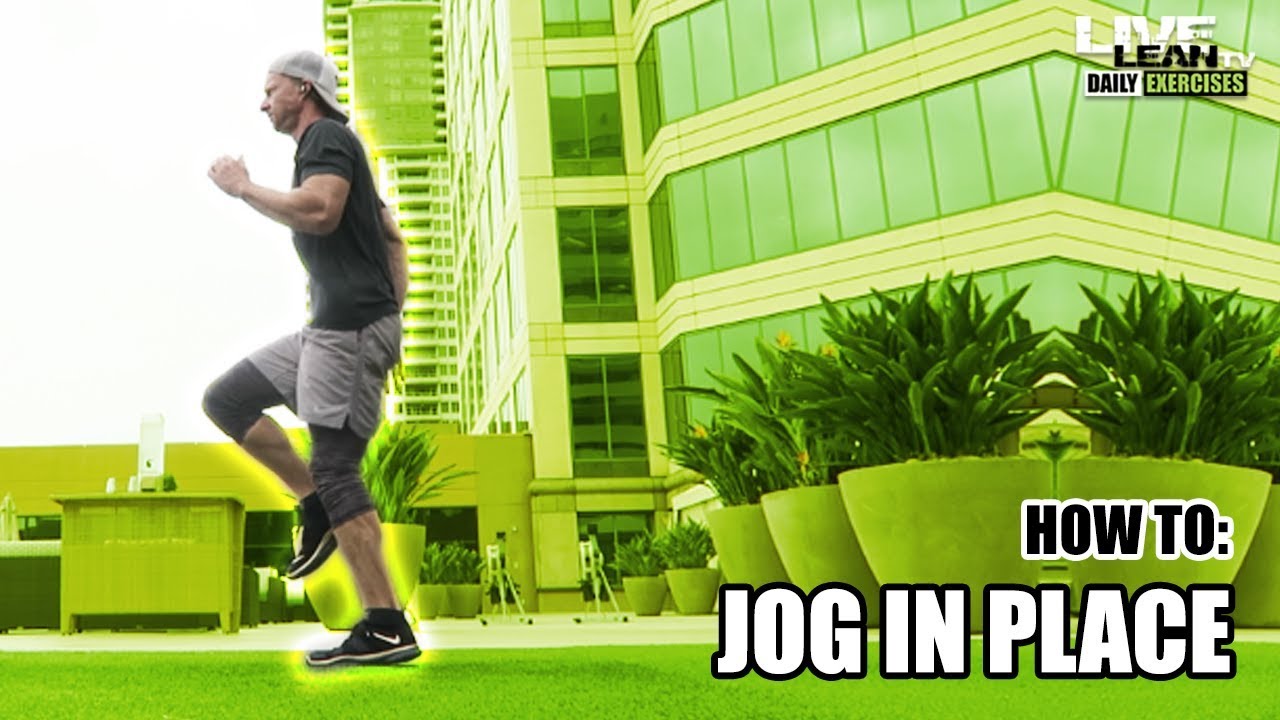
3. The Jog in Place
Jogging in place provides a rhythmic, repetitive series of low-to-moderate vertical impacts that elevate the heart rate while continuously stimulating the lower extremity bones.
┌────────────────────────────────────────────────────────┐
│                 JOGGING IN PLACE ROUTINE               │
│  • Sets: 2       • Reps: 10 each side (or 30 seconds)  │
└────────────────────────────────────────────────────────┘
Step-by-Step Instructions:
Starting Position: Stand upright on a supportive surface (avoid exercising on concrete barefoot; a cushioned mat or supportive athletic shoes are ideal).
The Movement: Begin alternating lifting your feet off the ground as if jogging, driving your knees upward slightly while maintaining a light, springy cadence.
Arm Action: Allow your arms to swing naturally in opposition to your legs to maintain rhythm and balance.
Expert Tips:
Stay Light: "Stay light and springy," advises Cullenberg. "Keep your posture tall, let your arms swing, and go for quick, easy turnover."
Scale Appropriately: Remember that if you are already a dedicated distance runner, jogging in place will not challenge your bones further. Reserve this drill for beginners or individuals reintroducing impact into their fitness routines.
Future Outlook
The paradigm shift surrounding high-impact exercise marks a major evolution in preventative medicine and physical therapy. As global life expectancies rise, preserving musculoskeletal independence is paramount. The old prescription of complete impact avoidance—while well-intentioned to spare cartilage—often backfired by creating fragile skeletons incapable of withstanding everyday slips, trips, and falls.
Future clinical research will likely continue refining "precise impact dosing," developing individualized exercise protocols based on biomarker tracking, advanced bone density imaging, and machine-learning algorithms that predict fracture risk.
For now, the prescription is remarkably straightforward: do not fear the thud. By thoughtfully incorporating moderate-impact movements like heel drops, skater jumps, and jogging in place into a balanced routine that includes progressive strength training, individuals can fortify their skeletal framework, protect against osteoporosis, and maintain vibrant, active lives well into their later years.