Executive Overview
The entertainment industry is built on a foundation of paradoxes: it is an ecosystem that rewards vulnerability while simultaneously demanding an impenetrable armor of resilience. For every triumphant awards-season speech, there are thousands of untold stories of near-misses, shifting casting directors, and roles that slipped away at the eleventh hour. Few recent Hollywood anecdotes capture this bittersweet reality quite like the journey of British writer and former glamour model Keeley Hazell.
Years before Apple TV+’s Ted Lasso became a global juggernaut—sweeping Emmy Awards, capturing hearts worldwide, and turning its ensemble cast into household names—its creative team conceptualized a character specifically for Hazell. Named "Keeley Jones" and modeled directly after Hazell’s own life, background, and cultural footprint, the part seemed destined to serve as her grand crossover from British lads’ mags to mainstream American television stardom.
Yet, in a twist characteristic of Hollywood’s unpredictable nature, the role ultimately went to acclaimed actress Juno Temple. The ensuing fallout—detailed candidly by Hazell in her memoir, Everyone’s Seen My Tits, and in recent interviews—was nothing short of seismic for the Lewisham-born creative. Grappling with professional rejection, the psychological weight of watching a character inspired by her life propel someone else to superstardom, and the complex path to closure required extensive therapy. This is the comprehensive inside story of the role that got away, the industry dynamics that shifted it, and how Hazell ultimately reclaimed her narrative on her own terms.
Detailed Chronology: From Late-Night Dinners to Casting Room Rejections
To understand the magnitude of the casting decision, one must look back at the genesis of Ted Lasso. Co-created by Jason Sudeikis, Brendan Hunt, Joe Kelly, and Bill Lawrence, the Apple TV+ sports comedy-drama started as a series of promotional sketches for NBC Sports before evolving into a multi-season cultural phenomenon.
The Conception of Keeley Jones
Long before cameras began rolling on the fictional AFC Richmond training grounds, Hazell’s personal and professional trajectory intersected with Sudeikis. Following a successful career as a prominent British glamour model—rising to fame through her appearances on Page 3 and in men’s lifestyle magazines—Hazell relocated to Los Angeles to reinvent herself as an actress and writer.
During this period, Hazell and Sudeikis developed a close rapport. According to accounts shared by Hazell, the two dined together frequently, exchanging stories about the peculiar trials of public life, media scrutiny, and the unique identity of British glamour culture. Intrigued by Hazell’s experiences, wit, and distinctive perspective, Sudeikis began conceptualizing a character for an upcoming television project.

The character was not just loosely inspired by Hazell; she shared her first name, her career background, and her sharp, disarming wit. When Sudeikis finally broke the news to Hazell that a major role had been written explicitly for her in what would become the Apple TV+ series, the reaction was euphoric. Hazell has humorously admitted that she nearly "wet her pants with excitement" upon hearing the news, fully believing her big Hollywood break had arrived on a silver platter.
The Shift in Direction
Despite being at the "top of the list" and mentally preparing to play a fictionalized version of herself, the production machinery of a major American streaming series began to turn. As casting processes formalized, network executives, producers, and casting directors sought established dramatic and comedic talent to anchor the burgeoning ensemble.
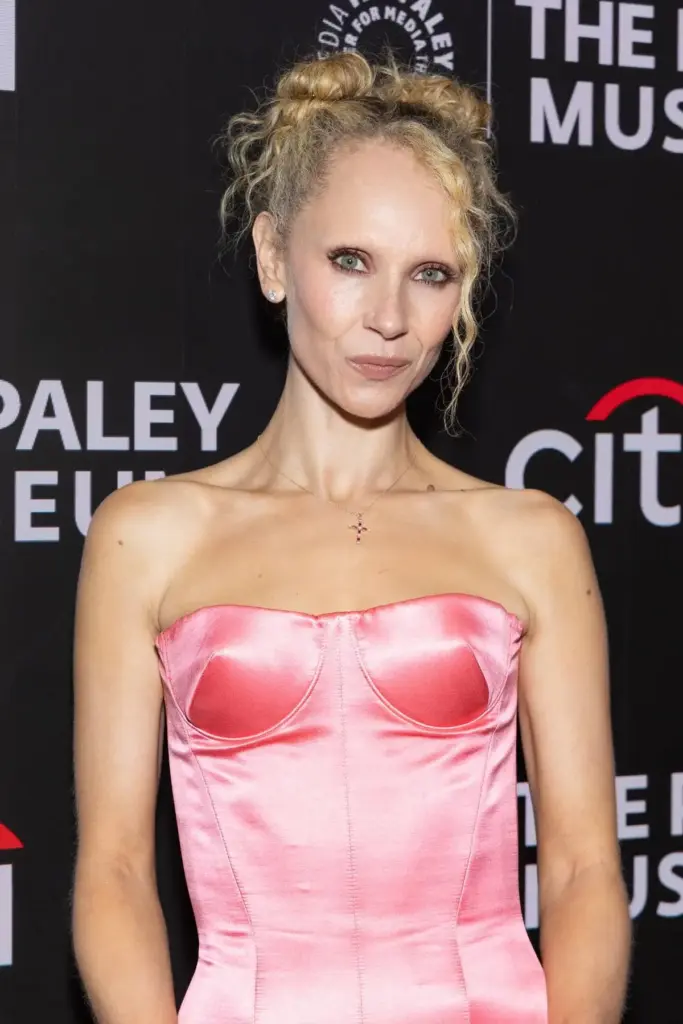
Ultimately, the part of Keeley Jones was awarded to Juno Temple, an acclaimed British actress known for her dynamic range in independent cinema and television. Temple’s audition and star power immediately resonated with the creative team, prompting a difficult conversation between Sudeikis and Hazell.
Rather than landing the titular breakout role, Hazell was delivered the sobering news that she was being "offered another part"—a significantly smaller, non-starring role within the production.
The Psychological Toll and "Defiant Disengagement"
Reflecting on the moment she learned she had lost out on playing Keeley Jones, Hazell described the sensation as feeling like she had been "punched in the chest." The psychological whiplash of having a character written for you—one bearing your very name and likeness—only to watch another actress step into the shoes of your intended destiny, proved to be an extraordinary burden.
"It’s a complete mind-f*k, especially as the show rendered immense amounts of success for the actress that plays Keeley—it changed her life," Hazell shared in an interview with the i Paper*. "It needs a lot of therapy and I’ve had a lot for it."

In her memoir, Everyone’s Seen My Tits, Hazell details how the rejection initially broke her relationship with the craft of acting entirely: *"Once I didn’t get cast as Keeley, I decided that acting could go f** itself."
Despite her inner turmoil, Hazell accepted the smaller acting role on the show and even contributed to the production behind the scenes as a staff writer. However, her resentment bled into her performance on screen. She admitted to putting on an "Oscar-worthy" performance off-camera by pretending to be "totally fine" with the outcome, while actively sabotaging her own on-screen contributions through what she described as "defiant disengagement."
Supporting Context & Metrics: The Phenomenon of Ted Lasso and Juno Temple’s Rise
To fully contextualize Hazell’s heartbreak, one must evaluate the unprecedented, stratospheric success of Ted Lasso and how the character of Keeley Jones became a defining cultural archetype of the 2020s.
The Numbers Behind the Success
- Emmy Dominance: Across its multi-season run, Ted Lasso received a staggering number of Primetime Emmy Award nominations and wins, cementing its status as one of the most decorated comedies in television history.
- Juno Temple’s Accolades: For her portrayal of Keeley Jones—the bubbly, fiercely loyal, business-savvy model-turned-PR-executive—Juno Temple earned widespread critical acclaim, including three consecutive Primetime Emmy Award nominations for Outstanding Supporting Actress in a Comedy Series.
- Global Cultural Impact: The character of Keeley Jones shattered conventional tropes regarding glamour models in media, presenting a multi-dimensional, fiercely independent, and emotionally intelligent woman. Because the character was initially birthed from Hazell’s actual personality traits and lived experiences, the parallel between art and reality became a subject of fascination for entertainment journalists and fans alike.
The Unseen Labor of Writers and Muses
While actors often receive the lion’s share of public adoration, the entertainment industry frequently relies on "muses"—real-life individuals whose stories, aesthetics, and personalities form the bedrock of fictional characters. Hazell’s transition from being the muse of Keeley Jones to a minor cast member and staff writer highlights the precarious boundary between inspiration and execution in Hollywood.
By joining the writers’ room, Hazell retained a tangible stake in the creative universe of Ted Lasso, ensuring that her authentic voice still bled into the scripts, even if the visual representation on screen belonged to someone else.
Official Statements and Memoir Revelations
The candid nature of Hazell’s disclosures—spanning her memoir Everyone’s Seen My Tits and recent press rounds—has shed a revealing light on the sanitized image of Hollywood casting processes.

In her literary work, Hazell pulls back the curtain on the paradox of working within a production that bears your DNA while remaining on the periphery of its glory. Her commentary strikes a chord with anyone who has ever faced professional displacement, proving that even within a dream job environment, unresolved trauma and professional grief can linger for years.
Regarding her on-screen performance in the series, Hazell’s self-awareness is striking. Rather than sugarcoating her feelings or pretending she handled the rejection with stoic grace, she owned her defensive coping mechanisms:
"Instead of using this as an opportunity to prove how good I was, I sabotaged myself on-screen with defiant disengagement. Just awful."
Yet, her perspective has evolved with time and extensive therapeutic processing. Moving past the initial bitterness of the casting snub allowed Hazell to reclaim her identity entirely independent of the character that once bore her name.
Future Outlook: Reclaiming the Narrative
Hollywood history is replete with near-misses that altered the trajectories of major franchises. Harrison Ford nearly missed out on Han Solo; Tom Selleck almost starred as Indiana Jones. For Keeley Hazell, the near-miss of Ted Lasso represents a defining chapter of personal reinvention rather than a permanent defeat.
As Hazell continues to build her career as an established author and multi-hyphenate creative, her willingness to speak openly about the psychological toll of rejection marks a refreshing shift toward transparency in an industry that traditionally demands perfection.

Reflecting on her journey, Hazell encapsulated her ultimate triumph away from the casting sheets with defiant ownership:
*"I get to play the greatest role of my lifetime—the Real Keeley, and here she f**ing is."
Ultimately, while Juno Temple earned the Emmy nods for portraying the fictionalized icon, Keeley Hazell secured something far more enduring: the unshakeable resilience of a creator who survived Hollywood’s harshest crucible and emerged with her authentic voice entirely intact.