Executive Overview
In the rapidly evolving landscape of direct-to-consumer retail, fashion rental platform Nuuly has emerged as a formidable powerhouse. Backed by parent company URBN—which also houses lifestyle giants like Urban Outfitters, Anthropologie, and Free People—Nuuly has enjoyed explosive momentum over the last two years. Boasting over 400,000 active subscribers and having recently surpassed $568 million in revenue just five years after its inception, the brand is no longer just an experimental side-project for URBN; it is a primary engine of growth.
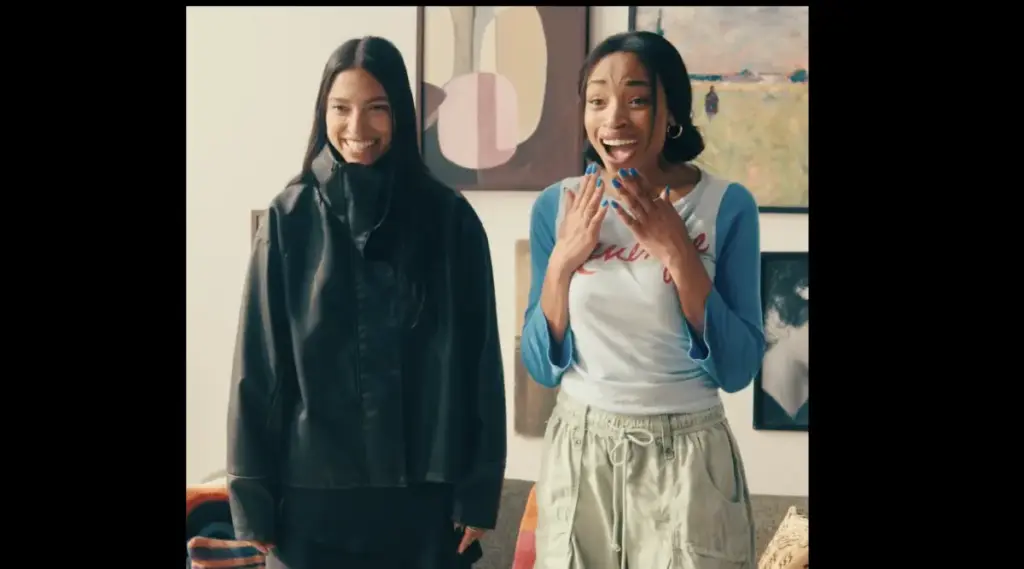
Yet, as the platform seeks to capitalize on its burgeoning market share, its leadership recognizes that maintaining momentum requires more than traditional performance marketing. Enter "Heart On My Sleeve," a 12-part social-native microdrama series. Developed in partnership with Dayna’s House—an elite creative agency founded by former Vogue video producer Dayna Carney—the project represents a bold pivot away from conventional digital advertising.
Instead of pushing disruptive promotional videos or algorithm-chasing banner ads, Nuuly is leaning into the global microdrama phenomenon. By combining professional filmmaking, comedic talent, and influencer culture, the brand is attempting a delicate balancing act: creating an episodic narrative that is deeply entertaining while seamlessly showcasing its expansive catalog of rental inventory.
This campaign signals a broader cultural shift in retail marketing. As consumers grow increasingly blind to traditional ad formats, brands are forced to ask a fundamental question: How do you break through the deafening noise of social media without looking like you are trying to sell something? For Nuuly, the answer lies in high-production-value storytelling disguised as pure entertainment.
Detailed Chronology & Campaign Mechanics
The anatomy of Nuuly’s "Heart On My Sleeve" campaign reflects a meticulous, fast-paced production model designed for maximum digital impact. Understanding how the project moved from concept to execution reveals the inner workings of modern social-first marketing strategies.
The Creative Genesis and Conception
For months, Kirsten Henri, Nuuly’s senior director of creative and content, and her team had been monitoring the exponential rise of the microdrama format. As major consumer goods corporations—ranging from Procter & Gamble and Maybelline to Dr. Pepper, Marc Jacobs, and Crocs—began experimenting with serialized, bite-sized narratives, Nuuly recognized an opportunity to adapt the trend for the fashion rental market.
To execute the vision, Nuuly enlisted Dayna Carney of Dayna’s House. Carney, whose agency has previously collaborated with luxury powerhouses and prestige retailers such as Sephora, Glossier, and Farfetch, understood the assignment immediately: the project could not feel like a traditional commercial.
"We wanted to make something entertaining and engaging that feels different—not just like you’re being sold something," Carney explains. "We’re all constantly fed ads. This is meant to be a breath of fresh air."
Production and Talent Assembly
Despite the casual, spontaneous aesthetic demanded by short-form video platforms, the production of "Heart On My Sleeve" was tightly run and professionally executed. Directed by filmmaker Milky Tran, the 12-part series was filmed entirely over the course of just two days—a testament to the cost-effective and agile nature of the microdrama format.
At the center of the narrative is actress and comedian Wally Baram, who portrays a mid-20s art teacher navigating the trials and tribulations of modern dating. In each one-minute episode, Baram goes on a completely different date with a new character. These rotating love interests and casual acquaintances are played by a carefully curated ensemble of notable content creators and influencers, including Charles Hsu, Chine Ikoro, Tara Raani, Khial Watson, and the duo Jean-Luc and Quentin Nguyen-Duy.
The narrative structure of each episode borrows heavily from both traditional television soap operas and digital-age pacing: it sets up a relatable premise, rapidly escalates or resolves a micro-plotline, and concludes on a sharp cliffhanger designed to keep viewers swiping to the next installment.
The Rollout Schedule and Distribution Strategy
Nuuly’s marketing team made a definitive strategic choice for their major fall campaign: they decided to bypass traditional multi-channel campaigns in favor of a hyper-focused social media blitz.
- September 17: Official teaser trailers begin dropping across social media.
- September 19: The official series premiere launches.
- September 19 – September 25: New one-minute episodes release daily, culminating in a week-long narrative arc.
Rather than relying solely on paid ad amplification—though paid campaigns will run to support the series—Nuuly’s distribution strategy hinges on organic reach and creator-led marketing. The entire 12-part series will live natively on Nuuly’s official Instagram, TikTok, and YouTube channels. Simultaneously, the extensive supporting cast of influencers will cross-post the episodes to their collective networks, exposing the content to hundreds of thousands of hyper-targeted followers.
Throughout the episodes, Nuuly’s inventory takes center stage. Featured brands available to rent on the platform include cult favorites and contemporary labels such as Lioness, Collina Strada, Frankies Bikinis, Boys Lie, Ronny Kobo, and OperaSport. However, brand integration remains remarkably subtle. Aside from a handful of organic mentions in the dialogue, Nuuly’s presence is established primarily through the characters’ wardrobes and a clean narrative credit at the end of each episode.
Supporting Context & Metrics: The Rise of the Microdrama
To fully appreciate the significance of Nuuly’s latest marketing venture, one must examine the staggering macroeconomic ascent of the microdrama format over the past several years.
From East Asia to a Global Phenomenon
The microdrama format originated in China, where vertically formatted, hyper-short serialized shows became a multi-billion-dollar domestic obsession. Over the last four years, however, the trend has exploded globally, transforming into a dominant cultural and advertising medium.
According to recent industry data cited by Variety, global revenue for microdramas skyrocketed from a modest $500 million in 2021 to over $7 billion by 2024, with projections continuing on a steep upward trajectory. This exponential growth is driven by fundamental shifts in consumer media consumption: shrinking attention spans, a preference for mobile-first, vertical video, and an appetite for instant narrative gratification.
The Economics of Production
For brands and media companies, microdramas offer an exceptionally attractive return on investment. Traditional television and high-end commercial productions require massive budgets, lengthy pre-production cycles, and complex distribution agreements. In contrast, microdramas are defined by low production costs, rapid turnaround times, and immense scalability.
As demonstrated by the two-day shoot for "Heart On My Sleeve," brands can produce an entire season of content with minimal overhead. Furthermore, the format challenges conventional digital marketing wisdom. For years, digital marketers insisted that short-form video platforms required low-effort, lo-fi content to resonate with audiences. However, the rise of professionalized microdramas proves that consumers respond enthusiastically to high-production-value narratives, provided they are packaged natively for social consumption.
"A lot of people just throw something up on social, and it feels like it comes from a place of low-effort," notes Kirsten Henri. "This was very tightly run and well-produced. A lot went into making it feel loose and social-native but high-quality."
Navigating the Algorithm Fatigue
Marketers today face an unprecedented paradox: while digital platforms offer more direct access to consumers than ever before, the sheer volume of content has created a nearly impenetrable wall of digital noise.
"We’re in a unique time on social media," reflects Dayna Carney. "The volume of content is huge. How can you break through that? It’s an uphill fight sometimes. Chasing the algorithm is a losing battle."
By shifting away from performance-based ad units that constantly chase ever-changing social algorithms, Nuuly is betting that long-tail engagement and pure entertainment value will foster deeper brand loyalty. When consumers are conditioned to skip ads within the first three seconds, wrapping a product catalog inside a comedic, character-driven soap opera changes the psychological contract between brand and viewer.
Official Statements and Industry Perspectives
The philosophy driving "Heart On My Sleeve" highlights a broader evolution in how retail brands approach digital storytelling. Key leaders behind the campaign have shared vital insights into the strategy:
-
On Avoiding the "Ad" Feel:
"We wanted to make something entertaining and engaging that feels different—not just like you’re being sold something. We’re all constantly fed ads. This is meant to be a breath of fresh air."
— Dayna Carney, Founder of Dayna’s House -
On Audience Alignment:
"We’ve had success with multichannel campaigns before, and it’s not like we won’t go there again. But social is where our target customer lives."
— Kirsten Henri, Senior Director of Creative and Content at Nuuly -
On Balancing Polish and Authenticity:
"A lot of people just throw something up on social, and it feels like it comes from a place of low-effort. This was very tightly run and well-produced. A lot went into making it feel loose and social-native but high-quality."
— Kirsten Henri
These perspectives underscore a pivotal industry realization: modern consumers—particularly Gen Z and Millennials who make up Nuuly’s core demographic—possess sophisticated ad-literacy. They can smell traditional corporate marketing from a mile away. By collaborating with respected comedic talent like Wally Baram and indie filmmakers like Milky Tran, Nuuly has successfully positioned itself as a cultural participant rather than an intrusive advertiser.
Future Outlook: What This Means for Retail and Nuuly
Nuuly’s aggressive push into social-native microdramas serves as a fascinating case study for the future of retail marketing. As the fashion rental market matures and competition intensifies—with legacy department stores and independent startups alike vying for subscription dollars—customer acquisition strategies must evolve beyond basic discount codes and static influencer partnerships.
Scaling the Brand Through Entertainment
With revenue surging past $568 million and a subscriber base comfortably exceeding 400,000, Nuuly is positioned to scale aggressively. However, maintaining high growth rates requires capturing the attention of consumers who may not yet view clothing rental as a staple of their wardrobe.
By utilizing microdramas, Nuuly is effectively functioning as a digital lifestyle media company. If "Heart On My Sleeve" proves successful in driving organic engagement, app downloads, and subscription conversions, it is entirely likely that branded microdramas will become a permanent fixture in Nuuly’s marketing playbook. Future iterations could explore different genres—ranging from workplace comedies to mystery anthologies—each tailored to showcase specific seasonal collections or capsule wardrobes.
Implications for the Broader Retail Industry
Nuuly’s experiment is expected to send shockwaves across the broader fashion and retail sectors. As traditional display advertising yields diminishing returns and ad-blocking software becomes ubiquitous, brands are desperately searching for sustainable alternative channels.
The success of serialized, creator-led branded content suggests that the future of retail marketing lies in "infotainment"—content that prioritizes narrative value while embedding products naturally within the environment. Retailers that master this medium will not only capture consumer attention; they will build cultural equity that transactional ads can never buy.
As the final episodes of "Heart On My Sleeve" air, industry analysts and rival marketing teams will be watching closely. One thing is already certain: in the battle for consumer attention, Nuuly has proven that the best way to sell a dress is to tell a great story.