Executive Overview
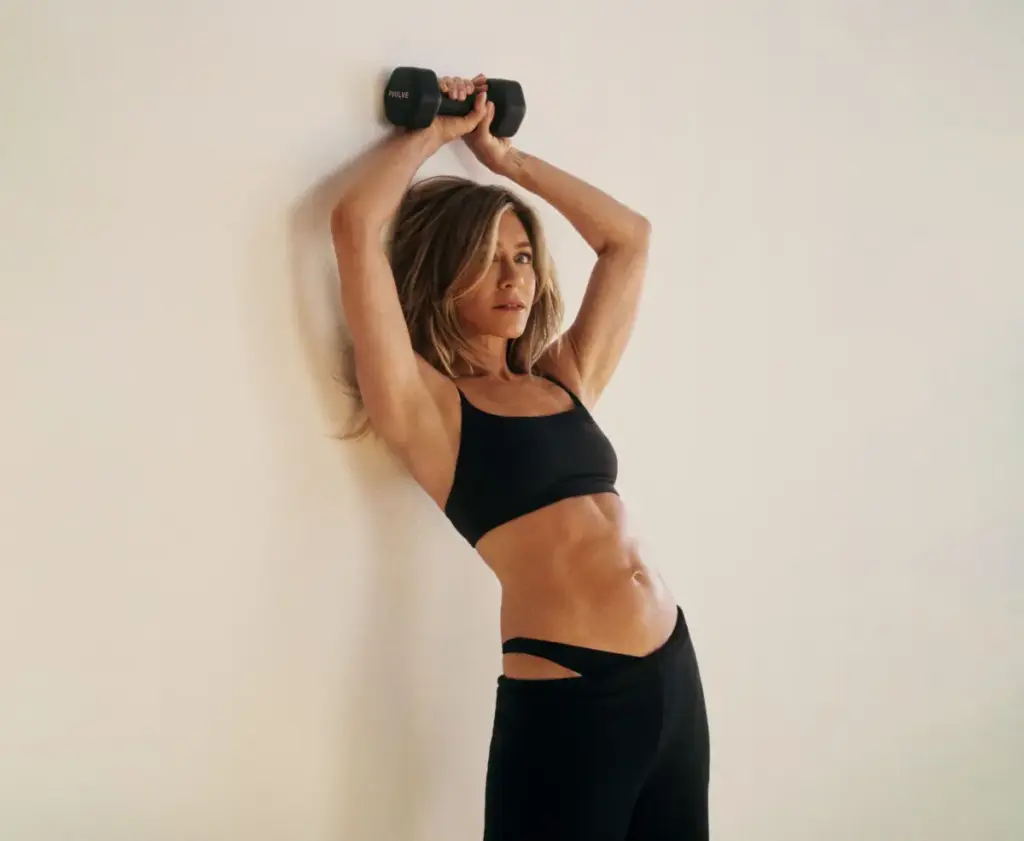
For decades, Jennifer Aniston has stood as an enduring icon of Hollywood elegance and vitality. Long celebrated for her radiant appearance and unwavering commitment to health, the Friends alumna has consistently challenged the prevailing cultural norms surrounding physical fitness. In an industry historically dominated by grueling, punishing workout regimens and the relentless pursuit of aesthetic perfection through exhaustion, Aniston has quietly pioneered a transformative philosophy: that true physical wellness is built upon the pillars of consistency, longevity, and self-compassion rather than the outdated mantra of "no pain, no gain."
In recent years, Aniston’s wellness journey has centered on functional fitness—specifically the Pvolve program, a methodology rooted in controlled resistance, deliberate movement, and anatomical synergy. By training the body to move efficiently across all three planes of motion, Aniston and her expert trainers have embraced an approach that prioritizes joint health, core stability, and functional strength designed to support the demands of everyday life.
This comprehensive report examines Jennifer Aniston’s modern fitness philosophy, the physiological principles behind her preferred arms-and-abs routine, insights from her personal trainer Dani Coleman, and the broader cultural shift toward sustainable, mindful movement in the modern wellness landscape.
Detailed Chronology: The Evolution of Aniston’s Fitness Philosophy
To fully appreciate Jennifer Aniston’s current approach to physical conditioning, it is essential to examine the historical trajectory of her fitness journey. Her relationship with exercise has mirrored the broader evolution of the fitness industry itself over the past thirty years.
The Era of High-Impact Extremes (The 1990s to Late 2000s)
During the height of Friends and her transition into a leading romantic comedy and dramatic film star, Aniston—like many public figures of her generation—was subjected to intense media scrutiny regarding her physique. During this era, mainstream fitness culture heavily promoted high-impact cardiovascular routines, extended endurance sessions, and grueling muscle-isolation exercises.
Aniston has frequently reflected on this period with refreshing candor, noting that her mindset was governed by extremes. Workouts were viewed as non-negotiable penance, often requiring intense exertion that left her depleted. The prevailing industry standard dictated that if a routine did not leave an individual drenched in sweat, sore for days, and physically exhausted, it was deemed ineffective.
The Turning Point: Embracing Sustainable Movement (The 2010s)
As sports science advanced and body-literacy improved, Aniston began noticing the physical toll of high-impact wear and tear. Chronic joint fatigue, acute burnout, and diminishing returns on energy levels forced a necessary reassessment. The shift was as much psychological as it was physiological.
Instead of asking how hard she could push her body, Aniston began to ask how well her routine supported her daily life. This philosophical pivot marked the departure from traditional weightlifting and high-intensity interval training (HIIT) toward modalities that emphasized deep stabilizing muscles, core integrity, and injury prevention.
The Pvolve Partnership and Functional Mastery (Present Day)
Aniston’s formal integration with the Pvolve fitness system cemented her transition into functional training. Rather than focusing solely on mirror muscles or superficial aesthetics, the methodology emphasizes how the body functions as an interconnected kinetic chain. By incorporating specialized resistance bands, stability balls, and precision equipment, Aniston unlocked a style of training that challenges the nervous system, protects the spine, and enhances mobility. Today, her routine serves as a blueprint for healthy aging, proving that strength and grace can evolve in tandem.
Supporting Context & Metrics: The Science of Functional Fitness
To understand why Aniston’s current routine yields such transformative results without the grueling side effects of traditional workouts, one must examine the physiological mechanics of functional training and core-centric conditioning.
The Anatomy of Functional Movement
Traditional weight training often isolates muscles in a single linear plane of motion—typically sagittal (forward and backward). However, human movement in daily life occurs across three dimensions:
- Sagittal Plane: Forward and backward movements (e.g., walking, squatting).
- Frontal Plane: Side-to-side movements (e.g., lateral lunges, side bends).
- Transverse Plane: Rotational movements (e.g., twisting, swinging a golf club).
Pvolve and similar functional fitness protocols intentionally integrate all three planes of motion. By challenging the body with rotational and lateral resistance, practitioners build resilient joints, balanced muscle development, and dynamic stability that significantly reduce the risk of injury.
The Power of the Center of Gravity
Aniston has repeatedly emphasized that the core is the anchor of her physical regime. "For me, core is everything," she notes. From a biomechanical perspective, the core encompasses far more than just the rectus abdominis (the superficial "six-pack" muscles). It includes the transversus abdominis, obliques, erector spinae, and the pelvic floor.
A strong core functions as the body’s powerhouse, responsible for force transfer between the upper and lower extremities. Maintaining optimal core stability improves posture, alleviates lower back pain, enhances balance, and optimizes athletic performance in every daily activity—from carrying groceries to sustaining long hours on a film set.
Time-Optimized Wellness: The 15-Minute Rule
One of the most significant barriers to consistent physical activity among high-achieving professionals and everyday individuals alike is perceived time constraints. Aniston addresses this psychological hurdle through brutal simplicity and behavioral psychology:
- Lowering the Barrier to Entry: By reframing a workout not as a monolithic 60-to-90-minute ordeal, but as a manageable 15-minute commitment, the brain’s resistance to starting diminishes.
- Micro-Habit Formation: Waking up just 15 minutes earlier to execute a targeted routine creates a reliable micro-habit. Over weeks and months, these micro-habits compound into profound cumulative physical and mental benefits.
Official Statements and Expert Insights
To gain a deeper perspective on Jennifer Aniston’s routine, we turn to the architectural minds behind her workouts and Aniston’s own reflections on mental health and physical vitality.
Dani Coleman on Intentional Strength
Dani Coleman, Aniston’s personal trainer and the Vice President of Training at Pvolve, emphasizes that the core objective of their collaborative work is deliberate control over momentum.
"We build upper body and core strength through progressive overload, resistance, and dynamic movement in all three planes of motion," Coleman explains to SELF. "By focusing on the muscles doing the work, you can develop intentional strength that not only improves performance in your workouts, but also helps you look and feel your best in daily life."
Coleman notes that eliminating momentum—relying purely on slow, controlled resistance rather than swinging weights or rushing through repetitions—recruits deep muscle fibers that are frequently bypassed during high-speed conventional training. This precision-focused engagement transforms shorter workouts into highly efficient sessions.
Jennifer Aniston on Mental Clarity and Self-Compassion
For Aniston, the primary driver of consistency is no longer external vanity, but internal alignment. She is remarkably transparent about how physical inactivity directly impacts her psychological well-being.
"When I don’t work out, I feel such a difference," Aniston shares. "My mood dips, I don’t have as much endurance during the day, my clothes fit differently. You just don’t feel good because you’re not being good to yourself."
Reflecting on her evolution away from punishing regimens, Aniston highlights the ultimate lesson learned from decades of experimentation:
"I used to look at workouts where it had to be this intense, ‘no pain, no gain’ situation. But the main takeaway over all the years of everything I’ve tried is just consistency. Don’t push it and listen to your body."
Detailed Breakdown: Jennifer Aniston’s Signature Arms and Abs Routine
Designed to target the body’s center of gravity while enhancing upper-body definition, Aniston’s preferred Pvolve circuit combines stability, mobility, and progressive resistance. Below is an analytical breakdown of the key movements that comprise her routine.
+-------------------------------------------------------------------------+
|                  ANISTON’S TARGETED ARMS & ABS CIRCUIT                  |
+--------------------------+----------------------------------------------+
| Movement                 | Primary Physiological Benefit                |
+--------------------------+----------------------------------------------+
| Curl Over Ball           | Full range of motion for abs with spinal     |
|                          | support.                                     |
+--------------------------+----------------------------------------------+
| Elevated Deadbug         | Deep core stability and bilateral limb       |
|                          | coordination.                                |
+--------------------------+----------------------------------------------+
| Golf Swing               | Transverse abdominis activation and          |
|                          | oblique/hip strength.                        |
+--------------------------+----------------------------------------------+
| Stability Ball Plank     | Advanced neuromuscular challenge via         |
|                          | instability.                                 |
+--------------------------+----------------------------------------------+
| Prone Back Extension     | Posterior chain strengthening and postural   |
| with Lat Pull            | correction.                                  |
+--------------------------+----------------------------------------------+
1. Curl Over Ball
- Equipment Needed: Stability ball, yoga mat.
- Execution & Focus: This exercise requires the practitioner to drape the torso over a stability ball while performing controlled abdominal crunches.
- Trainer Insight: According to Dani Coleman, "This move strengthens the abs through a fuller range of motion while the ball supports the lower back." By eliminating the flat floor constraint, the spine can achieve gentle hyperextension at the bottom of the movement, recruiting abdominal fibers that standard floor crunches miss while protecting lumbar integrity.
2. Elevated Deadbug
- Equipment Needed: Yoga mat (optional elevation prop).
- Execution & Focus: A staple of modern physical therapy and athletic conditioning, the deadbug teaches anti-extension control of the spine. The practitioner lies on their back, elevating limbs into tabletop positions, and systematically extends opposing arms and legs while maintaining absolute rigidity in the core.
- Trainer Insight: Coleman describes it as "a powerful core stability move that improves coordination and teaches the body to stay steady while the arms and legs move in tandem." This movement prevents compensatory arching of the lower back, a common pitfall in core training.
3. Golf Swing
- Equipment Needed: Resistance band or light functional tool.
- Execution & Focus: Mimicking the rotational mechanics of a golf swing, this dynamic exercise challenges the body to generate force from the ground up through the hips and core before transmitting it through the upper body.
- Trainer Insight: "This is a dynamic core exercise that strengthens the obliques while activating the outer hips for improved balance and stability," notes Coleman. Because daily life frequently involves twisting motions, training the body dynamically in the transverse plane is vital for injury prevention.
4. Stability Ball Plank
- Equipment Needed: Stability ball.
- Execution & Focus: Taking the traditional isometric plank—a foundational test of core endurance—and introducing an element of surface instability. By resting forearms or hands on a stability ball, the muscular system must continuously micro-adjust to maintain equilibrium.
- Trainer Insight: Coleman explains that "this exercise takes the classic plank up a notch by adding instability, forcing the core to work harder to stay controlled." This heightened neurological demand recruits deep stabilizer muscles surrounding the shoulder girdle and spine.
5. Prone Back Extension With Lat Pull
- Equipment Needed: Yoga mat, light resistance band.
- Execution & Focus: Performed lying face down on the mat, this movement lifts the chest and upper torso via posterior chain activation while simultaneously drawing the elbows down and back against resistance.
- Trainer Insight: "This targets the muscles along the spine to build back strength, support better posture, and counteract the effects of long hours of sitting," says Coleman. In an era defined by "tech neck" and sedentary desk work, reinforcing the upper back and erector spinae is essential for functional structural alignment.
Future Outlook: The Paradigm Shift in Celebrity Wellness
Jennifer Aniston’s enduring relevance as a wellness authority signals a broader, much-needed cultural maturation in how society views health and aging. For decades, the media perpetuated a toxic narrative that linked physical worth exclusively to youth, extreme thinness, and punishing physical penance.
As figures like Aniston publicly dismantle the "no pain, no gain" dogma in favor of sustainable longevity, intuitive movement, and mental self-care, public expectations are shifting. The modern fitness consumer is increasingly rejecting burnout culture. Instead, they are embracing modalities that:
- Prioritize Functional Longevity: Focusing on how the body will feel and move at age 70, 80, and beyond rather than just preparing for a summer aesthetic.
- Honor Mental Health Integration: Acknowledging that exercise is primarily an emotional and cognitive regulator rather than a mechanism for calorie debt repayment.
- Embrace Flexibility over Rigidity: Understanding that a consistent 15-minute routine executed with mindfulness vastly outperforms an erratic, punishing 90-minute regimen that leads to injury and psychological exhaustion.
Looking ahead, the evolution championed by Aniston and expert trainers like Dani Coleman points toward a holistic future where fitness is accessible, compassionate, and deeply integrated into the fabric of daily life. By stripping away the intimidation of fitness and replacing it with intentional, structured, and enjoyable movement, Jennifer Aniston continues to inspire millions to view health not as a punishment to endure, but as an act of profound self-respect.