Executive Overview
Lower-back pain has become one of the most pervasive physical grievances of modern life, affecting millions of individuals globally. Whether triggered by prolonged periods of sedentary desk work, poor posture, or muscular imbalances, the immediate instinct for many sufferers is to reach for a quick fix—most notably, a deep, isolated stretch of the lower back. However, according to experts in biomechanics and therapeutic movement, this common approach is frequently misguided and can sometimes exacerbate the issue.
Veronica Najera, a master trainer, director of education at YogaSix, and seasoned yoga instructor, emphasizes that lower-back discomfort does not occur in a vacuum. Instead, the lumbar spine is heavily influenced by a complex ecosystem of neighboring joints and muscle groups, including the hips, glutes, core, and even diaphragmatic breathing patterns. While basic stretching may offer superficial tension relief, it rarely resolves the underlying mechanical dysfunctions causing the pain.
To achieve sustainable relief, practitioners must pivot away from isolated stretches and adopt a comprehensive, well-rounded movement practice. By integrating mobility, strength, breathwork, and deep body awareness, therapeutic yoga offers a robust framework for rehabilitation. This article explores the root causes of lower-back strain, unpacks expert-backed movement strategies, outlines a targeted three-pose sequence for daily recovery, and projects the future outlook of integrating mindful movement into preventative healthcare.
Detailed Chronology: The Anatomy of Modern Lower-Back Pain
The Sedentary Epidemic and Structural Breakdown
To understand why lower-back pain resists simple remedies, one must examine how contemporary lifestyles alter human biomechanics. Over the past few decades, the transition toward desk-bound, white-collar professions has dramatically increased the average daily time spent sitting.
When an individual remains seated for extended periods—often spanning eight to ten hours a day—a predictable physiological cascade occurs:
- Hip Flexor Shortening: The muscles at the front of the hips (such as the iliopsoas) remain in a chronically shortened state, pulling anteriorly on the pelvis.
- Gluteal Amnesia: The gluteus maximus and surrounding posterior chain muscles are placed in a lengthened, inactive position, effectively turning "off" or failing to fire properly. This phenomenon is clinically known as reciprocal inhibition or disuse atrophy of the glutes.
- Core Deactivation: The deep abdominal stabilizers, including the transverse abdominis, experience a reduction in baseline activation, leaving the lumbar spine unprotected.
- Compensatory Lumbar Strain: With the hips tight and the glutes inactive, the lower back is forced to absorb mechanical loads it was never designed to manage independently. Every bend, twist, and postural shift places excessive shearing forces on the lumbar vertebrae and surrounding soft tissues.
The Realization: Moving Beyond the "Quick Stretch"
For individuals caught in this cycle, pain often sets in subtly at first—a dull ache at the end of a workday—before developing into chronic stiffness. Historically, wellness advice directed sufferers to perform aggressive forward folds or knee-to-chest pulls to "loosen up" the back.
However, clinical observations and yoga philosophy converge on a different reality: forcing a sore, over-stretched lower back to stretch even further can destabilize the lumbar joints. The breakthrough in modern recovery strategies involves shifting focus away from the site of the pain and toward the surrounding structural hubs. As Najera points out, real healing begins when we look at how the hips, glutes, and breath interact with the spine. Recognizing this holistic web of influence has transformed how practitioners approach back care, moving away from passive relief and toward active stabilization.
Supporting Context & Metrics: The Science of Movement and Stability
The Biomechanical Triad: Mobility, Strength, and Breath
To appreciate why a holistic yoga practice outperforms static stretching, it is helpful to analyze the three core pillars of functional spinal health:
- Mobility vs. Flexibility: Flexibility is the passive ability of a muscle to lengthen, whereas mobility encompasses the active, controlled range of motion across a joint. A tight lower back is often desperately crying out for mobility in the thoracic spine (upper back) and the hips, rather than forced lengthening in the lumbar region.
- Posterior Chain Activation: The glutes and hamstrings act as primary anchors for the pelvis. When these muscles are strong and responsive, they absorb the shock of daily movement, shielding the lower back from micro-trauma.
- The Neurological Role of Breath: Chronic pain triggers a sympathetic nervous system response ("fight or flight"), which manifests as shallow, chest-based breathing and increased muscle guarding. Deep, diaphragmatic breathing signals the nervous system to down-regulate, reducing muscular tension and allowing the deeper stabilizing muscles to engage naturally.
Industry Insights and Prevalence Metrics
According to global health data compiled by organizations such as the World Health Organization (WHO), lower-back pain remains the single leading cause of disability worldwide, impacting upwards of 600 million people at any given time. Epidemiological studies consistently highlight that sedentary behavior increases the risk of chronic back issues by over 50%.
Furthermore, workplace wellness audits reveal that companies investing in structured mobility and somatic movement programs experience a significant reduction in musculoskeletal complaints, translating to lower absenteeism and higher productivity. Within the fitness landscape, therapeutic yoga has transitioned from an alternative trend to an evidence-based modality endorsed by physical therapists and orthopedic specialists alike.
Official Statements and Expert Perspectives
Expert Insights from Veronica Najera
In professional commentary provided to fitness and wellness publications, Veronica Najera emphasizes the necessity of a multifaceted approach to spinal health.
"Lower-back pain doesn’t work in isolation," Najera explains. "The hips, glutes, core and even the way we breathe can influence how our back feels. Stretching can help ease tension, but it isn’t always going to address the root problem. Instead, try a yoga practice that offers a well-rounded approach combining mobility, strength, breath, and body awareness."
This perspective is echoed across the physical therapy community. Clinicians frequently note that patients who rely solely on passive stretching often experience temporary relief followed by recurring flare-ups. By weaving strength-building movements—such as active glute engagement—with intentional breathwork, practitioners retrain their neuromuscular pathways to support the spine naturally throughout daily activities.
Medical Disclaimer: Fitness and yoga professionals universally emphasize that individuals suffering from acute trauma, herniated discs, spinal stenosis, or diagnosed structural injuries must consult a physician or physical therapist before initiating any new movement routine.
Practical Application: The Three-Pose Therapeutic Sequence
For those experiencing the cumulative effects of desk work, muscle imbalances, or daily stress, Najera recommends a targeted three-pose sequence. Designed to be performed at the end of the day, this routine gently coaxes the body out of postural compensation patterns, releasing tension while simultaneously building structural support.
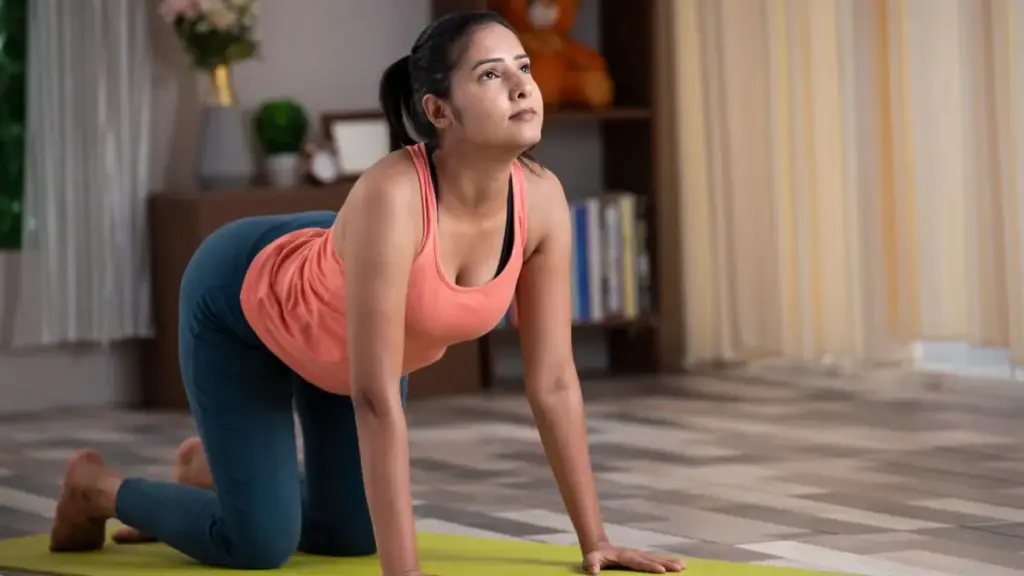
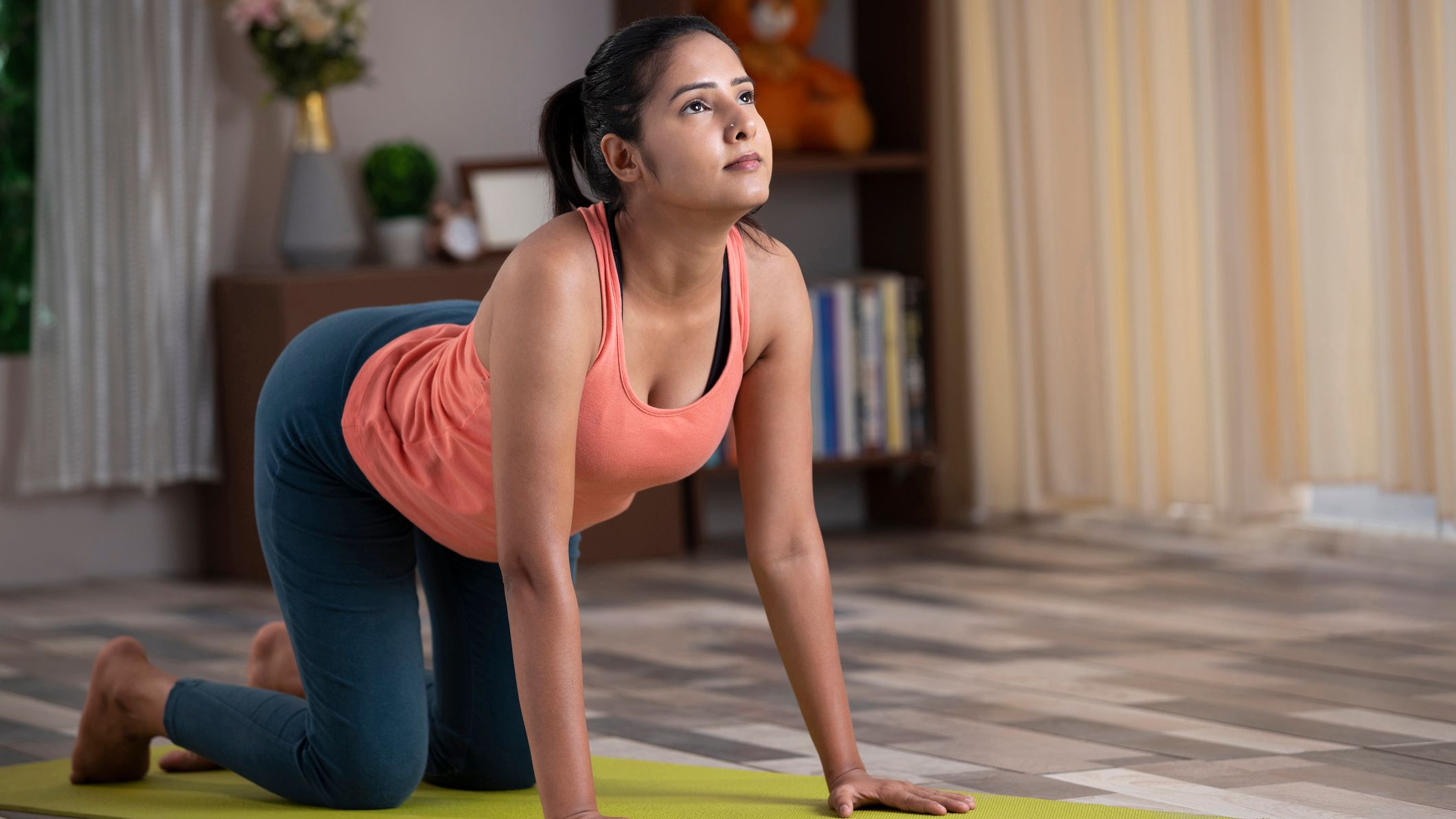
1. Cat-Cow (Marjaryasana-Bitilasana)
[Starting Position: Tabletop on hands and knees]
       │
       ├── Inhale ──> Cow Pose (Drop belly, lift chest & tailbone)
       │
└── Exhale ──> Cat Pose (Round spine, tuck chin & tailbone)- Target Purpose: Encourages multi-segmental spinal mobility and counteracts the stiffness accumulated from prolonged static sitting.
- Reps & Guidance: 5 to 8 complete cycles, fluidly guided by the natural rhythm of the breath.
- How to Execute:
- Begin on your hands and knees in a tabletop position, with your wrists stacked directly under your shoulders and your knees positioned under your hips.
- As you inhale (Cow Pose), gently drop your belly toward the floor, lift your chest and chin, and draw your tailbone upward toward the ceiling, creating a gentle arch in the spine.
- As you exhale (Cat Pose), draw your navel in toward your spine, round your back upward toward the ceiling like a stretching cat, and tuck your chin gently toward your chest.
- Move smoothly between these two shapes, matching every phase of movement to an inhale or exhale.
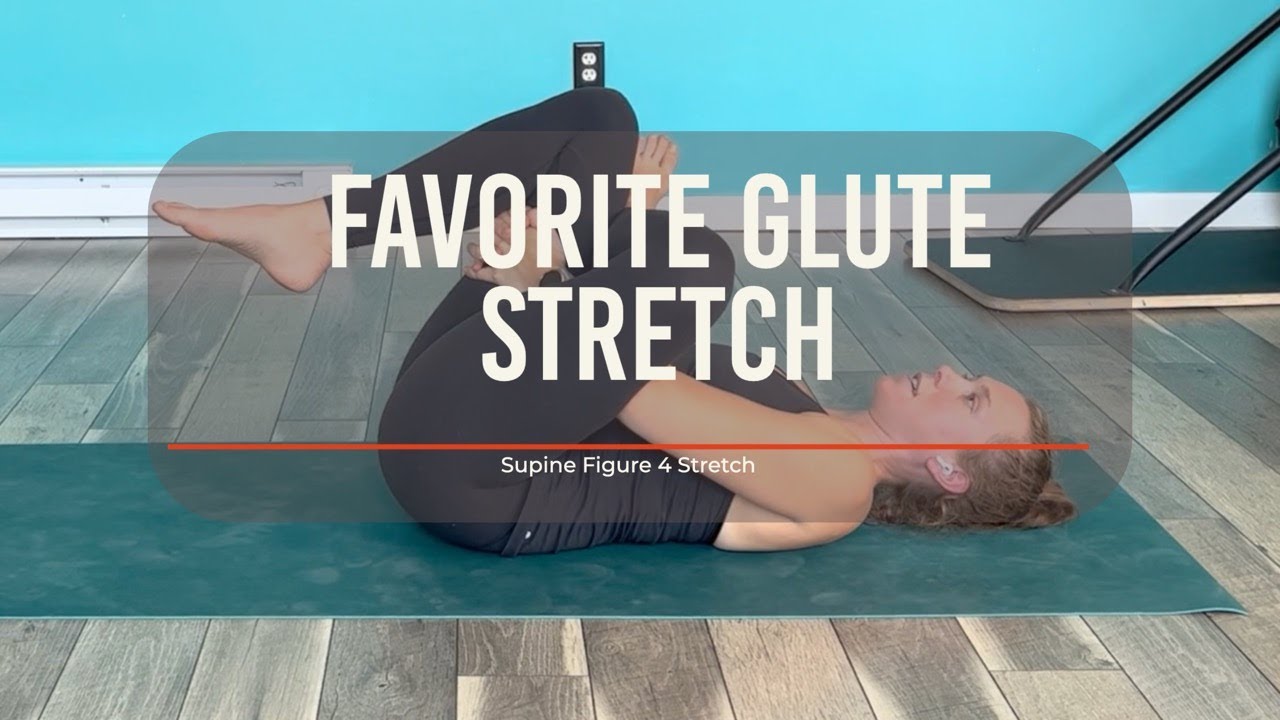
2. Supine Figure Four (Supta Kapotasana)
- Target Purpose: Relieves deep-seated tension in the outer hips and gluteal complex, preventing tight hips from pulling awkwardly on the pelvis and lower back.
- Time & Volume: Hold for 30 to 60 seconds on each side.
- How to Execute:
- Lie flat on your back with your knees bent and both feet planted firmly flat on the floor.
- Lift your right foot off the floor and cross your right ankle over your left thigh, just above your left knee, creating a "figure-four" shape with your legs. Ensure your right foot is flexed to protect your knee joint.
- Reach your arms around your left leg and draw your left thigh in toward your chest. If your flexibility allows, thread your right hand through the gap between your legs and your left hand around the outside to clasp your hands behind your left hamstring or over your left shin.
- Gently draw the package closer to your torso until you feel a comfortable stretch along the outer right hip and glute. Breathe deeply and hold, then switch sides.
3. Bridge Pose (Setu Bandha Sarvangasana)
- Target Purpose: Strengthens the glutes, hamstrings, and core stabilizers while enhancing the active mobility of the pelvis and spine.
- Sets & Duration: 5 to 8 repetitions, holding each lift for 15 to 30 seconds.
- How to Execute:
- Lie flat on your back with your knees bent and your feet planted flat on the floor, hip-width apart. Position your heels close enough that your fingertips can lightly graze the backs of your heels.
- Press down firmly through both feet and arms as you exhale, engaging your glutes and hamstrings to lift your hips up toward the ceiling.
- Keep your thighs parallel and avoid letting your knees splay outward. Roll your shoulders underneath you to lift your chest toward your chin.
- Hold the position for 15 to 30 seconds while maintaining steady, deep breathing, then slowly lower your hips back down to the mat one vertebra at a time. Complete 5 to 8 total sets.
Future Outlook: The Evolution of Spinal Wellness and Preventative Care
As we look toward the future of health and wellness, the paradigm surrounding lower-back pain management is undergoing a fundamental shift. The era of quick-fix remedies, passive therapies, and isolated stretching is steadily giving way to integrated, somatic-based movement education.
Integration into Corporate and Clinical Settings
Forward-thinking corporate wellness programs are beginning to replace traditional ergonomic audits with active movement interventions. By embedding short, guided mobility sessions—such as the cat-cow and bridge sequence—into the standard workday, employers can proactively mitigate the cumulative damage of prolonged sitting.
Similarly, physical therapy clinics are increasingly collaborating with certified yoga instructors and movement specialists. This multidisciplinary approach ensures that patients graduating from clinical rehabilitation transition smoothly into sustainable, home-based movement practices that prioritize strength, mobility, and breath awareness.
Empowering the Individual
Ultimately, the future of lower-back health lies in somatic literacy—empowering individuals to tune into their bodies’ subtle signals before minor stiffness escalates into chronic debilitation. By understanding that spinal health is a systemic issue connected to the hips, glutes, core, and nervous system, people are better equipped to take charge of their own physical wellbeing.
As practitioners like Veronica Najera demonstrate, integrating intelligent movement into daily life does not require an intimidating overhaul. A few minutes of mindful breathing, targeted hip mobility, and foundational strengthening can make the difference between a lower back that cries out in pain and one that supports you with strength and resilience throughout your day.