Executive Overview
The contemporary landscape of the entertainment industry is often viewed through a glittering lens of astronomical box office receipts, multi-million-dollar streaming residuals, and glamorous red-carpet premieres. Yet, beneath this high-gloss veneer lies a precarious financial reality for the vast majority of working actors. Few public figures have exposed this disconnect as starkly or as courageously as Jessie Cave. Best known to global audiences for her memorable turn as Lavender Brown in the final three installments of the blockbuster Harry Potter franchise, Cave recently made headlines during an appearance on the popular U.K. daytime talk show This Morning.
During the candid segment, Cave opened up about a decision that has simultaneously served as her financial lifeline and a lightning rod for controversy: launching an OnlyFans account. Far from the conventional expectations associated with the platform, Cave’s digital storefront is entirely non-explicit, focusing instead on high-quality hair sounds, sensory experiences, and niche aesthetic content tailored to hair fetishes.
Despite the PG-rated nature of her content, the decision to monetize her digital presence met with immediate professional fallout, most notably resulting in her being barred from a prominent Harry Potter fan convention. Organizers cited generalized affiliations with adult content as justification for the exclusion—a double standard that Cave has fiercely and publicly challenged.
Beyond the tabloid headlines and convention bans, Cave’s pivot offers an illuminating case study in the modern economics of the creative class. It forces a reckoning with how society perceives former child actors and franchise veterans, laying bare the staggering costs of childcare, the crushing weight of debt, and the desperate measures required to sustain a career as an independent "struggling artist" in an increasingly expensive world. This article provides a comprehensive examination of Cave’s journey, analyzing the financial pressures that drove her to the platform, the systemic hypocrisies of the convention circuit, and the broader implications for the creative workforce in the digital age.
Detailed Chronology: From the Great Hall to the Digital Frontier
To understand Jessie Cave’s current position, one must retrace a career trajectory that spans more than fifteen years across diverse artistic mediums.
The Harry Potter Years and Early Success
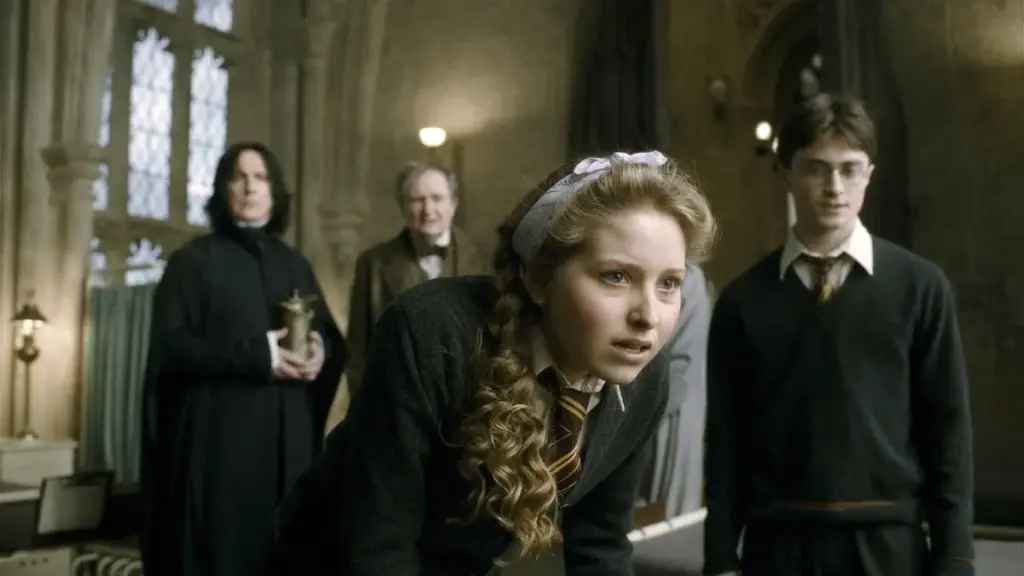
Jessie Cave’s introduction to the global stage occurred in 2009 with the release of Harry Potter and the Half-Blood Prince. Winning out over thousands of hopefuls to secure the role of Lavender Brown—Ron Weasley’s overly affectionate, dramatic, and ultimately doomed girlfriend—Cave instantly entered the pop culture lexicon. She reprised the role in both parts of Harry Potter and the Deathly Hallows (2010 and 2011) and lent her voice to the character in two accompanying video games.
For many fans, securing a role in one of the most successful film franchises in history equates to lifelong financial security. However, as Cave has repeatedly pointed out, the reality of working-actor compensation tells a very different story. The role of Lavender Brown, while visible and beloved by a dedicated fanbase, was a supporting part filmed nearly two decades ago. The upfront compensation for secondary characters in major studio films from that era rarely translates into the perpetual wealth that public perception assumes.
Post-Wizarding Endeavors and Indie Artistry
Following her departure from the magical world, Cave did not rest on her laurels. She actively cultivated a diverse portfolio, expanding her resume to include traditional theater, television, and film. She appeared in acclaimed cinematic adaptations such as Great Expectations (2012) and made notable guest appearances on prestigious television series, including Charlie Brooker’s dystopian anthology Black Mirror and the high-stakes financial drama Industry.
Parallel to her screen work, Cave carved out a distinct niche as a performance artist, writer, and comedian. She became widely celebrated for her unique, deeply personal one-woman shows that heavily incorporate hand-crafted puppets and absurdist humor. These productions earned critical acclaim at the Edinburgh Festival Fringe and across various London theaters. However, mounting artistic autonomy often comes with a steep financial cost. Producing independent theater, paying for venues, and maintaining a creative practice without the backing of a major studio or network left Cave vulnerable to the economic pressures of modern life.
The OnlyFans Launch (May 2025)
By early 2025, the compounding pressures of post-pandemic inflation, the soaring costs of family life, and residual debt pushed Cave to explore unconventional avenues for income. In May 2025, she officially launched an OnlyFans page.
Rather than leaning into traditional adult entertainment—which constitutes the primary business model for the vast majority of the platform’s creators—Cave chose a hyper-niche direction: hair appreciation. Through targeted Instagram announcements and promotional videos, she promised subscribers "the best quality hair sounds" and "very sensual stuff" centered entirely around hair textures, brushing sounds, and visual styling.
The public reaction was swift. While internet commentators expressed initial shock, Cave maintained a transparent and unapologetic stance. In her launch announcements, she outlined her goals with absolute clarity: to clear her mounting debts, secure her family’s living situation, repair structural damage to her home (jokingly referencing arsenic and lead wallpaper alongside roof repairs), and reclaim agency over her financial narrative.
The Convention Ban and Media Retaliation
The fallout from her digital entrepreneurialism materialized a few months later when organizers of a scheduled Harry Potter fan convention formally informed Cave that she was barred from attending or participating as a guest. The rationale provided by convention leadership centered on corporate risk aversion, specifically arguing that OnlyFans’ widespread association with pornography was incompatible with the family-friendly branding of the convention.
Rather than remaining silent, Cave took to social media and morning talk shows to dissect the inherent hypocrisy of the decision. She pointed out the glaring double standard: actors across the entertainment industry routinely participate in mainstream films and television series featuring explicit sex scenes, full-frontal nudity, and graphic violence, yet are welcomed onto convention stages without hesitation. By contrast, Cave was being penalized for playing with her hair behind a digital paywall to pay her bills.
Supporting Context & Metrics: The Economics of the Creative Class
To fully grasp the significance of Jessie Cave’s pivot, one must examine the broader socioeconomic data governing the lives of working actors and independent artists in the United Kingdom and globally.
The Myth of the Franchise Millionaire
Public perception of actors who star in multi-billion-dollar franchises is profoundly skewed by outliers at the very top of the call sheet. While the primary leads of the Harry Potter series—Daniel Radcliffe, Emma Watson, and Rupert Grint—secured generational wealth, the vast ensemble of supporting and recurring actors operated under standard scale contracts typical of mid-budget or large-ensemble British productions of the late 2000s.
Industry analysts note that secondary actors in blockbuster franchises receive standard residual payouts that diminish rapidly with the advent of modern streaming models. When digital distribution superseded physical media sales (DVDs and Blu-rays), the residual checks that historically sustained character actors between gigs shrank to negligible fractions of their former amounts.
The Cost-of-Living Crisis and Childcare Pressures
Cave’s candid admissions on This Morning highlighted a universally felt economic pressure: the staggering cost of childcare for working parents. In the U.K., childcare costs have soared to some of the highest levels in the developed world, frequently outpacing median wage growth. For self-employed artists, whose income fluctuates wildly from month to month depending on casting calls, book sales, or theater ticket revenue, the fixed monthly burden of childcare and housing can easily plunge a household into debt.
The Rise of Alternative Platforms for Creators
Cave is far from the only mainstream entertainer to seek financial refuge on creator-economy platforms like OnlyFans, Patreon, and Substack. As traditional avenues of arts funding decline, publishing houses cut advances, and television networks reduce episodic order counts, artists are increasingly cutting out middlemen to monetize their personal brands directly.
However, unlike social media giants such as Instagram or TikTok—where creator monetization relies heavily on volatile ad-revenue sharing and brand sponsorships—subscription-based platforms offer predictable, recurring monthly revenue. For Cave, her OnlyFans income transformed from an embarrassing necessity into a stabilizing force, enabling her to continue producing her unconventional puppet shows without the existential dread of financial ruin.
Official Statements and Public Discourse
The public conversation surrounding Jessie Cave’s entrepreneurial pivot has transcended the typical boundaries of celebrity gossip, sparking important discussions about morality clauses, bodily autonomy, and the dignity of labor.
Jessie Cave’s Perspective
During her comprehensive interview on U.K. talk show This Morning, Cave did not shy away from the emotional toll of her financial struggles or the initial embarrassment of entering the digital subscription market:
"People just assume I’m rich and I have loads of money and no I don’t… My role as Lavender Brown was a small-ish part and it was 20 years ago. So it was embarrassing because on a certain level, I would have really liked to get a job. But you know what it’s like, you have kids. It costs so much for childcare… [OnlyFans] really has saved me."
Addressing her artistic identity and the lingering stigma attached to alternative monetization platforms, Cave emphasized her desire to normalize financial survival for independent creators:
"This is how I’m making a living as an artist which… I want to have less shame about it. I want other people who do weird art like me, I want them to know that there is some way of still making [it]."
On the absurdity of her exclusion from the Harry Potter fan convention, Cave offered a sharp critique of institutional double standards:
"It was baffling to me as some actors who do conventions (most actors, actually) have done TV and films in which they’ve done sex scenes and nudity. I’m just playing with my hair!"
She further demonstrated a sense of professional closure regarding the convention circuit:
"I am not upset about the prospect of no more ‘Harry Potter’ conventions. There’s going to be a new cast now and it’s a different time. Plus, I have done conventions for over 15 years and have enough photos and wizard memorabilia."
Fan and Industry Reaction
Reactions to Cave’s revelations have been overwhelmingly supportive among independent creators and everyday social media users, who praised her radical transparency regarding the unglamorous financial realities of acting. Feminist media critics quickly rallied behind her critique of the convention organizers, pointing out the persistent policing of women’s bodies and digital output—even when the content in question is completely non-explicit.
Conversely, the convention organizers’ initial decision reflected a lingering corporate squeamishness regarding the OnlyFans brand name, highlighting the generational and institutional lag in how traditional entertainment entities navigate the modern creator economy.
Future Outlook: Redefining the Working Actor’s Toolkit
As the entertainment industry continues to evolve in the wake of streaming consolidation, artificial intelligence disruptions, and shifting economic landscapes, the traditional career playbook for actors is undergoing a permanent rewrite.
Jessie Cave’s journey from Hogwarts corridors to niche digital entrepreneurship serves as a watershed moment. It dismantles the antiquated notion that mainstream visibility guarantees lifetime financial stability, while simultaneously validating the resourceful, adaptive strategies that modern artists must employ to survive.
By refusing to succumb to the shame historically attached to alternative platforms, Cave has carved out a sustainable pathway for her household and her art. Her willingness to speak out against convention blacklisting exposes the hypocrisy of institutional gatekeepers who profit off nostalgia while penalizing artists for taking control of their economic destinies.
Looking ahead, the entertainment landscape is likely to see an acceleration of mainstream talent utilizing subscription-based creator economies. As audiences increasingly value authenticity and direct connection over polished, studio-manufactured PR personas, creators who share their genuine struggles—and solutions—will find enduring loyalty. For Jessie Cave, the spells of the wizarding world may be firmly in the past, but her ability to conjure financial stability out of creativity, resilience, and a bit of hair-focused ingenuity proves that real magic is found in the tenacity of the working artist.