Executive Overview
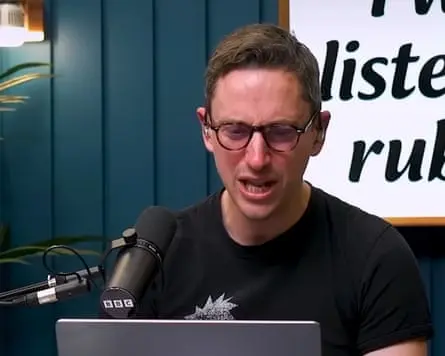
In the ever-evolving landscape of modern alternative music, few artists possess the singular ability to completely dismantle a legendary composition and rebuild it in their own distinct image quite like Phoebe Bridgers. The Grammy-nominated singer-songwriter has once again captured the global cultural zeitgeist with a stunning, stripped-down acoustic reimagining of Nirvana’s seminal 1991 anthem, "Lithium." Recorded for the celebrated BBC Radio 1 Live Lounge, Bridgers’ rendition trades the abrasive, distortion-heavy grunge mechanics of the original track for a fragile, deeply emotive folk-pop arrangement.
By prioritizing space, vulnerability, and her signature breathy vocal delivery, Bridgers unearths new dimensions hidden deep within Kurt Cobain’s timeless lyricism. This performance is far more than a standard radio cover; it serves as a masterclass in interpretive music-making, proving that exceptional songwriting transcends genre boundaries.
The timing of this release coincides with a period of personal and professional recalibration for the artist. Recorded prior to a sudden medical emergency that forced Bridgers to cancel several high-profile United Kingdom concert dates due to acute appendicitis, the performance has provided fans worldwide with a profound piece of art to absorb during her recovery. As music critics and fans dissect the nuances of the arrangement, the cover simultaneously refocuses attention on the complex history, enduring multi-platinum metrics, and philosophical underpinnings of Nirvana’s original Nevermind classic.
Detailed Chronology: From Studio Session to Global Release
The BBC Radio 1 Live Lounge Phenomenon
The BBC Radio 1 Live Lounge has long served as a sacred testing ground where contemporary pop, rock, and indie artists stretch their creative boundaries by tackling unexpected covers. For decades, the segment has produced legendary cultural moments—from high-energy rock crossovers to delicate acoustic teardowns. When Phoebe Bridgers stepped up to the microphone for the program, anticipation was already high given her status as one of the defining voices of her generation.
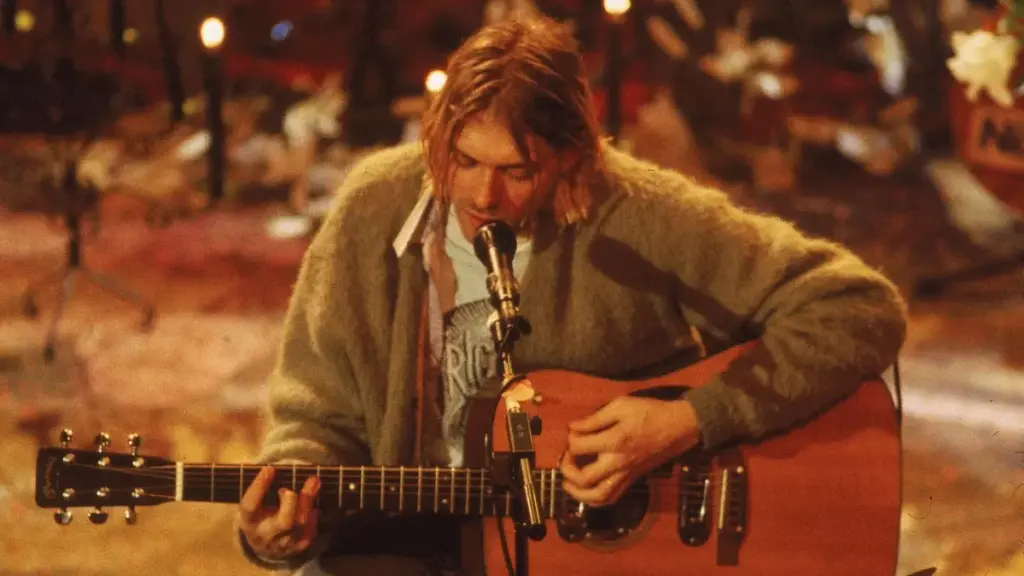
Rather than choosing a contemporary peer or a traditional folk standard, Bridgers leaned into alternative rock history by selecting "Lithium," the third single from Nirvana’s diamond-certified sophomore album, Nevermind. The choice was audacious. "Lithium" is inherently built upon the dynamic tension that defined the early 1990s grunge explosion: quiet, brooding verses that violently erupt into roaring, distorted choruses driven by Cobain’s guttural screams and Dave Grohl’s thunderous percussion.
Bridgers and her backing ensemble, however, took a radically minimalist approach. Stripping the instrumentation down to delicate acoustic guitar picking and haunting, ambient vocal harmonies, they inverted the song’s structural DNA. The explosive choruses were muted into soaring, melancholic valleys, allowing the poetic weight of Cobain’s words to take center stage.
Health Challenges and Tour Interruptions
Behind the scenes of the media rollout, Bridgers’ professional schedule faced an abrupt halt. On August 19, 2026, representatives for the artist announced that she had been forced to cancel an imminent run of United Kingdom tour dates. The cancellation was attributed to a sudden diagnosis of appendicitis, a painful medical emergency requiring immediate surgical intervention and subsequent rest.
While fans flooded social media platforms with messages of support and wishes for a speedy recovery, the pre-recorded Live Lounge session functioned as a welcome consolation. It ensured that, despite her temporary absence from the live touring circuit, Bridgers remained at the forefront of the musical conversation. Industry insiders have noted that discussions regarding the rescheduling of the postponed UK shows are already underway, pending clearance from her medical team.
Supporting Context & Metrics: The Anatomy of a Grunge Anthem
To fully appreciate the gravity of Phoebe Bridgers’ cover, one must examine the monumental legacy of the source material. Released in July 1991 by Geffen Records, Nevermind permanently altered the trajectory of popular music, dismantling the glossy, hair-metal dominance of the 1980s and ushering in the alternative rock revolution.
"Lithium" occupied a crucial space on the record. Released as a single in September 1992, it followed the astronomical success of "Smells Like Teen Spirit." While "Teen Spirit" became the anthemic battle cry of disaffected youth, "Lithium" offered a more psychological, deeply personal exploration of emotional instability, isolation, and coping mechanisms.
Commercial Achievements and Global Certifications
Over the decades, "Lithium" has achieved staggering commercial and critical milestones. According to global music data aggregators and official recording industry associations, the track has attained multi-platinum status across multiple continents:
- United States: Certified multi-platinum by the Recording Industry Association of America (RIAA), reflecting enduring streaming numbers and physical sales.
- Australia: Achieved multi-platinum accreditation through the Australian Recording Industry Association (ARIA).
- New Zealand: Secured robust multi-platinum recognition, highlighting the track’s enduring resonance in Oceania.
These commercial metrics underscore the reality that Nirvana’s catalog is not merely a nostalgic artifact of the 20th century, but a living, breathing component of the modern musical ecosystem that continues to connect with younger generations through artists like Bridgers.
Official Statements and Philosophical Interpretations
Kurt Cobain on the Meaning of "Lithium"
The lyrical themes of "Lithium" have been the subject of intense academic and journalistic analysis for over thirty years. Often misinterpreted as a straightforward narrative about substance abuse due to its title—a reference to the mood-stabilizing medication prescribed for bipolar disorder—Cobain’s own explanations reveal a far more nuanced narrative concerning grief, human vulnerability, and the psychological utility of belief systems.
In historical interviews, notably documented by outlets such as Radio X, Cobain peeled back the layers of the song’s creation. He candidly admitted that the track was a blend of fiction and deeply felt personal reality:
"It’s another story that I made up, but I did infuse some of my personal experiences. Like, breaking up with girlfriends and having bad relationships, feeling that death void that the person in the song is feeling — very lonely, sick."
However, Cobain also offered an alternative narrative framework for the protagonist within the song, tying the character’s journey directly to existential desperation and the search for salvation:
"The story is about a guy who lost his girlfriend. I can’t decide what caused her to die, let’s say she died of AIDS or a car accident or something, and he’s going around brooding, and he turned to religion as a last resort to keep himself alive. To keep him from suicide."
This existential exploration led Cobain to reflect openly on the societal function of faith, expressing a pragmatic view of organized religion as a psychological safety net for the profoundly distressed:
"Sometimes I think religion is ok for certain people. It’s good to use religion as a last resort before you go insane."
Cobain grounded this perspective in a deeply personal family anecdote involving a relative who struggled with severe mental health challenges:
"I have this relative who I really love a lot, and she really inspired me because she was a musician. I used to go to her house all the time, and she became really disillusioned with her life and became suicidal. And we felt that she was gonna kill herself. Now she’s a Born Again Christian — and because of religion she is alive still. I think that is ok."
Phoebe Bridgers’ Lyrical Alignment
Bridgers’ decision to cover "Lithium" is remarkably fitting given her own artistic preoccupations. Throughout critically acclaimed bodies of work like Stranger in the Alps and Punisher, Bridgers has established herself as a chronicler of existential dread, dark humor, and mental health struggles, delivered with a disarming lyrical candor.
When she sings lines like "I’m so happy ’cause today I’ve found my friends, they’re in my head," the sentiment takes on a different emotional hue. In Nirvana’s hands, the line was delivered with snarling irony and manic energy. In Bridgers’ hands, it sounds like an aching confession of profound isolation—a testament to the elasticity of Cobain’s songwriting.
Future Outlook
As the music community continues to stream and share Phoebe Bridgers’ rendition of "Lithium," the cultural conversation highlights a broader trend: the seamless cross-pollination between 1990s alternative rock and contemporary indie-folk. Bridgers has proven that the melodic genius driving grunge music was always sophisticated enough to stand stripped of its walls of amplification.
Looking ahead, the primary concern for the artist’s global fanbase remains her health. With her appendicitis recovery underway, industry watchers anticipate official announcements regarding rescheduled UK tour dates in the coming months.
In the interim, this unexpected BBC Radio 1 recording stands as a brilliant reminder of Bridgers’ interpretive prowess. By honoring the past while brilliantly reshaping it, Phoebe Bridgers has breathed fresh air into a rock classic, securing both her own place as a visionary interpreter of song and the everlasting legacy of Kurt Cobain’s songwriting genius.