Executive Overview
Television adaptations of celebrated literary works frequently walk a razor’s edge. They must satisfy the purists who demand fidelity to the source text while simultaneously offering fresh narratives that justify the medium shift. FX’s adaptation of Bret Easton Ellis’s chilling, nostalgic novel The Shards has consistently courted this creative tension. However, Episode 5, provocatively titled “Murder on the Dancefloor,” throws caution to the wind. Written and directed by series architect Ryan Murphy, this installment completely departs from Ellis’s text, leaning instead into the unbridled, deliciously campy, and high-tension territory that has become Murphy’s signature artistic calling card.
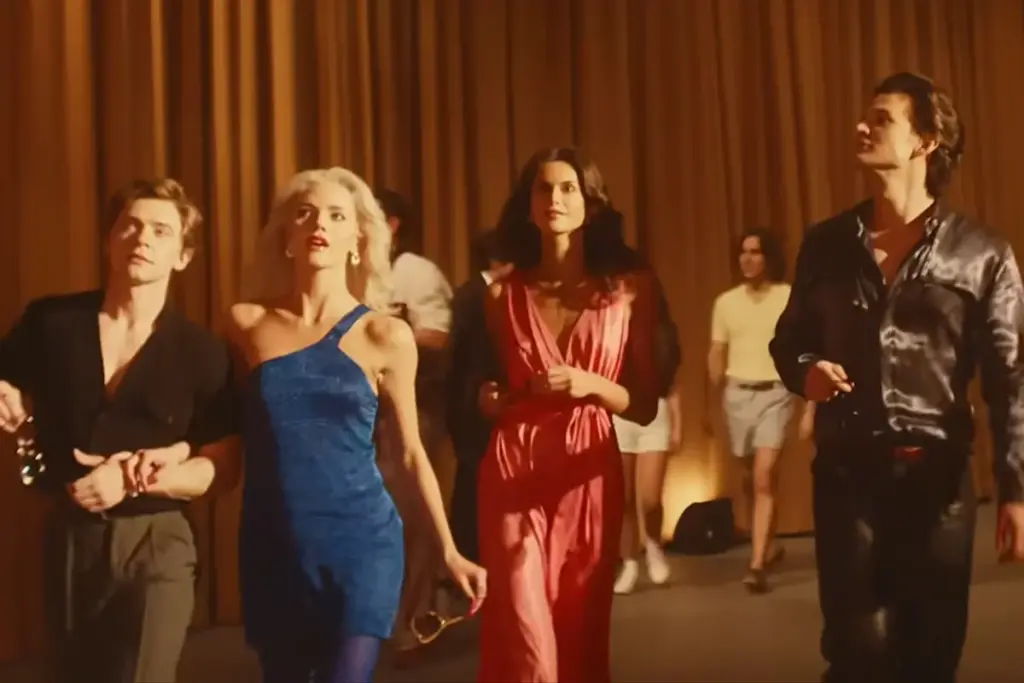
Currently streaming on Hulu, the episode shifts the narrative focus away from the atmospheric dread of the novel’s core plotlines and drops the teenage ensemble directly onto the soundstage of a fictional, neon-drenched 1980s dance program titled Dance Off. What begins as a seemingly innocuous adolescent excursion soon curdles into psychological warfare, clandestine affairs, and bloody murder.
For purists of Ellis’s original work, the detour may prove divisive. But for audiences willing to embrace Murphy’s penchant for heightened melodrama, biting satire, and escalating terror, “Murder on the Dancefloor” represents a masterclass in genre-bending television. Balancing the ticking-clock pressure of a live television broadcast with the lurking, insidious presence of the enigmatic serial killer known as "The Trawler," Episode 5 expands the scope of The Shards universe. It also brings enigmatic supporting players like Jordan Roth’s Steven into sharp, terrifying focus. As the series hurtles toward its mid-season milestones, this installment establishes that no character is safe, and no safe space—not even a cheerful, syndicated youth dance show—remains untouched by malice.
Detailed Chronology: The Chaos of Dance Off
The events of “Murder on the Dancefloor” unfold with a breathless, real-time urgency that mimics the high-stakes environment of a live studio broadcast. The premise centers on Debbie (played by Hayes Warner), an earnest teenager whose ultimate ambition is to capture the coveted title of “Groover of the Week.” For weeks, this honor has been tightly locked down by Cha Cha Rodriguez (Bella Valdes), an exceptionally talented and ruthlessly competitive dancer whose ambition matches the harsh, competitive ecosystem of the entertainment industry.
To offer moral support, Debbie ropes her inner circle into the studio audience. Bret (Igby Rigney), Susan (Kaia Gerber), and Robert (Homer Gere) dutifully tag along. Notably absent from the cheering section is Thom (Graham Campbell). The quintessential high-school jock is paralyzed by the fear that appearing as a spectator on a flamboyant, live-broadcast dance program might inadvertently damage his carefully curated masculine image and lead viewers to question his sexuality. His absence highlights the rigid, insecure social hierarchy that defines the youth culture of the era—a central thematic pillar of Easton Ellis’s original writing, even if the surrounding scenario is entirely fabricated for the screen.
Once inside the studio, the superficial glitz quickly gives way to dark, tangled undercurrents. It soon emerges that Cha Cha’s aspirations extend far beyond winning trophies. She is entangled in a high-stakes, illicit affair with the show’s married host, Tony Cruz (portrayed by Anthony Ramos). Seeking to legitimize their relationship and secure her future, Cha Cha confronts Tony backstage, dropping a bombshell: she is pregnant with his child and expects him to divorce his wife immediately.
As the dance competition reaches a fever pitch, the tension backstage boils over. The narrative intercuts the vibrant, energetic choreography on the soundstage with the claustrophobic, venomous dynamics happening just out of the camera’s view. By the time the credits roll, the celebratory atmosphere is shattered. Debbie stumbles into the ladies’ restroom, only to discover Cha Cha’s lifeless body, brutally murdered.
The immediate aftermath plunges the characters—and the audience—into a web of paranoia. Is Cha Cha the latest casualty of the elusive serial killer known as the Trawler? The suspicion is amplified by notable narrative absences; keen-eyed viewers will quickly note that Robert is conspicuously missing from the premises during the exact window of the murder. Alternatively, could a panicked Tony Cruz have silenced the pregnant dancer to protect his career and marriage? Or does the murder point to an entirely different perpetrator lurking within the studio’s labyrinthine backstage corridors?
Supporting Context & Production Metrics: Crafting a Movie Musical on Television
The genesis of “Murder on the Dancefloor” reflects the collaborative, boundary-pushing nature of The Shards’ writers’ room. According to executive producer Brad Simpson, the episode was born out of a desire to continually raise the stakes following the chaotic, book-accurate events of Episode 4, which centered on "Robert’s Party."
Speaking on the creative process behind the episode, Simpson revealed that Murphy walked into the writers’ room one day driven by a deep fascination with pop culture history. Murphy reminisced about the syndicated dance programs that dominated television formatting throughout the 1970s and 1980s—cultural staples that commanded appointment viewing and fostered a potent mix of envy and desire among adolescent viewers.
"What if our team went on that show together?" Murphy posited to the creative team, as recounted by Simpson. The vision quickly evolved from a simple nostalgic homage into a darker exploration. The creators wanted to lean into the inherent "dirtiness" and backstage toxicity of the television industry while keeping the existential dread of a serial killer stalking the periphery alive.
Achieving this atmospheric balancing act required immense logistical coordination. Broadway titan Jordan Roth, who takes center stage in this episode as the mysterious corporate player Steven, noted the staggering scale of the production. Because of the sheer number of moving parts, complex blocking, and densely populated ensemble scenes, the production required nearly eight weeks of shooting just for this single episode.
"It really is a movie musical," Roth observed, describing the intricate dance of characters constantly circling one another on set. The result is an episode that marries the hyper-stylized visual grammar of Ryan Murphy’s previous hits—such as Glee or American Horror Story—with the gritty, psychological ambiguity of 1980s neo-noir.
Official Statements and Character Evolutions: Entering the World of Steven
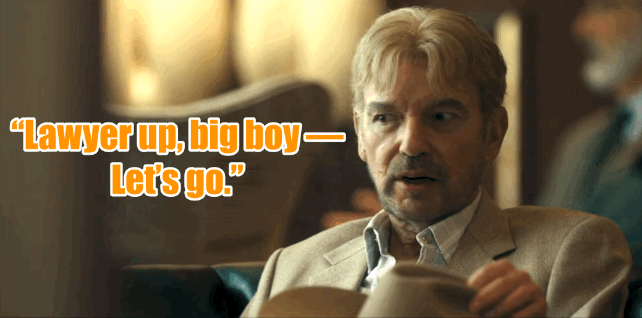
While the murder mystery drives the plot forward, Episode 5 serves as a crucial character showcase for Steven, a figure whose opaque motivations and predatory charm have loomed over the series thus far. Up to this point, Steven’s true nature has been heavily implied through corporate subservience and subtle manipulation. In "Murder on the Dancefloor," however, the mask begins to slip.
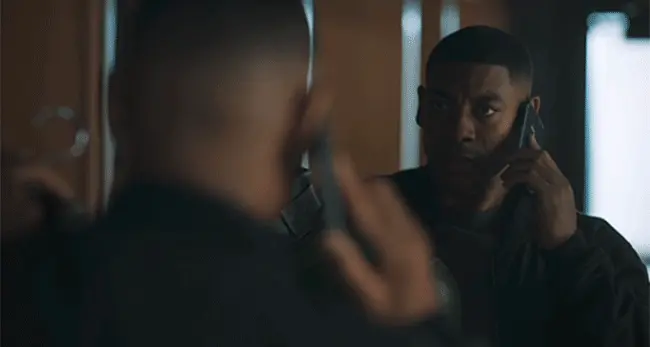
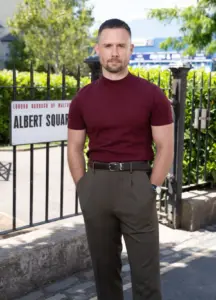
While his boss, Terry Schaffer (Wes Bentley), is distracted by the day-to-day chaos of the production, Steven seizes the opportunity to weave a web of influence. He charms the show’s substance-addicted producers, preys upon the vulnerabilities of teenage adult-film actor Ryan (Daniel Dale), and actively sabotages the youth social dynamics by gleefully casting his vote over the phone for Susan—Debbie’s fiercest rival—driving a deeper wedge into the already fractured friend group.
Jordan Roth, renowned primarily for his monumental contributions to Broadway production as a seven-time Tony Award winner, relished the opportunity to fully embrace Steven’s dark charisma. Discussing Steven’s vindictive campaign against Debbie, Roth didn’t mince words about his character’s morality.
"She’s nasty," Roth said of Debbie. "Steven gives Debbie every opportunity, and she keeps being nasty, and so, ‘Don’t cross me.’ That’s the lesson."
Roth elaborated that this episode represents the definitive moment where the audience truly gets to witness "Steven in all of his Steven-ness." Far from a simple corporate ladder-climber, Steven functions as a social predator who evaluates the people around him strictly through the lens of utility and deference. His petty cruelty toward a teenager—and his ease in navigating the seedier underbelly of the television and entertainment worlds—suggests that he may be far more dangerous than the kids realize. Roth’s warning is clear: other characters in The Shards would do well to watch their step around him.
Future Outlook: The Road Ahead After "Murder on the Dancefloor"
By blending a sensational murder mystery with institutional critique and pitch-black adolescent comedy, “Murder on the Dancefloor” marks a definitive turning point for The Shards. The episode successfully proves that the series is willing to break away from the confines of Bret Easton Ellis’s source material to forge its own distinct television identity. By transplanting the anxieties of Southern California youth into the high-pressure, artificial environment of a live television broadcast, the creative team has widened the aperture of the narrative.
As the body count rises and the psychological walls close in on Bret, Susan, Robert, and their peers, the comfortable boundaries separating the safe world of television from the violent reality of the Trawler have been obliterated. Furthermore, with Steven stepping out of the corporate shadows and into active malice, the series has introduced a human antagonist whose psychological threat rivals that of any masked serial killer.
Fans won’t have to wait long to see how the fallout from Cha Cha Rodriguez’s brutal murder impacts the wider narrative. The Shards is set to return next Wednesday, August 26, with a double-episode event featuring Episodes 6 and 7, ominously titled “Homecoming Part 1” and “Homecoming Part 2.” If "Murder on the Dancefloor" is any indication, the homecoming festivities are bound to be dripping in drama, betrayal, and likely, a significant amount of blood.