For decades, the fitness industry has operated under a high-octane, high-impact dogma: if you aren’t dripping sweat from pounding pavement, gasping for air after box jumps, or punishing your joints with plyometric burpees, you aren’t truly doing cardio. Running, sprinting, and leaping have long been positioned as the gold standards for cardiovascular health, fat loss, and endurance.
However, this relentless emphasis on high-impact movement leaves a massive demographic behind. Individuals managing chronic joint pain, recovering from injuries, navigating postpartum rehabilitation, or simply stepping into a fitness routine for the very first time often find themselves alienated—or worse, injured—by conventional aerobic programming. Enter the paradigm shift of low-impact cardio.
Far from being a watered-down alternative for the frail or out-of-shape, low-impact cardio is a scientifically robust, highly effective methodology for elevating heart rate, torching calories, and building aerobic capacity without the damaging mechanical stress placed on the ankles, knees, hips, and spine. According to Cara Bonney, CSCS, CPT, a certified strength and conditioning specialist and Club Pilates Master Trainer in Melbourne, Florida, low-impact movements get your blood pumping while protecting your foundational architecture.
This comprehensive report explores the mechanics of low-impact cardiovascular training, the surprising bone-density benefits that set it apart from no-impact alternatives like cycling or swimming, and actionable strategies for scaling bodyweight exercises to maximum intensity—all without a single jump.
Detailed Chronology: The Evolution of Aerobic Training and the Rise of Low-Impact Fitness
To understand why low-impact cardio is experiencing a modern renaissance, it helps to examine how the fitness landscape has evolved over the past half-century.
Phase 1: The High-Impact Aerobics Boom (1970s–1990s)
The modern fitness era was born on the back of the 1970s running boom, quickly followed by the high-impact aerobics craze popularized by figures like Jane Fonda. Characterized by explosive movements, rhythmic jumping, and high-speed choreography, these workouts promised rapid cardiovascular gains. Unfortunately, they also delivered an epidemic of shin splints, plantar fasciitis, meniscus tears, and lower back issues. The prevailing cultural sentiment was "no pain, no gain"—a philosophy that treated joint discomfort as an inevitable badge of honor.
Phase 2: The Extremes of Cross-Training and Plyometrics (2000s–2010s)
As the fitness industry matured, the introduction of high-intensity functional training (HIFT) and extreme conditioning programs pushed the boundaries of human performance even further. Plyometrics, box jumps, and sprinting became ubiquitous in mainstream gym programming. While these modalities produced impressive athletic feats, they also widened the injury gap for everyday practitioners. Weekend warriors and aging populations found themselves sidelined by overuse injuries, searching for sustainable ways to stay active.
Phase 3: The Functional Fitness and Longevity Revolution (Present Day)
Today, the conversation has shifted dramatically from short-term aesthetic vanity to long-term healthspan and functional longevity. Fitness experts, physical therapists, and biomechanists now recognize that exercise sustainability is the single most critical factor in lifetime health outcomes. If a workout routine causes chronic joint pain, an individual is statistically likely to abandon it entirely.
This realization has elevated low-impact cardio from a niche recommendation for rehabilitation patients to a premier training modality for athletes of all levels. By leveraging compound movements, variable tempos, and clever biomechanical adaptations, modern trainers have proven that you can achieve a maximal cardiovascular stimulus without subjecting your skeletal system to the hammer-like blows of traditional high-impact exercise.
Supporting Context & Metrics: Why Low-Impact Does Not Mean Low-Result
Skeptics often wonder: Can you genuinely achieve a true cardiovascular workout without jumping or running? The physiological answer is an emphatic yes. To understand why, we must examine how the cardiovascular system responds to exercise demand.
The Mechanics of Heart Rate Elevation
Your heart does not inherently know whether your feet are leaving the ground. It simply responds to the oxygen and energy demands of working skeletal muscle. When you engage large muscle groups—such as the glutes, quadriceps, lats, and core—your body requires a massive, immediate influx of oxygenated blood.
By designing movements that incorporate large, compound muscle groups or sweeping upper-and-lower-body combinations, you force blood to circulate systemically rather than pooling in the lower extremities. As Bonney points out, this systematic muscular recruitment is the secret sauce: "That’s going to get the heart rate elevated."
The Hidden Bone-Density Advantage
One of the most compelling arguments for low-impact cardio over zero-impact alternatives (such as cycling, rowing, or swimming) lies in skeletal health.
To maintain or build bone mineral density, human bones require mechanical loading and stress. Historically, high-impact exercises like running and jumping were prescribed for this purpose because the jarring forces stimulate osteoblast activity (bone-building cells). However, high-impact forces are precisely what individuals with early-stage osteoporosis, arthritis, or joint sensitivities must avoid.
Low-impact exercises offer the perfect physiological middle ground. Because your feet maintain contact with the floor, your skeletal system still experiences weight-bearing mechanical stress, but without the high-amplitude shock waves characteristic of running.
"Impact exercises are good for bone health, like preventing or improving osteoporosis, but it doesn’t always have to be high-impact," explains Bonney. "As long as you have some contact with the ground, you’re stressing your bones, which is ultimately what makes them stronger."
This makes low-impact training uniquely superior to swimming or cycling for individuals seeking to protect their joints while actively investing in skeletal density.
Official Expert Insights: Scaling Intensity Without the Joint Strain
Transitioning from a high-impact mindset to a joint-friendly paradigm requires a shift in exercise execution. You do not need impact to build intensity; you simply need a strategic approach to biomechanics, tempo, and programming.
1. Compound Movements and Full-Body Integration
The fastest way to spike your heart rate without jumping is to increase the active surface area of your body during a movement.
The Strategy: Combine lower-body movements with sweeping upper-body gestures. For example, pair a standard bodyweight squat with an aggressive overhead reach, or execute high-knee marches accompanied by expansive, rhythmic arm swings.
The Result: This forces the heart to pump blood across a greater physical span, rapidly driving up your beats-per-minute (bpm) without placing shear stress on your knees or ankles.
2. Modifying Traditional High-Impact Moves
You don’t have to abandon classic conditioning exercises entirely; you just need to modify their execution profile.
Burpees: Instead of jumping your feet back into a high plank and leaping explosively into the air, step your feet back one at a time into the plank position, and stand up smoothly without the jump.
Jumping Jacks: Swap the explosive jump-landing for a rhythmic, lightning-fast lateral foot tap, paired with full-range arm circles. You preserve the cardiovascular metabolic demand while reducing joint impact forces to near zero.
3. Dynamic Loading Through Planks
Planks are universally recognized as an elite core-strengthening movement, but when performed dynamically, they double as an incredible cardiovascular and muscular endurance challenge.
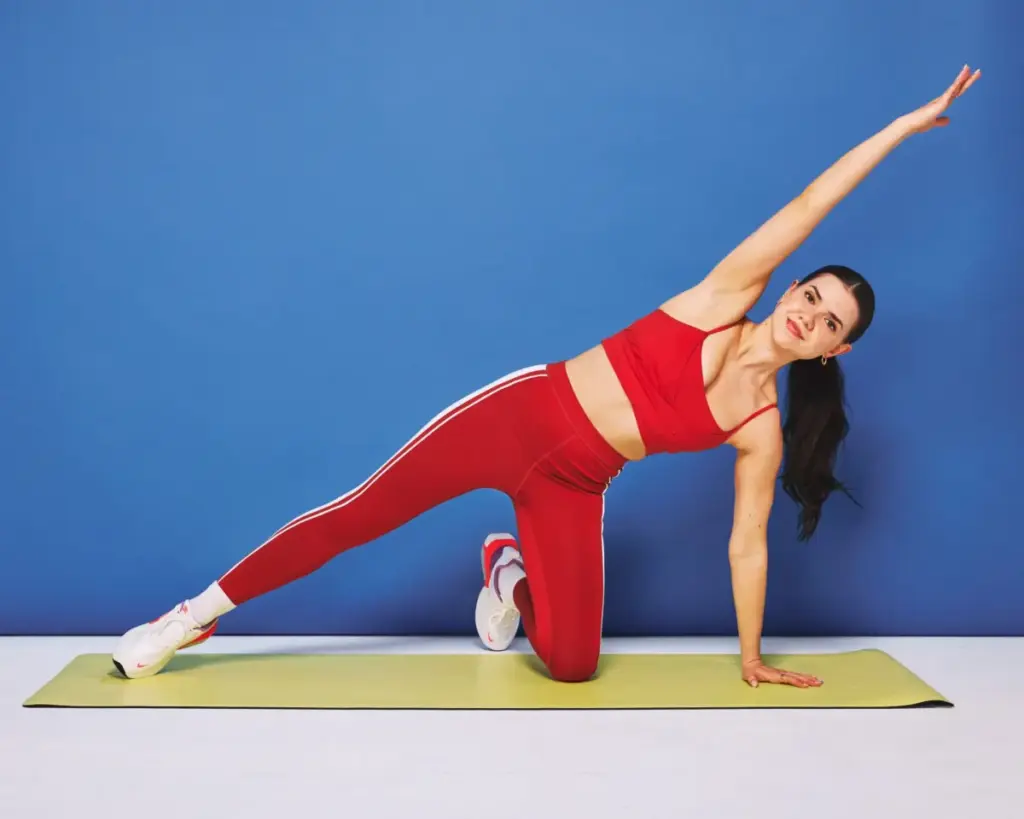
Shoulder Taps: Holding a high plank and alternately tapping opposite shoulders challenges upper-body stability and core anti-rotation while forcing the heart and lungs to work overtime to supply oxygen to stabilizing muscles.
Twisting Knee Drives: Weaving a cross-body knee drive into your plank fires up the obliques and jacks up your breathing rate.
Lateral Plank Walks: Walking your hands and feet sideways introduces lateral stability challenges that comprehensively stress multiple muscle groups simultaneously.
4. Manipulating Tempo and Programming
Intensity is not solely determined by how high you jump; it is equally governed by speed and density.
Tempo: By accelerating the speed at which you perform a low-impact exercise while rigorously maintaining immaculate form, you keep continuous tension on the cardiovascular system.
Work-to-Rest Ratios: Structuring your workout with longer continuous work intervals (e.g., 45 to 60 seconds of movement) and shorter, tightly managed rest periods ensures your heart rate remains elevated throughout the entire session.
Future Outlook: The Sustainable Future of Fitness
As the global fitness consumer becomes more sophisticated, the cultural narrative surrounding workouts is undergoing a profound transformation. The old-school mentality of enduring joint pain as a prerequisite for physical fitness is rapidly giving way to a longevity-first mindset.
The future of training belongs to sustainability. Exercise programs that can be performed consistently across a lifespan—from adolescence through older adulthood—will dominate the health and wellness space. Low-impact cardio stands at the very forefront of this movement.
By proving that sweat, cardiovascular conditioning, fat loss, and bone density maintenance do not require a punishing assault on the skeletal system, low-impact training empowers millions of people to take control of their health. Whether you are dealing with cranky knees, recovering from a sports injury, or simply establishing a fitness habit for the first time, low-impact bodyweight cardio offers a safe, accessible, and infinitely scalable path forward.
Your Actionable Next Steps
You don’t need a gym membership, fancy machines, or expensive equipment to get started. Bookmark this methodology, curate a selection of your favorite joint-friendly bodyweight movements—such as deep squat reaches, step-back burpees, high-knee marches, and dynamic plank variations—and string them together into a high-density, low-impact circuit. Your heart, lungs, and joints will thank you.