Executive Overview
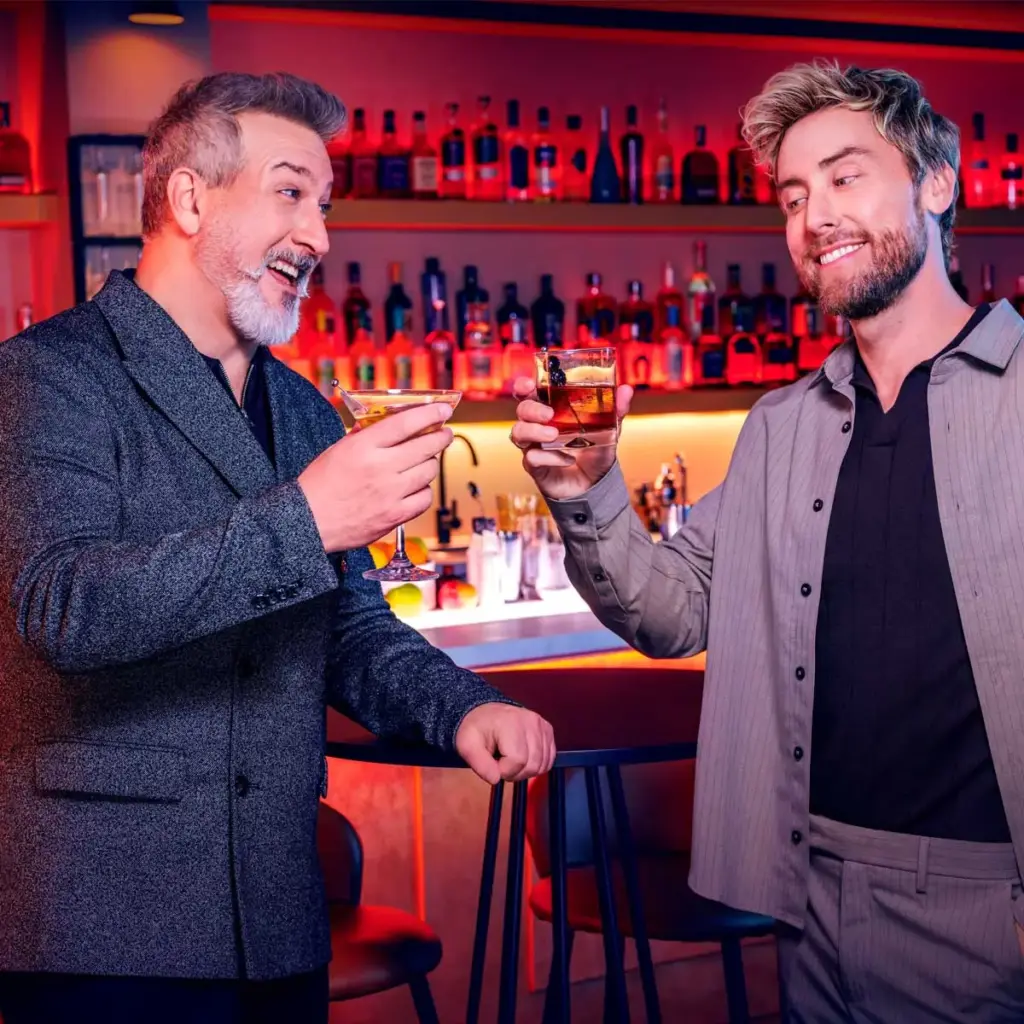
The intersection of reality television and pop-culture nostalgia delivered a high-proof punch this August as E! Entertainment debuted its fast-paced mixology competition series, Cocktail Wars. Hosted by pop royalty Joey Fatone and Lance Bass—two core members of the iconic turn-of-the-millennium boy band *NSYNC—the show brings together top-tier bartending talent to battle for supremacy, cash prizes, and mixological prestige.
During the show’s high-stakes, two-episode premiere event, the hosting duo was joined by resident mixology expert Melissa Brooke and a rotating panel of special celebrity guest judges, including E!’s Justin Sylvester and The Real Housewives of New Jersey star Melissa Gorga. Together, the panel evaluated inventive, boundary-pushing potables before crowning the first two round champions: Washington, D.C.-based mixologist Jon Schott and Tyler Kent of New York City’s legendary Marie’s Crisis.
Yet, for legions of pop culture enthusiasts tuning in, the excitement of Cocktail Wars offers a dual narrative. While the series celebrates modern craft cocktail culture—complete with recipes for winning concoctions like Schott’s rum-based "Staycation"—it also serves as a cultural portal back to the zenith of late-90s and early-2000s boy band mania. As Fatone and Bass display their effortless, decades-honed chemistry on screen, viewers are reminded of the tumultuous, fascinating, and frequently dark machinery that forged *NSYNC into a global phenomenon.
This report provides an exhaustive, dual-track analysis: an investigative look into the mechanics of E!’s new breakout hit, paired with a retrospective deconstruction of the *NSYNC phenomenon, drawing from historical archives, explosive interviews, and the true cost of pop superstardom under the thumb of manager Lou Pearlman.
Detailed Chronology: From Orlando Rehearsals to Global Superstardom
To understand the dynamic shared by Fatone and Bass on Cocktail Wars, one must examine the improbable, calculated sequence of events that brought *NSYNC together in the mid-1990s—a timeline fraught with corporate manipulation, near-misses, and fierce camaraderie.
The Genesis: Orchestrating a Phenomenon
The blueprint for *NSYNC began when Chris Kirkpatrick, then 23, was passed over for a spot in the Backstreet Boys—marking the first instance of infamous impresario Lou Pearlman capturing boy band lightning in a bottle. Undeterred, Kirkpatrick expressed interest in forming another group. Pearlman agreed to finance the venture on the condition that Kirkpatrick handle the heavy lifting of recruiting members.
Kirkpatrick scoured demo tapes and television broadcasts, ultimately setting his sights on The All-New Mickey Mouse Club alum Justin Timberlake, who was just 14 years old. Timberlake immediately recommended his fellow former Mouseketeer, 19-year-old JC Chasez.
The search shifted to Orlando, Florida, where Kirkpatrick tapped Joey Fatone, an 18-year-old performer he knew from Universal Studios. Needing a deep bass voice to round out the ensemble, Timberlake’s vocal coach pointed them toward Mississippi native Lance Bass. On October 1, 1995, Pearlman and Timberlake famously picked up the 16-year-old Bass at the Orlando airport in a black Rolls Royce.
The Missing Piece: Jason Galasso’s Near-Miss
History could have looked remarkably different. Bass was not actually the original fifth member of *NSYNC. That distinction belonged to Jason Galasso, who knew Fatone from high school choir and crossed paths with Chasez through The Mickey Mouse Club circle.
After nailing a rendition of Boyz II Men’s "End of the Road," Galasso was in. However, he was simultaneously fielding offers from a three-man R&B/hip-hop group called Unreal. When Pearlman introduced European-style techno demos to the table, Galasso grew hesitant.
The tipping point arrived when Galasso consulted a lawyer regarding the competing contracts. While the agreement with the rival trio was standard issue, Pearlman had written himself into the *NSYNC contract as a de facto sixth member, making the legal document "thick as a phone book." Unwilling to sign away his future to Pearlman’s predatory terms, Galasso walked away, paving the way for Bass to step in—and for the group to temporarily adopt the nickname "Lanceton" as a joke to ensure their name spelled out the acoustic acronym Justin, Chris, Joey, Jason, and JC (adjusted to include Bass).
Supporting Context & Metrics: The No Strings Attached Era and Financial Realities
While international success arrived swiftly—particularly in Germany, where the group dominated European magazine covers on the back of Max Martin-penned hits like "I Want You Back"—their American breakthrough was engineered by a serendipitous television broadcast. When the Backstreet Boys turned down a gig with the Disney Channel, the network aired NSYNC in Concert repeatedly throughout 1998, turning cable television into the launchpad for their domestic dominance.
The Economics of Exploitation
Despite selling millions of records and filling stadiums, the members of *NSYNC were financially disenfranchised by Pearlman. In 1998, Pearlman flew the group and their families to Los Angeles for a check-presentation party, handing out bonuses of just $10,000 apiece.
"I was in the biggest band in the world and selling millions of records… but I can’t even afford my apartment in Orlando. I couldn’t even get a car," Lance Bass recalled to ABC News’ 20/20 in 2019.
Realizing that Pearlman’s contracts siphoned off one-sixth of all group profits under the guise of management and production fees, the band took matters into their own hands. They severed ties with Pearlman and jumped ship to Jive Records. This triggered a massive $150 million lawsuit from Pearlman’s TransContinental Records and RCA parent BMG Entertainment. The group countersued for $25 million, eventually settling out of court in 1999 to secure the most vital asset of all: the legal right to retain the name *NSYNC.
Charting the Success
The subsequent sophomore album, appropriately titled No Strings Attached (March 2000), served as a metaphorical and literal battle cry against their corporate shackles.
- First-Week Sales: 2.4 million copies sold in its debut week.
- Day-One Sales: 1.1 million copies sold on the first day alone.
- Tour Revenue: At their peak during the 2001 PopOdyssey tour, the group was grossing an estimated $2.5 million per night.
Official Statements & Industry Perspectives
The journey from pop idols to mature television hosts has been marked by deep reflection. During the press rollout for E!’s Cocktail Wars, Fatone and Bass spoke candidly about how their decades of shared history inform their current professional endeavors.
Discussing the atmosphere on set, Fatone noted how their background in high-pressure live performance directly translates to hosting a chaotic, fast-paced culinary competition. "When you’ve spent your formative years performing in front of 50,000 screaming fans while dodging pyro and moving stage platforms, running a mixology show feels like second nature," Fatone joked.
Meanwhile, Jon Schott, the winner of the show’s inaugural episode, expressed awe over his victory in a post-show confessional:
"Winning feels unreal. When I was bartending when I was 21, people would ask me what my real job is and I’ll tell you right now: This is what I do. I win Cocktail Wars, I make drinks and I have fun doing it."
Future Outlook: Cocktail Wars and the Enduring Legacy of *NSYNC
As Cocktail Wars continues its weekly broadcasts on Tuesday nights at 10 p.m. on E!, the series is carving out a lucrative niche in the unscripted television landscape. By pairing the charisma of Fatone and Bass with high-concept culinary challenges, the network has tapped into a winning formula that blends lifestyle entertainment with millennial comfort viewing.
For fans eager to recreate the winning libations at home, official recipes from the show—including Jon Schott’s rum-based Staycation (featuring a distinct cold pistachio cream foam) and Tyler Kent’s Almond Sail Away—are made available weekly via official distribution channels.
As for the enduring legacy of *NSYNC, the bond between the members remains stronger than ever. Despite the trials of the Lou Pearlman era, the physical injuries (such as Fatone’s severe leg laceration during a 2001 stage mishap), and the ultimate disbandment following their 2002 hiatus, Fatone and Bass continue to prove that true showmanship—much like a well-crafted cocktail—only improves with time.
Tune in to E! each Tuesday as Cocktail Wars continues to raise the bar, serving up equal parts liquid creativity and timeless entertainment.