Executive Overview
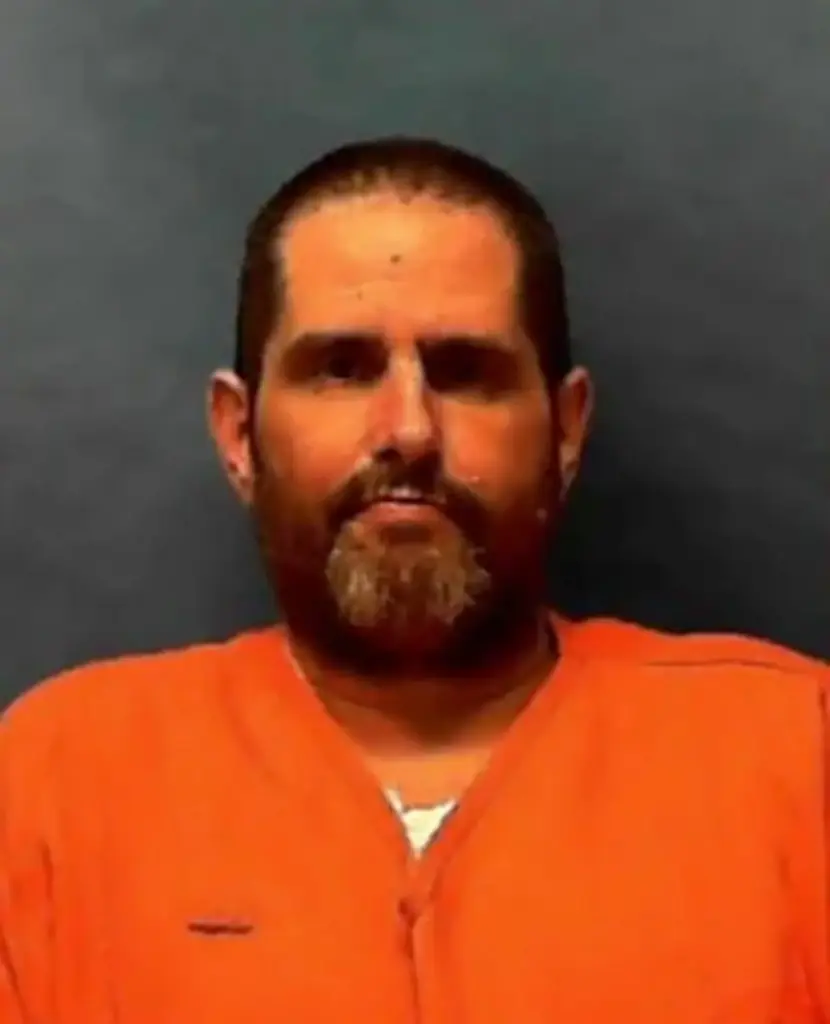
STARKE, Fla. — In what has become a routine, albeit grim, milestone in Florida’s aggressive capital punishment campaign, 61-year-old William Frances Silvia Jr. was executed by lethal injection on Tuesday evening at the Florida State Prison near Starke. Silvia, infamously dubbed the "cookout killer" for a brutal 2006 attack that shattered a family gathering, was pronounced dead at 6:11 p.m. EST. His execution marks the 13th time the state of Florida has carried out a death sentence in 2026 alone, highlighting an ongoing, relentless acceleration of capital punishment that has outpaced the rest of the United States.
Silvia’s execution underscores a broader judicial and societal shift in the Sunshine State. With Tuesday’s lethal injection, Florida accounts for more than half of the 22 total executions carried out nationwide so far this year. This aggressive trajectory follows a historic 2025, during which Florida led the nation by executing 19 individuals—representing a state record since the reinstatement of the death penalty in 1976.
Legal challenges up to the final hours failed to halt the execution. Silvia’s defense team argued administrative inadequacies regarding state-provided legal counsel, but the Florida Supreme Court ultimately declined to intervene. As state officials prepare for additional executions in the coming weeks, civil rights advocates, legal scholars, and proponents of capital punishment remain locked in an intense debate over the velocity, frequency, and moral implications of Florida’s capital punishment apparatus.
Detailed Chronology: The 2006 Orlando-Area Tragedy and Legal Odyssey
The Incident
The tragic chain of events that culminated in Silvia’s execution began nearly two decades ago. In 2006, Silvia and his wife, Patricia Silvia, were separated. Following the separation, Patricia had moved in with her mother, Betty Woodard, at a residence in the Orlando area.
Court records indicate that deep-seated marital discord and resentment drove Silvia to purchase a shotgun earlier that year. On a fateful day in 2006, Patricia and her family were gathered outside in the backyard for a family cookout—a routine, domestic scene that would soon turn into a horrific crime scene.
Silvia arrived unannounced at the property, confronting his estranged wife in front of family members. According to police and trial testimonies, an argument ensued as Silvia attempted to force a reconciliation. When Patricia rebuffed his advances and refused to return with him, Silvia walked out to his truck, retrieved the newly purchased shotgun, and returned to the gathering.

Without warning, Silvia opened fire on the assembled family. He shot and killed his estranged wife, Patricia Silvia, and turned the weapon on his mother-in-law, Betty Woodard, severely wounding her. The rapid escalation from a domestic dispute to mass gunfire left the family traumatized and sent shockwaves through the local community.
The Trial and Re-Trials
Silvia was subsequently apprehended, charged, and tried for his crimes. In 2008, an Orange County jury convicted him of first-degree murder in the death of Patricia Silvia and attempted first-degree murder in the shooting of Betty Woodard. The trial concluded with a recommendation for death, leading a judge to formally sentence Silvia to death row.
However, Silvia’s journey through the appellate courts was protracted, shaped by evolving standards and landmark rulings regarding Florida’s death penalty statutes. Years after his initial condemnation, his death sentence was vacated following appellate rulings that challenged how Florida juries previously recommended death sentences—specifically regarding the requirement for unanimous jury verdicts.
In 2018, Silvia was granted a new sentencing phase. Despite arguments from the defense highlighting his potential for rehabilitation and mitigating factors from his background, a new jury and judge again determined that the severity of the crime warranted capital punishment. Silvia was re-sentenced to death, cementing his status as a permanent resident of Florida’s death row until his appeals were finally exhausted in mid-2026.
The Final Legal Challenges
In the days leading up to his execution, Silvia’s appellate attorneys made desperate attempts to stay the execution. Their primary argument centered on the operational capacity and structural burdens of the Capital Collateral Regional Counsel (CCRC), the state-funded agency tasked with providing legal representation to indigent death row inmates.
Silvia’s defense argued that the CCRC was fundamentally overburdened and incapable of providing effective, timely assistance of counsel because its attorneys were simultaneously managing heavy caseloads for other condemned prisoners facing imminent execution dates. Legal representatives argued that this systemic strain violated Silvia’s constitutional rights to adequate representation.

The Florida Supreme Court, however, dismissed the argument, clearing the final judicial hurdle preventing the Florida Department of Corrections (FDOC) from carrying out the governor’s death warrant.
Supporting Context & Metrics: Florida’s Capital Punishment Surge in 2026
Silvia’s execution is not an isolated event; rather, it is a prominent data point in an unprecedented wave of state-sponsored executions that has positioned Florida at the epicenter of the American death penalty debate.
Execution Protocol
According to the Florida Department of Corrections, capital punishment in the state is executed via a standardized three-drug lethal injection protocol. The procedure involves:
- A sedative (traditionally etomidate or midazolam) designed to render the inmate unconscious.
- A paralytic agent (such as rocuronium bromide) to immobilize the skeletal muscles.
- A potassium chloride solution to safely and permanently stop the heart.
The entire procedure inside the execution chamber at Florida State Prison is tightly regulated, witnessed by designated media representatives, state officials, and members of the victims’ families. Silvia was pronounced dead at precisely 6:11 p.m., just eleven minutes after the intravenous lines began administering the drugs.
National and State Statistics
To understand the magnitude of Florida’s current capital punishment trajectory, criminologists often look at broader historical context:
- National Standing: Out of the 22 executions carried out across the entire United States so far in 2026, Florida alone is responsible for 13 of them—amounting to approximately 59% of the national total.
- The 2025 Precedent: This year’s pace directly builds upon a historic 2025, during which the U.S. saw a total of 47 executions. Florida led all 27 death-penalty states by executing 19 individuals—setting a new state record since the U.S. Supreme Court reinstated capital punishment in the landmark 1976 Gregg v. Georgia decision.
- Double Executions: Illustrating the state’s uncompromising momentum, last July Florida executed two prisoners on a single day, marking the first time any U.S. state had executed multiple inmates within a 24-hour window in nearly a decade.
Official Statements and Institutional Perspectives
The execution of William Frances Silvia Jr. has elicited starkly contrasting reactions from state leaders, corrections officials, and human rights advocates.

The Florida Department of Corrections issued a concise, formal statement following the conclusion of the procedure:
"The sentence of the State of Florida v. Inmate William Frances Silvia, Jr. was carried out at 6:11 PM EST on Tuesday at the Florida State Prison near Starke, in accordance with the warrant signed by the Governor."
Proponents of the state’s aggressive execution schedule argue that these measures provide long-overdue closure to the families of victims who have endured decades of legal limbo. Supporters maintain that swift and decisive justice deters violent crime and upholds the rule of law, particularly in heinous cases involving premeditated domestic violence and the taking of innocent lives.
Conversely, anti-death penalty organizations and human rights watchdogs have voiced deep alarm over Florida’s accelerating pace. Critics argue that rushing executions risks irreversible miscarriages of justice, noting that legal representation for indigent inmates is frequently compromised by institutional underfunding and overwhelming workloads. Furthermore, global human rights groups continue to lobby against capital punishment entirely, classifying lethal injection as cruel and unusual punishment while pointing to racial and socioeconomic disparities embedded within the American criminal justice system.
Future Outlook: Upcoming Executions on Florida’s Death Row
There is no indication that the state’s execution calendar will slow down as the year progresses. The Florida Department of Corrections has already scheduled subsequent executions for the coming month of September, signaling that the current wave of capital punishment will continue unabated.
Upcoming Dates and Cases:
- September 1, 2026: Harold Gene Lucas, 74, is scheduled to be executed. Lucas was convicted of the brutal, fatal shooting of a 16-year-old girl who rejected his romantic advances, a crime that also left two of her friends seriously wounded.
- September 10, 2026: Daniel Owen Conahan Jr., 72, is scheduled to face lethal injection. Conahan was convicted of the kidnapping and strangulation of a man he had paid to pose for nude photographs. Beyond his specific conviction, law enforcement authorities have long suspected Conahan of being a serial killer responsible for multiple similar homicides committed throughout southwest Florida during the 1990s.
As these dates approach, legal defense teams are expected to file eleventh-hour appeals, challenging everything from the mental competency of the aging inmates to the pharmacological integrity of the lethal injection drugs. However, given the track record of the Florida courts and the executive branch’s firm commitment to enforcing capital sentences, the state appears poised to continue its historic and controversial path through the remainder of 2026.