Executive Overview
In the sprawling, hyper-accelerated ecosystem of modern internet culture, the boundary separating real-world tragedy from digital surrealism is frequently porous. Few digital phenomena illustrate this grim reality more starkly than the online lifecycle of Patrick Crusius, the perpetrator of the 2019 El Paso Walmart mass shooting—an act of domestic terrorism that ranks among the deadliest targeted attacks against Latinos in modern American history. While Crusius currently languishes behind bars, serving multiple consecutive life sentences in federal prison, his digital avatar has achieved an entirely separate, deeply entrenched existence within the subterranean channels of imageboards and meme forums.
Known colloquially across internet subcultures as "Chudjak"—a derivative of the ubiquitous "Wojak" line-drawing format—Crusius’s likeness has spent half a decade serving as the visual anchor for ironic doomerism, right-wing extremism, and the viral catchphrase: "The West has fallen. Billions must die."
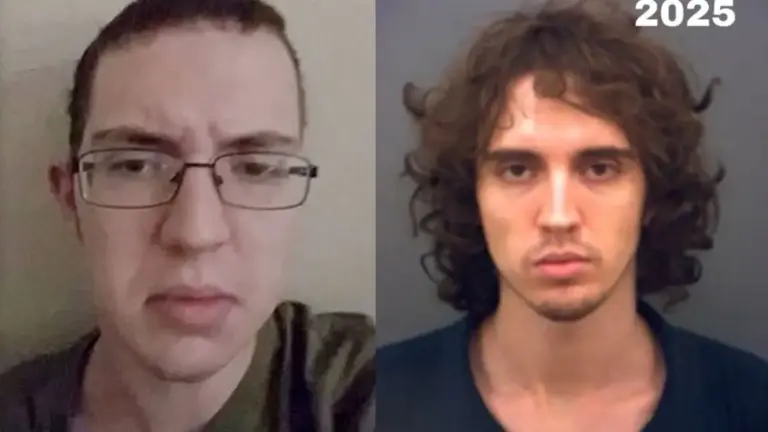
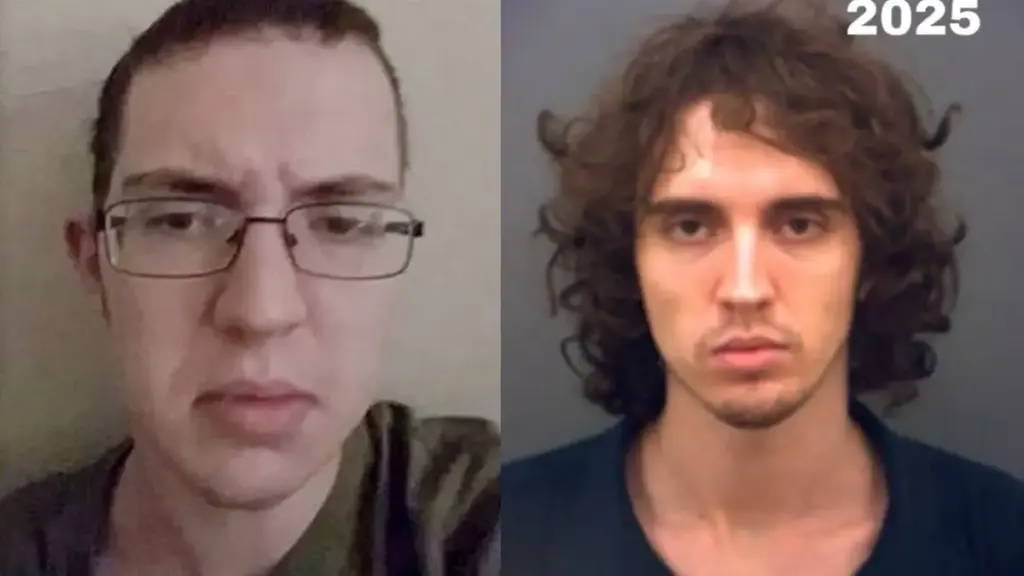
This surreal disconnect between a mass murderer and his digital caricature was violently upended in late April 2025. A leaked federal mugshot, purportedly acquired via a Freedom of Information Act (FOIA) request and disseminated across Reddit and X (formerly Twitter), revealed a drastically altered physical appearance. Stripped of his iconic glasses, sporting longer curly hair, and wearing facial scruff, a surprisingly distinct iteration of Crusius sparked a wildfire of ironic commentary, dark humor, and bizarre cultural fascination online.
As the image racked up over 1.2 million views within forty-eight hours, internet commentators rushed to process the jarring visual update. Reactions ranged from absurd comparisons to indie rock musicians to reflections on the strange ways the internet abstracts human trauma into digital currency. This investigative report details the chronology of the leak, examines the mechanics of how real-world horrors are digested by meme culture, and analyzes the profound ethical questions raised when the face of mass murder undergoes a digital "glow-up."
Detailed Chronology: From FOIA Leak to Viral Phenomenon
The resurrection of Patrick Crusius within the mainstream digital consciousness did not happen by accident; it was the product of a carefully documented chain of archival leaks, platform moderation actions, and algorithmic amplification.
The Reddit Leak (April 25, 2025)
The sequence of events began on April 25, 2025, within the niche and often morbidly curious Reddit community /r/masskillers. A user operating under the handle /u/uncanealguinzaglio uploaded what they claimed was a previously unseen federal mugshot of Crusius. According to the original poster, the photograph had been obtained through a Freedom of Information Act (FOIA) inquiry.
The image immediately drew intense scrutiny. Unlike the gaunt, startled, bespectacled mugshot captured in the immediate aftermath of the August 2019 massacre, this new photograph showed a noticeably matured Crusius with longer, curly locks, absent eyewear, and soft facial scruff.
Sensing a violation of content policies regarding the glorification or promotion of violent criminals, Reddit’s automated moderation systems and human administrators quickly scrubbed the post, deleting it from /r/masskillers. However, in the age of data mirroring, digital preservation, and screenshots, total containment on the internet is an impossibility. The image had already broken containment, migrating from restricted subreddits onto open-access platforms.
The Propagation and Clarification of Dates
As the image began circulating on X, digital sleuths and internet historians sought to establish its provenance. Concerns arose regarding whether the image truly represented Crusius’s condition in 2025 or an earlier milestone in his judicial proceedings.
The original uploader clarified the timeline in subsequent forum discussions, stating that the photo dated back to July 2023—a period when Crusius formally pleaded guilty to federal hate crime and firearms charges. The uploader noted:
"From when he plead guilty to federal charges. circa July of 2023. It was not taken BY the federal government it was taken by El Paso holding him for them. For some reason. But it still came from his federal charges and not state."
The X Explosion (April 27, 2025)
The tipping point from a niche archival find to a mainstream internet meme occurred on Sunday, April 27, 2025. X user @TruueDiscipline posted the leaked photograph alongside a classic internet framing device: "This is what chudjak looks like now… feel old yet?"
The juxtaposition of a notorious white supremacist mass shooter with a nostalgic, low-stakes internet meme format triggered a massive algorithmic response. Within forty-eight hours, the post accumulated over 1.2 million views and secured more than 17,000 likes. The digital machinery of irony poisoning had successfully seized hold of the asset, transforming a federal inmate’s legal documentation into interactive entertainment.
The Reality Check and Subsequent Court Appearances
As the "Feel Old Yet?" post went viral, a secondary wave of discourse emerged. Users noted the chronological discrepancy between the 2023 mugshot and Crusius’s actual appearance in 2025.
To correct the record, @TruueDiscipline and other users resurfaced documentation from Crusius’s court hearings on April 21, 2025, where he faced state capital murder proceedings in El Paso. In these more recent, authoritative courtroom photographs, Crusius appeared once again with short hair, trimmed facial hair, and standard prescription glasses—dispelling the romanticized, unkempt aesthetic that had briefly captivated the internet’s ironic imagination.
Supporting Context & Metrics: The Anatomy of the "Chudjak" Meme
To fully comprehend why a change in a mass murderer’s hairstyle could generate millions of impressions, one must understand the unique semiotics of the "Chudjak" meme and its place within contemporary internet subcultures.

The Birth of "Chudjak" on 4chan /pol/
The Chudjak meme traces its origins to late 2019, shortly after the El Paso Walmart shooting, on 4chan’s politically charged /pol/ (Politically Incorrect) board. The board has long served as an incubator for extreme political ideologies, nihilism, and dark humor.
The template itself is a specialized mutation of the classic "Wojak" (or "Feels Guy") drawing style. Characterized by deep nasolabial folds, harsh glasses, an aggressive frown, and an unkempt demeanor, the Chudjak visual style was explicitly mapped onto the public perception of Patrick Crusius.
Over the years, the character evolved beyond its initial direct reference, becoming a generalized archetype representing a bitter, terminally online, misanthropic internet reactionary.
"The West Has Fallen. Billions Must Die."
Accompanying the Chudjak visual format is a recurring textual mantra: "The West has fallen. Billions must die."
This phrase functions as a hyper-exaggerated parody of sincere neo-fascist and accelerationist rhetoric found on fringe message boards. By repeating apocalyptic declarations over trivial daily inconveniences or minor cultural shifts, internet users weaponized irony as a defense mechanism.
The meme became a foundational pillar of "doomer" culture, acting as a recognized shorthand for online extremist hysteria. Through endless iteration, replication, and parody, the internet effectively decoupled the drawing from its grim historical origin, abstracting a real-world tragedy into an interactive pixelated symbol.
Quantitative Engagement Metrics of the 2025 Viral Wave
The April 2025 resurgence demonstrated the staggering velocity of meme-driven engagement networks on X and Reddit:
- Initial Reach: The core viral post by
@TruueDisciplinecrossed 1.2 million impressions within 48 hours. - User Interaction: Over 17,000 direct likes, alongside thousands of reposts, quote-tweets, and threaded discussions.
- Secondary Derivative Content: Dozens of specialized reaction memes, including comparisons to indie rock musicians, satirical romance commentary, and meta-commentary panels (such as the classic "Cereal Guy" spitting out his breakfast in disbelief).
Cultural Analysis: Irony Poisoning and the Aestheticization of Tragedy
The viral reaction to Crusius’s leaked photograph offers a sobering case study in what sociologists and digital media theorists refer to as irony poisoning—a cultural condition wherein individuals use extreme cynicism and humor to process information that is too grim, complex, or morally heavy to confront sincerely.
The "Glow-Up" Paradox
When internet users reacted to Crusius’s 2023 mugshot by joking about a "glow-up" or comparing him to an "indie rock singer," they were engaging in a well-documented psychological coping mechanism: absurdism.
By flattening the horrific reality of a mass murder into superficial aesthetic critiques (evaluating a terrorist’s haircut, facial hair, or perceived attractiveness), users strip the individual of their terrifying agency. In the digital ether, a mass shooter ceases to be a human monster responsible for twenty-three deaths and dozens of injuries; he becomes a static character in an ongoing, multi-year digital soap opera.
The Perils of Decontextualization
This phenomenon underscores the dangers of total decontextualization in modern media consumption. As information migrates from courtrooms and FOIA databases into imageboards and algorithmic feeds, historical context is systematically stripped away. Younger internet users interacting with the Chudjak meme frequently possess little to no knowledge of the real-world El Paso shooting, treating the character as a purely fictional, abstract internet lore piece.
When real-world photographic proof collides with this fictionalized digital lore—revealing that the "character" is a living, breathing human being aging in a federal penitentiary—it creates a cognitive dissonance that the internet resolves through laughter, memes, and dark satire.
Future Outlook: The Permanent Digital Shadow
As Patrick Crusius serves out his multiple life sentences, the digital artifacts of his crime will continue to haunt the periphery of internet culture. The 2025 mugshot leak demonstrates that even years after legal proceedings conclude, the appetite for archival data within online subcultures remains insatiable.
Going forward, platform moderation teams face an ongoing game of whack-a-mole regarding leaked federal documents, FOIA requests, and inmate imagery. Algorithms designed to catch explicit glorification of violence often struggle to parse the nuanced, multi-layered irony of meme subcultures, where outright praise is frequently masked as absurd parody.
Ultimately, the viral resurgence of the Chudjak inspiration serves as an unsettling reminder of the digital age’s most profound psychological hurdle: our collective capacity to transform human suffering into infinite, scrollable content. Until digital literacy catches up with algorithmic acceleration, the internet will likely continue to mine its darkest histories for the next fleeting, irony-poisoned punchline.