Executive Overview
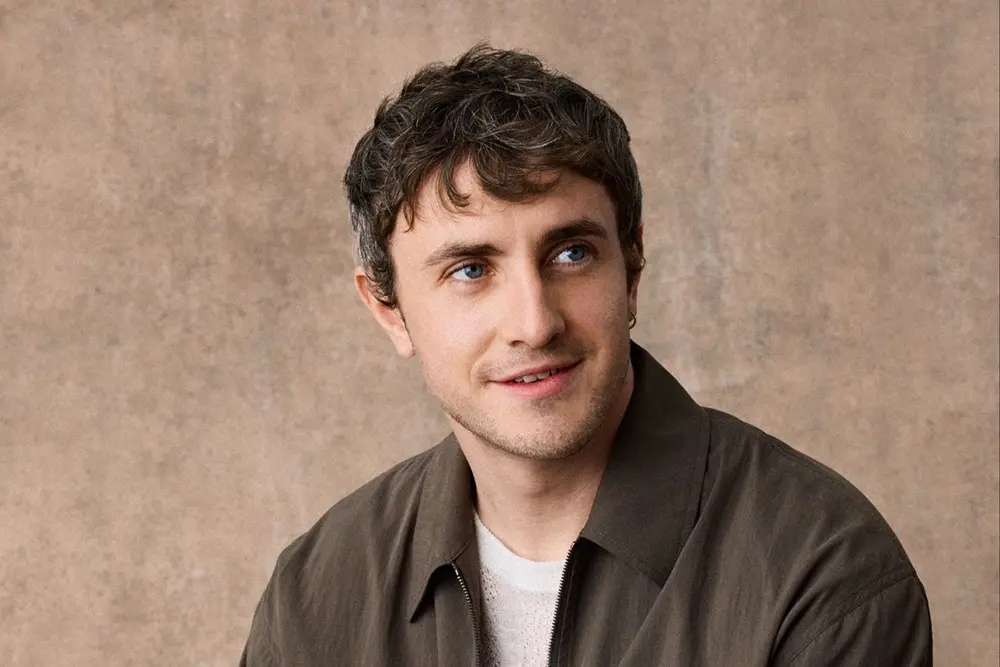
In a significant show of support for grassroots Irish cinema, Academy Award nominee Paul Mescal has boarded the psychological thriller Mary Is Missing as an executive producer. Best known for his meteoric rise in films like Aftersun and Gladiator II, alongside high-profile attachments to Sam Mendes’ upcoming multi-part Beatles biopic project and persistent industry rumors linking him to the James Bond franchise, Mescal is lending his considerable global star power to a profoundly local endeavor.
Mary Is Missing is an Oscar-qualifying short film rooted deeply in Maynooth, the historic university town in County Kildare where Mescal was raised. Directed by Aisling Byrne and produced by Killian Coyle for Run of the Mill and Arcade Film, the project is notable not only for its atmospheric tension and psychological depth but also for its groundbreaking production model. Developed through an intensive, collaborative 12-week writers’ room alongside learning-disabled artists, the film challenges traditional industry hierarchies and centers marginalized voices at the very heart of the creative process.
For Mescal, the decision to step into an executive producer role was driven by a desire to champion distinctively original Irish storytelling and ensure that a boundary-pushing narrative finds the widest possible international audience. By marrying high-caliber talent with an ethos of radical inclusivity, Mary Is Missing positions itself as a compelling beacon for the future of independent filmmaking, proving that boundary-pushing cinema often emerges from the most localized and collaborative of origins.
Detailed Chronology & Narrative Plot
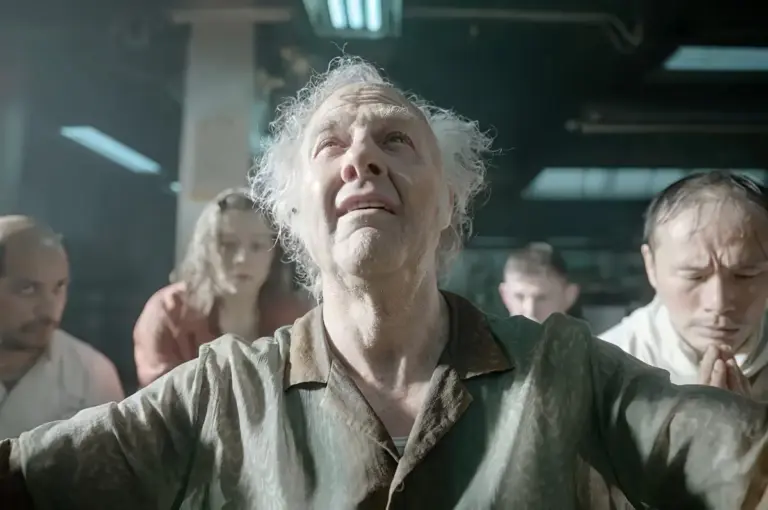
The narrative architecture of Mary Is Missing is constructed around a tense, unsettling disappearance that ripples through a community care facility. The story opens at the Yellow Tree Day Service, where a dedicated care worker named Mary vanishes without a trace under mysterious circumstances. The sudden disappearance shatters the relative calm of the service, prompting an official police investigation.
Enter Garda Foley, the investigating officer tasked with unraveling the labyrinthine mystery of Mary’s whereabouts. Upon arriving at the Yellow Tree Day Service, Foley quickly realizes that the attendees are among the last people to have laid eyes on Mary, making them the investigation’s most critical—and perhaps unpredictable—witnesses.
As Garda Foley begins conducting interviews, the film shifts into a gripping psychological maze. The accounts provided by the service attendees begin to fracture, splintering into contradictory details and taking increasingly fantastical, surreal turns. Foley is forced to walk a knife-edge of deduction and empathy, trying to parse truth from fiction in real-time. He must ask the ultimate investigative questions: Are these witnesses simply telling the truth as they perceive it? Are they desperately protecting Mary from an unseen threat? Are they shielding themselves from culpability? Or is the underlying reality far more complicated, sinister, and layered than anyone could have initially anticipated?
This intricate plot unfolds through a meticulously assembled ensemble cast. Lloyd Cooney commands the screen as Garda Foley, flanked by professional actors Lauren Larkin and Craig Connolly, who portray the facility’s care workers, alongside supporting turns from Danny O’Connor, Clare Monnelly, and Kamilla Fenger.
However, the beating heart of the film belongs to its co-creators and performers from the learning-disabled community. Out of an expansive 19-member cast, thirteen roles are filled by artists with intellectual disabilities. This ensemble features Mark Smith, Derek McSweeney, Eoghan Ashe, Ella-Jane Moore, Jackie O’Hagan, John Egan, Keith Foley, Maurice Coll, Neil Coffey, Teresa Flood, Wesley Fairbrother, Lucy Smith, and Conor Begley. Their performances infuse the psychological thriller with an uncanny authenticity, grounding the film’s surreal narrative twists in deeply human, lived experiences.
Supporting Context & Metrics: A Collaborative Production Model
To fully understand the cultural and artistic weight of Mary Is Missing, one must examine the institutional and collaborative framework that brought it to life. The film is the product of an innovative creative partnership between Run of the Mill—an organization renowned for empowering artists with intellectual disabilities in film and theatre—and Arcade Film.
Rather than utilizing a traditional top-down screenwriting model, the script for Mary Is Missing was forged in a 12-week writers’ room hosted by Run of the Mill. In this space, the learning-disabled ensemble members were not merely cast to perform pre-written lines; they were active, foundational architects of the story. The participants contributed vital ideas regarding character development, thematic arcs, psychological motivations, and plot progression. This collaborative genesis ensures that the film’s unique perspective is baked directly into its DNA, avoiding the tropes and superficial representations that too often plague depictions of neurodiversity in mainstream media.
The production also marks a triumphant continuation of an established, award-winning creative partnership between director Aisling Byrne and producer Killian Coyle. Mary Is Missing is their third consecutive Oscar-qualifying short film together, cementing their status as powerhouses in the contemporary Irish short film landscape.
Their previous collaborations have left an indelible mark on the international festival circuit:
- Headspace: Won the prestigious Grand Prix Irish Short at the Cork International Film Festival and proudly served as Ireland’s official short film candidate for the European Film Awards in 2023.
- Turnaround: Secured critical acclaim by winning qualifying awards at both the Galway Film Fleadh and the Foyle Film Festival, followed by an Irish Film and Television Academy (IFTA) nomination and a lucrative acquisition deal by streaming giant Disney+.
In addition to these shared projects, director Aisling Byrne’s individual portfolio boasts significant accolades. Her RTÉ and Ardan-commissioned short film Misread took home the Best Irish Short award at the Catalyst International Film Festival. Building on this unbroken chain of critical successes, Byrne, Coyle, and Arcade Film are currently leveraging the momentum of Mary Is Missing to develop Byrne’s debut feature-length film. The feature project has already cleared a major industry hurdle, securing a spot among the final ten projects selected for Screen Ireland’s competitive and prestigious Perspectives scheme.
Official Statements & Industry Reception
The announcement of Paul Mescal’s involvement has generated significant buzz across the international film community, transforming a heavily anticipated regional short into a global talking point. For Mescal, the project represents a rare chance to give back to the artistic community that nurtured his early creative instincts while championing an uncompromising piece of Irish cinema.
Reflecting on his first encounter with the film, Mescal articulated a profound admiration for its daring vision:
"There are films that remind you just how exciting cinema can be when it opens itself up to new voices. For me, ‘Mary is Missing’ is one of those films. It’s bold, surprising and unlike anything else I’ve seen, and what stayed with me most when I first saw it was the collaborative spirit behind it," Mescal shared.
He continued, emphasizing the authenticity woven into every frame: "The film has been shaped through the imagination and lived experience of artists with intellectual disabilities, and that originality is there in every frame. Knowing it was created in Maynooth, where I grew up, makes it feel especially close to home."
By stepping into the role of executive producer, Mescal’s strategic goal is clear: to leverage his considerable platform—built upon critical darlings and blockbuster spectacles alike—to bridge the gap between niche independent art and mainstream visibility.
"My goal in coming on board is to help bring this film to the widest possible audience and champion such a distinctive piece of Irish filmmaking," Mescal added.
Industry insiders note that executive producer credits from A-list talent of Mescal’s caliber can be transformative for short-form cinema. Beyond providing immediate financial and logistical security, a high-profile attachment acts as a beacon for film festival programmers, international distributors, and Academy voting blocks, significantly enhancing the film’s trajectory through the rigorous Oscar-qualification circuit.
Future Outlook & The Evolution of Irish Cinema
The partnership between a global breakout star like Paul Mescal and boundary-pushing independent creators like Aisling Byrne, Killian Coyle, and Run of the Mill signals a maturing, confident era for the Irish film industry. Ireland has long punched above its weight class in global cinema, celebrated for its rich literary tradition, emotive storytelling, and striking visual landscapes. However, the rise of collaborative, inclusive production models—exemplified by the writers’ room that birthed Mary Is Missing—suggests that the future of Irish cinema lies not just in aesthetic excellence, but in democratization and narrative expansion.
As Mary Is Missing campaigns on the international festival circuit with its eyes firmly on the Academy Awards, its ripple effects are already being felt. For Run of the Mill, the project validates years of tireless advocacy and artistic development, proving that learning-disabled artists are capable of anchoring complex, genre-bending psychological thrillers with nuance, depth, and originality.
Concurrently, the success of Byrne and Coyle in transitioning from acclaimed shorts to feature-film development via Screen Ireland’s Perspectives scheme highlights a sustainable pipeline for domestic talent. With a debut feature on the horizon and an executive producer of Mescal’s stature championing their ethos, the creative team behind Mary Is Missing is poised to make a permanent imprint on the global cinematic landscape.
Ultimately, Mary Is Missing transcends the boundaries of a standard short film. It stands as a masterclass in community-driven art, a subversion of conventional thriller tropes, and a powerful reminder of what cinema can achieve when it dares to listen to new, unfiltered voices.