Executive Overview
The landscape of physical fitness is undergoing a profound structural shift. For decades, the conventional wisdom of strength training dictated that serious progress required a dedicated commercial gym membership. Heavy racks, expansive plate inventories, and specialized cable machines were viewed as non-negotiable prerequisites for hypertrophy and functional strength. However, macroeconomic pressures, urban migration patterns, and rapid advancements in fitness technology are challenging this long-standing paradigm.
At the forefront of this movement is the modern home gym ecosystem, anchored by space-efficient, high-capacity equipment designed to deliver commercial-grade performance in residential footprints. Among these innovations, adjustable dumbbells have emerged as the ultimate equalizer for home fitness enthusiasts. Offering a wide spectrum of resistance payloads within a single, compact footprint, these systems eliminate the traditional friction points of home workouts—namely, spatial constraints and exorbitant equipment costs.
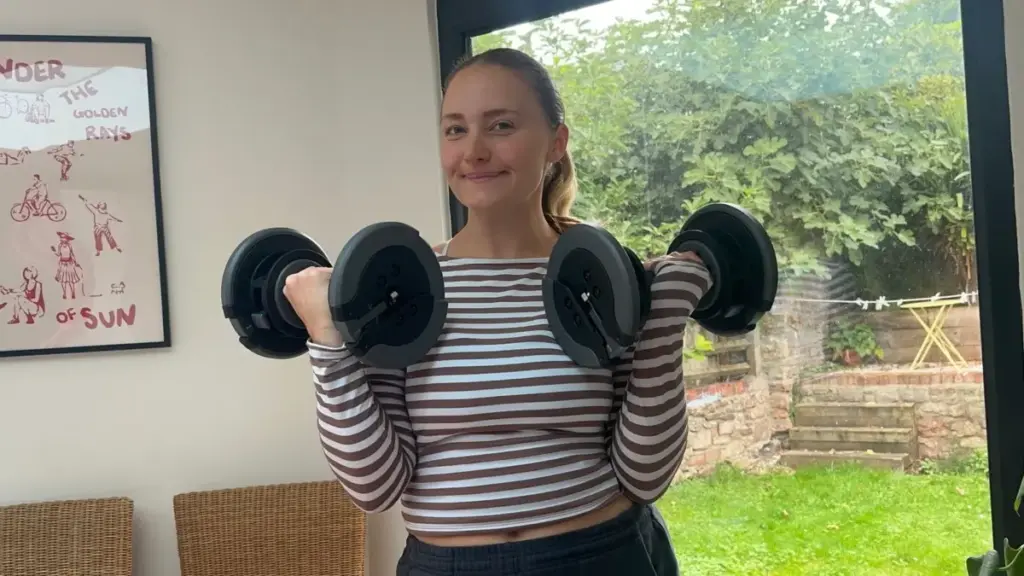
This report examines the real-world utility of transitioning from a traditional commercial gym to a home-based strength routine, utilizing a case study of the NordicTrack Select-A-Weight Adjustable Dumbbell system over a rigorous seven-week testing period. Through firsthand analysis, we explore the mechanics of progressive overload in constrained environments, evaluate the safety and durability of quick-adjustment mechanisms, and assess the broader financial and lifestyle implications of ditching the commercial gym membership in favor of a streamlined domestic training hub.
Detailed Chronology: The Transition from Commercial Facilities to Residential Training
Phase 1: The Catalyst for Change (The Urban Move)
The decision to pivot away from a traditional, established gym routine rarely happens in a vacuum. For seasoned strength athletes—particularly those with five or more years of consistent lifting experience—breaking away from a familiar environment can feel counterproductive. The infrastructure of a commercial facility provides an illusion of endless optionality: rows of fixed dumbbells, dedicated benches, and specialized apparatuses for every conceivable muscle group.
However, a recent relocation to a metropolitan center served as the primary catalyst for change. High-density urban living introduces a harsh reality: square footage comes at a premium. Installing a conventional rack of fixed-weight dumbbells—ranging from 5 to 50 pounds—requires dedicated floor space, heavy-duty storage racks, and structural floor considerations that are often impractical in modern apartments or multi-family residential buildings.
The core challenge was clear: How does one maintain a rigorous, progressive strength-training regimen at home without converting a living space into an industrial weight room? The solution demanded heavy, versatile resistance that could be instantly stowed away when not in use.
Phase 2: Equipment Selection and Integration
Following extensive market research into the burgeoning home fitness sector, the selection process zeroed in on the NordicTrack Select-A-Weight Adjustable Dumbbell system. Engineered to consolidate multiple pairs of traditional dumbbells into a single, cohesive unit, these systems utilize a pin-and-lever selection mechanism that allows users to rapidly modify the load without cluttering the training area.
Coincidentally, the timing of the acquisition aligned with promotional retail events—specifically Amazon’s Prime Big Deal Day—yielding a notable price reduction of nearly $80. While upfront equipment costs for premium adjustable dumbbells can be substantial compared to standard iron, amortizing the investment against recurring monthly gym membership fees rapidly establishes a compelling economic rationale.
Upon unboxing and initial integration into the domestic workspace, the physical footprint immediately proved its worth. Rather than dominating a room, the compact storage cradles occupied a minimal corner, presenting an unobtrusive profile that blended seamlessly into a residential environment.
Phase 3: The Seven-Week Operational Trial
To evaluate the true efficacy of the NordicTrack system, a strict seven-week protocol was implemented, characterized by exclusive at-home strength training. Over this period, performance metrics, ease of use, mechanical reliability, and physiological adaptations were closely monitored.
- Frequency and Consistency: One of the most immediate, unquantified benefits observed during the trial was a dramatic increase in workout frequency. Eliminating travel time to and from a commercial facility—along with the friction of waiting for equipment during peak hours—transformed strength training from a scheduled logistical task into a seamless daily habit.
- Mechanical Performance: Switching weights between sets is historically the Achilles’ heel of adjustable dumbbell systems. Complex screw-on collars or fragile plastic dials often disrupt the flow of a workout. The NordicTrack system’s mechanical adjustment lever demonstrated high reliability, allowing for weight transitions in a matter of seconds. Throughout the seven-week trial involving high-velocity compound movements and traditional isolation exercises, the locking pins maintained structural integrity with zero instances of weight plates slipping or shifting.
- Physiological Progression: Operating comfortably within a sub-maximum threshold—specifically maintaining working sets at or below 30 pounds per dumbbell—highlighted the ample headroom remaining in the weight stack. This ensures that the equipment can easily accommodate future strength gains without necessitating an immediate secondary purchase.
Supporting Context & Metrics: The Ergonomics and Economics of Home Strength Training
Ergonomic Evaluation: Comfort, Grip, and Safety
No piece of fitness equipment is without its design compromises. While the mechanical performance of the NordicTrack adjustable dumbbells earned high marks, prolonged usage revealed specific ergonomic nuances worthy of analysis.
The primary critique centers on the width of the handle grips. Because adjustable systems must accommodate internal locking mechanisms, guide rods, and secure housing channels, the handle geometry is inherently bulkier than a standard, slim-profile commercial steel dumbbell. For users with smaller hand spans, this added width requires a conscious adjustment in grip strategy.
However, this design characteristic inadvertently serves as a functional benefit: the wider diameter places a heightened demand on forearm activation and grip endurance. Over the course of the seven-week trial, this translated to noticeable improvements in grip strength—a foundational metric that underpins performance in deadlifts, pull-ups, and heavy carries.
The Mathematics of Progressive Overload at Home
A common skepticism surrounding home fitness equipment is its limitations regarding progressive overload—the gradual increase of stress placed upon the body during resistance training. Critics often argue that home setups lack the incremental weight steps required to drive continuous muscle adaptation.
The NordicTrack system dismantles this limitation by offering fine-tuned weight increments. By enabling users to incrementally scale resistance without massive leaps, the system supports the fundamental laws of hypertrophy:
- Mechanical Tension: Delivered through stable, balanced weight distribution that mimics traditional cast iron.
- Metabolic Stress: Achieved through uninterrupted supersets and drop-sets, made frictionless by the rapid-change levers.
- Progressive Overload: Facilitated by a generous maximum weight capacity per dumbbell that accommodates intermediate to advanced training phases.
Financial Analysis: Commercial Gym vs. Home Investment
To understand the broader economic impact of transitioning to a home gym ecosystem, we must examine the total cost of ownership (TCO) over a multi-year horizon.
| Expense Category | Commercial Gym Membership | Home Gym Setup (Adjustable Dumbbells) |
|---|---|---|
| Upfront Cost | $0 to $100 initiation fee | $300 – $600 (One-time equipment purchase) |
| Recurring Costs | $40 – $150 per month ($480 – $1,800+ annually) | $0 |
| Time Cost | Travel, parking, waiting for equipment (3-5 hrs/week) | Zero commute |
| Long-Term Value | Depreciating asset (returns nothing) | Retained asset with years of functional lifespan |
When factoring in inflation, annual membership price hikes, and the hidden costs of transit, purchasing a high-end set of adjustable dumbbells pays for itself within the first six to twelve months of consistent use.
Official Perspectives and Industry Insights
Fitness equipment manufacturers and sports science researchers have increasingly turned their attention to the structural evolution of domestic workouts. Industry data indicates a permanent shift in consumer behavior following global disruptions in recent years, with a sustained preference for hybrid or entirely home-based fitness solutions.
According to leading biomechanics specialists, the psychological barrier to entry for strength training drops significantly when the equipment is physically accessible within the living environment. "The best workout routine is not necessarily the most complex one found in a multi-million-dollar facility; it is the one that an individual can execute consistently and safely over years," notes a prominent sports conditioning analyst.
Furthermore, product safety standards for adjustable fitness gear have tightened considerably. Modern manufacturing processes now employ reinforced steel pins, high-impact thermoplastic housings, and double-lock safety systems to ensure that consumer-grade adjustable dumbbells meet or exceed the safety thresholds previously reserved for heavy-duty commercial environments. This engineering rigor directly correlates with the flawless safety record observed during extended field tests, where structural integrity remained uncompromised under dynamic loading.
Future Outlook: The Evolution of the Residential Training Ecosystem
As we look toward the future of health and wellness, the boundaries separating commercial fitness spaces from residential environments will continue to blur. Several key trends are poised to shape the next decade of strength training:
- Smart Integration: The integration of digital tracking sensors into adjustable weight systems will become standard. Future iterations will likely feature embedded accelerometers and Bluetooth connectivity to automatically log reps, sets, and exact weight loads, feeding performance data directly into fitness tracking applications.
- Materials Science Innovations: Manufacturers will increasingly utilize advanced carbon-fiber composites and aerospace-grade alloys to reduce the physical dimensions of adjustable dumbbells while expanding their maximum payload capacity. This will solve lingering ergonomic concerns, such as handle width, without sacrificing durability.
- Democratization of Strength: As high-density housing continues to expand globally, the demand for hyper-efficient exercise equipment will surge. Adjustable weights represent the vanguard of a movement that ensures physical fitness remains accessible, regardless of geographic location, spatial limitations, or economic barriers to commercial gym access.
Conclusion
The transition from a commercial gym to a streamlined home setup powered by adjustable dumbbells is more than a temporary adaptation to an urban move—it is a masterclass in efficiency, consistency, and long-term financial pragmatism. As demonstrated by a rigorous seven-week operational trial, modern adjustable weights provide the mechanical stability, safety, and scalable resistance required to drive continuous physical progress. For anyone seeking to break free from the recurring costs and logistical friction of traditional gym memberships, investing in high-quality home training infrastructure is no longer a compromise; it is an upgrade.