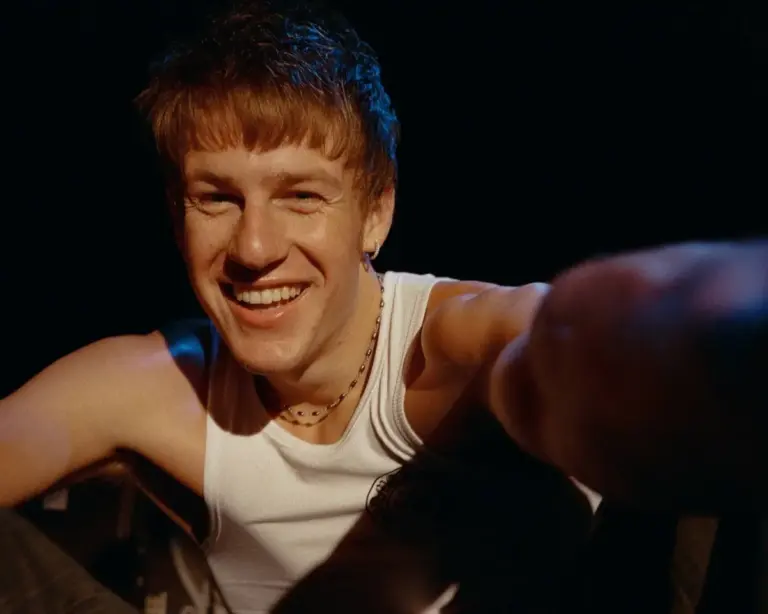
Executive Overview
The landmark 30th season of NBC’s powerhouse vocal competition The Voice delivered one of its most emotionally resonant and surprising moments during Monday night’s Blind Auditions. Competing for a spot on the coveted coaching panels of Kelly Clarkson, Adam Levine, Queen Latifah, and Riley Green, 25-year-old vocalist Dakota Cohen stepped onto the stage with a bold, high-risk song choice: a melancholy, stripped-down piano rendition of Black Sabbath’s classic 1972 ballad, "Changes."
The performance proved to be a masterclass in vocal restraint and emotional storytelling. Although it took nearly the entirety of the song for the coaches to turn, the suspense culminated in a dramatic dual-chair pivot from Adam Levine and Riley Green. Praise poured in immediately from the panel—with Queen Latifah hailing the performance as "astounding" and "insane," and Green commending the strategic perfection of the song choice.
Ultimately, Cohen’s audition transcended a routine television competition appearance. It became a touching tribute to the late, legendary Ozzy Osbourne—who passed away in July 2025 at the age of 76—and cemented a full-circle moment for Cohen, who revealed a prior chance encounter with Levine years earlier. As The Voice marches deeper into its historic 30th season, Cohen’s audition stands as an early frontrunner for the season’s most memorable musical translation, highlighting the timeless power of rock history intersecting with modern vocal artistry.
Detailed Chronology of the Blind Audition
The atmosphere inside The Voice studio on Monday, October 5, was thick with anticipation as the Season 30 Blind Auditions continued. Coaches Kelly Clarkson, Adam Levine, Queen Latifah, and Riley Green were actively filling the final slots on their respective rosters, pushing contestants to demonstrate both raw technical ability and distinct artistic identity.
Stepping into the spotlight was 25-year-old Dakota Cohen. Eschewing the typical Top 40 pop hits or modern radio anthems that often dominate reality singing competitions, Cohen opted for a daring, unconventional canvas: "Changes," originally released on Black Sabbath’s 1972 studio album Vol. 4. Stripped of heavy guitars and the dense production of the original rock arrangement, Cohen approached the piece as a delicate, piano-driven lament.
For the first half of the performance, the stage remained silent and the four red chairs remained locked forward. The stylistic choice to hold back vibrato and emotional peaks created an intense psychological tension within the room. However, the understated delivery required immense vocal control—a subtlety that gradually began to work its magic on the coaching panel.
As the song approached its final verses, Maroon 5 frontman Adam Levine slammed his button, quickly followed by country artist Riley Green. The last-second turns sent a surge of energy through the audience.
Instantly, the post-performance critique transformed into a high-stakes recruiting battle. Queen Latifah was the first to voice her awe, describing the performance as "astounding" and "insane." Riley Green doubled down on the sentiment, praising Cohen’s creative instincts: "The song choice for me says so much… That’s instantly something out of the gate."
Levine, displaying an aggressive and immediate competitive streak, jumped in to claim credit for his rapid button-pressing. "That’s instantly something out of the gate; before I even heard you sing a note, I want you on my team," Levine argued, drawing a direct parallel between Cohen’s vocal timbre and the raspy, emotive textures of pop-rock superstar Miley Cyrus. He delivered the sealing pitch by telling her, "I just love what you’re out here doing, and I do believe this is your home."
The decision ultimately boiled down to a choice between Green and Levine. In a surprising twist, Cohen revealed that her choice of Team Adam was predated by a serendipitous encounter years earlier. According to Cohen, she had once run into Levine at a local restaurant, where she spontaneously sang Maroon 5’s "Sunday Morning" and received an encouraging thumbs-up from the pop-rock icon. The full-circle moment sealed her allegiance, cementing her place on Team Adam for the remainder of the season.
Supporting Context & Metrics: The Legacy of "Changes"
The emotional weight of Cohen’s performance cannot be separated from the recent, monumental history surrounding the song and its original creator. "Changes" occupies a unique space in rock history. Written and recorded for Black Sabbath’s 1972 record Vol. 4, the track marked a radical departure for the heavy metal pioneers, replacing their signature doom-laden guitar riffs with a melancholic mellotron and piano arrangement that showcased Ozzy Osbourne’s surprising vulnerability as a balladeer.
Decades later, the song experienced a major resurgence in 2003 when Osbourne re-recorded it as an emotional duet with his daughter, Kelly Osbourne. That iteration struck a chord with a younger generation, ultimately climbing to the No. 1 spot on the U.K. Singles Chart and proving the composition’s cross-generational appeal.

The song took on an even heavier, more poignant meaning in the wake of recent events. In July 2025, the music world mourned the passing of Ozzy Osbourne at age 76, following a legendary farewell concert tour with Black Sabbath. The loss of the "Prince of Darkness" prompted an immediate wave of global retrospection, sending classic Sabbath tracks back onto the Billboard charts. Notably, "Changes" debuted at No. 42 on Billboard’s Hot Rock & Alternative Songs chart following his passing.
By choosing to perform "Changes" during primetime television in late 2025, Dakota Cohen tapped directly into this collective cultural grief. The performance functioned not merely as a vocal showcase, but as a respectful, timely homage to a titan of rock and roll. The song’s inherent themes of loss, transformation, and regret resonated deeply with viewers, elevating the audition from a standard reality TV segment to a moving tribute that underscored the enduring relevance of Osbourne’s catalog.
Official Statements and Coaching Dynamics
Season 30 of The Voice has introduced a refreshed, highly dynamic coaching lineup that blends seasoned franchise veterans with fresh perspectives. Featuring Kelly Clarkson, Adam Levine, Queen Latifah, and Riley Green, the current panel has been praised by critics for its diverse musical backgrounds and fierce, yet respectful, competitive banter.
Following the audition, the coaches elaborated on why Cohen’s performance resonated so deeply within the professional context of the show:
- Adam Levine on Song Selection and Vocal Identity:
"The song choice for me says so much. That’s instantly something out of the gate; before I even heard you sing a note, I want you on my team… I just love what you’re out here doing, and I do believe this is your home."
- Queen Latifah on Artistic Impact:
Assessing the sheer shock value of Cohen’s vocal control, Latifah labeled the moment "astounding" and "insane," highlighting how few modern artists possess the courage to strip an arrangement down to absolute minimalism on a competitive stage.
- Riley Green on Strategic Execution:
Praising the artistic risk-taking, Green noted that the "perfect song choice" separated Cohen from the conventional pop-belt contestants who typically populate the preliminary rounds of the competition.
The chemistry between Levine—returning with his trademark intensity—and newcomers like Queen Latifah and Riley Green has injected a renewed sense of unpredictability into Season 30. Coaches are no longer relying solely on standard vocal acrobatics; instead, they are hunting for distinctive sonic identities and artists capable of translating classic, legacy material into contemporary relevance.
Future Outlook: What’s Next for Dakota Cohen and Season 30
As The Voice Season 30 continues to broadcast its weekly episodes on Mondays and Tuesdays at 8 p.m. ET on NBC (with next-day streaming available on Peacock), the spotlight shifts heavily to Team Adam and the progression of Dakota Cohen.
Winning a Blind Audition with a legendary Black Sabbath track sets an exceptionally high bar. Industry analysts and fans alike are now questioning how Cohen will adapt her understated, piano-ballad style to the high-pressure environments of the upcoming Battle Rounds and Knockouts. Will she continue to mine the classic rock and alternative archives for hidden gems, or will Team Adam push her toward contemporary indie-pop landscapes reminiscent of the Miley Cyrus comparisons drawn by her coach?
Furthermore, Cohen’s addition to Team Adam strengthens Levine’s roster as he fights to dominate the milestone 30th season against formidable teams mentored by Clarkson, Latifah, and Green. If Cohen can maintain the delicate balance of emotional vulnerability and precise vocal delivery that defined her rendition of "Changes," she possesses all the necessary ingredients to advance deep into the live shows.
Ultimately, Dakota Cohen’s audition will be remembered as a defining highlight of Season 30—a moment where television, raw talent, and rock history converged to remind audiences why The Voice continues to capture the cultural imagination week after week.