Executive Overview
It is one of modern grooming’s most enduring paradoxes: the absolute best hair days—characterized by an elusive, enviable tousle—invariably occur when one has abandoned all styling ambitions and remains safely sequestered at home with nowhere to go. Achieving an authentically "effortless" look on command often feels like chasing a phantom. Traditional styling techniques frequently yield results that look overly manicured, rigidly symmetrical, or aggressively forced.
However, the tides of red-carpet beauty are shifting. The era of the high-maintenance, uniform "Instagram curl" is giving way to a more organic, lived-in aesthetic that celebrates imperfection, individuality, and ease.
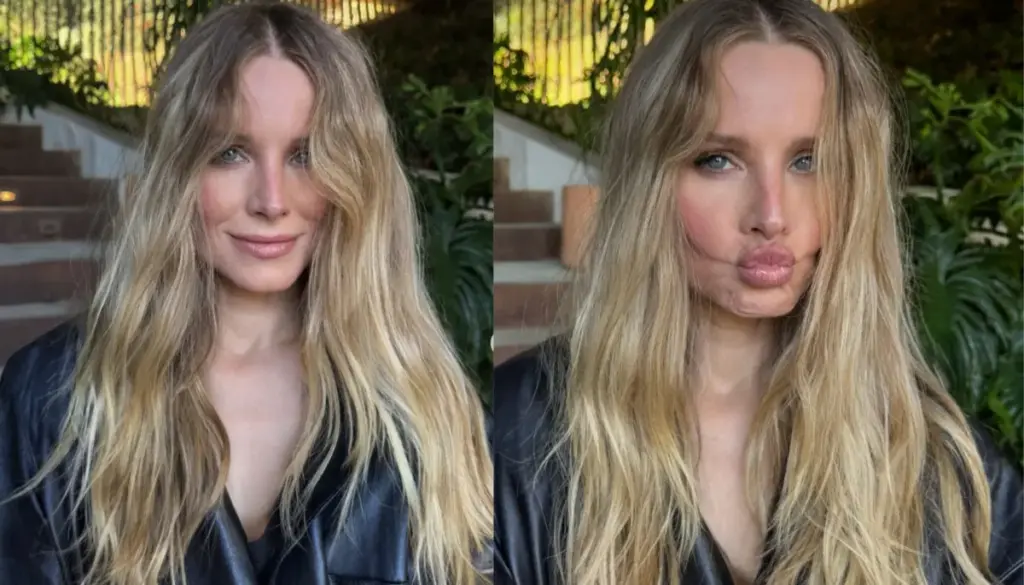
Recently, celebrity hairstylist Dimitris Giannetos captured this exact cultural zeitgeist by recreating the coveted "post-Pilates wave" on award-winning actress Kristen Bell. Rather than employing the standard, predictable styling methods typical of high-profile public appearances, Giannetos bypassed the curling iron uniformity in favor of loose, intentionally irregular waves paired with a slightly lived-in, sweat-kissed hairline. This masterclass in modern styling proves that achieving the ultimate casual-chic hair texture is not a matter of luck, but of precise, calculated randomness.
Detailed Chronology: Deconstructing the Kristen Bell Look
The creation of Kristen Bell’s relaxed yet sophisticated red-carpet waves did not happen by accident; it was the result of a deliberate, multi-step artistic vision executed by Giannetos. To understand how to replicate this look at home, one must examine the chronological progression of the styling session, moving from the initial conceptualization to the final touch-ups.
Phase 1: Conceptualizing the "Post-Workout" Aesthetic
The genesis of the look stemmed from an observation familiar to anyone who frequents a reformer class: the distinct, multidimensional texture hair naturally assumes after being released from a tight ponytail following physical exertion.
"I wanted to create the texture you always have after an intense Pilates session, when you free your ponytail and have this amazing piecey, wavy hair texture," Giannetos explains.
The primary challenge in translating this concept to a high-profile setting lies in the paradox of the "effortless" look. True post-workout hair is entirely random—shaped by sweat, tension, scalp natural oils, and physical movement. Replicating this spontaneity without the accompanying perspiration requires an intimate understanding of hair architecture and tactical styling.
Phase 2: Introducing Strategic Irregularity
To break away from the mechanical repetition of standard curling techniques, Giannetos avoided the uniformity that plagues modern blowouts and curling routines. A standard curling iron used in a single direction creates a predictable barrel wave that lacks dimension.
Instead, Giannetos implemented a mixed-media approach to thermal styling:
- Dual-Barrel Methodology: Rather than relying on a single curling wand or iron, he utilizes two distinctly sized curlers, ensuring that a smaller barrel is always integrated into the process. This variation in tool size prevents the wave pattern from establishing a repetitive, hypnotic rhythm down the length of the hair shaft.
- Directional Chaos: Curls are intentionally twisted and wrapped in alternating directions from section to section. By reversing the rotation of the iron continuously, the hair strands are prevented from clumping together or merging into a single, uniform wave formation. This structural friction creates the illusion of natural, erratic movement.
Phase 3: The Hairline Secret
One of the most telling indicators of post-workout hair is the hairline—specifically, the subtle, delicate framing around the face that responds to light perspiration by softening, curving, and taking on a natural, feathered quality.
To mimic this without requiring an actual trip to the gym or dampening the hair with water, Giannetos employs a signature technique:
- Following the thermal curling phase, he applies a modest amount of styling mousse to a fine-toothed or medium-toothed comb.
- He gently combs back the hairline, distributing the product evenly while reforming the direction of the baby hairs and face-framing layers.
- He allows the hair to air-dry naturally, locking the soft, touchable texture into place.
"This brings back your natural texture without using any water," Giannetos notes, highlighting the genius of utilizing lightweight polymers to mimic the structural weightless bond of moisture and natural sebum.
Supporting Context & Metrics: The Psychology and Physics of Lived-In Hair
To fully appreciate why the post-Pilates wave resonates so profoundly with contemporary beauty consumers, one must examine the broader cultural shift toward "normcore" and low-maintenance luxury, alongside the underlying physics of hair styling.
The Rise of Lived-In Luxury
In the beauty and fashion industries, the pendulum swings reliably between hyper-curated perfection and radical authenticity. For decades, red-carpet styling was dominated by the Hollywood glamour wave—sculpted, brushed-out, and heavily lacquered. However, consumer fatigue has set in. Modern audiences increasingly value relatability and authenticity over untouchable glamour.
Data from global beauty trend trackers indicates a massive surge in search queries for terms like "air-dried texture," "effortless waves," and "messy bun tutorials" compared to traditional styling terms. The post-Pilates wave sits squarely at the intersection of health, wellness, and beauty. Pilates, yoga, and functional fitness have become lifestyle pillars, and the aesthetic associated with those spaces—clean, glowing skin, athletic wear as streetwear, and naturally textured hair—has become the ultimate status symbol of modern self-care.
The Physics of the Ponytail Bend
Why does a ponytail create such desirable waves in the first place? From a physical standpoint, gathering the hair into a centralized anchor point creates high-tension zones where the hair shafts are compressed against one another.
When the hair is released:
- Variable Tension Release: The hair closest to the anchor point experiences a sharp, abrupt bend (often called a "kink"), while the mid-lengths and ends experience a graduated wave due to the varying lengths of individual strands within the ponytail.
- Micro-Climate Effects: Light perspiration from the scalp introduces trace amounts of moisture and sodium chloride (salt), which temporarily breaks the hydrogen bonds in the hair and allows it to reset into whatever shape it is forced into by the elastic tie.
Because manual styling tools cannot inherently replicate this chaotic, multi-directional compression, stylists must use optical illusions—such as alternating barrel sizes and directional twisting—to trick the human eye into perceiving natural randomness.
Official Statements & Industry Insights
Industry professionals and celebrity stylists have increasingly championed the philosophy of "less is more." The movement away from aggressive thermal damage and toward treatments that enhance natural texture represents a fundamental evolution in salon culture.
"The hardest thing to teach a client or a fellow stylist is how to embrace imperfection," notes a prominent editorial hair director. "We are trained in beauty school to seek symmetry. Balance, uniformity, and precision are drilled into us. But true modern chic is entirely asymmetrical. When Dimitris [Giannetos] styles Kristen Bell, he is working against his own technical training to achieve a state of controlled chaos. That is where true artistry lies."
Furthermore, dermatologists and trichologists have praised the cultural shift toward lived-in, air-dried textures. The constant application of high heat and heavy styling resins can compromise the structural integrity of the cuticle, leading to breakage and moisture loss. Techniques that rely on strategic product application—such as Giannetos’s mousse-and-comb method—minimize thermal dependency, promoting long-term hair health without sacrificing style performance.
Future Outlook: The Evolution of Red-Carpet and Everyday Hair
As we look toward the future of personal grooming and celebrity styling, the "post-Pilates wave" serves as a harbinger of broader aesthetic trends. The rigid boundaries separating "gym hair" from "formal hair" are officially dissolving.
1. The Mainstreaming of Hybrid Products
To meet the demand for effortless, lived-in styles, the beauty market is experiencing a massive influx of hybrid styling products. Traditional hairsprays that leave hair stiff and crunchy are being phased out in favor of flexible texturizing mousses, dry texture sprays, and bond-building air-dry creams. These formulations allow consumers to manipulate their hair’s natural memory without weighing it down or requiring extensive heat styling.
2. The Democratization of Professional Techniques
Social media platforms and digital masterclasses have bridged the gap between red-carpet stylists and everyday consumers. Techniques once guarded as professional trade secrets—such as alternating iron barrel sizes and directional flipping—are now routinely broken down by stylists like Giannetos on Instagram and TikTok. This democratization empowers individuals to achieve salon-grade, lived-in textures in their own bathrooms with minimal equipment.
3. Sustainability and Hair Health
As consumers become increasingly conscious of the environmental and personal costs of high-maintenance beauty routines, styles that celebrate natural texture, air-drying, and reduced water consumption will continue to dominate. The ability to refresh second-day hair or recreate a post-workout wave using a single styling product and a comb aligns perfectly with the growing movement toward sustainable, low-impact beauty habits.
In conclusion, Dimitris Giannetos’s work with Kristen Bell is far more than just another celebrity hair moment; it is a masterclass in modern styling philosophy. By recognizing that beauty lies in the accidental, the irregular, and the unforced, he has provided a roadmap for anyone looking to capture that elusive, effortless glow—no reformer class required.