Executive Overview
Wrinkles happen to the best of us—all of us, actually, if we have the profound privilege of aging. Entering one’s mid-40s often triggers a psychological shift into full defense mode against fine lines, loss of elasticity, and uneven texture. While the aesthetic medicine market offers a dizzying array of high-intervention clinical procedures—ranging from neuromodulators like Botox to dermal fillers and laser resurfacing—the vast majority of consumers naturally gravitate toward topical treatments first. This prompts a fundamental, age-old question: Do the best wrinkle creams actually work?
To decode the truth behind multi-million-dollar marketing claims, we consulted an elite panel of board-certified dermatologists, plastic surgeons, and medical aestheticians. The consensus is both reassuring and pragmatic: no topical formulation will ever entirely replicate the structural paralysis of a neurotoxin or the volumetric replacement of a filler. However, today’s advanced anti-aging creams are more sophisticated than ever. Powered by targeted delivery systems, stabilized active ingredients, and sophisticated multi-tasking matrices, modern formulations can measurably improve skin resilience, boost collagen production, refine texture, and soften the appearance of fine lines over time.
This comprehensive report explores the shifting paradigms of topical anti-aging care, evaluates the industry’s gold-standard formulations, and outlines a dermatologist-backed blueprint for achieving ageless skin.
Detailed Chronology & Industry Evolution: From Cold Creams to Smart Formulas
For decades, the over-the-counter anti-aging market was plagued by over-promising and under-delivering. Consumers were sold expensive jars of heavy, fragranced emollients that sat on the surface of the skin, offering temporary hydration without addressing the biological roots of dermal aging.
The Shift Toward Efficacy and Skin Barrier Health
Over the past ten to fifteen years, consumer literacy has undergone a seismic shift. Influenced in part by the meteoric rise of K-beauty (Korean skincare), the dialogue has pivoted away from aggressive, abrasive "anti-aging" toward holistic skin longevity, barrier preservation, and cellular resilience.
Double-board-certified dermatologist Dr. May Hall notes that contemporary consumers are seeking thoughtful, intentional hybrid formulations. Rather than aggressively stripping or irritating the skin to force cell turnover, modern regimens focus on locking in hydration, preventing transepidermal water loss (TEWL), and building robust skin architecture.
Technological Advancements in Delivery Systems
According to double-board-certified oculofacial plastic surgeon Dr. Robert Schwarcz, the scientific formulation of wrinkle creams has evolved dramatically.
"I used to tell patients that wrinkle creams offered only modest benefits," Dr. Schwarcz explains. "And while that’s still true for deep lines and significant skin laxity, today’s formulations are more sophisticated. We’re seeing better delivery systems, more stable active ingredients, and formulas that combine retinoids, peptides, antioxidants, growth factors, and barrier-supporting ingredients that can help improve skin quality."
This technological leap means that active ingredients—such as encapsulated retinol or multi-weight hyaluronic acid—can penetrate deeper into the epidermis and dermis without causing the catastrophic irritation that once turned consumers away from active skincare regimens.
Supporting Context & Metrics: The Biological Realities of Skin Aging
To understand why certain creams work and others fail, one must examine the biological mechanics of skin aging. Dermatologists broadly categorize wrinkles into two distinct camps:
- Dynamic Wrinkles: These are expressions in motion, such as the crow’s feet that form when you smile or the horizontal forehead lines that appear when you raise your eyebrows. They are caused by repeated muscle contractions beneath the skin.
- Static Wrinkles: These are etched into the skin even when the face is entirely at rest. They are the direct result of intrinsic aging (genetics, natural cellular slowdown) and extrinsic aging (UV exposure, pollution, smoking, and poor nutrition), which lead to the systemic degradation of collagen and elastin fibers.
The Collagen Timeline
Collagen production begins to decelerate in our mid-20s, declining by roughly 1% each year thereafter. As structural proteins break down, the skin loses its foundational scaffolding, leading to thinning, loss of firmness, and the eventual development of static lines.
Topical formulations cannot rebuild this scaffolding overnight, but consistent application of scientifically validated actives can significantly slow down degradation while stimulating new collagen synthesis.
Official Statements & Expert Insights
To separate marketing hype from clinical reality, top-tier medical professionals weighed in on ingredient efficacy, application protocols, and realistic expectations.
The Gold Standard: Retinoids
Board-certified plastic surgeon Dr. Carey Campbell is unequivocal about the non-negotiable core of any anti-aging routine:
"Vitamin-A derivatives, whether retinoid, retinol, or tretinoin, remain the mainstay of antiaging because they accelerate cell turnover and increase collagen production. This is second only to SPF in my book, and every woman serious about antiaging needs one in her routine."
Dr. Rayva Khanna, a dermatology resident at Georgetown University Medical Center, echoes this sentiment:
"Retinoids, derived from vitamin A, promote skin turnover, boost collagen synthesis, and improve pigmentary changes. They’re among the most well-studied ingredients for antiaging."
Tailoring Ingredients to Skin Goals
Dr. Kristina Collins, a board-certified dermatologist and Mohs micrographic surgeon in Austin, Texas, advises patients to bypass marketing fluff entirely:
"Choose your cream based on your skin type and goals rather than marketing claims. Retinoids remain the gold standard because they boost collagen and increase cell turnover. Peptides, niacinamide, and antioxidants such as vitamin C improve firmness and tone, while hyaluronic acid and ceramides support hydration and barrier function."
Synergy Between At-Home Care and In-Office Procedures
A common misconception is that patients undergoing cosmetic procedures—such as laser resurfacing, microneedling, or facelifts—can abandon their topical skincare routines. Dr. Campbell debunks this myth:
"Some patients never had a routine before surgery, and the procedure becomes the catalyst that finally gets them started, which is great. But the patients who were already dedicated to skin care, had surgery with a resurfacing procedure alongside their facelift, and then stayed committed to their routine afterward are the ones who genuinely look like they’ve aged in reverse."
Dr. Collins reinforces the concept of a multi-pronged approach:
"Topical products can improve texture and brightness, but in-office procedures penetrate deeper and produce more dramatic, faster results. Daily use of creams helps preserve and extend those professional results over time."
Curated Expert-Backed Wrinkle Creams: The Elite Lineup
Following expert consultations and rigorous editorial testing, several standout formulations have emerged as the gold standard across various categories.
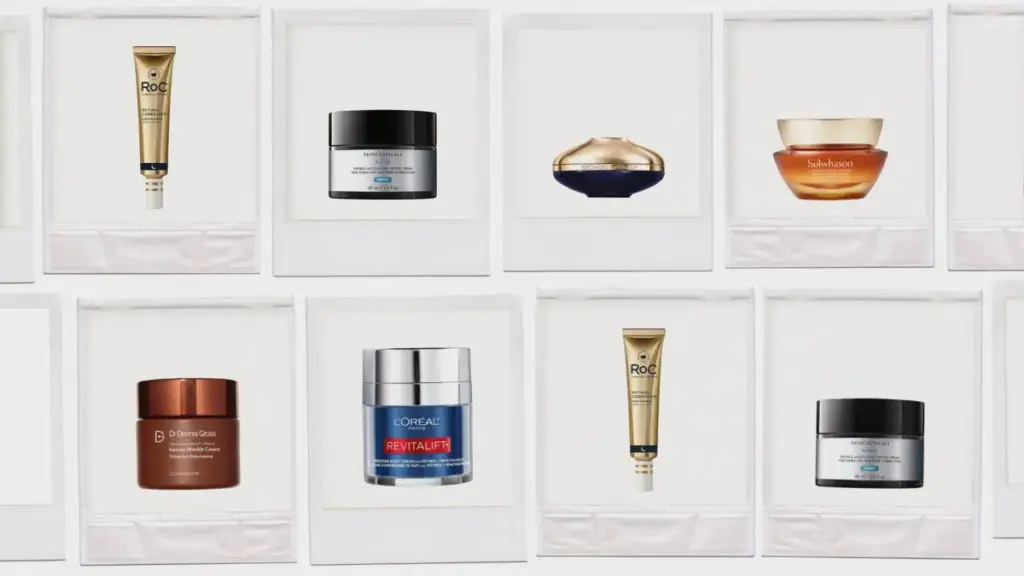
1. Best Drugstore: L’Oréal Paris Revitalift Pressed Night Cream
- Price: ~$26 – $40
- Key Strengths: Features a stabilized retinol complex paired with niacinamide and nourishing plant extracts in an innovative hygienic packaging system. It delivers high-end efficacy at an accessible price point, smoothing surface texture without triggering excessive dryness.
2. Best Overall: SkinCeuticals P-Tiox Wrinkle-Modulating Peptide Cream
- Price: ~$150
- Key Strengths: Designed as a topical complement to neurotoxin injections, this advanced peptide cream targets expression lines and improves skin texture using a high concentration of advanced peptides and supportive antioxidants.
3. Best for Deep Wrinkles: RoC Retinol Correxion Deep Wrinkle Night Cream
- Price: ~$22 – $30
- Key Strengths: A drugstore legend clinically proven to visibly reduce the appearance of both fine lines and deep wrinkles over a 12-week testing period. Its non-comedogenic formula absorbs quickly and works overnight to accelerate cell turnover.
4. Best K-Beauty: Sulwhasoo Concentrated Ginseng Rejuvenating Cream
- Price: ~$160
- Key Strengths: Rooted in traditional Korean herbal medicine, this luxury formulation harnesses proprietary ginseng saponins to fortify the skin barrier, boost resilience, and restore youthful elasticity and bounce.
5. Best for Sensitive Skin: Dr. Dennis Gross Advanced Retinol + Ferulic Intense Wrinkle Cream
- Price: ~$77
- Key Strengths: Phyto-retinol blends seamlessly with ferulic acid, bakuchiol, and ceramides. It delivers the collagen-boosting benefits of vitamin A without compromising or irritating fragile lipid barriers.
6. Best for Eyes: Celimax Retinal Shot Tightening Booster
- Price: ~$18 – $24
- Key Strengths: A targeted treatment utilizing gentle retinaldehyde to firm, tighten, and smooth the delicate, thin skin surrounding the orbital bone without causing stinging or puffiness.
7. Best With SPF: Elemis Pro-Collagen Marine Cream SPF 30
- Price: ~$150
- Key Strengths: Combines marine algae (Padina pavonica) with broad-spectrum UV filters, offering deep hydration and preventative anti-aging protection in a lightweight, makeup-friendly morning moisturizer.
8. Best High-Tech Cream: Guerlain Orchidée Impériale The Longevity Cream
- Price: ~$550
- Key Strengths: An ultra-luxury masterpiece powered by longevity science and rare orchid extracts, targeting cellular vitality to enhance firmness, density, and radiance.
9. Best Nighttime Wrinkle Cream: Olay Retinol24 + Peptide Night Face Moisturizer
- Price: ~$36
- Key Strengths: A fragrance-free, deeply hydrating overnight formula that combines vitamin B3 (niacinamide) with a proprietary retinoid complex to visibly smooth fine lines while you sleep.
10. Best Holiday Gift: Dolce & Gabbana Ever-Youth Gold Peptides Face Cream
- Price: ~$136
- Key Strengths: Fuses decadent sensorial textures with gold-conjugated peptides to impart an immediate, luminous glow while supporting long-term skin firmness.
Future Outlook: The Next Frontier in Anti-Aging Skincare
As dermatological science marches forward, the future of wrinkle creams points toward hyper-personalization, biotechnology, and microbiome optimization.
1. Microbiome-Centric Aging
Researchers are discovering that the skin microbiome—the ecosystem of bacteria residing on the skin’s surface—plays a direct role in inflammation, barrier integrity, and accelerated aging. Future topical creams will increasingly feature prebiotics and postbiotics designed to balance the skin flora, thereby reducing inflammaging (chronic, low-grade inflammation that degrades collagen).
2. Advanced Delivery Mechanisms
The next generation of formulations will utilize cutting-edge delivery systems, such as lipid nanoparticles and drone technology, to steer active ingredients directly to targeted cellular receptors. This will maximize the efficacy of potent actives like retinoids and growth factors while virtually eliminating localized irritation.
3. Epigenetic Skincare
Moving beyond basic surface hydration, emerging biotech skincare taps into epigenetics—the study of how environmental factors influence gene expression. Upcoming formulations aim to "re-educate" aging skin cells to behave like younger cells, turning back the cellular clock from within.
Conclusion
Navigating the crowded landscape of anti-aging skincare does not require a chemistry degree, but it does demand a strategic approach. While wrinkle creams cannot halt the passage of time or replace the structural interventions of a plastic surgeon, they remain an indispensable foundation of skin health.
By prioritizing clinically proven ingredients like retinoids, ceramides, peptides, and daily broad-spectrum SPF, and by selecting formulations tailored to your specific skin type and goals, you can support graceful aging, protect your skin barrier, and maintain a luminous, resilient complexion for decades to come.