Executive Overview
The cultural footprint of the Dallas Cowboys Cheerleaders (DCC) has long extended far beyond the traditional boundaries of professional football. For decades, the squad has served as an iconic, albeit polarizing, symbol of Americana, pop culture, and athletic performance. However, the release of Netflix’s hit docuseries, America’s Sweethearts: Dallas Cowboys Cheerleaders, has fundamentally shifted the paradigm. By pulling back the curtain on the grueling auditions, intense physical toll, and intricate personal lives of the women behind the iconic blue-and-white uniform, the series catalyzed a massive global renaissance for the brand.
Today, the DCC is no longer just a premier NFL spirit squad; it is a burgeoning commercial, fashion, and beauty powerhouse. Major retail giants, high-end cosmetics brands, and fast-growing lifestyle labels are rushing to associate themselves with the squad, leveraging the global reach provided by streaming media. According to former DCC group leader Megan McElaney, the most profound change since the show’s premiere has been a cultural reframing: audiences now view the women not merely as visual spectacles on game days, but as elite athletes and multifaceted cultural icons.
This perceptual shift has translated directly into unprecedented financial growth. In an era where sports marketing increasingly intersects with lifestyle and entertainment, the Dallas Cowboys organization—and by extension, the DCC—is leading the charge. Fashion and beauty partnerships across the NFL surged to $58 million during the 2025–2026 season, with the Cowboys capturing more than $8 million of that category spend, excluding venue naming-rights agreements. Yet, beneath the glittering surface of multi-million-dollar sponsorships and exclusive locker-room makeovers lies a complex debate regarding compensation, individual empowerment, and the true commercial value generated by the women driving this multi-industry crossover.
Detailed Chronology: The Streaming Catalyst and Retail Expansion
To understand the current commercial explosion of the Dallas Cowboys Cheerleaders, one must trace the timeline of digital exposure and strategic corporate realignment that followed the debut of Netflix’s America’s Sweethearts.
The Netflix Phenomenon
Before the docuseries hit streaming queues worldwide, the DCC enjoyed a high level of domestic recognition, largely anchored by their long-running CMT reality show, Dallas Cowboys Cheerleaders: Making the Team. While successful, that platform catered primarily to a niche, dedicated cable television audience.
Netflix changed the equation overnight. By introducing the DCC to a massive, global audience, the streaming platform fostered a deeper, more empathetic connection between viewers and the individual women of the squad. The audience growth was both immediate and measurable:
- Season One Impact: The inaugural season drew an impressive 2.3 million global views within its first four days, surging to 3.7 million views the following week.
- Season Three Momentum: Proving the staying power of the franchise, the third season opened at No. 4 on Netflix’s global English-language TV chart in June, pulling in 3.2 million views in its first six days.
Corporate Partnerships Fall Into Place
Capitalizing on this newly unlocked global demographic—which heavily skews toward beauty, fashion, and lifestyle enthusiasts who may not otherwise watch football—brands rapidly mobilized.
- Abercrombie & Fitch Expansion: Building upon an existing relationship with the Cowboys and the DCC, Abercrombie significantly widened its partnership. In a groundbreaking move for the squad, the fashion retailer installed a custom-branded "closet" directly inside the DCC locker room at The Star in Frisco, Texas. This curated product assortment is refreshed on a monthly basis, outfitting the squad for their off-field public appearances and daily routines. Furthermore, the broader Abercrombie x Cowboys collection achieved expanded retail distribution via NFLShop.com and AT&T Stadium through the brand’s Fanatics partnership.
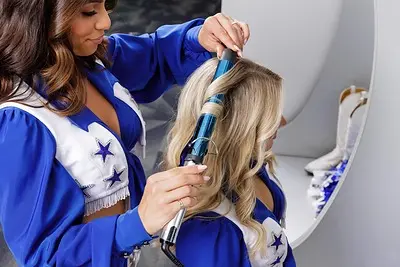
- Sally Beauty’s Historic Entry: In a strategic pivot, Sally Beauty announced its first-ever professional football partnership, claiming the title of official beauty retailer of the Dallas Cowboys and the DCC. Rather than relying solely on traditional stadium signage, Sally Beauty integrated the cheerleaders directly into its consumer outreach, utilizing DCC-led content, live appearances, and digital product demonstrations to show consumers how to recreate official game-day hair and nail looks. Additionally, the partnership strategically highlights Sally’s expanding men’s hair-care product lines.
Supporting Context & Metrics: The Intersection of Sports, Fashion, and Beauty
The convergence of professional sports and the beauty industry is one of the fastest-growing sectors in modern marketing. According to data from SponsorUnited, fashion and beauty sponsorship spending across the entire NFL rose by 16.9% year-over-year, reaching a staggering $58 million during the 2025–2026 season. Simultaneously, the volume of individual deals increased by 11.7%, totaling 105 active partnerships.
Within this competitive landscape, the Dallas Cowboys stand virtually unmatched. Excluding stadium naming-rights agreements, the Cowboys led all NFL franchises in both fashion and beauty deal counts and total revenue generation during the 2025 season, pulling in upwards of $8 million in category-specific sponsorships. To put their digital footprint into perspective, the official social media channels of the DCC boast more Instagram followers than 12 entire NFL teams.
Bridging Demographics
Industry analysts point out that while the Dallas Cowboys franchise as a whole offers brands an enormous male-skewed and general sports audience, the cheerleaders provide a completely distinct demographic entry point.
Bob Heere, a University of North Texas professor specializing in sports management, notes that the DCC has historically served as a bridge connecting the football franchise to female consumers and the broader fashion and beauty industries. The global reach of Netflix has effectively widened that bridge into a superhighway.
"The Cowboys give brands enormous reach, but the Dallas Cowboys Cheerleaders give them something different: an authentic bridge from sports into fashion, beauty, entertainment, and lifestyle," explains Peter Carton, executive director of sport industry engagement and partnerships at Southern Methodist University (SMU).
However, navigating these overlapping brand identities requires careful curation. The Cowboys currently manage a diverse portfolio of beauty and fashion relationships, featuring luxury and mass-market partners side by side. For instance, prestige cosmetic brand Charlotte Tilbury serves as an official beauty partner—supplying products for game-day routines and occasionally hiring individual cheerleaders for content creation—while Sally Beauty operates as the official beauty retailer. According to Carton, such multi-brand strategies can successfully coexist as long as each corporate entity is granted clearly defined product categories, exclusive rights, and distinct activation parameters.
Official Statements and Industry Insights
The rapid commercialization of the DCC has sparked necessary conversations among marketing executives, academic researchers, and former performers regarding the nature of modern sports sponsorships.
Transforming Retail Perceptions
For Sally Beauty, the partnership with the DCC is a cornerstone of a broader corporate transformation and customer-acquisition strategy. Chris Kobus, chief marketing officer of Sally Beauty, emphasizes that the collaboration is specifically designed to introduce the retailer to consumers who may still hold outdated perceptions of the brand.
"There is a lingering general perception that Sally is more of a functional retailer that majors in hair care," notes Neil Saunders, managing director of GlobalData Retail. "That’s no longer true, but to capture new shoppers, Sally must work at creating the view that it’s a place for inspiration and a destination for many beauty categories."
By leveraging the aspirational aesthetic and rigorous grooming standards of the DCC, Sally Beauty aims to rebrand itself as an inspirational lifestyle destination.
The Equity Question for Performers
Despite the multi-million-dollar inflows generated by the DCC brand, a critical friction point remains: the distribution of wealth and compensation among the individual women who comprise the squad.
Megan McElaney, the former DCC group leader, highlights a persistent disconnect between team-level corporate partnerships and individual financial reward.
"A team-level partnership can create more exposure and opportunities for the cheerleaders, but that doesn’t automatically mean an individual cheerleader receives compensation from that partnership," McElaney explains.
While partnerships like the one with Charlotte Tilbury help subsidize and democratize the notoriously expensive beauty routines required for game days, and occasionally provide freelance content-creation gigs for select squad members, they do not guarantee financial windfalls for every performer. Furthermore, McElaney notes a personal boundary within the squad: not every cheerleader desires to become a full-time social media influencer or monetize her personal likeness.
For industry observers like McElaney, true progress in sports marketing must account for the welfare and agency of the talent. "The most valuable partnerships would be ones where the women themselves are meaningfully included, not just used as part of the visual identity of the brand," she asserts.
Future Outlook: Moving from Sponsorship to Commerce
As the dust settles on the initial wave of streaming-fueled popularity, sports marketers and retail executives agree that the future of DCC-driven partnerships will be judged by a much stricter metric than digital impressions and logo placements.
The immediate challenge for brands collaborating with the Dallas Cowboys Cheerleaders is converting passive viewers into active consumers. As SMU’s Peter Carton succinctly summarizes:
"The real opportunity is moving from sponsorship to commerce. The question is no longer simply how many people saw your logo; it’s how many consumers engaged with your brand, entered your retail ecosystem, or bought something because of the relationship."
For brands like Abercrombie & Fitch and Sally Beauty, success will be measured by sell-through rates, retail foot traffic, and long-term customer lifetime value. For the Dallas Cowboys organization, the challenge will be balancing the explosive commercial demand for the DCC brand with the ethical imperative to ensure fair compensation, respect for personal boundaries, and professional recognition for the athletes themselves.
Ultimately, the transformation of the Dallas Cowboys Cheerleaders from traditional sideline performers into global retail and lifestyle icons is permanent. As long as the world continues to watch America’s Sweethearts, the intersection of professional football, high fashion, and beauty will continue to expand into uncharted commercial territory—redefining what it means to wear the uniform in the modern digital age.