Executive Overview
The economic ecosystem of the entertainment industry has long operated behind a veil of curated illusion, where public perceptions of immense wealth frequently clash with the gritty economic realities experienced by performers on the ground. Recent industry-wide transparency—catalyzed by candid star confessions, high-profile union strikes, and shifting business models within the streaming era—has exposed a vast and volatile financial spectrum. At one end, mega-stars command tens of millions of dollars up front alongside perpetual, generational windfalls from syndicated television. At the other, critically acclaimed actors, ensemble television regulars, and reality icons describe working for scale minimums, clearing modest four-figure paychecks after taxes and representation fees, or watching their long-tail syndication earnings dwindle into absolute irrelevance.
This investigation explores the mechanics of Hollywood compensation, analyzing why certain legacy contracts continue to yield breathtaking fortunes while modern streaming models leave marquee talent earning nominal sums. By examining firsthand accounts from television veterans, cinematic heavyweights, and reality television pioneers, we uncover how a combination of bad early deals, shifting distribution technologies, and the persistent gender pay gap have fundamentally reshaped the financial landscape of modern show business.
Detailed Chronology & Case Studies: The Two Extremes of the Pay Scale
The discrepancies in entertainment compensation are best understood through the historical and professional milestones of the actors who lived them. From the foundational television syndication era to the disruption of streaming platforms, the journey of an actor’s paycheck reveals how timing, negotiation leverage, and genre dictate financial survival.
The Television Rerun Era: Windfalls and Washouts
Television residuals have historically served as the bedrock of middle-class actor stability in Hollywood, rewarding performers long after production has wrapped. However, the structural integrity of these agreements has varied wildly across generations.
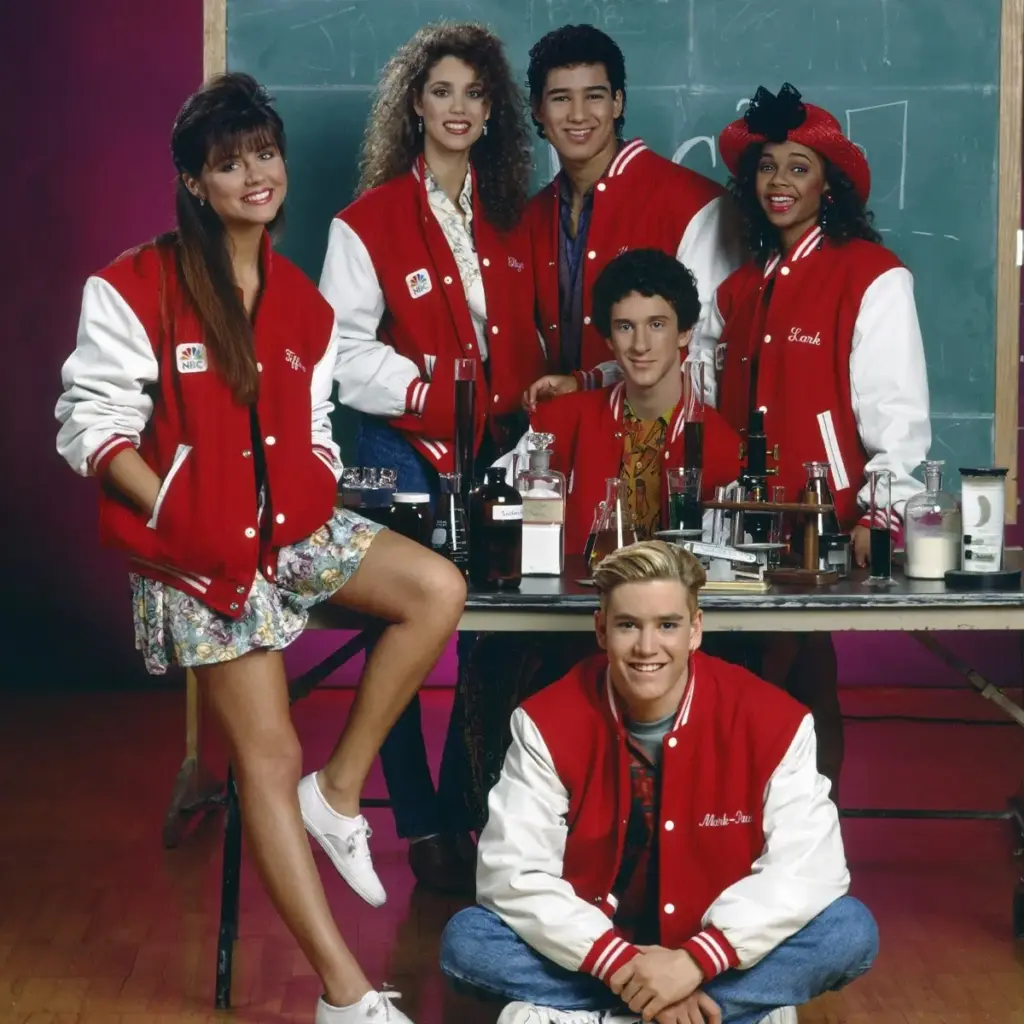
- The Saved by the Bell Legacy: For decades, Saturday morning television staple Saved by the Bell entertained millions globally. Yet, the cast’s financial reality bore little resemblance to the show’s enduring cultural footprint. In early 2026, Tiffani Thiessen revealed that her modern-day residuals from the series have plummeted to "negative now"—meaning the administrative and processing costs associated with issuing the disbursements outstrip the actual monetary value of the checks. Fellow alum Mario Lopez validated these remarks as "real talk," echoing sentiments previously voiced by Mark-Paul Gosselaar. Speaking on Watch What Happens Live With Andy Cohen in 2019, Gosselaar conceded, “We made really bad deals. It is what it is. You move on, you learn. Great experience.”
- The Friends Phenomenon: Conversely, the cast of NBC’s mega-hit sitcom Friends—Jennifer Aniston, Courteney Cox, Lisa Kudrow, Matt LeBlanc, Matthew Perry, and David Schwimmer—secured syndication terms that remain the gold standard of television history. When questioned by The Times regarding reports that each principal cast member continues to pull in approximately $20 million annually in residuals, Lisa Kudrow playfully demurred, cracking, “Because Phoebe Buffay is so great?” Turning to a more somber tone, the Emmy winner reflected on the collective brilliance of her castmates, singling out the late Matthew Perry: “He was just beyond us all.”
- The Streaming Desert (Gilmore Girls & 13 Reasons Why): The transition from traditional network syndication to subscription video-on-demand (SVOD) fundamentally disrupted residual mathematics. Lauren Graham, who starred as Lorelai Gilmore for seven seasons and the 2016 revival Gilmore Girls: A Year in the Life, noted during a 2025 appearance on Jimmy Kimmel Live that "there really are no residuals on Netflix." Graham dryly observed that she had instead been "paid in love and appreciation." Meanwhile, during the 2023 SAG-AFTRA strikes, Tommy Dorfman laid bare the brutal economics of streaming hits on Threads, revealing that her earnings for the entire first season of Netflix’s 13 Reasons Why—spanning eight episodes over six months, complete with promotional duties and global key art—totaled $29,953.24 before 20% agency and manager fees and taxes. Despite the show garnering 476 million view hours within its first 28 days, Dorfman barely qualified for health insurance.
Cinema’s Paradox: Blockbusters vs. Passion Projects
The silver screen presents an equally fragmented financial landscape. While top-tier movie stars can command massive upfront guarantees, many A-listers routinely slash their fees to zero or near-minimum wage to bring personal or artistic visions to life.
- The Indie and Scale-Minimum Route:
- Christian Bale took home the absolute legal minimum for his chilling, career-defining performance as Patrick Bateman in 2000’s American Psycho, recalling in a 2022 GQ interview that makeup artists in the trailer openly laughed upon discovering he was earning less than the crew.
- Jonah Hill accepted a meager $60,000 ("before commissions and taxes") to star in Martin Scorsese’s 2013 epic The Wolf of Wall Street, while co-star Leonardo DiCaprio commanded $10 million. Hill eagerly accepted the lowest possible tier simply to work with the legendary director, noting he would have sold his house to do it.
- Jennifer Lopez produced and starred in Hustlers entirely for free, choosing to "bank on myself" rather than take an upfront salary.
- George Clooney famously earned just $1 for writing the screenplay of Good Night, and Good Luck, turning over his acting and directing salaries to fully capitalize the independent production, which subsequently earned six Academy Award nominations. He supplemented his cinematic passion projects with lucrative European commercial endorsements—pocketing $500,000 per advertisement for Italian sunglasses, cars, and Martini & Rossi—long before becoming the multi-million-dollar face of Nespresso.
- Fantasy Franchises on a Budget: Even monumental box-office juggernauts frequently undercompensated their foundational talent. Cate Blanchett revealed on Watch What Happens Live in 2024 that the massive $2.9 billion The Lord of the Rings trilogy yielded virtually no upfront wealth for its ensemble, quipping that she received "free sandwiches" and got to keep her prosthetic elven ears. Orlando Bloom similarly confirmed he was paid a modest $175,000 for the entire trilogy as elven warrior Legolas.
Supporting Context & Metrics: The Anatomy of a Hollywood Paycheck
To fully comprehend why actors celebrate or lament their compensation, one must analyze the aggressive deductions that erode gross pay before it ever hits a bank account.
The Multi-Tiered Deduction Matrix
When a celebrity announces a salary figure—such as Taraji P. Henson’s $150,000 fee for The Curious Case of Benjamin Button or Rebel Wilson’s multi-million-dollar studio payouts—public perception frequently underestimates the velocity at which gross earnings evaporate:
- Representation Commissions: Agents, managers, and entertainment attorneys routinely siphon between 10% and 20% off the top of gross earnings.
- Union and Guild Dues: Initiation fees and ongoing percentage dues (such as those paid by Wilson to join SAG-AFTRA during Bridesmaids, where her $3,500 fee was entirely offset by union obligations) reduce net take-home pay.
- Overhead and Operational Costs: Publicists, business managers, assistants, and stylists must be retained out of pocket, particularly for high-profile talent navigating the press cycle.
- Federal, State, and Local Taxation: Top-earning entertainers in production hubs like California and New York frequently face combined marginal tax rates approaching or exceeding 50%.
As Henson meticulously calculated regarding her Oscar-nominated role: Uncle Sam claims roughly half, representation takes another 30% off the top, leaving a $150,000 gross salary reduced to a net figure of approximately $40,000.
Official Statements & Industry Disclosures
The discourse surrounding actor compensation has evolved from hushed industry gossip into open public debate, fueled by landmark interviews and direct digital disclosures.
- Jennifer Lawrence and the Gender Pay Gap: Following the 2014 Sony email hack, which exposed stark disparities between Lawrence’s compensation and her male co-stars in American Hustle, the actress emerged as a leading voice on gender wage parity. Discussing her $25 million paycheck for Adam McKay’s Don’t Look Up (compared to Leonardo DiCaprio’s $30 million), Lawrence articulated the systemic discomfort female artists face when negotiating: "Look, Leo brings in more box office than I do… But in other situations, what I have seen—and I’m sure other women in the workforce have seen as well—is that it’s extremely uncomfortable to inquire about equal pay."
- Ellen Pompeo’s Fight for Equity: In 2018, Ellen Pompeo negotiated a landmark Grey’s Anatomy contract worth $575,000 per episode, alongside a seven-figure signing bonus and backend equity points. Reflecting on her long battle for parity against former co-star Patrick Dempsey, Pompeo told Call Her Daddy in 2025: "Just being that I was the namesake of the show, I deserved the same and that was harder to get. I wasn’t salty about him getting what he got. I was salty that they didn’t value me as much as they valued him."
Future Outlook: The Evolving Financial Landscape of Entertainment
As the entertainment industry continues its painful migration from linear cable and traditional theatrical windows to algorithm-driven streaming platforms, the traditional paradigms of actor compensation face existential transformation.
The historical safety net of backend residuals—which sustained generations of working-class actors through dry spells between projects—has been largely neutralized by SVOD business models that rely on flat-rate buyouts rather than per-airing royalties. This structural shift was a primary catalyst for the historic WGA and SAG-AFTRA strikes of 2023, which successfully forced studios to establish rudimentary streaming bonus structures and data-sharing transparency metrics.
Moving forward, the polarization of actor pay is expected to intensify. While elite A-listers and proven global franchise anchors will continue to command astronomical upfront guarantees and equity participation, mid-tier actors, reality personalities, and ensemble television stars face an increasingly precarious economic reality. Unless streaming residuals evolve to accurately reflect viewership engagement, the chasm between Hollywood’s ultra-rich and its working-class majority will continue to widen, rendering the "paycheck paradox" one of the defining labor battles of modern media.