Executive Overview
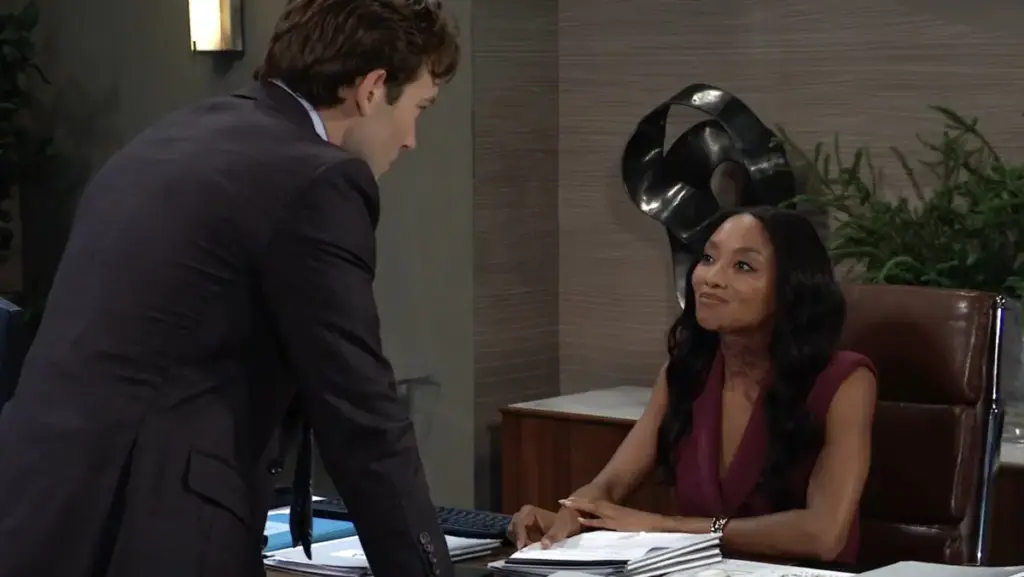
The landscape of daytime television drama is perpetually defined by shifting alliances, unexpected heartbreaks, and narrative gambles that test the loyalty of a dedicated viewership. In the rich, decades-long tapestry of ABC’s iconic soap opera General Hospital, few narrative developments generate as much instantaneous fan speculation as the sudden convergence of two previously distant characters. Recently, keen-eyed viewers have observed an undeniable uptick in screen time, shared professional responsibilities, and emotional vulnerability between Jordan Ashford, portrayed by Tanisha Harper, and Michael Corinthos, played by Rory Gibson.
Working side-by-side at Aurora, these two figures—who historically operated in entirely different circles of the Port Charles ecosystem—have found themselves navigating a unique and profound common denominator: the physical and emotional trauma of severe disfigurement. In exclusive commentary provided to Soap Opera Digest, actress Tanisha Harper confirmed what many fans have suspected for weeks: the powers-that-be behind General Hospital, including executive producer Frank Valentini and the writing room, are actively testing the waters for a prospective romance between Jordan and Michael.
This unfolding dynamic is far more than a simple narrative convenience. It represents a masterclass in modern soap opera storytelling, leveraging pre-existing emotional wounds, physical vulnerabilities, and the classic absence-makes-the-heart-grow-fondenster dynamic to construct a slow-burn romance. With Jordan’s longtime partner, Curtis Ashford (Donnell Turner), serving time at Pentonville, and Michael stepping into a deeply supportive role—even arranging for Jordan to undergo specialized facial reconstruction surgery at the exact German clinic that facilitated his own healing—the stage is set for a high-stakes entanglement. As Harper notes, this storyline promises to polarize the audience, igniting fiery debates across digital fan forums while delivering the kind of high-octane, emotionally charged drama that has kept General Hospital at the pinnacle of daytime television for over six decades.
Detailed Chronology: From Corporate Colleagues to Confidants
To understand the weight of Jordan and Michael’s evolving relationship, one must trace the chronological steps that brought these two disparate characters into each other’s professional and personal orbits. Historically, Jordan Ashford’s narrative path has been defined by her tenure as Port Charles Police Commissioner, her intricate web of connections within the legal and criminal underworld, and her complex romantic history, most notably with Curtis Ashford. Michael Corinthos, on the other hand, has been anchored by the heavyweight politics of the Corinthos family empire, corporate maneuvers at Aurora, and his own harrowing brushes with mortality and physical trauma.
The convergence began subtly, manifesting as routine interactions within the corporate halls of Aurora. Following Curtis’s incarceration at Pentonville, Jordan stepped into a prominent role within the company, bridging the operational gap left by her partner’s absence. This career pivot naturally placed her in closer proximity to Michael, who serves as a key pillar within the corporate structure.
Initially, the narrative seeds were planted with understated, casual exchanges—brief scenes peppered here and there that established a baseline of professional mutual respect. However, the writers quickly recognized the palpable, albeit unexpected, chemistry simmering between Harper and Gibson. Executive producer Frank Valentini and the creative team elected to lean into these early interactions, gradually expanding the scope of their shared scenes.
The turning point in their dynamic shifted from corporate camaraderie to profound emotional intimacy when the storyline addressed their mutual experiences with physical trauma. Both characters have endured severe accidents and the visible, lasting scars that accompany them. In Michael, Jordan found someone who did not offer empty platitudes or superficial reassurances, but rather a visceral, empathetic understanding of what it means to heal from catastrophic physical damage.
This emotional bridge culminated in a major plot development: Michael utilizing his resources to arrange for Jordan to receive specialized facial reconstruction surgery at the elite German clinic that played a pivotal role in his own physical and psychological recovery. This gesture transcended mere workplace collegiality, crossing firmly into the territory of deep, personal investment. As Harper illuminates, this shared journey through pain and rehabilitation has created a magnetic pull between them—one that threatens to transcend the boundaries of friendship and corporate partnership.
Supporting Context & Metrics: The Anatomy of Soap Opera "Trauma-Bonding"
In the analytical realm of serialized television drama, the phenomenon observed between Jordan and Michael has a specific psychological and narrative categorization: trauma-bonding. While clinical psychology defines trauma-bonding differently, within the hyper-accelerated ecosystem of daytime soap operas, it describes a profound emotional attachment formed through shared crises, survival, and mutual vulnerability.
The Weight of Absence and Availability
A critical structural component driving this potential romance is the physical and emotional vacancy of Curtis Ashford. Donnell Turner’s character, currently serving time behind bars at Pentonville, is physically barred from offering the day-to-day emotional support, physical presence, and partnership that Jordan requires. In long-running serials, incarceration serves a dual narrative purpose: it safely benches a character while simultaneously testing the resilience of their primary relationship.
Jordan’s ascension within Aurora places her in a high-pressure environment where stress is elevated. In the absence of Curtis, Michael Corinthos emerges not as a predatory interloper, but as an organic, reliable fixture of comfort. The metrics of screen time allocation clearly reflect this strategic shift: network data and fan-tracked viewing logs indicate a significant increase in shared scenes between Harper and Gibson over the preceding quarter, signaling a deliberate investment by production to condition the audience for a major shift in relationship statuses.
Physical Vulnerability as a Narrative Catalyst
Scars, both literal and figurative, carry immense narrative weight in Port Charles. Michael Corinthos’s journey through his own severe trauma provides him with a unique vantage point regarding Jordan’s current psychological and physical state. When an individual undergoes a life-altering accident or disfigurement, the psychological fallout often breeds isolation.

By having Michael facilitate Jordan’s access to the German surgical clinic, the narrative employs a classic romance trope: the savior figure who provides not just emotional solace, but tangible, life-changing aid. This dynamic inevitably shifts the power and emotional balance of their relationship. Jordan, accustomed to being fiercely independent—a trait honed during her years in law enforcement—finds herself lowering her defenses around Michael in a way she perhaps cannot with Curtis, whose own life remains entangled in external crises and prison politics.
[Curtis Imprisoned at Pentonville]
       │
       ▼
[Jordan Steps Up at Aurora] ──(Professional Proximity)──► [Shared Screen Time Increases]
       │                                                              │
       ▼                                                              ▼
[Shared Trauma of Disfigurement] ────────────────────────► [Michael Arranges German Surgery]
       │                                                              │
       └─────────────────────────► [Deep Emotional Intimacy] ◄────────┘
                                         │
                                         ▼
                         [Emergence of Forbidden Attraction]
Official Statements and Behind-the-Scenes Insights
The real-world creative synergy matching the on-screen chemistry provides further insight into how this storyline came to fruition. In her comprehensive interview with Soap Opera Digest, Tanisha Harper offered a candid look behind the curtain of General Hospital’s production process, detailing how the pairing transitioned from an experimental script idea to a front-burner romance plot.
"I kind of knew a bit before that it might go that way," Harper revealed, addressing when she first realized Jordan and Michael’s orbits were destined to intersect. While noting that firm long-term plans are rarely set in stone in the fast-paced world of daytime television, she acknowledged an early awareness that the creative team was eager to "test it out and see" how the audience would respond to the pairing.
Reflecting on the logic of the storyline, Harper expressed absolute confidence in the writers’ trajectory. "It made sense," she asserted. "It makes for good television to see that bond form between them, kind of out of the blue. At first, they were kind of just sprinkling it in; we were starting to do some scenes together here and there. But I think the writers and Frank [Valentini, executive producer] liked it, and we’ve progressed with that."
Harper also emphasized the unique emotional framework grounding the relationship:
"They have a lot of common ground. They’ve both had these severe accidents and scarring, and as we know, people kind of trauma-bond at times! Especially now that Curtis has gone away to prison and Jordan has taken over his role at the company, there is a closeness that is developing between them… [Michael] is the one person who understands what she’s going through on a deeper level. That makes for a strong connection, and I think the fans are starting to see that connection, too."
Addressing the inevitable escalation toward a forbidden romance—the bread and butter of daytime drama—Harper leaned enthusiastically into soap opera convention. "That seems to be where we’re headed," she smiled, "in true soap fashion!"
Furthermore, Harper praised her co-star, Rory Gibson, highlighting that their on-screen chemistry is bolstered by a pre-existing real-world friendship. "We were friends before we started working together," she shared. "Now, working with him, it’s been nice to kind of learn each other’s rhythms and how we work and to develop that relationship. I love working with Rory! He’s a brilliant actor and I’m really excited to see where it goes."
Future Outlook: Fan Reception and What Lies Ahead for Port Charles
As General Hospital continues to unspool this intricate narrative arc, the immediate future holds a mixture of high dramatic tension and inevitable fan polarization. The introduction of any new romantic pairing in a legacy soap opera invariably stirs passionate responses from dedicated viewer factions, and Jordan and Michael are no exception.
The Fan Divide: "For It" vs. "Mad"
Tanisha Harper encapsulated the anticipated audience reaction with refreshing self-awareness: "We’ll see what the writers have in store for us, but I do think that this could be something really interesting. It’ll make some people mad, and some people will be here for it!"
- The Traditionalist Faction: Viewers deeply invested in Jordan and Curtis’s long-term endurance, as well as those attached to Michael’s historical romantic alignments, are likely to express frustration. The disruption of established couples is a high-risk maneuver that frequently invites social media backlash and fierce debate across forums like Soap Central and Twitter/X.
- The Pro-Change Faction: Conversely, a substantial segment of the audience continually craves fresh dynamics that break up stagnant storytelling loops. The pairing of Harper and Gibson introduces a sophisticated, emotionally mature dynamic that sidesteps traditional youthful tropes in favor of two professionals bonding over profound, hard-earned life lessons.
Narrative Trajectory and Potential Pitfalls
Looking forward, the longevity and ultimate success of the Jordan-Michael pairing will hinge on how the writers handle several narrative landmines:
- The Curtis Factor: Eventually, Curtis Ashford will complete his time at Pentonville or find a legal avenue back to Port Charles. When he returns, the revelation of the emotional—and potentially physical—intimacy that blossomed between Jordan and Michael in his absence will serve as a primary dramatic catalyst.
- The Power Dynamics of Aurora: Mixing corporate power structures with romantic entanglements is a classic recipe for professional chaos. As both characters wield influence within Aurora, a romantic fallout could destabilize not just their personal lives, but corporate governance.
- The Medical Journey: The upcoming trip to the German clinic for Jordan’s facial reconstruction surgery serves as a critical narrative crucible. Will the vulnerability required during a medical procedure be the definitive catalyst that shatters their remaining emotional defenses and pushes them past the point of no return?
Ultimately, General Hospital has demonstrated its willingness to take bold creative swings under Frank Valentini’s executive production. Whether Jordan Ashford and Michael Corinthos become Port Charles’s newest supercouple or remain a tragic, beautifully acted casualty of timing and circumstance remains to be seen. What is certain, however, is that Tanisha Harper and Rory Gibson have struck a resonant chord, ensuring that viewers will be glued to their screens as this compelling, forbidden chapter unfolds.