Executive Overview
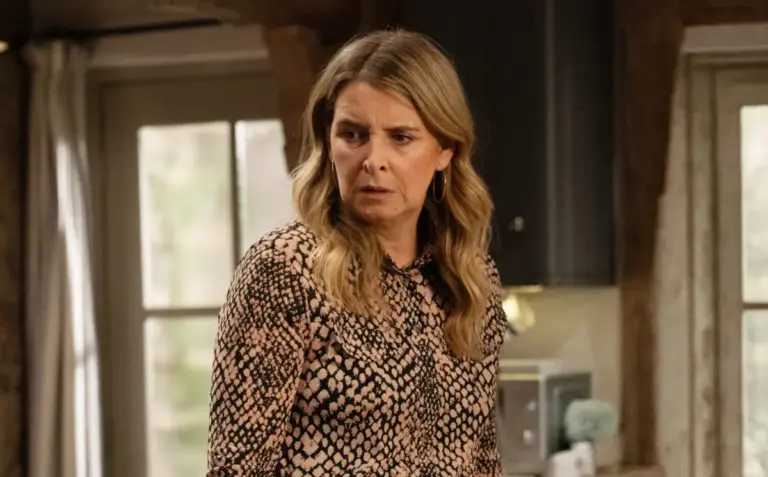
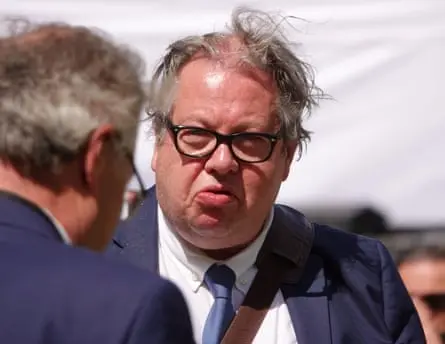
Former British Prime Minister Liz Truss is teaming up with controversial broadcaster Mike Graham on his YouTube channel, UKLive, in an effort to breathe new life into her struggling media career. When Truss launched her independent podcast last year, she grandly declared it would spearhead a "counter-revolution" to dismantle the "deep state" which she claimed had conspired to "destroy" her brief, tumultuous 49-day tenure in Downing Street.
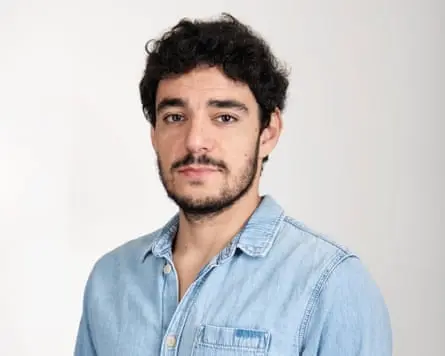
However, reality has fallen drastically short of political ambition. Truss’s self-produced episodes on YouTube have consistently failed to capture a wide audience, frequently pulling in fewer than 4,000 views per video—falling well below the threshold required to monetize video content on the platform. By partnering with Graham—a prominent fixture of the alternative digital broadcasting circuit who was dismissed from Rupert Murdoch’s TalkTV following an investigation into a racist social media post—Truss hopes to tap into a more established, monetized audience.
This high-profile alignment underscores a broader, structural transformation within the British media landscape. As political figures frozen out of mainstream outlets migrate to independent digital channels, a burgeoning parallel broadcasting ecosystem is flourishing largely outside the traditional bounds of statutory regulation. Experts warn that this growing regulatory grey area poses significant questions for public discourse, accountability, and the prevention of online harm.
Detailed Chronology of Events
The Downfall and the "Counter-Revolution"
Liz Truss’s premiership ended in historic ignominy in October 2022. Her radical "mini-budget," which slashed taxes without independent fiscal forecasting or spending cuts, triggered a run on the pound, forced emergency intervention by the Bank of England, and spiked mortgage rates. Serving the shortest term of any prime minister in British history, Truss retreated to the backbenches before losing her South West Norfolk seat at the general election.
Undeterred by her historic electoral defeat, Truss sought to reframe her political demise not as a consequence of economic miscalculation, but as sabotage by institutional forces. Last year, she launched a podcasting venture intended to rally conservative populists and wage intellectual warfare against what she termed the British "deep state."
Audience Attrition and Monetization Struggles
Despite high media interest immediately following her departure from office, Truss’s solo digital efforts quickly plateaued. Her video podcasts struggled to cross the 4,000-view mark on YouTube. In the algorithm-driven economy of digital video creation, such low engagement figures mean creators are cut off from YouTube’s lucrative AdSense revenue-sharing program.
Recognizing the urgent need for structural distribution and a broader subscriber base, Truss opted to pivot. Under the new agreement, she will livestream her podcast twice a week on UKLive, a channel helmed by Mike Graham that positions itself as "the home of common sense."
Mike Graham’s Exit from TalkTV
Graham’s arrival at UKLive follows his high-profile dismissal from TalkTV. Murdoch’s digital channel terminated his contract after stating he failed to cooperate with an internal investigation into a racist post published on his official Facebook account. The post asked the incendiary question: "Why are we surrounded by non-white people?" Graham publicly denied authoring the post, claiming his account had been hacked.
Graham first entered the national consciousness for viral media moments—most notably during a live broadcast clash with eco-activist and carpenter Cameron Ford. When Ford argued that timber was sustainable because "you can grow trees, you can’t grow concrete," Graham curtly insisted, "Yeah, you can"—a claim that cemented his reputation for unyielding, contrarian bluster.
The UKLive Roster and Content Strategy
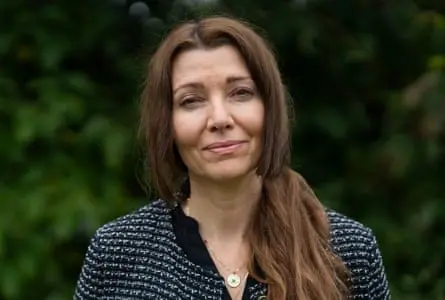
By joining UKLive, Truss enters a stable of firebrand commentators and fringe political figures. The channel’s roster includes Laurence Fox, the former actor and controversial commentator who was suspended from GB News after making sexualised on-air remarks about a female journalist. Also featured are Mark Littlewood, the former director of the Institute of Economic Affairs (IEA) free-market thinktank—which staunchly defended Truss’s 2022 economic agenda—and pro-Reform UK commentator Ellie Hodges.
Truss’s recent output reflects a heavy lean toward populist grievance narratives. Recent episodes of her show have featured commentator June Slater declaring that "Labour is panicking as Reform surges in Makerfield byelection"—despite Labour comfortably winning the seat by a wide margin. Another recent installment featured an interview with Lucy Connolly, who complained about being "jailed for a tweet." Connolly was sentenced to prison in 2024 for inciting racial hatred against asylum seekers, having published a post calling for asylum seeker accommodation to be burned down.
Beyond digital broadcasting, Truss has also attempted to diversify her post-political commercial ventures. Earlier this year, she partnered with property tycoon Robert Tchenguiz to establish a private members’ club in Mayfair named The Leconfield, marketed online as an exclusive sanctuary where "tradition meets contemporary luxury."
Supporting Context and Metrics: The Economics of Alternative Media
The commercial mechanics of channels like UKLive reveal why figures like Truss are migrating away from traditional media and toward independent creator platforms.

While individual videos on UKLive average approximately 24,000 views—still modest by mainstream television standards—the channel’s relentless publishing schedule changes the financial equation entirely. According to digital analytics platform Socialpruf, UKLive has pumped out roughly 1,700 posts over the past year, accumulating a staggering 41 million total views in that timeframe.
This high-frequency publishing strategy easily clears YouTube’s monetization hurdles, generating thousands of pounds in monthly ad revenue. Furthermore, Truss stands to benefit immensely from audience disparity: while her personal YouTube channel hovers around 32,300 subscribers, Graham’s UKLive boasts a substantially larger audience of 179,000 subscribers, offering her an immediate megaphone for her political messaging.
The Regulatory Void
The rapid expansion of independent digital broadcasting has birthed a sprawling media ecosystem that operates completely outside the purview of traditional broadcasting standards. Unlike terrestrial television and regulated radio, which are bound by strict statutory codes enforced by Ofcom, YouTube-based interview shows and livestreams face virtually no external editorial oversight regarding fairness, accuracy, or harm.
Chris Banatvala, Ofcom’s founding director of standards, notes that the boundary between traditional television and digital video has dissolved in the minds of consumers.
"We now have a huge range of content that looks and feels like television — and is often available on the same television set — but isn’t subject to the same standards," Banatvala observed. "Viewers may have no idea whether what they are watching is regulated by Ofcom or not — and these regulatory grey areas are only likely to grow."
While acknowledging that public access to diverse viewpoints is a positive development, Banatvala cautioned that public policy has failed to keep pace with technological disruption:
"It is a good thing that the public has access to such a wide range of views and content. But the law has not kept pace, parliament has yet to confront the implications of this increasingly blurred distinction, and the platforms themselves have not always proved able to prevent serious harm."
Official Statements and Industry Reactions
As the boundaries between populist political commentary and unregulated digital media continue to blur, establishment watchdogs and political opponents have raised concerns over the radicalization of discourse on these platforms.
Representatives for Mike Graham and UKLive have framed the channel as an essential bastion of free speech, championing common sense against what they perceive as a consensus-driven mainstream media monopoly. The channel’s branding openly courts disenfranchised voters, anti-establishment figures, and cultural conservatives who feel alienated by traditional broadcast networks.
Conversely, critics and media watchdogs argue that platforms offering a megaphone to convicted inciters of racial hatred and promoters of fringe conspiracy theories are eroding democratic norms under the guise of free expression. While Liz Truss maintains that her new bi-weekly format on UKLive will feature "exciting new guests" and challenge institutional orthodoxy, critics point out that her media trajectory increasingly mirrors the playbook of American-style partisan shock-jock broadcasting—trading traditional political influence for niche digital monetization and polarization.
Future Outlook
The partnership between Liz Truss and Mike Graham marks a pivotal milestone in the evolution of British political commentary. As traditional career paths for fallen politicians shift away from corporate boards, memoirs, and institutional lecture circuits toward direct-to-consumer digital streaming, the incentives for extreme rhetoric will likely intensify.
For Truss, UKLive represents a lifeline to maintain political relevance and audience growth following the failure of her independent podcasting venture. Whether this alliance can successfully translate into broader political leverage remains to be seen. However, as the audience for alternative digital networks continues to dwarf local newspapers and compete with regional broadcasting, the societal implications of an unregulated, highly polarized media ecosystem will remain a pressing challenge for lawmakers and regulators alike.