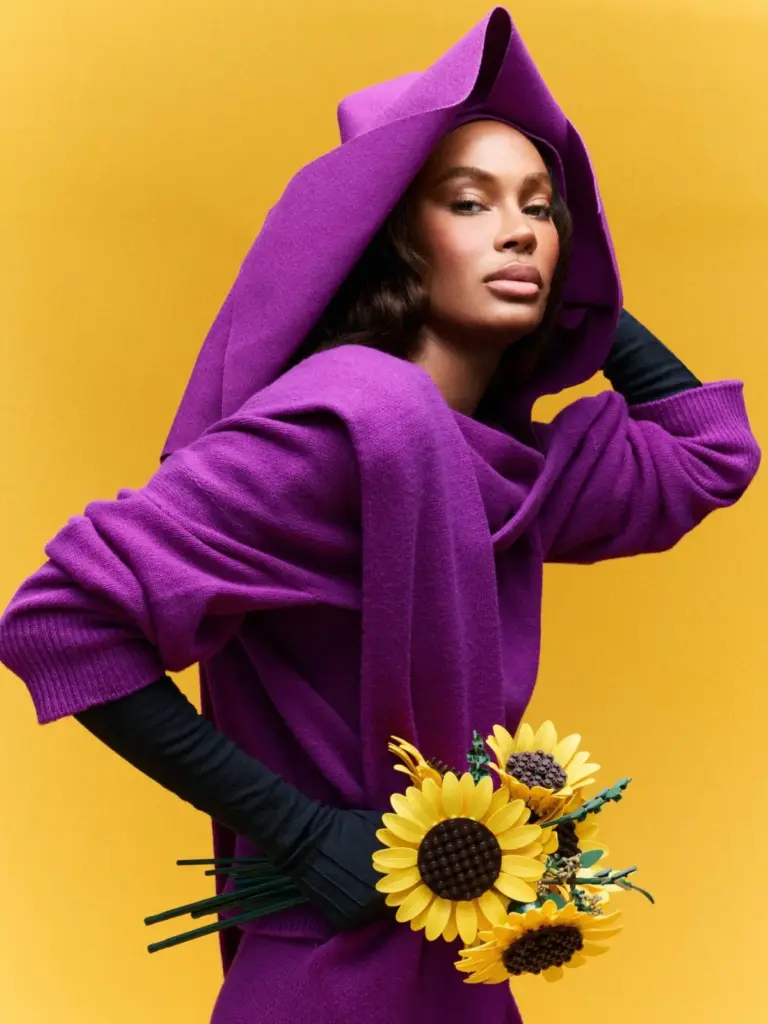
In an era defined by relentless digital velocity, hyper-connectivity, and the perpetual motion of the modern attention economy, a fascinating counter-trend has taken root among the world’s most dynamic tastemakers. High fashion—traditionally characterized by frantic schedules, overcaffeinated production sets, and the sensory overload of global events like New York Fashion Week (NYFW)—is finding an unlikely sanctuary in the quiet, tactile discipline of interlocking plastic bricks.
In a newly unveiled collaborative editorial campaign titled Your Favorite Model’s Favorite Model, PAPER magazine has teamed up with the LEGO Group to explore the intersection of adult creativity, high-end styling, and mindful escapism. Featuring iconic supermodel Joan Smalls alongside rising runway talents Soap California and Danielle Mareka, the campaign bridges the gap between the ephemeral glamour of the catwalk and the enduring, meditative satisfaction of physical creation. Designed to spotlight the LEGO Group’s robust portfolio of 18+ adult-targeted sets—spanning architecture, botanical design, automotive engineering, and cultural landmarks—the partnership posits a compelling thesis: that the antidote to modern professional chaos is not passive consumption, but intentional, hands-on play.
This investigative feature examines the convergence of high fashion and adult play culture, analyzing how creative catalysts across industries are reclaiming their time, redefining self-care, and finding profound psychological grounding in analog hobbies. Through the lens of the PAPER and LEGO Group collaboration, we explore the mechanics of burnout in fast-paced creative sectors, the therapeutic value of tactile building, and how modern adults are proudly integrating toys into chic, contemporary lifestyles.
Detailed Chronology: Behind the Scenes of Your Favorite Model’s Favorite Model
The genesis of Your Favorite Model’s Favorite Model reads less like a traditional commercial partnership and more like a cultural experiment in slowing down time. The project began taking shape months prior to its public rollout, conceived by PAPER’s creative leadership as a way to comment on the sensory overload of the international fashion calendar.
Phase 1: Conceptualization and the NYFW Parallel
Fashion Week is widely recognized as a masterclass in sensory stimulation. Behind the polished facade of front-row seats and pristine editorial spreads lies a high-stakes, high-stress ecosystem. Production assistants whisper urgent directives into headsets; frantic publicists juggle crisis management; and editors pore over call sheets while flashing camera strobes capture every micro-expression. At the center of this hurricane are the models—professionals tasked with projecting effortless grace while enduring the relentless gaze of dozens of strangers.
Recognizing the parallels between the structured chaos of a photo set and the chaotic rush of NYFW, the creative team at PAPER posed a disruptive question: What if the antidote to the industry’s frantic pace was hidden in plain sight, packaged in a colorful cardboard box?
The editorial team engaged the LEGO Group to curate a selection of advanced, 18+ building sets. The goal was not merely to stage a clever photo op, but to authentically capture models stepping out of character, temporarily abandoning the frantic demands of the set to immerse themselves in building blocks.
Phase 2: The Production Set as a Microcosm of Play
On the day of the shoot, captured by photographer Jonas Huckstorf with a director of photography Jeremy Herron at the helm, the atmosphere was a microcosm of the fashion world—until the LEGO sets were introduced.
The styling choices were impeccably high-fashion: Joan Smalls was outfitted in a statement Tom Ford puffer jacket from Cloak Wardrobe, paired with an Oscar de la Renta belt and an Aknvas skirt, later transitioning into looks featuring Matières Fécales at Selfridges, Christian Louboutin footwear, and Georg Jensen jewelry. Soap California and Danielle Mareka embodied modern streetwear elegance draped in LaQuan Smith trench coats sourced from the Albright Fashion Library and Saint Laurent shoes.
However, the high-fashion posturing quickly gave way to genuine absorption. According to on-set accounts, the models became so engrossed in assembling their respective LEGO models that they routinely ignored panicked production assistants calling them back to the marks. The boundaries between "work" and "play" dissolved. The meticulous styling—curated by fashion director Angelina Cantú, stylists Abisoye Odugbesan and Arut Arustamyan, and supported by a robust beauty and production crew—collided with the unpretentious joy of snapping plastic bricks into alignment.
Phase 3: The Builder’s Journey
The campaign’s narrative extended beyond the primary talent, deeply influencing the editorial writers themselves. Inspired by the visual lexicon of the shoot, editorial staff embarked on their own building journeys. Choosing the 958-piece Paris – City of Love architecture set, writers documented the psychological shift that occurs when one exchanges a glowing smartphone screen for an instruction booklet and a pile of colored bricks.
Hours evaporated unnoticed. The frantic overstimulation of the daily news cycle and professional deadlines was replaced by the rhythmic click of bricks locking into place. The resulting finished model—now permanently displayed as an apartment centerpiece—served as a physical monument to a rare afternoon reclaimed from digital fatigue.
Supporting Context & Metrics: The Rise of the "Adult Fan of LEGO" (AFOL) and Mindful Escapism
To understand the cultural resonance of Your Favorite Model’s Favorite Model, one must examine the broader socio-economic shifts driving the adult toy market. For decades, construction toys were pigeonholed as developmental tools strictly for children. Today, the demographic landscape of play has radically transformed.
The Maturation of Play
The LEGO Group has experienced exponential growth in its adult-targeted demographic, colloquially recognized within the community as AFOLs (Adult Fans of LEGO). Recognizing that the psychological need for creative self-expression does not terminate upon reaching legal adulthood, the Danish toy giant engineered a deliberate pivot toward the 18+ market.
Market research consistently points to a surging demand for analog pastimes among Millennials and Gen Z. Overwhelmed by screen fatigue—accelerated by remote work environments and an incessant 24-hour news cycle—modern adults are actively seeking "low-tech" hobbies that engage tactile senses.
Psychological Benefits of Tactile Creation
Psychologists and wellness experts have long championed the benefits of flow states—deeply immersive mental states where an individual is fully energized and focused on an activity. Assembling complex construction sets mimics the neurological benefits of meditation and mindfulness.
- Cognitive Offloading: Building requires spatial reasoning and sequential problem-solving, temporarily displacing workplace anxieties and existential dread with immediate, manageable spatial challenges.
- Tangible Reward Loops: Unlike digital tasks, which often feel abstract and unending, building a physical model provides a clear, unmistakable beginning, middle, and end. The final piece clicked into place delivers an immediate dopamine release and a profound sense of agency.
- Control in an Uncontrollable World: As the campaign editorial aptly notes, there are countless macro-level elements in modern life that defy individual control. However, how one designs a physical object—or how one chooses to spend an afternoon—remains entirely within personal jurisdiction.
The Intersection of High Fashion and Nostalgia
Luxury fashion has increasingly embraced whimsy, nostalgia, and subversion. By merging avant-garde couture (Tom Ford, Saint Laurent, Oscar de la Renta) with a universally recognized childhood pastime, campaigns like this subvert the often-stuffy pretension of high art. It signals to consumers that true sophistication is not about maintaining an unapproachable facade of perfection, but about retaining a sense of childlike curiosity and unbridled joy.
Official Statements and Industry Perspectives
The convergence of high-end editorial storytelling and mass-market consumer play has garnered significant attention from creative directors, brand strategists, and cultural commentators alike.
Reflecting on the ethos of the campaign, executive leadership at PAPER emphasized the necessity of carving out unhurried spaces within high-pressure industries.
"In a world that’s always moving at full speed, there’s something deliciously satisfying about creating at your own pace—no rush, no pressure, no rules," the editorial collective noted. "There are plenty of things in life we can’t control. But how you move through Fashion Week—how you play with color, how you build your looks—that’s entirely yours."
The collaborative effort was brought to life by an extensive roster of creative talent, spearheaded by Chief Creative Officer Brian Calle, President Jason Ve, Executive Creative Director Jordan Bradfield, and VP Brand Partnerships Jamie Granoff. Their shared vision underscored that modern brand partnerships must transcend traditional product placement; they must offer a resonant cultural narrative that speaks directly to the psychological desires of the contemporary consumer.
Fashion Director Angelina Cantú and the styling teams curated wardrobes that intentionally contrasted with the playful, primary-colored nature of the building bricks, creating a visual tension that elevated the campaign into genuine high-art commentary. From the meticulous lighting direction of Mia Dawson to the crisp digital capture by Terry Broadbent and Kylie Coutts, every technical element was calibrated to honor both the rigor of high fashion and the nostalgic warmth of the LEGO brand.
Future Outlook: The New Paradigm of Adult Leisure and Brand Synergy
As we look toward the future of consumer culture, the success of Your Favorite Model’s Favorite Model offers a clear blueprint for how lifestyle brands can successfully collaborate across disparate categories.
The Death of Industry Silos
Gone are the days when fashion magazines exclusively featured cosmetics, luxury automobiles, and travel destinations. Today’s consumers inhabit multifaceted, hybrid identities. A person who appreciates archival runway pieces by LaQuan Smith is equally likely to spend a quiet Sunday evening assembling an architectural landmark out of thousands of plastic bricks. By acknowledging and celebrating these intersections, publications and brands create deeper, more authentic connections with their audiences.
The Longevity of Analog Hobbies in a Digital Age
Far from being displaced by virtual reality, augmented reality, or generative AI, tangible hobbies are experiencing a renaissance. The more digitized our professional and social lives become, the more precious physical materiality will be. We anticipate a continued surge in adult-focused craft, construction, and design kits as consumers increasingly prioritize mental wellness and screen-free downtime.
Ultimately, campaigns like this serve as a gentle, stylish reminder. Whether navigating the high-stakes pressure cooker of New York Fashion Week or managing the mundane stressors of everyday life, the modern tastemaker’s greatest secret weapon isn’t an exclusive invite or a filtered feed—it is the radical, grounding joy of building something entirely of one’s own creation, piece by deliberate piece.