
Executive Overview
As the golden days of July and August wind down, families across the nation face a familiar, complex transition. The unstructured rhythms of summer—marked by late nights, spontaneous adventures, and a reprieve from rigid schedules—inevitably give way to the structure of the academic year. While buying new outfits, mechanical pencils, and crisp notebooks is an annual ritual that signals a fresh start, back-to-school preparation requires far more than retail therapy. True preparation is a psychological and physiological bridge designed to help children not merely survive the first day of class, but thrive throughout the entire academic cycle.
Transitioning from a relaxed summer environment to a high-demand school setting can trigger significant stress for children of all ages. To unpack how parents can navigate this delicate pivot with grace, foresight, and empathy, we turned to expert insights from licensed educational psychologist, board-certified behavior analyst, and parenting specialist Reena B. Patel, LEP, BCBA. In this comprehensive report, we explore actionable strategies rooted in child psychology—ranging from early circadian rhythm adjustments and anxiety mitigation techniques to fostering self-advocacy in older students—to ensure a seamless and joyful return to the classroom.
Detailed Chronology: A Step-by-Step Roadmap for the Transition
Successfully navigating the back-to-school season is rarely achieved overnight. Shifting a child’s lifestyle from summer mode to academic mode requires a carefully paced, chronological approach. Experts advise initiating this strategic shift well before the school doors officially open.
Phase 1: Three Weeks Out – Resetting the Internal Clock
The first casualty of summer vacation is almost always the sleep schedule. Long daylight hours and lack of early-morning commitments naturally push bedtimes and wake-up times later. However, abruptly forcing a child back onto a strict schedule the night before school starts is a recipe for exhaustion, behavioral outbursts, and elevated anxiety.
According to the American Academy of Sleep Medicine (AASM), school-age children require between 9 and 12 hours of uninterrupted sleep per night, while teenagers need 8 to 10 hours. Reena B. Patel urges parents to begin the adjustment process at least two to three weeks prior to the first day of school.
- Gradual Adjustment: Rather than shifting bedtimes by hours all at once, move your child’s bedtime and wake-up time 15 minutes earlier every few nights.
- Routine Reversion: Simultaneously reintroduce structured evening wind-down rituals, such as turning off electronic devices an hour before bed, dimming household lights, and incorporating reading time. This gradual recalibration allows the body’s circadian rhythm to adapt naturally without inducing fatigue-related resistance.
Phase 2: Two Weeks Out – Demystifying the Unknown
Anxiety is fundamentally rooted in the fear of the unknown. A new academic year brings a cascade of potential stressors: a new school building, an unfamiliar classroom, changing peer groups, and authority figures whose personalities are yet unproven.
To dismantle this apprehension, parents should proactively familiarize children with their upcoming environments.
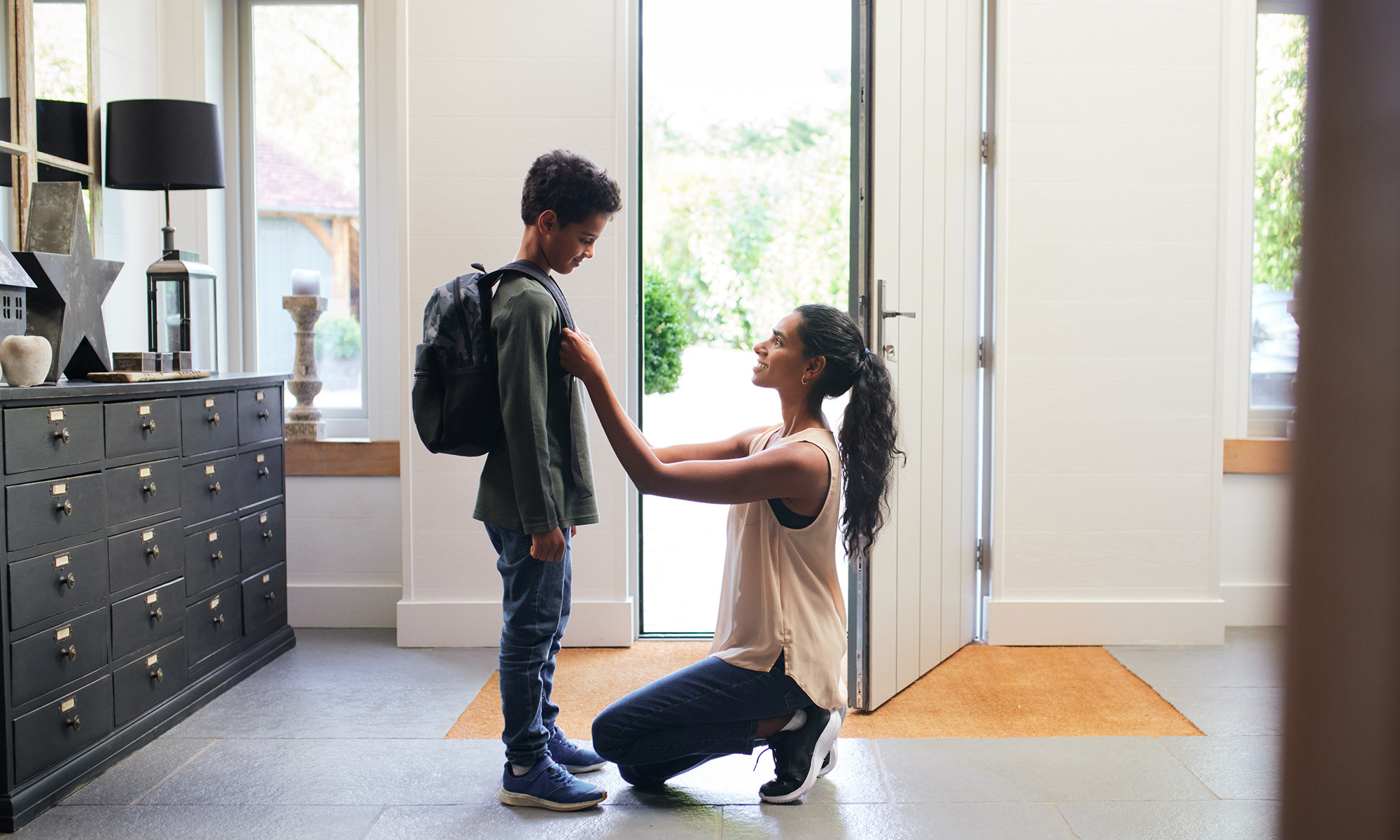
- Official Orientations: Take full advantage of school-sponsored orientation sessions. Walking the physical halls allows children to spatialize their new environment, transforming a daunting, abstract concept into a concrete, navigable space.
- Virtual Reconnaissance: If an official orientation is unavailable, utilize the school’s website. Review teacher biographies, browse photo galleries of the campus, and share these images with younger children to build familiarity.
- Individual Meet-and-Greets: For children exhibiting pronounced nervous behaviors, Patel recommends reaching out directly to school administrators, principals, or teachers. Request a brief, 15-minute individual tour to locate vital touchpoints, such as homeroom classrooms, lockers, cafeterias, and restrooms. Educators and administrative staff are often setting up their classrooms weeks in advance and are typically eager to accommodate a nervous future student.
Phase 3: One Week Out – Empowering Through Communication
As the start date draws closer, the focus shifts toward communication and emotional scaffolding. For younger children who may still be developing robust social and emotional learning (SEL) skills, bridging the gap between home and school can be streamlined with targeted tools.
- The "All About Me" One-Pager: Patel suggests that parents of younger children create a concise, visually appealing one-page profile to hand directly to the teacher on or before the first day. This document can feature a photo of the child, fun facts about their hobbies, preferred motivational triggers, learning styles, and critical health data like allergies. This proactive step fosters an immediate, positive connection between the educator and the student.
- Fostering Autonomy in Older Youth: For middle and high school students, the strategy pivots. Instead of employing a "snowplow" parenting style—where adults clear every obstacle and manage every administrative detail—parents must step back and encourage self-advocacy. Allowing adolescents to communicate directly with teachers regarding schedules, assignments, or concerns builds foundational resilience and lifelong problem-solving capabilities.
Phase 4: Day One and Beyond – Mindful Decompression
The first day of school is an intense sensory and cognitive experience. Children are subjected to prolonged focus, social navigation, rule-following, and environmental stimulation. When the school bell rings at the end of the day, the immediate temptation for enthusiastic parents is to bombard their children with rapid-fire questions about their experiences.
Patel cautions strongly against this approach. "When your child gets in the car after a long day of school, you don’t want to hit them with a barrage of questions," she advises. Instead, parents should provide a safe, quiet space for decompression. Acknowledge that the sensory overload of day one requires time to process. Allow children to ground themselves, unwind, and naturally volunteer information when they feel secure and ready.
Supporting Context & Metrics: The Science of Academic Transitions
Understanding the psychological mechanics behind back-to-school prep requires looking at broader educational metrics and pediatric health data.
The Sleep Deficit Crisis
Data compiled by sleep researchers indicate that up to 70% of adolescents are chronically sleep-deprived during the school year. The transition from summer freedom to early morning alarms abruptly cuts short the REM and deep sleep cycles essential for adolescent brain development. Sleep deprivation directly correlates with lowered academic performance, emotional dysregulation, and a heightened vulnerability to anxiety and depression. Implementing a graduated sleep schedule weeks in advance acts as a vital protective measure against these physiological vulnerabilities.
The Impact of Environmental Familiarity on Pediatric Anxiety
Child development studies consistently show that environmental mastery—knowing where one is and how to navigate it—reduces cortisol levels in children facing novel situations. According to behavioral health metrics, children who participate in pre-season school visits or meet their teachers prior to day one report a 40% reduction in acute separation anxiety compared to peers who enter the building completely blind.
Official Statements and Expert Perspectives
Reena B. Patel, LEP, BCBA, emphasizes that preparation is not merely about checking items off a school-supply list; it is about emotional attunement.

"Anxiety stems from a fear of the unknown," Patel notes. "A new school year means a lot of changes. For some, it could also mean a new school, a new classroom, new teachers, and even a new peer group. Parents have the power to remove that fear factor by demystifying the environment early on."
Furthermore, Patel highlights the distinction between developmental stages when determining how much intervention a parent should provide. While elementary school students benefit heavily from structured parental scaffolding—such as teacher profiles and guided school tours—older students require space to cultivate independence.
"It’s really important to teach children how to self-advocate," Patel explains, noting that middle and high schoolers should take the reins where appropriate, while younger children require more direct coaching and direction from adults.
Future Outlook: Building Long-Term Resilience
As educational landscapes continue to evolve in 2026 and beyond, the definition of back-to-school preparation is expanding to encompass holistic well-being. Moving forward, educators and psychologists anticipate an even greater emphasis on mental health literacy within school curricula and home routines alike.
The transition from summer to autumn should not be viewed merely as an abrupt end to leisure, but as a structured opportunity for personal growth. By starting early, addressing anxiety with targeted environmental exposure, honoring developmental milestones through customized communication, and respecting a child’s need for post-school decompression, parents can transform the back-to-school season. Rather than a period of friction and tears, preparation becomes a collaborative, empowering journey that sets the stage for a resilient, successful, and joyful academic year.