Executive Overview
In the current landscape of music docuseries, few projects manage to strip away the pristine layers of corporate iconography quite like JAY-Z in 8. Released weekly on HBO Max in thematic two-episode increments, the eight-part chronicle has steadily positioned itself as a masterclass in artistic introspection. Following an exclusive, high-profile screening on September 13, 2026, and its subsequent rollout culminating in late September, the series has continuously pushed the boundaries of how hip-hop royalty engages with its own mythos.
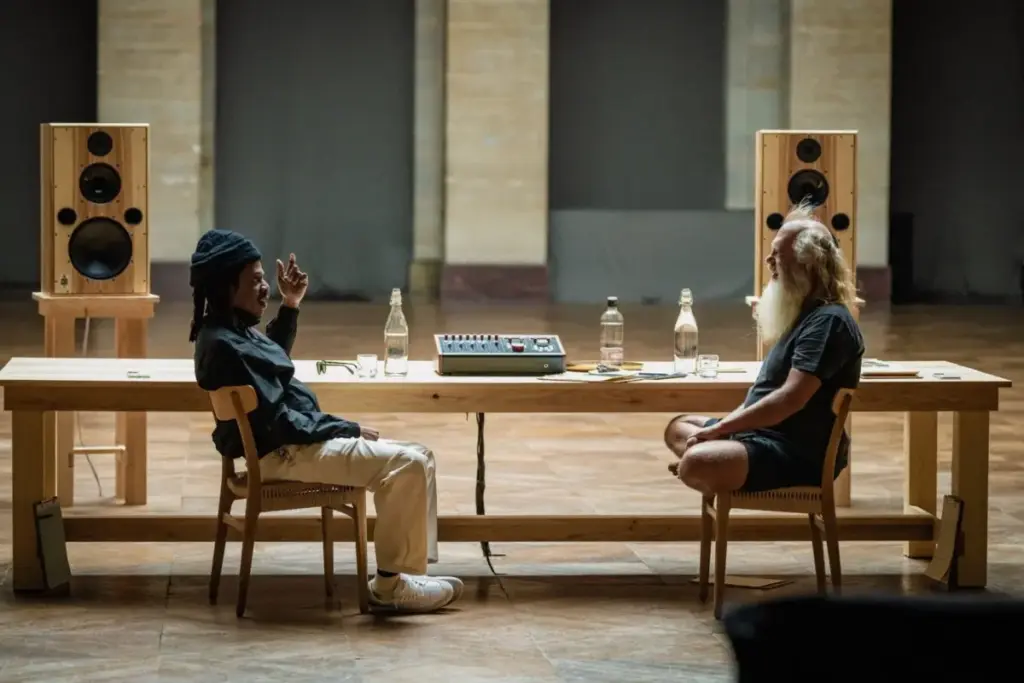
At the core of JAY-Z in 8 is a radical dismantling of the "Jigga" persona—the untouchable, razor-sharp billionaire mogul whose corporate boardrooms are as legendary as his corner-to-corner triumphs. Across its first four episodes, the series has traded braggadocio for profound vulnerability. Guided by visionary producer and longtime creative sounding board Rick Rubin, the project functions less as a standard-issue victory lap and more as an auditory and visual excavation of trauma, survival, and studio therapy.
During the red-carpet premiere, Shawn "JAY-Z" Carter made headlines by telling Billboard that none of the deep-dive conversations featured in the series were "difficult," even when navigating the darkest corners of his past. From the emotional weight of early tracks like "You Must Love Me" to the visceral pain of "Where Have You Been," the series reveals an artist who utilized the recording booth not merely as a commercial workspace, but as a psychological sanctuary. As the series crosses its halfway mark, it offers a rare, unflinching look at the human cost of legendary art, dissecting how an introvert from Brooklyn weaponized his deepest regrets and most harrowing losses to redefine the parameters of modern rap.
Detailed Chronology: The Anatomy of Episodes 1 Through 4
To fully appreciate the narrative architecture of JAY-Z in 8, one must trace its emotional trajectory from the initial screening to the pivotal fourth installment.
The Premiere and the Red-Carpet Revelation
The journey began in earnest for critics and insiders on September 13, 2026, when HBO Max hosted an exclusive early screening of the series’ first three episodes. The atmosphere on the red carpet was electric, charged with the anticipation of what an unfiltered JAY-Z would actually look and sound like in a retrospective format. When speaking with Billboard on the carpet, Carter addressed the perceived weight of his own history with surprising casualness. When asked if confronting his most emotional records required difficult conversations with Rubin, the rapper insisted that nothing felt forced.
This ease of dialogue permeates the screen. In the early episodes, viewers are immediately thrust into the formative years of Carter’s life in Marcy Houses, establishing the baseline hunger that fueled his transition from local phenom to independent label boss via Roc-A-Fella Records.
Episode 3: The Catharsis of "You Must Love Me"
The third episode of the series cemented its critical acclaim by zoning in on deep cuts that defined Carter’s lyrical DNA, most notably the haunting In My Lifetime, Vol. 1 track "You Must Love Me." For core fans, the song has always held a sacred, almost painful status. It was here that a young JAY-Z famously laid bare the profound guilt and shame he felt after shooting his brother in the shoulder, alongside the broader collateral damage of his early life navigating the drug trade.
During his conversation with Rubin, Carter unpacked the mechanics of that recording session. He detailed how the isolation of the vocal booth became a therapeutic vacuum for an avowed introvert. Unable or unwilling to unpack such heavy burdens in ordinary social settings, the recording studio offered a frictionless environment where he could articulate thoughts, regrets, and confessionals that would never cross his lips in casual conversation. It stands as a vital touchstone in understanding his catalog: the music wasn’t just entertainment; it was a desperate exercise in self-exorcism.
Episode 4: "Where Have You Been" and Paternal Absence
Building directly upon the emotional scaffolding of episode three, the fourth installment opens with a devastating breakdown of "Where Have You Been," featuring Philadelphia heavyweight Beanie Sigel. The track remains one of the most heart-wrenching performances ever committed to wax, featuring both artists grappling with the lingering trauma of growing up without paternal figures.
As Jay and Rubin dissect the track, the Brooklyn MC drops a narrative bombshell that stuns even the seasoned producer. Carter reveals that years after the song was recorded, he finally managed to make amends with his estranged father. However, the emotional relief of reconciliation was cruelly short-lived; his father passed away approximately a month later.
This tragic sequence of events provides unmatched insight into an artist historically known for keeping his cards close to his chest. The juxtaposition of paternal abandonment, belated closure, and sudden loss paints a portrait of a man whose armor was forged out of absolute necessity.
The Pivot to Culture and Aesthetics in Episode 4
Fortunately, the back half of the fourth episode pivots toward lighter, culturally monumental territory. The tone shifts as Jigga and Rubin discuss the rigorous studio habits and meticulous writing processes that allowed him to drop classic albums at a breakneck pace during the late ’90s and early 2000s.
The conversation inevitably drifts toward the ubiquitous "Best Rapper Alive" debates that dominated barbershops, dorm rooms, and magazines during the In My Lifetime, Vol. 1 era. Carter reflects on the competitive ecosystem of New York hip-hop during that period—an era where lyrical supremacy was treated as an extreme sport.
Furthermore, the episode leans into the visual iconography of the era, examining the cultural shockwaves of JAY-Z’s now-iconic styling choices: specifically, the audacity of wearing a heavy bulletproof vest layered over a crisp white T-shirt, accessorized with a gleaming Rolex. It was a visual paradox that encapsulated the entire ethos of his career—vulnerability and mortal danger sitting side-by-side with immense triumph and unshakeable luxury.
Supporting Context & Metrics: The Cultural and Industrial Impact
To contextualize the rollout of JAY-Z in 8, one must examine the broader strategic rollout by HBO Max and the enduring legacy of the catalog being discussed.
The HBO Max Distribution Strategy
By opting for an eight-episode structure released weekly in two-episode blocks, HBO Max has engineered a masterclass in appointment viewing. In an era dominated by immediate, full-season data dumps that burn brightly and fade from the cultural consciousness within 72 hours, the paced rollout of JAY-Z in 8 forces audiences to sit with the material.
| Metric / Detail | Value / Description |
|---|---|
| Total Episodes | 8 Episodes |
| Release Schedule | Weekly on HBO Max (2 episodes at a time) |
| Screening Date | September 13, 2026 (Exclusive press screening) |
| Premiere Window | September 2026 rollout |
| Key Creative Partner | Rick Rubin |
| Core Subject Era | From Marcy Houses upbringing through In My Lifetime, Vol. 1 and beyond |
This deliberate pacing has allowed cultural critics, musicologists, and die-hard fans to dissect each installment online, sparking viral conversations about specific lyrical choices, production stories, and archival footage. The strategy honors the weight of the subject matter, treating JAY-Z’s discography not as back-catalog content, but as American literary history.
The Commercial and Critical Footprint of the Vol. 1 Era
The heavy focus in episodes three and four on the In My Lifetime, Vol. 1 (1997) era serves as a crucial reminder of the album’s complex legacy. Released in the immediate wake of the tragic murder of The Notorious B.I.G., the album found JAY-Z grappling with the commercial pressures of mainstream stardom and the dark realities of his past.
While initially received with mixed commercial expectations compared to its predecessor Reasonable Doubt and its successor Vol. 2… Hard Knock Life, Vol. 1 has aged into a fan-favorite masterwork. It was the transitional record where Carter proved he could write high-concept street narratives ("Where I’m From") alongside soul-baring confessions ("You Must Love Me"). By dedicating substantial runtime in JAY-Z in 8 to this specific epoch, the docuseries validates the perspective of core fans who argue that Carter’s commercial peak was inextricably linked to his deepest psychological turmoil.
Official Statements & Direct Perspectives
The integrity of JAY-Z in 8 rests almost entirely on the candor of its primary subject. Unlike many retrospective documentaries where subjects hide behind heavily media-trained talking points, Carter’s commentary throughout the series—and on the red carpet leading up to it—reflects a startling level of self-awareness.
Reflecting on his willingness to unearth painful memories during the production, Carter told Billboard on the red-carpet premiere:
"None of the conversations were difficult… even when digging deeper into some of the feelings I had when making some of my most emotional records."
This nonchalant willingness to confront trauma stems from a mature artist who has long since secured his legacy. When discussing the function of the recording booth with Rick Rubin, Carter illuminated the psychology of the introvert operating in an extroverted, high-stakes industry:
"In there, he can say things that he would never say in a conversation with other people."
This dynamic explains the unique emotional resonance of his music. For an artist who built an empire on stoicism and calculated corporate movements, the microphone served as his only true confidant. Rubin, serving as the ideal conversational foil, pulls these revelations out not through aggressive journalistic probing, but through a shared, meditative understanding of the creative process.
Future Outlook: What to Expect as the Series Concludes
As JAY-Z in 8 moves past its midpoint and marches toward its final episodes, the trajectory of the series promises to tackle the monumental shifts in Carter’s career: the rise of Roc-A-Fella Records, the crossover global domination of the 2000s, his brief retirement, his tenure as president of Def Jam, and his eventual ascension to billionaire status and cultural statesman.
However, if the first four episodes are any indication, the true value of the remaining installments will not lie in the recounting of his business triumphs or Grammy wins. Instead, viewers will be watching to see how the series handles the human being behind the billionaire.
By grounding its narrative in the therapeutic power of the booth, the trauma of paternal loss, and the stark visual imagery of bulletproof vests worn over white tees, JAY-Z in 8 has redefined what a hip-hop documentary can achieve. It treats the music as living history and the artist’s psyche as a complex landscape worthy of serious, unsparing investigation. As the remaining episodes roll out on HBO Max, the series is well on its way to cementing itself as the definitive visual companion to one of the most important artistic catalogues of the 20th and 21st centuries.