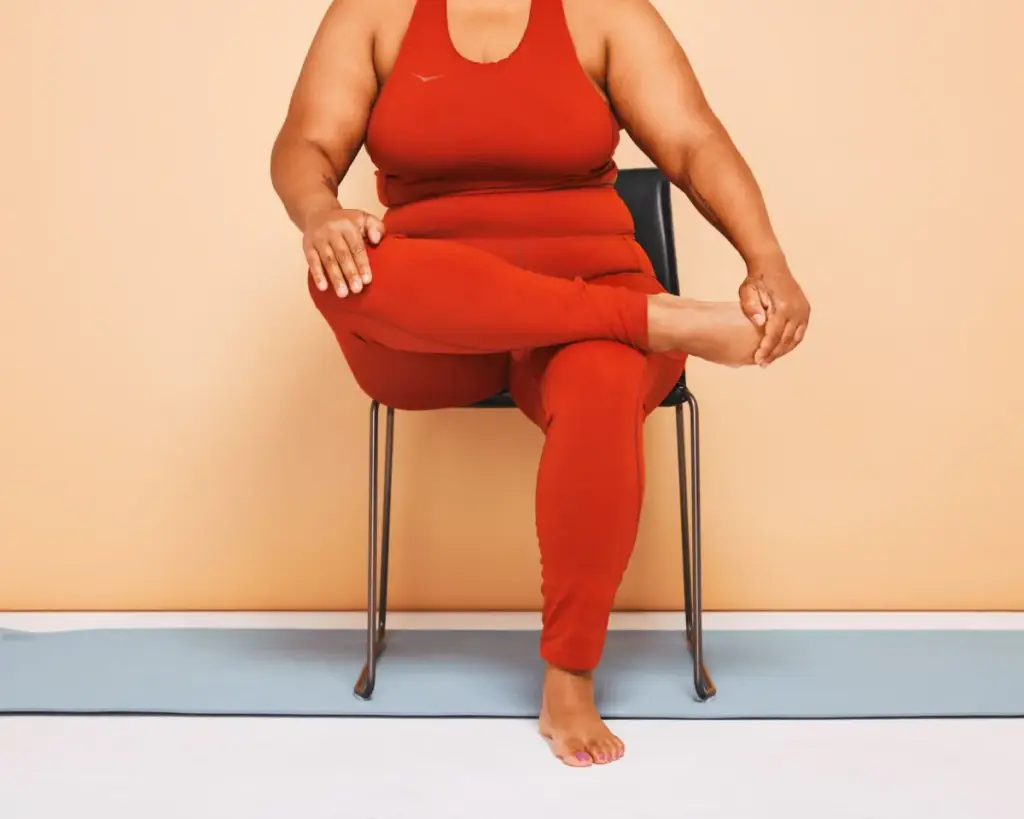
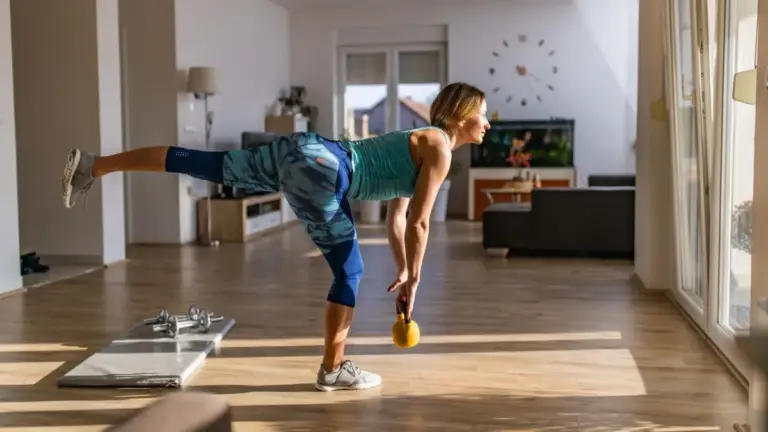
In the modern landscape of physical fitness, the tools for building functional strength are often viewed as specialized: heavy kettlebells, suspension trainers, high-end resistance bands, and designated flooring. Yet, fitness professionals are increasingly pointing to an object present in nearly every home and office as an overlooked powerhouse for musculoskeletal development: the standard, stationary chair.
While chairs are primarily associated with the sedentary realities of contemporary life—hours spent working at computer terminals, commuting, or consuming digital media—they possess profound utility as fitness implements. According to leading personal trainers and physical conditioning specialists, incorporating a chair into an abdominal workout regimen offers a strategic bridge for beginners, an accessible modification for those with mobility limitations, and a tactile feedback tool for advanced practitioners seeking deeper neuromuscular engagement.
This report explores the mechanics of seated and chair-supported core training. Drawing on expert insights from certified personal trainers Becca Revier and Katie Pierson, we examine the physiological rationale behind chair-based abdominal work, detail five fundamental movements designed to fortify the midsection, and provide a comprehensive framework for integrating these exercises into a balanced, everyday routine.
Detailed Chronology: The Evolution of Accessible Calisthenics
The integration of household furniture into physical conditioning is not an entirely new concept, but its formalization within structured fitness programming has accelerated significantly over the past decade.
Early Calisthenics Foundations: Historically, calisthenics and bodyweight conditioning utilized elevated surfaces—such as boxes, benches, and low walls—to alter leverage angles, making bodyweight movements like push-ups and squats either more accessible or more demanding.
The Rise of the Sedentary Economy: As global workforces shifted toward desk-bound environments, fitness experts recognized a dual opportunity. Instead of viewing the chair purely as the antagonist of physical health—the root cause of postural degradation and hip flexor tightness—innovators began treating it as a dynamic prop.
Democratization of Fitness: Post-2020 fitness trends heavily prioritized home-based, equipment-minimal routines. Trainers sought ways to maintain workout efficacy without requiring individuals to invest in expensive gym memberships or bulky apparatuses. The household chair emerged as the ultimate equalizer, enabling users to perform compound movements safely within tight residential spaces.
Neuromuscular Focus on Deep Core Stability: Contemporary exercise science has shifted away from endless crunches toward stabilizing the spine through activation of the transversus abdominis (TA) and obliques. The tactile and physical boundaries provided by a chair naturally cue proper pelvic alignment, turning simple movements into highly efficient core-strengthening protocols.
Supporting Context & Metrics: Why the Core Matters
The "core" is frequently misunderstood as merely the rectus abdominis—the aesthetic "six-pack" muscles visible on the anterior wall of the abdomen. In functional anatomy, however, the core is a complex cylinder of muscles encompassing the entire midsection:
Transversus Abdominis (TA): The deepest layer of the abdominal muscles, acting like a natural corset to stabilize the spine and pelvis.
Obliques (Internal and External): Located on the sides of the torso, responsible for rotation and lateral flexion.
Rectus Abdominis: The primary spinal flexor.
Erector Spinae and Glutes: Posterior stabilizers that work in tandem with the anterior core to protect the lower back.
The Problem with Traditional Floor Work
While traditional floor exercises like standard crunches and floor planks are staples of physical conditioning, they present distinct barriers to entry:
Mobility and Joint Restrictions: Getting up and down from the floor can be painful or prohibitive for individuals with knee, hip, or lower-back stiffness.
Hygiene and Environment: Public or home floors are not always pristine, making prone exercises unappealing.
Form Breakdown: Without proper feedback, beginners frequently arch their backs during floor planks or yank on their necks during crunches, leading to strain rather than strengthening.
The Chair as a Tactile Stabilizer
Utilizing a chair fundamentally alters the physics of bodyweight training. By elevating the hands during movements like planks and push-ups, the total load shifted by the upper body is reduced, allowing individuals with developing upper-body or core strength to execute movements with pristine form. Furthermore, the physical presence of a chair provides immediate tactile feedback—such as knowing precisely where the seat is during a squat—which enhances spatial awareness and neuromuscular recruitment.
The 5 Best Chair Exercises for Core Strength
To maximize the benefits of chair-based training, fitness experts emphasize one non-negotiable safety rule: always use a stable, stationary chair. Rolling swivel chairs, lightweight folding chairs with structural give, or anything with wheels must be avoided to prevent slippage and injury.
Below are five foundational exercises recommended by CPTs Becca Revier and Katie Pierson. Beginners are advised to start with three sets of 8 to 10 repetitions per movement, gradually increasing volume as functional strength improves.
1. The Elevated Push-Up
Though categorized primarily as an upper-body pressing movement, the elevated push-up functions as a dynamic plank, placing immense demand on the abdominal wall.
Execution: Place your hands securely on the edges of a stable chair seat or backrest, stepping your feet backward until your body forms a straight line from your head to your heels. Lower your chest toward the chair by bending your elbows, then press back up to the starting position.
Core Connection: According to Revier and Pierson, the core must work overtime to stabilize the spine throughout the pushing motion. Maintain a neutral pelvis—avoiding both arching and rounding of the back—while drawing your belly button inward and upward.
2. The Elevated Mountain Climber
Like its floor-based counterpart, the elevated mountain climber is a high-energy dynamic plank that forces the deep core stabilizers to engage while the extremities move.
Execution: With your hands braced firmly on the chair seat, drive one knee toward your chest in a controlled running motion, then return it to the starting position and switch legs.
Core Connection: Focus on pulling your shoulders down and away from your ears. As each knee drives upward, concentrate on creating a mini-crunch in the upper abdomen. Keep the hips completely steady; eliminating side-to-side rocking is the key to firing up the transversus abdominis.
3. The Chair Squat
While primarily targeting the quadriceps, hamstrings, and glutes, the standard chair squat offers exceptional, albeit subtle, core engagement.
Execution: Stand a few inches in front of your chair, facing away from it. Hinge your hips backward and bend your knees to lower your body until you gently tap the seat, then press through your heels to return to standing.
Core Connection: The chair acts as a physical cue to enforce proper mechanics, preventing the common mistake of shifting all weight forward onto the toes. Revier advises keeping your gaze directed outward (as if watching a television screen) rather than looking down at your feet, which naturally elevates the chest and engages the deep core.
4. The Single-Leg Squat to Chair
An advanced progression of the standard chair squat, this unilateral movement challenges balance, coordination, and core stability intensely.
Execution: Extend one leg out in front of you while keeping the other foot planted firmly on the floor. Slowly lower your body using only the strength of the working leg until you are seated, then stand back up.
Core Connection: "You naturally want to tip over if you’re just in that single-leg stance, but your core has to work to help you stay upright," notes Revier. The chair provides a safety net, making single-leg work far more approachable than performing pistol squats suspended in open space.
5. The Alternating Cross Crunch
A seated or semi-supported twisting movement that specifically hones in on the obliques—the rotational muscles lining the lateral walls of the torso.
Execution: Seated upright on your stationary chair, bring opposite elbows and knees together in a controlled, diagonal crunching motion. Alternate sides with precision.
Core Connection: Emphasize a full exhale as the elbow meets the knee. This forced exhalation expels air from the lungs, allowing the abdominal wall to contract more deeply and isolating the oblique muscles effectively.
Official Statements and Expert Insights
Industry professionals emphasize that fitness does not require an all-or-nothing mindset, nor does it demand expensive infrastructure.
"Basically, using a chair can make core exercises more accessible to more people," explains Becca Revier, CPT and Pilates instructor at Life Time Lakeville. Whether utilized for a quick one-off movement between Zoom meetings to break up long periods of sitting, or strung together into a comprehensive full-body circuit, chair-based routines offer unmatched versatility.
Furthermore, safety and stability remain paramount. Katie Pierson, a Montana-based personal trainer, underscores the importance of equipment selection:
"You definitely want a chair that’s going to keep you where you need to be."
By eliminating the variables of unstable surfaces, practitioners can focus entirely on form, breath control, and muscle engagement.
Future Outlook
As the boundaries between home, work, and wellness continue to blur, the demand for efficient, low-barrier fitness solutions is projected to grow. The "chair workout" is evolving from a physical therapy necessity into a recognized, highly effective modality for mainstream strength training.
Future developments in home fitness will likely see deeper integration of ergonomic furniture designs that double as fitness apparatuses, alongside expanded digital programming tailored specifically for micro-workouts. By redefining everyday objects as training tools, fitness science is successfully dismantling the notion that effective workouts require specialized environments—proving that strength is accessible to anyone, anywhere, starting right where they sit.