Executive Overview
In the fast-paced, multi-billion-dollar global skincare market, consumers are routinely bombarded with a revolving door of exotic, trendy botanical extracts and high-tech lab-engineered peptides. Yet, while marketing departments chase the next fleeting aesthetic obsession, dermatologists and master estheticians consistently rely on an unassuming, highly effective workhorse that has quietly anchored clinical dermatology for decades: urea.
Long before it became a staple of modern cosmetic formulations, urea was recognized for its exceptional biological compatibility with human skin. Naturally occurring as a vital component of the skin’s Natural Moisturizing Factor (NMF), urea possesses a dual-action identity that sets it apart from traditional humectants. It is a rare molecule capable of simultaneously quenching parched skin by drawing in atmospheric moisture and chemically dismantling the tight bonds holding stubborn, dead skin cells together.
However, despite its clinical efficacy, urea has historically suffered from an identity crisis. Consumers often confuse traditional urea with its synthetic derivatives, misunderstand its diverse concentration thresholds, or shy away from its chemical name altogether. As skincare literacy deepens and consumers demand functional, science-backed formulations over hollow marketing hype, urea is experiencing a major renaissance.
This comprehensive report explores the multifaceted science of urea, demystifies its concentration spectrum, distinguishes it from common alternatives like hydroxyethyl urea, outlines its safety profile for both facial and body applications, and provides expert-backed guidelines for safe ingredient layering. Drawing on insights from leading board-certified dermatologists, master estheticians, and rigorous testing protocols by beauty editors, this guide offers an authoritative roadmap to navigating one of skincare’s most powerful ingredients.
Detailed Chronology: The Evolution of Urea from Clinical Ointment to Mainstream Beauty Staple
To understand urea’s current prominence in modern cosmetic chemistry, it is necessary to examine how this ingredient transitioned from a strictly medical prescription ointment to a versatile, over-the-counter beauty essential.
Phase One: The Medical Foundation (Mid-20th Century)
Historically, urea was primarily utilized in clinical dermatology settings. Physicians recognized early on that high concentrations of urea—typically ranging from 20% to 40%—exhibited profound keratolytic properties. In these therapeutic concentrations, urea was prescribed to manage severe dermatological conditions characterized by hyperkeratosis, scaling, and extreme dryness, such as ichthyosis, severe psoriasis, eczema, and hyper-thickened calluses. During this era, urea-based creams were strictly utilitarian: heavy, medicinal, and rarely associated with daily cosmetic routines or facial care.
Phase Two: The Cosmetic Integration (Late 20th to Early 21st Century)
As cosmetic chemists advanced emulsion technologies, the aesthetic profile of urea formulations improved dramatically. Formulators learned how to stabilize urea in cosmetically elegant creams, lotions, and balms, making lower concentrations accessible for everyday hydration. Skincare brands began introducing 5% to 10% urea formulations targeting rough body skin, chronic winter dryness, and rough patches like keratosis pilaris. This period marked urea’s transition from a pure therapeutic intervention to a consumer-accessible moisturizer.
Phase Three: The Modern Scientific Renaissance (Present Day)
Today, urea is undergoing a digital and cultural renaissance. Driven by ingredient-conscious consumers, online skincare communities, and scientific communication by board-certified dermatologists, beauty enthusiasts are looking past buzzwords and focusing on barrier health and cellular turnover. Urea has emerged as the ultimate "dual-threat" molecule: a gentle hydrator at low doses and a sophisticated exfoliating agent at higher levels. With advanced formulation techniques minimizing the potential for irritation, urea now holds a respected place in both targeted body treatments and sophisticated facial regimens.
Supporting Context & Metrics: Understanding Urea’s Unique Chemical Architecture
To fully appreciate why dermatologists champion urea, one must examine its role within the human body and its distinct biochemical mechanisms.
The Natural Moisturizing Factor (NMF)
Human skin is equipped with an intrinsic defense and hydration system known as the Natural Moisturizing Factor (NMF). Located within the stratum corneum—the outermost layer of the epidermis—the NMF is a complex mixture of hygroscopic (water-attracting) substances, including amino acids, lactic acid, sugars, and, crucially, urea.
Urea constitutes approximately 7% of the skin’s natural NMF pool. Its primary biological job is to bind water within the corneocytes (skin cells), ensuring that the skin barrier remains flexible, hydrated, and structurally sound. As we age, or when the skin barrier is compromised by harsh weather, over-exfoliation, or chemical irritants, natural levels of urea deplete. Topically applied urea replenishes this internal deficit, essentially mimicking and reinforcing the skin’s native biology.
The Concentration Spectrum: How Percentage Drives Function
One of the most critical rules of formulating and using urea is that concentration dictates behavior. Unlike many ingredients where "more is always better," urea’s functional profile shifts dramatically depending on its percentage in a formula:
- 1% to 5%: Pure Hydration & Barrier Support. At this baseline level, urea functions primarily as a potent humectant. It draws moisture from the atmosphere and deeper dermal layers into the stratum corneum, supporting the skin barrier without inducing noticeable exfoliation. This concentration is ideal for sensitive facial skin, daily body lotions, and lightweight moisturizers.
- 5% to 10%: The Dual-Action Sweet Spot. At around 10%, urea delivers a balanced combination of deep hydration and gentle, superficial softening. This concentration is widely utilized to smooth general body roughness, manage mild keratosis pilaris, and provide daily maintenance for dry skin types.
- 20% and Higher: Keratolytic Therapy. Crossing the 20% threshold transforms urea into a powerful keratolytic agent. At this concentration, it actively loosens and dissolves the hydrogen bonds holding dense clusters of dead skin cells together. Formulas ranging from 20% to 40% are engineered specifically for hyper-thickened, callused, or scaling skin, such as severely cracked heels, stubborn elbow patches, and advanced palmoplantar keratoderma.
Official Statements and Expert Insights
To provide rigorous, evidence-based guidance, industry-leading dermatologists and skincare professionals have shared their clinical perspectives on urea’s applications, distinctions, and safety profiles.
On Urea vs. Hydroxyethyl Urea
A common point of confusion among consumers scanning ingredient labels is the distinction between traditional urea and hydroxyethyl urea. While they sound nearly identical, their biochemical behaviors diverge significantly.
"They’re actually pretty different," notes board-certified dermatologist Dr. Turegano. "Traditional urea acts as a humectant and, at higher concentrations, a keratolytic, meaning it can both hydrate and help soften thick, rough, or scaly skin."
By contrast, hydroxyethyl urea is a synthetic derivative specifically engineered for its moisturizing and conditioning attributes.
"It’s great for hydration, but it doesn’t have the same well-established keratolytic or exfoliating benefits as traditional urea," Dr. Turegano explains.
Consumers seeking the targeted exfoliating and smoothing benefits of high-percentage urea creams should carefully verify the ingredient nomenclature to ensure they are purchasing traditional urea rather than its gentler derivative.
Navigating Facial Applications and Sensitivities
Can urea be used safely on the delicate skin of the face? According to clinical experts, the answer is an absolute yes—provided the user respects concentration limits and skin sensitivity.
"Urea can be a really nice facial skincare ingredient, especially at lower concentrations," states board-certified dermatologist Dr. King.
At lower percentages (5% to 10%), facial urea formulas can hydrate, plump, and support the skin barrier. However, experts strongly advise against applying high-strength foot or body creams (which often contain 20% to 40% urea) to the face. Furthermore, compromised, irritated, or actively cracked skin should never be treated with high-concentration urea, as the keratolytic action can cause significant stinging and inflammation.
When incorporating urea into a facial routine, master esthetician Gallo recommends strategic layering: apply urea-containing creams after lightweight corrective and hydrating serums, but before applying broad-spectrum SPF in the morning.
The Dangers of "Exfoliation Overkill"
Because urea is such an effective multitasker, dermatologists warn against combining high-strength formulas with aggressive multi-acid regimens.
"If you’re using a high-strength urea cream, especially one that already contains salicylic acid or another exfoliant, I wouldn’t then layer a bunch of additional acids or a retinoid over the same area," cautions Dr. King.
Gallo echoes this warning from direct clinical observation:
"Layering acids or exfoliating too often can compromise the skin barrier, creating a dry, rough texture and making crepey skin appear more visible."
Instead of stacking harsh exfoliants, experts recommend pairing urea with supportive, barrier-repairing ingredients such as ceramides, glycerin, hyaluronic acid, and emollients. For rough body skin where chemical exfoliation is desired, urea can safely work alongside complementary acids like lactic, glycolic, or salicylic acid—provided the overall formulation is balanced and used consistently without over-processing the skin.
Methodology: How Leading Experts and Editors Test Urea Formulas
To establish benchmark standards for evaluating urea-based skincare products, beauty editors and clinical experts employ a rigorous, multi-tiered testing methodology.
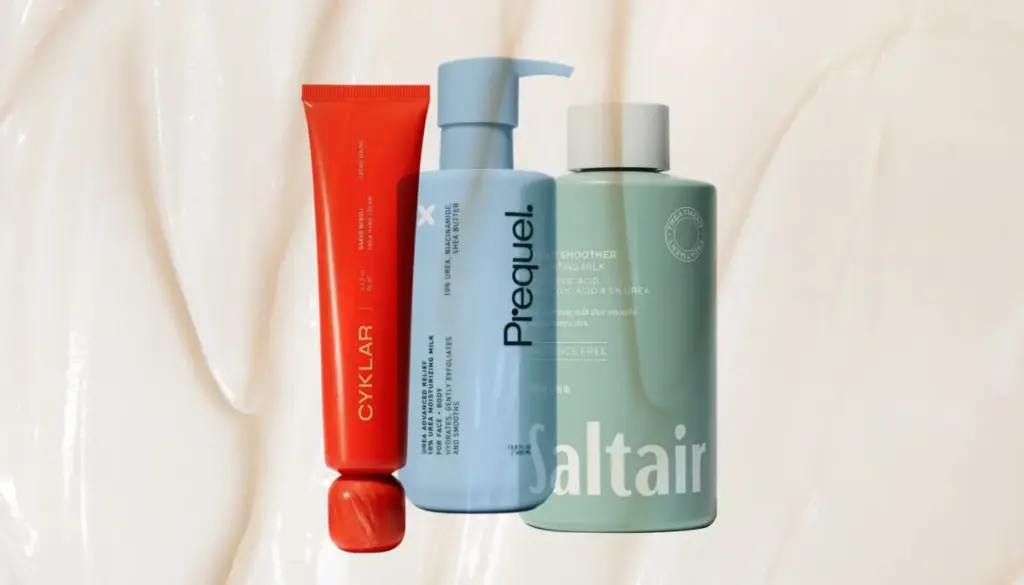
- Concentration-Based Evaluation: Testing protocols are strictly segmented by urea percentage. Products containing under 20% urea are evaluated primarily for tactile metrics: depth of hydration, immediate skin softening, non-greasy absorption, and long-term moisture retention. Formulas boasting 20% urea or higher are subjected to performance trials assessing their capacity to rapidly soften, smooth, and dismantle thick calluses, rough patches, and scaling skin on heels, elbows, and knees.
- Clinical & Professional Audits: Dermatologists and master estheticians are interviewed regarding their personal product preferences, clinical protocols, and the specific formulations they routinely recommend to patients dealing with chronic xerosis, keratosis pilaris, and severe scaling.
- Consumer Sentiment Analysis: Extensive reviews across commercial and dermatological platforms are analyzed to evaluate real-world performance, tracking metrics such as consistency, fragrance sensitivity, packaging integrity, and long-term user satisfaction.
Future Outlook: The Next Generation of Urea Formulations
As cosmetic science continues to evolve, the future of urea in skincare looks exceptionally bright. Industry formulators are currently focusing on advanced delivery systems that enhance urea’s stability and skin penetration while completely eliminating potential irritation profiles.
Micro-Encapsulation and Time-Release Technology
One of the most exciting frontiers in urea formulation is micro-encapsulation. By encapsulating urea molecules within lipid bilayers or polymeric matrices, formulators can achieve a sustained, time-release effect. This innovation allows high concentrations of urea to deliver continuous keratolytic and hydrating action over many hours without triggering acute stinging or barrier disruption upon initial application.
Synergy with Advanced Barrier Therapeutics
Future skincare lines are moving away from single-ingredient spotlighting toward sophisticated, biomimetic formulations. We can expect to see next-generation urea creams synergized with bio-identical ceramides, postbiotics, and advanced lipid complexes designed to rebuild compromised skin barriers while simultaneously smoothing texture.
As consumers increasingly reject superficial marketing claims in favor of proven, scientifically validated ingredients, urea stands out as a timeless anchor of dermatological science. By bridging the gap between deep hydration and effective cellular renewal, urea proves that sometimes the most revolutionary ingredient in your bathroom cabinet is the one your skin already knows how to make.