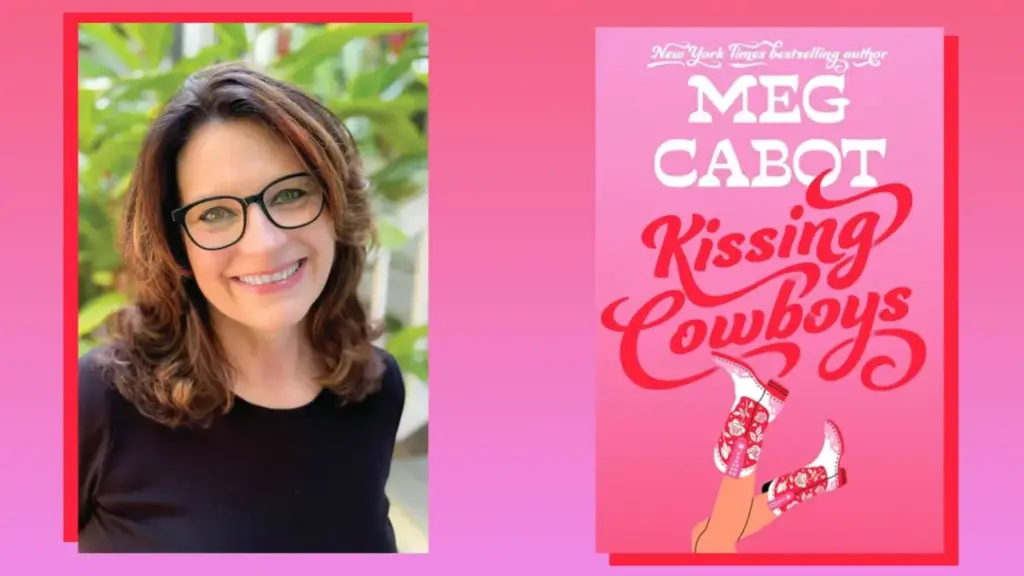
Meg Cabot, the literary architect who defined the coming-of-age experience for millions of Millennials and older Generation Z readers with her seminal 2000 release The Princess Diaries, is mounting a massive, multi-platform return to the literary spotlight. Sitting down for afternoon tea at the historic Palm Court inside New York City’s Plaza Hotel—the very landmark where young Mia Thermopolis discovers her royal lineage—Cabot reflects on an expansive 2026 publishing slate that spans genres, mediums, and target demographics.
Among the standout projects fueling her resurgence is a brand-new graphic novel adaptation of The Princess Diaries, illustrated by comic artist Bethany Crandall and published this summer. This release arrives alongside a flurry of high-profile literary output: The Magic We Made, a witchy contemporary romance; Kissing Cowboys, Cabot’s first young adult novel in a decade; an updated re-release of her classic YA supernatural title When Lightning Strikes; and an original children’s graphic novel series, Detective Baby.
This cultural wave is amplified by persistent, high-level buzz surrounding the forthcoming Princess Diaries 3 film adaptation, for which Cabot confirms she has reviewed scripts. Having published upwards of 80 novels over a 26-year career, Cabot’s renaissance is not merely a nostalgic victory lap. It is a calculated, vibrant reconnection with an audience that has grown up, populated the world with children of their own, and maintained an unyielding appetite for the author’s signature blend of diary-format intimacy, sharp wit, and modern fairy-tale mechanics.
Detailed Chronology: From Star Wars Fanfiction to Royal Realities
The Indiana Origins and Early Writing Roots
Long before she was a New York Times bestselling author shaping the landscape of contemporary young adult literature, Meg Cabot was an imaginative child growing up in Indiana during the 1970s. Like countless creative youths, she nurtured a deeply held belief in her own latent supernatural abilities.
"I was convinced, like all young imaginative girls, that I had ESP and witch powers," Cabot recalls with a chuckle over Earl Grey tea—a beverage she notes she selected intentionally after reading that its bergamot composition is historically tied to bringing fortune. That childhood imagination was further stoked by her family, who jokingly fed into folklore about supposed ancestral witches burned at the stake.
Cabot’s foundational steps into storytelling began not with formal literary exercises, but with elaborate Star Wars fan fiction centered entirely around herself. In these unpublished childhood manuscripts, Princess Leia would routinely arrive at Cabot’s school to enlist her aid in defeating the Dark Lord, casually ditching her youthful rivals to save the Rebel Alliance. When she proudly presented her finished manuscript to her mother with the instruction to forward it directly to George Lucas, she received a formative education in the realities of the publishing industry.
The New York Arrival and Early Antics
Upon moving to New York City in her early twenties, Cabot’s bold literary fandom manifested in eccentric ways. One of her earliest acts in the metropolis was looking up Hilary Knight—the acclaimed writer and illustrator behind the iconic Eloise at the Plaza series—in the physical telephone book.

"I couldn’t believe that he was listed," Cabot says. "All I said was, ‘Hi, you’re my favorite artist.’ He sounded very refined on the phone."
That early reverence for New York institutions deeply influenced her professional breakthrough. When she published The Princess Diaries under her real name in 2000, she anchored Mia Thermopolis’s identity-shattering revelation not in a vacuum, but in the ornate hallways of the very hotel where Eloise lived. While the 2001 Disney film adaptation—starring Anne Hathaway and Julie Andrews—relocated Mia’s life to sunny San Francisco and altered her familial backstory, the literary canon kept the Plaza front and center.
The Decade-Long YA Hiatus and Triumphant Comeback
After spending decades as an undisputed titan of young adult fiction, Cabot deliberately pivoted away from the demographic for ten years. Finding her way back to the YA space required overcoming a distinct hurdle: re-learning the vernacular of contemporary teenagers.
"I’ve been out of it for so long, I don’t know what anyone is talking about," she admits.
That hurdle was cleared with Kissing Cowboys, a diary-style, fish-out-of-water romantic comedy set on a Montana dude ranch that features a classic love triangle. The process forced Cabot to re-engage with the intimate, confessional narrative structure that made her famous, proving that her distinct narrative voice transcends generational shifts in teenage communication.
Supporting Context & Metrics: The Scale of Cabot’s Empire
The scope of Meg Cabot’s literary footprint is immense. With more than 80 published titles to her credit, her work has crossed linguistic, cultural, and generational boundaries.
Bibliographic Overview and 2026 Slate
Cabot’s 2026 publishing calendar demonstrates a rare cross-market versatility, bridging middle-grade readers, young adults, and adult romance consumers:

- The Princess Diaries: The Graphic Novel: Illustrated by Bethany Crandall, bringing the foundational royal narrative into a modern visual medium.
- The Magic We Made: The second installment in her Witches of West Harbor series, conceptually inspired by Taylor Swift’s song "Long Live."
- Kissing Cowboys: Cabot’s triumphant return to young adult literature after a ten-year hiatus.
- When Lightning Strikes: A meticulously re-edited re-release of her beloved supernatural YA title.
- Detective Baby: An original, humor-driven children’s graphic novel series focusing on an infant crime-solver.
Demographics and Fan Evolution
Cabot’s book tours provide a living metric of her multi-generational impact. The young girls who devoured The Princess Diaries paperbacks in the early 2000s now navigate adulthood with strollers, career tracks, and families of their own.
"It’s weird because I have not aged to myself, but all these women are coming [to my book tour] and they’re using baby strollers and stuff," Cabot observes. When fans approach her to state that her books were their sixth-grade obsession, the author experiences a momentary cognitive dissonance regarding the passage of time—tempered quickly by the satisfaction of seeing her readership grow into accomplished, literate adults.
Productivity Hacks and the "Hatred" Motivation
Maintaining such a prolific output requires rigid discipline. Cabot relies on a collaborative daily goal system with fellow author Rachel Vail to ensure creative momentum. The operational mechanics of this system are remarkably strict:
- The Daily Minimum: Both authors must complete five pages of new manuscript text every single day.
- The Deadline: The target must be met by 5:00 PM local time.
- The Penalty: Failure to hit the five-page threshold results in a mandatory $5 financial donation directed to Donald Trump.
- The Psychological Driver: "I really seem to be motivated by just hatred, which is terrible," Cabot jokes, noting that alternative rewards—such as treating themselves to nice purchases—historically failed to provide adequate incentive.
Official Statements and Author Insights
Throughout her conversations with literary critics and interviewers, Cabot has offered candid perspectives on the evolution of her readership, the psychology of writing, and the surprising ways fan culture has transformed over the past quarter-century.
On the Intimacy of Diary-Style Fiction
Cabot remains fiercely attached to the format that launched her career. The diary style allows for an unfiltered psychological intimacy between the protagonist and the reader, creating a safe harbor for adolescents navigating identity crises.
"You always remember the books that shaped your young adulthood, that gave you a frame of reference for seeing the world, that taught you reading could feel a bit like magic," Cabot notes, drawing parallels to foundational coming-of-age texts like the Betsy-Tacy series and Phyllis Reynolds Naylor’s Alice novels.
On Misunderstood Villains and Fan Obsessions
As modern media consumption habits have evolved, Cabot has noticed a fascinating shift in how readers interpret moral frameworks in fiction. Fans frequently attempt to rehabilitate the reputations of her most notoriously unlikable antagonists, such as Paul Slater from her Mediator series.

"I still get emails from people wanting to tell me that I need to write a book from his point of view because he’s not that bad and he’s just misunderstood and they have had a book crush on him forever," Cabot says, expressing utter disbelief. "I’m like, ‘Oh my God, he is that bad. He’s not misunderstood. He’s just a jerk.’"
Conversely, fans often lobby for point-of-view expansions for upstanding characters like Michael Moscovitz from The Princess Diaries, a proposition Cabot dismisses with characteristic pragmatism: "I don’t even think he could have a diary. He’s a teenage boy who’s totally into computers."
On Making Your Own Magic
Reflecting on her journey from an imaginative, spell-obsessed child in Indiana to a master architect of modern romance and YA fiction, Cabot emphasizes that creative agency is an active endeavor rather than a passive gift.
"The magic is within us, but it’s just doing our jobs very well. We’re trying to make the world better, right?" she reflects. That philosophy underpins her return to crafting stories for young people—ensuring that whether through a baby detective solving neighborhood mysteries or a princess navigating diplomatic protocols in New York, new generations of readers continue to find joy in the written word.
Future Outlook
As Meg Cabot looks toward the horizon, her creative engine shows zero signs of deceleration. Having successfully wrapped the sequel to Kissing Cowboys, she is already deep into the development of a brand-new book series centered around a female amateur sleuth navigating the streets of New York City.
Concurrently, the entertainment industry continues to prep for the long-awaited revival of the cinematic franchise that cemented her global footprint. With Anne Hathaway publicly confirming the active development of Princess Diaries 3 and Cabot having reviewed preliminary script drafts, the cultural appetite for Gen-X and Millennial nostalgia is reaching a fever pitch.
By simultaneously servicing her original readership with mature contemporary romances, introducing her classic characters to fresh eyes via graphic novel adaptations, and capturing the imaginations of toddlers through projects like Detective Baby, Meg Cabot has secured her legacy. She proves definitively that good storytelling does not age out—it simply evolves, finding new ways to make readers believe in a little bit of magic.