Executive Overview
The global fashion calendar has officially touched down in Milan for the Spring/Summer 2027 collections, following whirlwind, star-studded showcases in New York and London. While Milan Fashion Week is historically celebrated for its reverence for heritage, masterful tailoring, and the enduring legacy of fashion dynasties like Prada, Gucci, and Fendi, the current season is far from business as usual. Instead, the Italian capital is playing host to a dramatic structural evolution, marked by high-profile creative director departures, major leadership handovers, and an unprecedented shift in how heritage houses position themselves for the future.
At the epicenter of this tectonic industry shift is Prada, which once again proved its unmatched magnetic pull by drawing a stellar constellation of international cinema, music, and digital stars to its front row. Stars such as Hunter Schafer, Maya Hawke, Uma Thurman, Alexa Chung, and Nara Smith converged to witness Miuccia Prada and Raf Simons’ latest visionary offering. Yet, beyond the flashbulbs and viral runway moments, Milan Fashion Week SS27 is defined by a transitional landscape. From Glenn Martens preparing for his poignant final bow at Diesel to the bold new chapters opening at Moschino and Emporio Armani, the city is a living laboratory where legacy meets metamorphosis.
This comprehensive report examines the cultural impact, major front-row sightings, brand strategies, and structural realignments defining Milan Fashion Week SS27, offering an authoritative lens on the state of global luxury.
Detailed Chronology: The Evolution of the SS27 Milan Schedule
Setting the Stage: From New York and London to Lombardy
The journey toward Milan Fashion Week SS27 has been exhausting yet exhilarating. Since the official kickoff following Labor Day, the international style circuit has been locked in a non-stop rotation of high-fashion parties, debut musical releases, and critical runway presentations. New York offered an energetic, youth-driven spectacle, while London showcased avant-garde experimentation and boundary-pushing British design. However, as the fashion capitals shifted focus from the Anglo-American sphere to the historic palazzos of Milan, the mood transformed.
Milan’s approach to fashion week is traditionally more measured. It relies on the gravitational pull of storied Italian institutions. Yet, the SS27 season arrived bearing heavy industry-wide news. The traditional lineup has been disrupted by strategic shake-ups that signal a broader industry reckoning regarding creative direction, brand identity, and sustainable growth cycles.
The Seismic Shifts: Departures, Debuts, and Quiet Intermissions
The runway calendar this week tells a story of transition as much as it does of creation. Among the most notable updates is Glenn Martens presenting his final collection as the creative director of Diesel. Martens, widely credited with revolutionizing the denim giant through boundary-pushing conceptual streetwear and high-concept runway spectacles, leaves behind a monumental legacy as he closes this chapter of his career.
Concurrently, notable absences are shaping the narrative. Versace has opted not to show on the traditional SS27 schedule, keeping anticipation high for incoming designer Pieter Mulier, whose highly anticipated debut at the helm of the legendary Medusa house is slated for 2027. This tactical pause underscores a growing trend among luxury houses: giving incoming creative directors ample runway time to construct an unimpeded, highly cohesive vision rather than rushing into production under legacy schedules.
Further shaking up the Italian fashion ecosystem, the dynamic design duo known as the Sunnei boys—Loris Messina and Simone Rizzo—are making their official debut as the newly minted creative directors of Moschino. Their appointment represents a generational shift, injecting a much-needed dose of contemporary, digitally native irony into a house historically defined by Franco Moschino’s irreverent surrealism. Meanwhile, Dario Vitale has recently secured a high-profile, pivotal role at Emporio Armani, though industry insiders will have to wait another season to witness his debut collection take shape.
Amidst these structural earthquakes, reliable anchors like Ferragamo, Bottega Veneta, and Marni continue to draw critical acclaim, ensuring that Milan remains the gold standard for tactile craftsmanship and material innovation.
Supporting Context & Metrics: The Star Power and Digital Footprint of Prada
While executive shuffling sets the macro-economic tone of Milan Fashion Week, the micro-economic and cultural impact is measured in front-row star power, earned media value (EMV), and global digital engagement. No brand masters this equation quite like Prada.
The Prada Front Row: A Masterclass in Curation
Prada’s Spring/Summer 2027 front row functioned as a masterclass in cross-generational, cross-industry casting. The gathering was a testament to the house’s ability to bridge classic Hollywood royalty with contemporary internet icons and indie darlings.
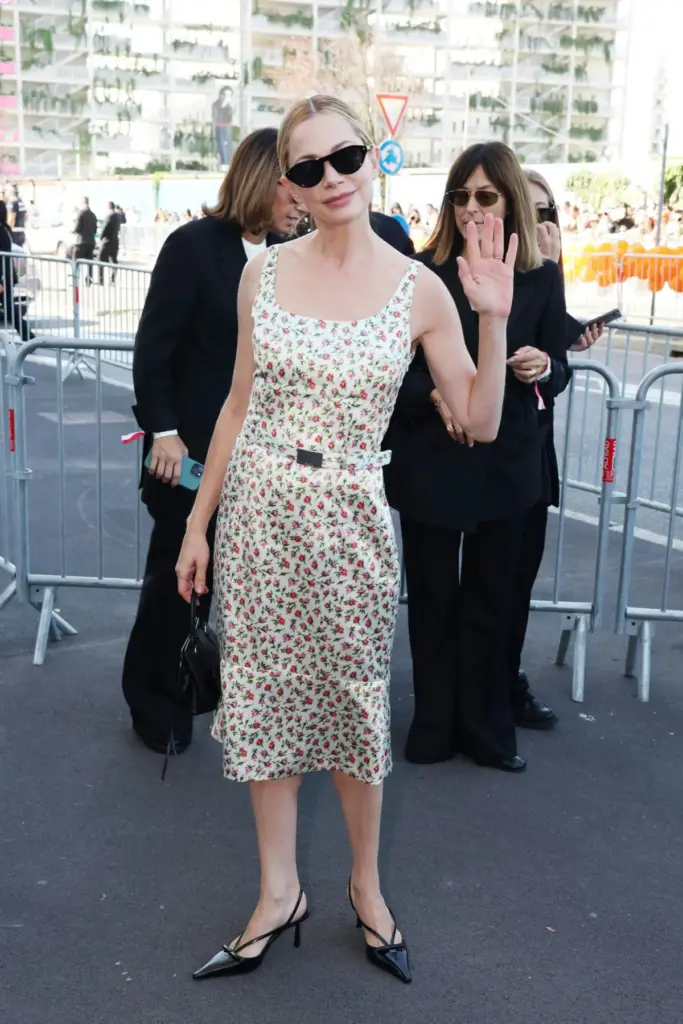
- Cinematic Icons and Generation-Defining Actors: The legendary Uma Thurman commanded attention with her effortless elegance, joined by her talented daughter Maya Hawke, whose literary-chic aesthetic perfectly complements Prada’s intellectual cool. Michelle Williams brought her signature understated poise, while rising cinematic and television stars Molly Gordon, Benedetta Porcaroli, and Camila Mendes added fresh energy to the house’s inner circle.
- The Avant-Garde Muses: Hunter Schafer, a longtime collaborator and muse of the brand, delivered another masterclass in front-row dressing, effortlessly embodying the futuristic, gender-fluid luxury that Prada frequently champions. Alexa Chung brought her quintessential British indie-sleaze charm, reinterpreted through a refined Milanese lens.
- Digital Pioneers and Lifestyle Icons: Culinary-meets-lifestyle creator and digital icon Nara Smith captivated onlookers, further bridging the gap between digital-first personal branding and heritage luxury validation. Meanwhile, Charli D’Amelio represented the pinnacle of TikTok-era mainstream culture successfully integrating into high fashion’s most elite echelons.
Metrics of Influence: Why the Front Row Matters
In the modern luxury economy, a front row is not merely a seating chart; it is a meticulously calculated data point. Industry analytics firm Earned Media Value (EMV) tracking reveals that appearances by figures like Hunter Schafer, Maya Hawke, and Charli D’Amelio generate millions of impressions within hours of the show’s conclusion.
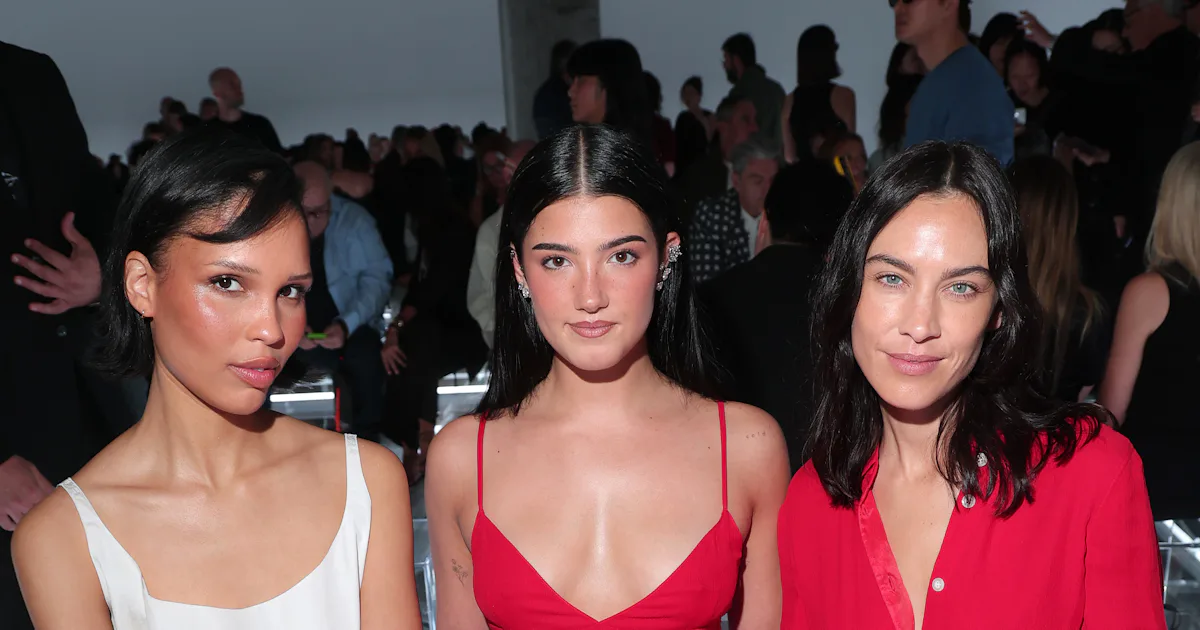
Prada’s strategic pairing of legacy actors (Thurman, Williams) with Gen-Z cultural arbiters (D’Amelio, Smith) ensures that the brand captures multiple distinct consumer demographics simultaneously. This multi-generational appeal is vital as luxury houses navigate a volatile global market where brand loyalty must be continually cultivated across diverse age brackets.
Official Statements & Industry Perspectives
The convergence of corporate restructuring and artistic turnover has prompted industry leaders to reflect on the future trajectory of Italian fashion.
Reflecting on the shifting creative landscape, market analysts note that luxury houses are increasingly prioritizing long-term brand equity over rapid trend cycles. The decision by houses like Versace to step back temporarily, alongside the strategic appointments of independent talents like Glenn Martens and the Sunnei founders to legacy houses, points to a broader industry realization: creative direction requires breathing room.
An executive close to the Milanese fashion chamber remarked on condition of anonymity:
"We are witnessing a structural recalibration. The consumer is fatigued by endless revolving doors of designers. What Milan is doing this season—giving space to incoming talents like Pieter Mulier at Versace, celebrating the closing chapters of innovators like Glenn Martens at Diesel, and empowering independent voices at historic houses like Moschino—proves that Italian fashion is investing in genuine narrative depth rather than superficial shock value."
Furthermore, representatives for Prada emphasized the collaborative nature of their collections, noting that the synergy between Miuccia Prada and Raf Simons continues to redefine the boundaries of contemporary uniform dressing. By maintaining a steady, uncompromising aesthetic vision while engaging with contemporary cultural figures, Prada remains the undisputed anchor of Milanese stability amidst a sea of change.
Future Outlook: What Lies Ahead for Milan and Global Fashion
As Milan Fashion Week Spring/Summer 2027 progresses, the implications of this week’s events will ripple far beyond the current season. The industry is standing at a critical crossroads.
1. The Rise of the New Creative Guard
The upcoming 2027 calendar will see the fully realized visions of newly appointed creative directors take to the runway. As Pieter Mulier unveils his inaugural collection for Versace and the Sunnei founders settle into their new roles at Moschino, the design vocabulary of Italian luxury is set to undergo a profound transformation. Expect a departure from hyper-commercialized minimalism toward more texturally rich, conceptually driven collections that honor house archives while aggressively pushing into the future.
2. The Evolution of Brand Collaborations and Front-Row Strategies
The success of Prada’s SS27 front row demonstrates that the traditional celebrity endorsement model has evolved. Brands no longer look simply for famous faces; they seek cultural partners whose personal narratives align with the intellectual ethos of the house. Moving forward, expect to see even tighter integrations between luxury brands and multidisciplinary artists, digital creators, and independent filmmakers.
3. Sustainability and Pacing in the Luxury Sector
The tactical pauses observed this season—such as Versace’s scheduling adjustment—may well become a permanent blueprint for the luxury sector. As supply chain pressures, economic fluctuations, and consumer fatigue mount, the industry is slowly pivoting away from the breakneck pace of pre-collections and rapid-fire seasonal drops. Instead, Milan is championing a return to deliberate, high-impact storytelling.
Conclusion
Milan Fashion Week Spring/Summer 2027 will be remembered not just for the clothes that graced the runways, but for the profound structural evolution happening behind the scenes. From the star-studded sanctuary of the Prada front row to the bittersweet farewells at Diesel and the anticipatory buzz surrounding new creative leadership, Milan has once again proven that it is capable of honoring its storied past while fearlessly authoring its future. As the week unfolds, one thing remains certain: the world of fashion is watching Milan, and Milan is ready for its next great era.