Executive Overview
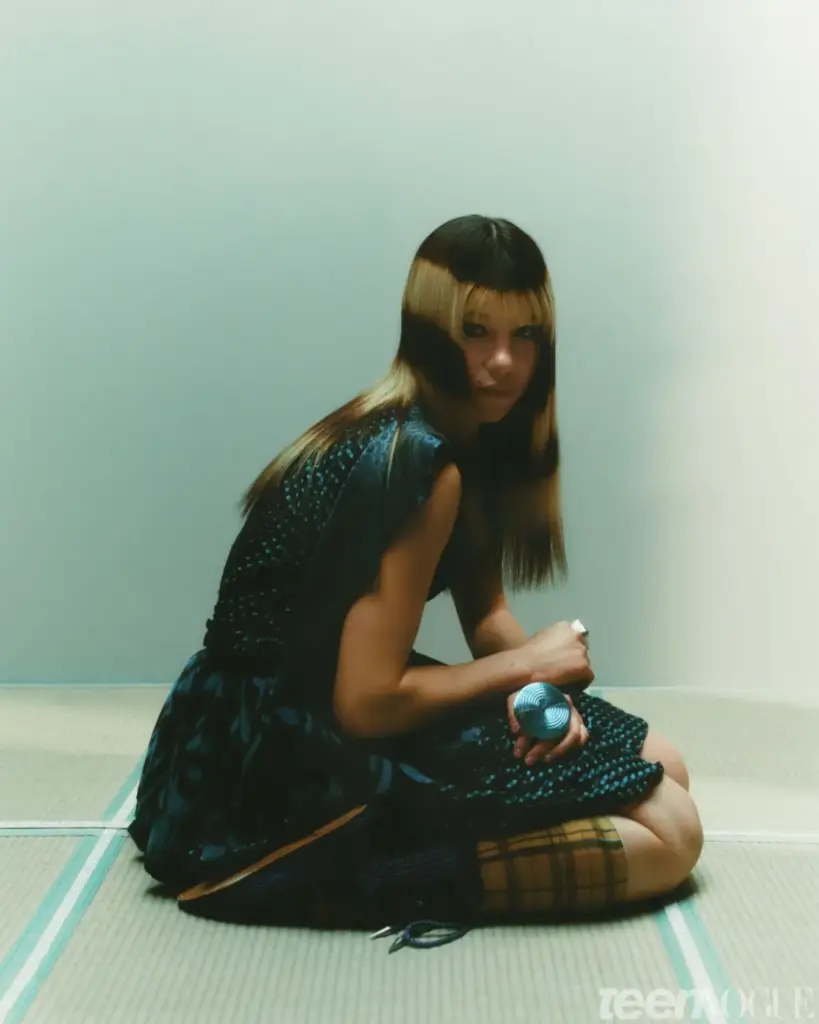
Weeks after the triumphant conclusion of the 2026 Winter Olympics, the cultural fallout of the Games continues to ripple far beyond the competitive rinks. Among the most enduring symbols of this athletic cycle is not merely a medal tally or a record-shattering routine, but a visual masterpiece of personal branding: the golden-hued, intricately structured "halo hair" worn by American figure skating gold medalist Alysa Liu.
As the cover star of Teen Vogue‘s special Olympic issue, Liu has cemented her status not only as an elite athletic champion, but as a defining cultural icon of the mid-2020s. Known for her effortless grace on the ice coupled with a distinctively rebellious "alt-girl" aesthetic, Liu has catapulted a decades-old hair coloring technique back into the global spotlight. Her signature milk-tea-toned halo—painfully perfected by St. Louis-based colorist Kelsey Miller over a grueling five-hour session—has sparked an unprecedented aesthetic movement.
This deep-dive investigative report examines the convergence of high-performance athletics and counter-cultural beauty trends. We trace the chronology of Liu’s Olympic triumph and hair evolution, explore the mechanics and historical lineage of halo hair, evaluate expert industry insights from top stylists and colorists, and project how this low-maintenance yet striking aesthetic will permanently alter mainstream hair trends.
Detailed Chronology: From Rink to Runway and the Evolution of an Icon
To understand the cultural magnitude of Alysa Liu’s current reign, one must examine the timeline of her unique journey through sport and self-expression.
The California Roots and the Hiatus
Raised in California, Liu burst onto the senior international figure skating scene as a prodigy, capturing national titles at a remarkably young age. However, the immense pressure of elite competition led the young skater to step away from the ice entirely to reclaim her adolescence, focus on her education, and explore her personal identity outside of the rigid confines of competitive sports.

During this hiatus, Liu’s personal style blossomed. Eschewing the conventional, hyper-polished look traditionally favored by competitive figure skaters, she gravitated toward alternative fashion, dyeing her hair herself and experimenting with edgy color placements.
The Return and the 2026 Winter Olympic Triumph
When Liu made her triumphant return to competitive skating, she brought her authentic self back with her. Her victory in the free skate at the 2026 Winter Olympics was heralded not just for its technical brilliance, but for the unapologetic individuality she brought to the ice. Paired with a matching gold skating dress, her meticulously crafted halo hair and ethereal styling became instantly iconic. The look bypassed traditional sports journalism and dominated fashion blogs, TikTok, and high-fashion spreads, culminating in her landmark Teen Vogue cover shoot.
The Crafting of the Milk Tea Halo
Liu’s DIY hair experiments eventually graduated to professional execution when she partnered with St. Louis colorist Kelsey Miller. Moving away from a brassy, high-maintenance blonde, Liu sought a softer, more sophisticated "milk tea" shade. The transformation required a meticulous, five-hour color session designed to isolate specific sections of the hair while leaving the underlying layers deep and dimensional. The result was a stunning, luminous ring of light that seemed to float effortlessly around her head—a visual manifestation of her Olympic gold.
Supporting Context & Metrics: The Mechanics and History of Halo Hair
While Alysa Liu has modernized the look for the mid-2020s, the "halo hair" technique possesses a rich, cyclical history within the broader landscape of hair artistry.
What is Halo Hair?
In professional colorist terminology, a "halo result" is achieved by strategically placing lightener to build intense brightness in defined, circular zones throughout the head. Unlike traditional highlights, balayage, or global bleaching, halo hair isolates specific geometric patterns—ranging from soft, crown-like halos to striking, linear horizontal stripes.

Renée Valerie Radoiu, Vice President of R+COLOR Education, explains the structural mechanics:
"I typically isolate a circular section through the top of the head, almost like drawing a soft crown, and focus brightness strategically through that zone, while keeping the underneath more dimensional."
A Century of Rebellious Evolution
The technique has ebbed and flowed in popularity over the decades, frequently tied to counter-cultural movements.
- The Y2K and 2000s Era: Early iterations featured stark contrasts, such as Miley Cyrus’s platinum-on-top, dark-layers-beneath approach reminiscent of early 2000s punk and pop-punk aesthetics.
- The Neo-Punk Era: Musicians like Billie Eilish revolutionized the technique with high-contrast, peekaboo roots in neon greens and vibrant reds, establishing rooty, dimensional placement as a mainstream statement.
- The Editorial Vanguard: Artists like Rosalía and Caroline Polachek have continually reinvented the crown stripe, proving that the technique can adapt to everything from avant-garde pop performances to red-carpet galas.
The Maintenance Paradox: Why Low-Maintenance Appeals to High Achievers
One of the primary drivers behind the explosive popularity of Liu’s specific halo technique is its ingenious maintenance schedule. Traditional blonde highlights or double-process blonding require grueling, monthly root touch-ups that demand significant time in the salon chair—a luxury busy athletes and modern consumers rarely possess.
Liu initially toyed with the idea of classic "raccoon stripes," but was deterred by the intense upkeep. By opting for a single, crown-centric halo ring that she could simply add to on an annual basis, she discovered a brilliant loophole in hair maintenance.

As Liu noted in her Teen Vogue cover interview:
"Then as it grew out, I was like, ‘I could just do it once every year.’ You don’t have to upkeep it. You don’t have to re-bleach your roots because it’s not on the roots."
This "add an extra ring each year" approach transforms hair color from a chore into an evolving narrative of personal growth and storytelling.
Official Statements & Industry Expert Perspectives
Leading voices in the professional hair care and beauty industries have weighed in on why Alysa Liu’s hair is striking such a deep chord with contemporary audiences.
Redefining Individualism in Elite Athletics
Renée Valerie Radoiu of R+COLOR emphasizes the rarity of true self-expression in traditional sports:

"Alysa Liu’s hair suits her so well because it feels completely unapologetic and true to who she is. In figure skating, it’s rare to see such individuality expressed through personal style, which is likely why so many people are drawn to her. It feels refreshing. As someone who grew up figure skating, I know I would have loved having a role model like her to look up to."
Radoiu adds that the current aesthetic is rapidly shifting from a niche underground technique to a dominant mainstream influence, largely driven by cultural figures across sports and music embracing custom placements.
The Shift Toward Hyper-Personalization
Chase Kusero, cofounder of IGK Haircare, views Liu’s look as the ultimate embodiment of current consumer desires:
"We’re in a moment where personalization is everything. Clients don’t just want highlights—they want intentional placement that feels expressive. It taps into the Y2K revival energy, it gives that editorial edge without committing to a full-head transformation."
Future Outlook: How to Achieve and Maintain the Look
As the halo hair trend transitions from Olympic ice rinks to global salons, professionals advise that achieving this editorial look requires precision and dedicated aftercare.

Salon Execution vs. DIY
While Alysa Liu originally experimented with DIY applications, industry experts strongly recommend consulting a licensed professional to execute clean, geometric placements. Colorists frequently utilize specialized sectioning tools—such as professional hair tape or foil boards—to isolate the crown zone cleanly without bleeding into the underlying dimensional layers.
Professional Maintenance and Home Care Regimen
Because pre-lightened hair is susceptible to fading, warmth, and structural dryness, maintaining a halo style requires targeted hydration and color-protection protocols. Experts recommend the following regimen:
- Gentle Cleansing and Glossing Shampoos:
Kusero recommends products specifically engineered to extend color vibrancy, such as the IGK More Life Color Extending Gloss Shampoo and Conditioner, which are clinically formulated to double the hair’s natural shine and lock in radiant tones. - Professional and At-Home Gloss Treatments:
To prevent the natural brassiness that plagues pre-lightened strands, regular glossing treatments are non-negotiable. Professionals utilize high-performance acid-based demi-permanents like R+COLOR HYPERMATIC 10-Minute Demi-Permanent Liquid. For at-home maintenance, consumers can turn to consumer-friendly alternatives such as Kristin Ess Hair Gloss in Crystal Quartz or the IGK Expensive Clear Gloss Top Coat. - Strategic Evolution:
Rather than treating hair color as a static destination, adopting Liu’s philosophy allows the hair to grow out naturally, treating each subsequent salon visit as an opportunity to add a new ring to your personal aesthetic story.
Conclusion
Alysa Liu’s 2026 Olympic gold medal victory will forever be remembered in sports history books, but her cultural legacy extends far beyond the medal podium. By refusing to conform to athletic homogeneity and instead bringing her authentic, alt-girl aesthetic to the global stage, she has democratized a bold, expressive hair trend. The halo hair renaissance is officially here—and whether you step onto an Olympic rink or simply walk down the street, it offers everyone the chance to shine with an unapologetic, golden glow.