Executive Overview
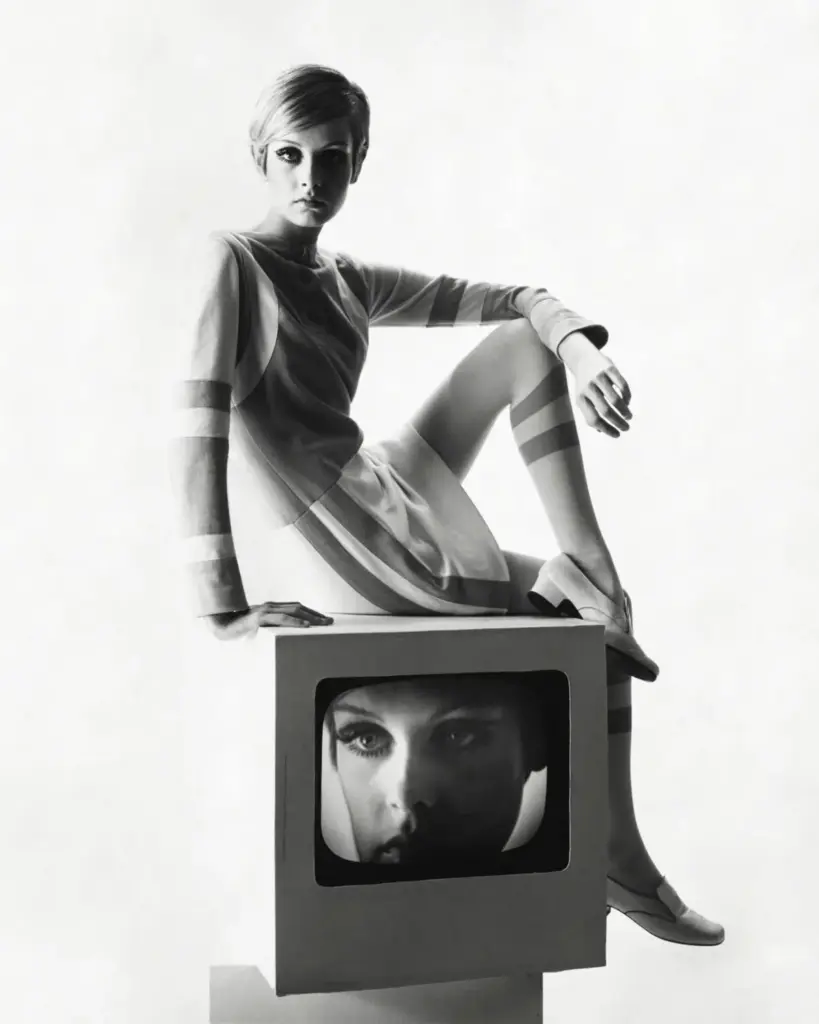
Nearly six decades after she revolutionized the global perception of beauty, Lesley Hornby—better known to the world simply as Twiggy—remains a towering cultural benchmark. At just 16 years old, she shattered the rigid class and aesthetic barriers of mid-century fashion, effectively becoming the world’s first true supermodel. Yet, despite an astonishing trajectory that placed her at the vanguard of the British Invasion alongside The Beatles, her full narrative has often been truncated to those incandescent five years of 1960s modeling.
Now, at 77, Twiggy is stepping firmly back into the cultural spotlight to reclaim the entirety of her legacy. Spearheaded by director, producer, and close friend Sadie Frost, a new biographical documentary titled Twiggy seeks to correct the historical record. The film chronicles her accidental ascension from a strict working-class suburban household in London to global superstardom, while also illuminating the remarkable four-decade second act that followed her retirement from full-time modeling in 1970. Featuring contributions from cultural heavyweights such as Sir Paul McCartney, Sienna Miller, Stella McCartney, Brooke Shields, and Edward Enninful, the documentary offers an intimate exploration of a reluctant icon whose accidental revolution permanently altered the DNA of modern style.
Detailed Chronology: From Suburban Mod to Global Phenomenon
The Mod Club Years and Working-Class Roots
Before she was captured by the lenses of Barry Lategan and Bert Stern, Lesley Hornby was a quintessential suburban London teenager navigating the strictures of 1960s working-class life. Confined by familial curfews and social limitations, her introduction to the burgeoning youth culture of the era came through weekend excursions to mod clubs.
"I was a schoolgirl, so I was only allowed out on a Saturday night. I had a strict curfew. I had to be home by 10:00," Twiggy recalls, looking back from the tranquil terrace of a Chelsea Italian restaurant on a sunlit late-summer afternoon.
At age 13, these clandestine outings served as her introduction to a formalized youth identity. "We’d go to a club in another suburb of London. The thing about mods is you wore the same things. It was a uniform," she says. Lacking the financial resources of the upper or middle classes, Twiggy and her peers emulated the older girls, adopting an austere uniform comprising a gray pleated knee-length skirt, Hush Puppies shoes, and a navy blue nylon raincoat.
Financing her passion for fashion required ingenuity. While working as a Saturday girl at a local hair salon, she meticulously saved her tips for pilgrimages to Biba, the iconic Kensington boutique that functioned as a secular temple for London’s youth. "It was like our church, going to Biba," Twiggy reflects. "Every fourth week, we’d run down to Biba during our lunch hour. You could get a dress for two pounds, and it was brilliant."

The Accidental Haircut That Changed History
The trajectory of modern fashion history pivoted on a fateful, involuntary visit to a Mayfair salon in 1966. At the hands of Leonard Lewis—universally known as Leonard of Mayfair—Twiggy received the iconic boyish crop that would define a decade.
"I didn’t want my hair cut," she confesses. "I was sitting in this posh salon in Mayfair, and I was too shy to say no. Thank God, because if I hadn’t had my hair cut, none of this would have happened."
Photographer Barry Lategan captured the striking new silhouette, and the resulting portrait was hung prominently within the salon. There, it caught the discerning eye of Deirdre McSharry, a fashion journalist for the Daily Express. McSharry instantly recognized the cultural significance of the image, heralding Twiggy as "The Face of ’66." Overnight, the teenager was thrust into a maelstrom of international celebrity.
The British Invasion of New York
By 1967, a 17-year-old Twiggy touched down in New York City for the first time, only to be met by scenes of mass hysteria usually reserved for rock stars.
"I landed and they were teenage girls with banners up with my name," she remembers. "I came in after the Beatles, so I became part of the British Invasion… I was one of the invaders."
Her arrival in the United States cemented her status as a transatlantic phenomenon. Yet, behind the flashing cameras and adoring crowds lay a young woman who recognized the sheer improbability of her position. "There’s a bit of Eliza Doolittle in me," Twiggy notes, drawing a parallel to the working-class flower girl she would eventually portray in a 1981 television adaptation of George Bernard Shaw’s Pygmalion. "I came from the wrong class. I would never have gone to a modeling agency, and they wouldn’t have taken me because I was too small, too thin. What happened to me shouldn’t have happened."

Supporting Context & Metrics: Deconstructing the Myth
The Five-Year Modeling Career
A recurring revelation for contemporary audiences encountering the documentary is the ephemeral nature of Twiggy’s modeling tenure. Operating at the absolute apex of the industry, she officially retired from full-time modeling in 1970—having spent a mere five years in the profession that made her a household name.
This brevity underscores a critical thematic pillar of Sadie Frost’s directorial vision: the danger of cultural pigeonholing. As Frost notes, public memory is frequently anchored to the precise moment of an individual’s initial breakthrough, often overshadowing decades of subsequent reinvention.
Archival Treasures and Cultural Contrast
A standout element of the documentary is its extensive use of archival footage capturing teenage Twiggy navigating the predatory media landscape of the 1960s. Director Sadie Frost emphasizes the raw authenticity preserved in these historical records.
"There’s this authenticity and naivety and innocence," Frost observes. "You really had these very upper-class, middle-class models who were very put together. And then Twiggy came along and just blew that out of the water."
Among the archival clips driving conversation online is a notorious television interview featuring a visibly condescending Woody Allen interrogating a young Twiggy about her favorite philosophers. Demonstrating a quiet resilience and innate poise, Twiggy deflects the query by turning it back on her interviewer—leaving him momentarily speechless and highlighting the intellectual fortitude hidden beneath her doe-eyed, mod aesthetic.
Official Statements and Production Insights
Sadie Frost on the Genesis of Twiggy
The realization of the documentary was as serendipitous as Twiggy’s initial discovery. Sadie Frost, who returned to academia in 2019 to pursue a master’s degree in film production, was in the midst of promoting her directorial debut—a critically acclaimed documentary about fashion designer Mary Quant—when she appeared as a guest on Twiggy’s podcast, Tea With Twiggy.
.jpg)
"At that moment, I realized I didn’t have a job," Frost recalls. "I’d been working for three years on Quant and I hadn’t thought about the future because I was so consumed with that. And it just spurted out: ‘Oh, I don’t know. Let me do a documentary about you.’"
Twiggy was initially hesitant, having fielded numerous cinematic and biographical overtures over the decades. "It’s a big commitment to agree to have somebody put your life on the big screen," Twiggy explains. However, the shared cultural touchstones between the two women—both having entered the glaring public eye at approximately age 15 through distinct creative avenues—fostered an immediate mutual trust. Following an off-air lunch in London, the project was officially greenlit.
Crafting the Narrative and Securing Key Voices
Over a rigorous three-year production cycle, Frost meticulously curated an interview roster designed to dissect the various facets of Twiggy’s multifaceted career. Rather than relying solely on fashion historians, Frost enlisted cultural figures whose personal and professional trajectories intersected with Twiggy’s legacy.
- Sienna Miller: Chosen because her trajectory as a young, blonde, British actress and model afforded her a profound empathy for Twiggy’s unique pressures.
- Sir Paul McCartney: Brought in not only as a personal friend of Twiggy’s, but as a fellow traveler from a working-class British background who conquered the global stage during the exact same cultural epoch.
- Stella McCartney, Brooke Shields, and Edward Enninful: Added vital contemporary perspectives on the enduring democratization of fashion and the ongoing evolution of female representation in media.
Future Outlook: A Legacy Reclaimed
The release of Twiggy—arriving on DVD and VOD—serves as a timely recalibration of pop-cultural history. By refusing to let her narrative be confined to the monochrome snapshots of 1966 swinging London, the documentary honors the entirety of an extraordinary life.
From winning Golden Globes and releasing critically praised musical albums to anchoring her own television productions and cementing her status as a timeless style oracle, Twiggy’s journey transcends the catwalk. When asked what advice she would offer to the teenage Lesley Hornby stepping off a plane into a storm of adoring fans and flashing cameras, her response is characteristically resolute:
"Be brave and go for it," she says. "But I think I did."