Executive Overview
Remember when being labeled a "nerd" or a "geek" was a one-way ticket to social exclusion in the high school cafeteria? Decades ago, wearing a Star Trek badge, memorizing comic book issue numbers, or displaying an intense passion for computer coding was enough to make you a primary target for mockery. Today, however, the cultural landscape looks entirely different.
Being a nerd is no longer just socially acceptable—it is actively cool. From Hollywood blockbusters and pop culture phenomena like The Big Bang Theory and Stranger Things to high-profile billionaires and supermodels proudly claiming the mantle, geek culture has been thoroughly absorbed into the mainstream.
Yet, as the label has shed its negative connotations, a fascinating cultural debate has emerged. When mega-celebrities like Kylie Jenner and Kendall Jenner casually declare themselves "nerds" on podcasts because they enjoy playing video games or painting with friends, it raises an important question: What does it actually mean to be a nerd in the 21st century? Is modern nerdiness a genuine, all-consuming lifestyle of specialized knowledge and niche hobbies, or has the term become a trendy, diluted badge of honor worn by anyone with a casual pastime?
To find out, we spoke with self-proclaimed nerds, community leaders, and everyday enthusiasts who live and breathe their passions. What we uncovered is a rich spectrum of human obsession, lifelong learning, and the surprising ways that modern technology and inclusive spaces are reshaping how kindred spirits connect.
Detailed Chronology: From Playground Pariahs to Pop Culture Royalty
To understand how the modern nerd evolved, it helps to trace the historical timeline of how society has viewed intellectual and niche obsessions over the past several decades.
The Mid-to-Late 20th Century: The Era of the Outcast
For generations, nerd culture operated entirely in the shadows. In the mid-to-late 20th century, schoolyards and workplaces heavily penalized anyone who deviated from mainstream athletic or social norms. Interests involving science fiction, fantasy literature, early computing, and tabletop roleplaying games like Dungeons & Dragons were strictly ghettoized. If you spent your weekends coding games from magazine text transcripts—as cybersecurity expert James Bore recalls doing in his youth—you kept it quiet to avoid social penalties.

The Early 2000s: The "Seth Cohen Effect" and the Turning Point
The cultural pivot began in the early 2000s, largely catalyzed by media representations that humanized and romanticized the intellectual outsider. Characters like Seth Cohen in The O.C. introduced a new archetype: the witty, comic-book-reading, indie-music-loving protagonist who was not only socially functional, but genuinely desirable. This era marked the very first cracks in the wall separating "cool" culture from "geek" culture.
The 2010s: The Big Bang Theory and Ubiquitous Media
By the 2010s, the floodgates had fully opened. Shows like CBS’s The Big Bang Theory brought references to quantum physics, comic books, and sci-fi tropes into millions of living rooms every week. Concurrently, the rise of the Marvel Cinematic Universe transformed comic book fandom into the single most lucrative engine in global cinema. Being into superhero movies was no longer niche; it was the global baseline of entertainment.
The Present Day: The Stranger Things Generation and Celebrity Adoption
Today, we live in a world where the characters in cultural juggernauts like Stranger Things can proudly play Dungeons & Dragons and defeat supernatural villains while remaining the undisputed cool kids of pop culture.
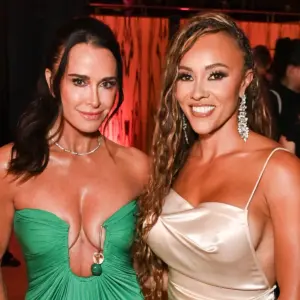
This normalization has paved the way for modern celebrities to embrace the terminology. Recently, billionaire makeup mogul Kylie Jenner—whose life of high-end cosmetics and Hollywood relationships hardly screams "basement dweller"—revealed on the Better Half With Stas & Vic podcast that she spends "days" of her life playing video games like The Sims and Zelda. Similarly, supermodel Kendall Jenner has repeatedly described herself and her friends as "nerds" because their idea of a wild night involves painting, drinking wine, and watching basketball.
These admissions have triggered online debates. Can someone whose life epitomizes global glamour genuinely claim an identity forged in social alienation? Or has the definition of a nerd simply expanded to encompass anyone with an interior hobby?
Supporting Context & Metrics: The Anatomy of Modern Nerdiness
While celebrity casual adoption keeps the term in headlines, true enthusiasts argue that genuine nerdiness is built on a very different foundation: rigorous commitment, specialized knowledge, and an insatiable thirst for learning.

1. It’s a Full-Time Lifestyle, Not a Part-Time Aesthetic
For dedicated nerds, hobbies are rarely casual weekend distractions; they form the bedrock of their daily lives, careers, and personal identities.
Take James Bore, a 43-year-old from Woking. James’s childhood fascination with computer systems, logic puzzles, and programming directly paved the way for his professional career in cybersecurity.
"I used to program when I was a kid — I still do now," James tells us. "Back in the day, I’d copy out transcripts of game code from magazines, because at the time we didn’t have discs to copy it off."
Beyond his professional life, James is a dedicated Dungeons & Dragons player, participates in live-action role-playing (LARP) events on weekends, and has recently cultivated a deep, academic fascination with amateur butchery. For James, the common thread is not a specific brand or aesthetic, but a relentless cognitive drive. "I’m interested in lots of different things," he explains. "And naturally, I just start thinking, ‘I wonder what more there is to this,’ and it’ll make me want to dig deeper. I just really enjoy learning."
2. The Thirst for Deep-Dive Expertise
True nerdiness requires moving past general awareness and diving headfirst into microscopic niches.
Jacob Simpson, a 25-year-old enthusiast, articulates this distinction clearly. While he enjoys watching football like millions of others, he points out that a true football nerd doesn’t just watch the match—they master the legal intricacies of club ownership, understand the most obscure rulebook clauses, and memorize every player who featured in the Premier League between 2001 and 2016.

Jacob’s own passions are vast: he loves model trains, taught himself to solve a Rubik’s cube over a single weekend, and possesses an encyclopedic knowledge of the Chernobyl disaster. However, his ultimate loyalty lies with aviation. His fascination with aircraft engineering goes far beyond casual video game simulations like Microsoft Flight Simulator.
"I also have a spreadsheet of every flight I’ve ever been on, what side of the plane I’ve been on, left or right, and the flight time, just so I can see it all written down, and also the tail number," Jacob shares.
This level of obsessive data collection allows him to track aircraft lifecycles across commercial fleets. "EasyJet probably has around 200 to 300 planes, and I think I’ve flown on the same one at least a couple of times. It’s always quite satisfying when you can check the spreadsheet and spot a trend. For example, you can look at it and think: ‘I flew from Gatwick to Hamburg on this exact aircraft two years ago.’"
Official Statements and Community Perspectives: Building Safe Spaces for Fandom
As nerd culture has stepped out of the shadows, it has also evolved to become more inclusive, particularly for demographics that were historically alienated even within traditional geek circles.
The Rise of Dedicated Communities
Dennie Smith, a 64-year-old self-described "teacher’s pet" and history nerd, has spent her life diving deep into military history, specifically the events of the World Wars. "I’ll watch documentaries, read books, visit battlefields and museums, and then happily talk about it all for hours!" she says.
Recognizing the joy of shared passions, Dennie took her enthusiasm a step further by launching the Geek Meet Club, an app designed to help members date, make friends, and socialize with fellow enthusiasts within their favorite fandoms. The inspiration struck during a solo tour where she spent a week surrounded by people who shared her exact passion for history.

"I remember thinking, ‘Why don’t we have a community where people like us can find each other?’ Especially as, at that point, I’d never really met another woman who was into the things I was," Dennie explains.
Since its launch, the app has expanded rapidly, housing nearly 30 distinct geeky groups ranging from tabletop gaming and LEGO to deep-dive historical research. Dennie notes that society has come a long way: "People are much more comfortable owning what they love rather than hiding it because they’re worried about being judged."
A Haven for Neurodivergent Enthusiasts
Crucially, modern nerd communities have increasingly become vital safe spaces for neurodivergent individuals. Because shared interests provide a structured framework for interaction, social pressure is significantly reduced.
"I think nerd communities can be particularly welcoming because, in my experience, they tend to be very non-judgmental," Dennie notes. "You can be yourself, talk passionately about what you love, and not worry about being seen as a bit different. Shared interests also take away some of the pressure of making conversation because you already have that common ground. For many neurodivergent people, I think that can make friendships, dating, and simply feeling part of a community much easier."
Future Outlook: Inclusive Passions vs. Exclusive Labels
Where does the culture go from here? As the boundary lines between mainstream luxury culture and niche fandoms continue to blur, experts suggest that policing who gets to call themselves a "nerd" is ultimately counterproductive.
While veterans like James Bore and Jacob Simpson acknowledge the stark operational gap between a supermodel casually enjoying a video game and someone whose entire mental architecture is built around specialized data sets and historical research, they agree that gatekeeping is unnecessary.

As Jacob Simpson wisely concludes: "People deserve to be passionate; it’s something that should be embraced by everyone."
Whether you are a billionaire mogul unwinding with The Sims, a cybersecurity expert building custom code and LARP armor, or an aviation enthusiast maintaining a meticulous flight spreadsheet, the modern definition of a nerd is no longer defined by exclusion or mockery. Instead, it is defined by a universal human desire to learn deeply, care intensely, and find community with those who share your obsessions.