Executive Overview
For years, fans of Peacock’s breakout psychological reality competition The Traitors have wondered how ordinary people would fare inside Alan Cumming’s sprawling, gothic Scottish fortress. The premise—a high-stakes game of psychological warfare pitting "Faithfuls" against clandestine "Traitors"—has proven magnetic. However, previous iterations relied heavily on the built-in star power of reality television royalty, Survivor legends, and Bravolebrities like Phaedra Parks and Lisa Rinna.
Enter The Traitors: New Blood. Swapping out professional fame-seekers for an all-civilian roster, this fresh season tests whether the format can sustain its manic energy without the safety net of manufactured celebrity drama. Tens of thousands applied; just 22 individuals were chosen. While these everyday contestants bring a distinct lack of polished media training and celebrity glamour, the foundational machinery of the series remains intact. High-stakes challenges, dramatic turret meetings, nocturnal assassinations, and Cumming’s unmatched theatrical wardrobe continue to drive the narrative.
As the series expands its broadcast footprint—moving from streaming exclusively on Peacock to a dual streaming-and-broadcast home on NBC and Peacock—the stakes have never been higher. This analytical deep dive examines the premiere of The Traitors: New Blood, evaluating structural game modifications, early standout performances, and what an all-civilian pivot means for the future of competitive strategic television.
Detailed Chronology: Inside the Premiere of The Traitors: New Blood
The psychological descent begins long before the contestants set foot inside the ancient stone walls of the Scottish highlands.
The Gathering and the Steam Train
The season premiere opens with host Alan Cumming dispatching a raven across the mist-shrouded highlands, setting the theatrical tone with his characteristic declaration: "The hour approaches and soon, my treacherous game will begin once more."
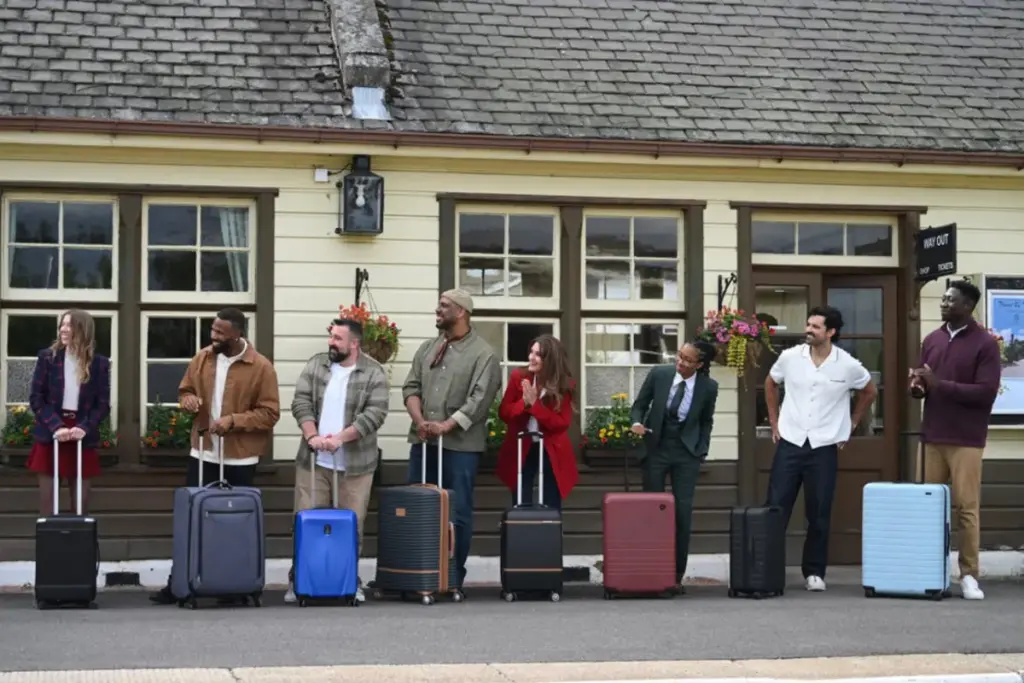
Unlike previous seasons where celebrities awkwardly mingled in the grand hall, the 22 new civilians are introduced en route via a vintage steam train. The atmosphere is immediately charged with nervous energy and existential dread. As Joe, a funeral director from Long Island, aptly observes while awaiting departure: "It’s like goin’ to Hogwarts, except everyone wants to murder each other."
This collective journey establishes the narrative tone immediately. Without the crutch of pre-existing public personas, the contestants are forced to define themselves within minutes. We are introduced to a disparate cross-section of everyday society: lawyers trying to hide or embrace their profession, construction workers styling themselves for the Scottish weather, and blue-collar strategists trying to calculate their odds of surviving the first night.
The Rules of Engagement
Once inside the castle, Cumming outlines the parameters of the game, which remains true to its international roots while introducing subtle, high-impact tweaks:
- The Division: Cumming secretly taps a select few to be the Traitors, while the remainder are designated as Faithfuls.
- The Nightly Purge: Following daily collaborative challenges designed to build the prize fund, the Traitors convene in the turret to murder one Faithful each night.
- The Banishment: The Faithfuls must work collectively during round-table discussions to unmask and banish suspected Traitors.
- The Grand Prize: Surviving players compete for a base $250,000 cash prize.
Twists and Strategic Adjustments
To keep the format fresh, production introduced vital mechanical shifts for the New Blood season:
- Traitor Recruitment: The initial Traitors chosen by Cumming are given the power to recruit additional members from the general pool, expanding their ranks and complicating the social dynamics.
- The Escalating Bounty: Every time a Traitor is successfully identified and banished by the Faithfuls, the overall prize pot swells by an additional $15,000, injecting a financial incentive into successful detective work.
The episode culminates with a classic cliffhanger: Cumming reveals that the designated Traitors must secretly vet and recruit two more contestants to compete for a third coveted spot in the turret. The episode closes on masked figures moving through the shadows, leaving both the contestants and the audience guessing.
Supporting Context & Metrics: The Evolution of a Global Phenomenon
To understand the significance of The Traitors: New Blood, one must examine the meteoric rise of the format globally and its unique footprint within the American streaming landscape.
The Mechanics of Social Deception
The Traitors traces its origins to the Dutch series De Verraders, created by Marc Pos. The format has since been exported to dozens of countries, including the United Kingdom, Australia, New Zealand, and Canada. The U.S. version, hosted by Scottish actor Alan Cumming, quickly became a critical darling and a cultural touchstone due to its self-aware campiness.
Psychologically, the show operates at the intersection of Mafia (the party game), Survivor, and Big Brother. However, it differs fundamentally in its pacing. While Survivor spans weeks of physical deprivation, The Traitors compresses paranoia into intense, high-society interiors where every breakfast is a post-mortem reveal of who survived the night.
Civilian vs. Celebrity Casts: A Comparative Analysis
| Metric / Dimension | Celebrity Seasons (U.S. Seasons 1-2) | Civilian Season (New Blood) |
|---|---|---|
| Media Training | High; contestants know how to "play" for the cameras. | Low; reactions are raw, unpredictable, and occasionally unpolished. |
| Motive | Charity, increased Q-score, brand expansion, and winning. | Primarily financial ($250,000+ life-changing money). |
| Strategic Sophistication | Pre-existing alliances formed on other shows (Big Brother, Survivor). | Organic, hesitant, and built entirely within the castle walls. |
| Camp Factor | Amplified by iconic quotes and larger-than-life personas. | Grounded, gritty, and occasionally rough around the edges. |
The Financial Stakes
For a celebrity, winning $250,000 is a nice bonus; for the average civilian cast member, it represents life-altering capital. This shift in motivation changes the psychological texture of the round tables. The desperation is palpable, the tears are genuine, and the paranoia runs significantly deeper when the prize money represents mortgage payments, student loans, or retirement security rather than a donation to charity.
Official Statements & Industry Perspective
The transition to an all-civilian cast was a calculated gamble by network executives and producers seeking to prevent franchise fatigue.
In promotional interviews surrounding the launch of The Traitors: New Blood, producers emphasized that the decision to strip away celebrity influence was designed to return the format to its purist roots. "When you cast everyday people, the stakes instantly recalibrate," notes an internal production source close to the project. "There is no safety net of a pre-established fanbase. If you make a fool of yourself at the round table, millions are watching, but you don’t have a publicist waiting to spin the narrative."
Critics and industry analysts have praised NBCUniversal for expanding the show’s distribution. By airing episodes across both Peacock and NBC, the network is deliberately grooming The Traitors to be a tentpole multi-platform franchise capable of capturing both streaming-native audiences and traditional broadcast viewers.
Alan Cumming himself has frequently addressed the unique joy of inhabiting the role of the aristocratic, brooding host. In press statements, Cumming has noted that stepping into the Scottish castle allows him to indulge in theatrical excess that few other television projects permit. Whether the cast is composed of Housewives or everyday citizens, Cumming’s commitment to the bit—punctuated by bespoke plaid capes, military-style jackets, and walking sticks—remains the gravitational anchor of the production.
Future Outlook: Will New Blood Sustain Momentum?
As The Traitors: New Blood progresses past its introductory episodes, several critical questions remain regarding its long-term viability and cultural impact.
Early Standouts and Casting Potential
While civilian casts lack the instant name recognition of seasoned reality stars, early episodes suggest that the 2026 cohort is more than capable of carrying the narrative load.
- Kim and Michael: The dual-lawyer dynamic provides an immediate intellectual chess match. Kim’s initial attempts to conceal her profession contrast sharply with Michael’s overt embrace of his legal background, establishing a natural rivalry.
- Joe: The Long Island funeral director acts as the emotional and comedic anchor of the early episodes, bridging the gap between everyday relatability and the dark humor required for a murder-mystery show.
- Madeleine: Representing the blue-collar trades as a construction worker, Madeleine brings a grounded, pragmatic approach to the physical and social challenges.
It typically takes three to four episodes for an all-civilian cast to settle into the rhythm of the game, shed their self-consciousness before the cameras, and commit fully to the paranoia required to win. Once the initial politeness wears off, deeper strategic factions are expected to emerge.
The Franchise Crossroads
The success of The Traitors: New Blood will dictate the future trajectory of the U.S. franchise. If audiences embrace the raw, unfiltered strategic gameplay of everyday people, NBCUniversal may adopt a hybrid model, alternating between civilian and celebrity seasons—much like CBS handles Survivor and Big Brother.
Ultimately, the core appeal of the format is bulletproof. As long as Alan Cumming commands his Scottish castle with villainous glee, secret alliances are forged in the turrets, and innocent Faithfuls are unjustly banished at the round table, The Traitors remains essential viewing.
Our Call: Stream it. While the civilian edition feels slightly more rugged and unpolished than its star-studded predecessors, it retains every ounce of the psychological tension, dramatic flair, and chaotic brilliance that makes the show a modern television triumph.