Executive Overview
The beauty industry is perpetually saturated with a revolving door of “holy grail” lip products, yet consumers remain locked in a relentless battle against chronic dryness, chapping, and environmental stressors. Amidst this crowded marketplace, formulas that manage to bridge the gap between clinical efficacy and cosmetic elegance stand out. A prime example is the SOS Vanilla shade, which recently clinched a prestigious 2024 Best of Beauty Award in the Sensitive category, proving that soothing care and high-performance beauty can coexist harmoniously.
However, understanding why a product succeeds requires looking past the award badge and deep into the formulation itself. Whether clear or tinted, the primary function of any quality lip balm is to repair and protect the delicate barrier of the lips. Behind every successful product is a complex interplay of dermatological science and cosmetic chemistry.
This report provides an exhaustive investigation into the formulation of modern lip treatments, exploring the essential ingredients powering today’s top-tier balms, differentiating between tinted balms and traditional lip stains, and detailing the rigorous, multi-faceted testing methodologies employed by beauty industry authorities to separate marketing hype from genuine skincare innovation.
Detailed Chronology: The Evolution of Lip Care and Industry Standards
To fully comprehend the sophistication of modern lip balms like the award-winning SOS Vanilla, it is helpful to trace how the lip care category has evolved over the past few decades.
Era of Waxes and Petroleum (Late 20th Century)
Historically, lip care was largely functional rather than therapeutic. For decades, the market was dominated by heavy occlusive agents—primarily petrolatum and heavy waxes—designed simply to sit on top of the lips and physically block moisture from escaping. While effective at temporary sealing, these legacy products frequently lacked active hydration mechanisms. They addressed the symptoms of chapped lips (dryness, cracking) without actively nurturing the delicate cellular matrix underneath.
The Rise of Multifunctional Skincare (Early 2000s)
As consumer awareness grew, fueled by an expanding interest in facial skincare regimens, expectations shifted. Buyers began demanding that lip treatments perform like high-end serums and moisturizers. Cosmetic chemists responded by integrating humectants—substances that draw ambient moisture into the skin—into anhydrous lip bases. This era saw the introduction of hyaluronic acid derivatives, botanical oils, and specialized butter matrices into everyday lip care routines.
The Clean, Sensitive, and Clinical Boom (Present Day)
Today, the standard for lip care has reached a clinical zenith. Modern formulations must cater to rising rates of skin sensitivity, eczema, and environmental irritation. The recognition of sensitive-skin-friendly formulations, such as the 2024 Best of Beauty winner, highlights an industry-wide pivot toward hypoallergenic, barrier-repairing ingredients. Modern lip balms are no longer treated as an afterthought at the bottom of a makeup bag; they are engineered as targeted topical treatments designed to improve lip texture, boost resilience, and provide anti-aging benefits without triggering irritation.
Supporting Context & Metrics: Decoding the Ingredients of Modern Lip Balms
Whether a balm delivers a wash of color or remains crystal clear, its fundamental obligation is to offset dryness and chapping. To achieve this, formulators spike their bases with active ingredients borrowed straight from advanced facial skincare routines.
1. Hyaluronic Acid: The Moisture Magnet
This powerful humectant is arguably the most popular hydrator in contemporary skincare. Dr. Doris Day, a New York City-based board-certified dermatologist, notes that hyaluronic acid is exceptional at holding water and giving skin resilience and firmness.
- The Clinical Mechanism: While injecting hyaluronic acid into the deeper layers of the skin provides the most dramatic volume restoration, topical applications still work wonders for surface rejuvenation and hydration.
- Application in Lip Care: Because the skin on the lips is exceptionally thin and lacks oil glands, it loses moisture rapidly. Topical hyaluronic acid draws ambient water to the lip surface, instantly plumping fine lines caused by dehydration.
2. Shea Butter: The Ultimate Occlusive and Emollient
While humectants bind water to the surface layer, emollients like shea butter act as a vital seal to prevent moisture loss while actively reducing roughness and flaking.
- Nutritional Profile: Dr. Kim Nichols, a board-certified dermatologist based in Greenwich, Connecticut, explains that shea butter is rich in essential fatty acids. This makes it an exceptional emollient that simultaneously moisturizes and protects against transepidermal water loss.
- Vitamins A and E: Dr. Nichols emphasizes that shea butter is a phenomenal source of vitamin A (retinol) and vitamin E. These two potent antioxidants soothe and soften irritated, dry, and itchy skin.
- Therapeutic Benefits: This combination of powerhouse ingredients makes shea butter an ideal component for soothing symptoms associated with chronic skin conditions such as eczema, rosacea, and psoriasis.
3. Jojoba Oil: The Lightweight Liquid Wax
Despite having "oil" in its name, jojoba oil is remarkably lightweight. Ron Robinson, a cosmetic chemist and founder of BeautyStat, points out that jojoba oil is actually a liquid wax, which is why it feels significantly less greasy on the skin compared to traditional plant oils.
- Unique Molecular Composition: Unlike most heavy oils, jojoba oil is made up primarily of fatty acids, wax esters, and hydrocarbons.
- Non-Comedogenic Hydration: According to Dr. Marisa Garshick, a board-certified dermatologist in New York City, this unique composition gives jojoba oil its light, pore-friendly texture. "It acts as both a humectant to draw moisture in and an emollient that softens and smooths the skin," she notes.
4. Peptides: Subtitle Alternatives to Fillers
Consumers have likely noticed a massive surge in peptide-infused lip treatments, and for good reason. For those seeking a subtle, non-invasive alternative to injectable fillers or botulinum toxin, peptide balms offer a viable clinical option.
- Textural Improvement: Dr. Yoon Soo Cindy Bae, a board-certified dermatologist based in New York City, states that peptide lip balms can be remarkably effective for improving overall lip texture and moisture retention.
- Cellular Signaling: Depending on the specific concentration and type of peptides utilized, these chains of amino acids can signal the skin to firm, smooth, plump, and minimize the visual appearance of vertical lip lines.
Official Statements & Expert Perspectives: Tinted Balms vs. Lip Tints
As the beauty market expands, nomenclature can often confuse consumers. A frequent point of discussion among cosmetic chemists and dermatologists centers on the operational differences between tinted lip balms and traditional lip tints.
Distinguishing the Categories
- Tinted Lip Balms: These formulations prioritize moisture replenishment, barrier repair, and deep conditioning, with color acting as a secondary, highly wearable benefit.
- Lip Tints and Stains: These products focus primarily on delivering potent, long-lasting color payoff, though their moisturizing capabilities can vary wildly depending on the underlying base formulation.
The Chemistry of Color
Kelly Dobos, a Cincinnati-based cosmetic chemist, explains that virtually any lip product can act as a stain depending on its composition.
"The color additives are the primary determinant of whether a color actually stains the lips," Dobos notes. "It’s really about the chemistry of the color additives that contribute to staining, so balms, glosses, and lipsticks can all function as lip stains under the right chemical parameters."
This expert insight clarifies that consumers do not have to sacrifice hydration for pigment; modern chemistry allows balms to deliver rich stains while maintaining a deeply nourishing emollient core.
How Industry Authorities Test and Review Beauty Products
Evaluating a beauty product requires a rigorous, multi-tiered approach designed to protect the consumer and ensure complete objectivity. When leading beauty authorities review products—such as those evaluated for major industry awards—the methodology is rooted in science, expert consultation, and rigorous real-world testing.
The Five Pillars of Evaluation
For competitive categories like the best tinted and clear lip balms, products are judged against five strict performance criteria:
- Product Ingredients and Efficacy: Scrutinizing the active formulations to ensure marketing claims are backed by dermatological reality.
- Packaging: Assessing whether the packaging protects active ingredients (like antioxidants and peptides) from light and air degradation while offering user-friendly application.
- Fragrance (or Lack Thereof): Evaluating potential irritants, ensuring that scents—if present—do not compromise sensitive skin barriers.
- Texture: Testing glide, weight, tackiness, and comfort across varied climate conditions.
- Product Wear: Measuring longevity, hydration retention over time, and how the product fades or wears through eating and drinking.
Diverse Testing Panels
A beauty product is inherently personal. A formula designed to treat severe dryness must be tested across a wide demographic spectrum. Relying exclusively on a narrow testing pool yields skewed results.
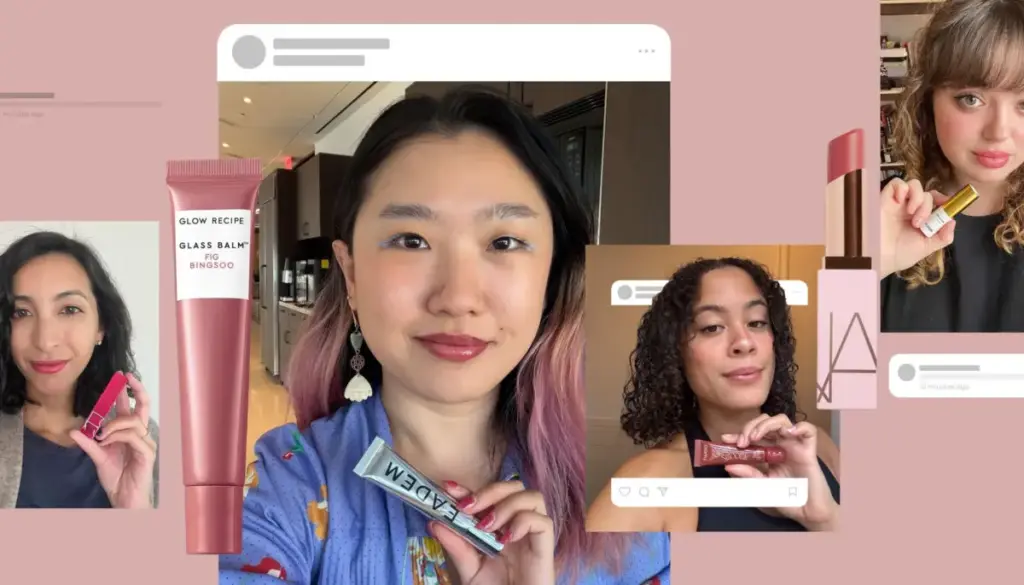
True editorial integrity requires a diverse team of writers, editors, and outside testers encompassing a wide range of ages, skin tones, hair textures, genders, and backgrounds. Asking whether a skincare product is truly "the best" for mature skin without consulting older demographics, or evaluating a luxury hair tool without testing it on diverse curl patterns, fails the consumer. By combining rigorous scientific vetting from dermatologists and cosmetic chemists with real-world testing from a diverse panel, industry reviews maintain their authority and trust.
Future Outlook: What Lies Ahead for Lip Care Innovation
As we look toward the future of cosmetic formulation, the intersection of biotechnology, skin health, and clean beauty will continue to dictate trends.
- Advanced Delivery Systems: Expect to see micro-encapsulated peptides and sustained-release hyaluronic acid matrices become standard in daily lip care, ensuring that hydration lasts for hours without requiring constant reapplication.
- Microbiome-Friendly Formulations: Just as facial skincare has embraced microbiome health, upcoming lip treatments will incorporate pre- and post-biotics to support the natural barrier of the lips against environmental pollution and microbial imbalance.
- Sustainable and Clinical Transparency: Consumers will increasingly demand total transparency regarding ingredient sourcing, efficacy testing, and eco-friendly packaging, ensuring that award-winning products like SOS Vanilla set a high benchmark that the rest of the industry must follow.
Ultimately, the evolution of lip care proves that what was once a simple cosmetic accessory has matured into a sophisticated branch of dermatology—one where science, safety, and sensory pleasure merge to deliver products that genuinely transform skin health.