Executive Overview
For the modern parent, the daily balancing act of career, household management, and personal well-being often feels like an impossible puzzle. Among the first casualties of a packed family schedule is physical self-care. Finding a 45-minute window for a solo run, a trip to the gym, or a fitness class can require logistical choreography that leaves parents feeling more exhausted than rejuvenated.
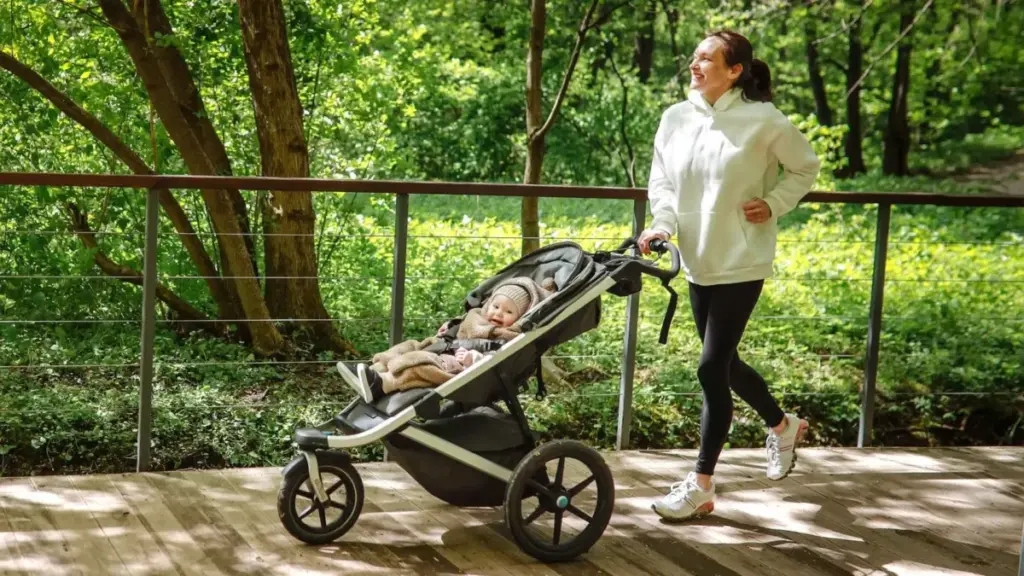
Enter the running stroller—a piece of fitness equipment that bridges the gap between active childcare and intense cardiovascular conditioning. Far from a mere convenience item for neighborhood walks, a dedicated running stroller transforms routine parenting duties into a high-performance training session.
However, running with a stroller is not simply a matter of swapping your regular running shoes and heading out the door. The biomechanical alterations, increased caloric burn, and unique safety considerations require a thoughtful, structured approach. To understand how to master this discipline without courting injury, we turn to W. Zach Smith, a Doctor of Physical Therapy, exercise science specialist, and father of four. Drawing on both his professional expertise in sports rehabilitation and his personal experience on the pavement, Smith offers a masterclass in optimizing stroller runs safely and efficiently.
Detailed Chronology: From Childhood Memories to Modern Rehab
The roots of Zach Smith’s philosophy on active parenting run deep into his own childhood. As the owner of HIDEF Physical Therapy—which operates multiple clinics across the Pacific Northwest and Southern New Mexico—Smith’s professional life is deeply rooted in orthopedic health and sports rehabilitation. Yet, his approach to wellness is profoundly personal.
A Tradition Born in Childhood
"My mom was an avid runner, and many of my core memories were made riding along for the runs," Smith recalls. Growing up watching his mother prioritize her physical health while keeping her children close left an indelible mark. It demonstrated that parenthood and personal fitness do not need to exist in mutually exclusive spheres; rather, they can be harmoniously integrated.
Decades later, as a father of four and a Doctor of Physical Therapy specializing in sports rehab and orthopedics, Smith found himself facing the universal time-crunch familiar to all parents. Remembering the lessons of his youth, he revived the tradition, trading his solitary morning runs for excursions accompanied by his own children.
Translating Clinical Expertise to the Pavement
As a clinician working with athletes of all levels, Smith quickly realized that pushing a stroller fundamentally alters human locomotion. Rather than just winging it, he began applying his clinical knowledge of exercise science, gait mechanics, and injury prevention to his new routine.
By analyzing his own form and observing the habits of other parent-runners, Smith formulated a step-by-step methodology designed to maximize the cardiovascular benefits of stroller running while mitigating the risks of repetitive strain injuries. His insights bridge the gap between rigorous athletic training and the unpredictable reality of parenting young children.
Supporting Context & Metrics: The Biomechanics and Physiology of Stroller Running
Running while pushing a wheeled chassis introduces a series of physiological and biomechanical shifts that every runner—novice or veteran—must understand to stay healthy and maximize their workout efficiency.
Amplified Caloric Burn and Intensity
One of the most immediate effects of running with a stroller is the substantial increase in physical exertion. Pushing an additional 20 to 50 pounds of stroller and child—often fighting wind resistance and rolling friction—requires significantly more muscular force than unencumbered running.
- Elevated Heart Rate: Clinical observations and fitness metrics consistently show that stroller runners experience an elevated heart rate at the same perceived exertion level compared to solo runs.
- Accelerated Caloric Expenditure: Because the body must work harder to propel both the runner and the load, calorie burn spikes dramatically.
"Depending on your training, this could allow you to run for a shorter distance or shorter period of time because the exercise itself is more intense," Smith explains. For busy parents pressed for time, this metabolic efficiency is a major win. A 30-minute stroller jog can deliver the cardiovascular stimulus of a much longer solo run.
The Disruption of Natural Running Mechanics
Despite its efficiency, stroller running comes with distinct biomechanical challenges. The human body is designed to move with a reciprocal arm swing that stabilizes the torso, aids in rotational balance, and drives forward momentum.
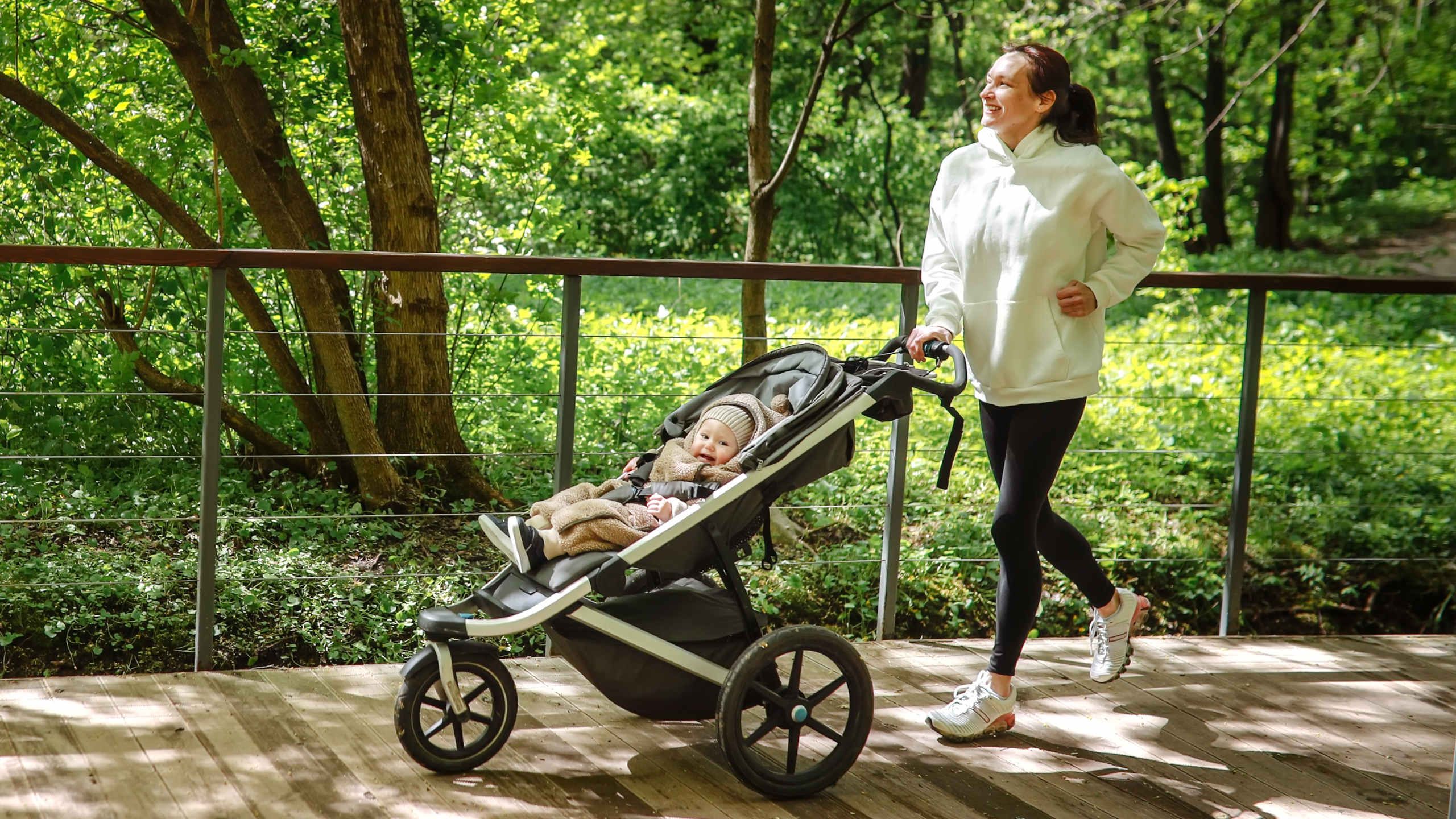
"The biggest [drawback] of running with a stroller is that you’re unable to use your arm swing to drive your running motion," Smith notes. "The arms are such an important piece of running mechanics, and if you’re using two hands—or even one hand—on a stroller, you are losing that entire process."
Locking both hands onto a stroller handle restricts thoracic rotation and can cause uneven spinal loading. Over time, this can lead to hip imbalances, lower back discomfort, and shoulder strain.
Navigational and Environmental Constraints
Beyond internal biomechanics, external factors play a massive role in safety.
- Obstructed Field of View: The physical presence of the stroller directly in front of the runner limits downward visibility, making it difficult to spot cracks in the pavement, debris, or sudden drops.
- Reaction Time: Because your upper body is engaged in controlling the rig, your reaction time to sudden obstacles—such as erratic cyclists, pets, or pedestrians—is inherently compromised.
Official Guidelines & Expert Recommendations
To help parents navigate these challenges, Dr. Zach Smith outlines four essential pillars for safe, effective, and sustainable stroller running.
1. Start with Shorter Runs and Manage Expectations
Because the physical tax of pushing a stroller is much higher than standard running, diving straight into long distances is a recipe for burnout or injury. Furthermore, your passengers come with their own agendas.
- Build Endurance Progressively: Allow your musculoskeletal system—particularly your core, shoulders, and calves—to adapt to the added resistance.
- Accommodate Your Co-Pilot: A child’s patience is an unpredictable variable. Start with short loops close to home so you can easily turn back if your passenger decides they’ve had enough.
2. Master the Art of Arm Switching
To combat the loss of natural running mechanics and prevent muscular imbalances, Smith offers a practical coordination tip:
- One Hand Pushing, One Hand Swinging: Alternate which hand rests on the stroller handle while allowing the free arm to swing naturally at your side.
- Rotate Regularly: Switch sides every few minutes. This ensures that both arms and shoulders share the load, maintaining symmetrical muscle recruitment and reducing unilateral fatigue.
3. Choose Flat, Paved Surfaces
Given the restricted visibility and the difficulty of reacting quickly to ground hazards, route selection is critical for injury prevention.
- Stick to Sidewalks and Neighborhoods: Avoid rugged dirt trails, heavily rooted park paths, or uneven terrain where the stroller could tip or jolt unexpectedly.
- Prioritize Visibility: Choose well-lit, paved routes with low traffic volume to ensure a smooth, predictable ride for both you and your child.
4. Invest in the Right Equipment and Respect Age Limits
You cannot simply strap a car seat into a standard grocery buggy or umbrella stroller and hit the pavement. Dedicated engineering is required to keep a child secure at running speeds.
- The Importance of Ergonomics: "The best way to run with a stroller safely is to find one that fits you well," Smith advises. You should not have to hunch over the handlebar or lean forward unnaturally. Your posture should remain upright, mimicking your natural running form. Always test models in-store before purchasing.
- Age Requirements: Never rush into stroller running too early. Children generally must be at least six months old—old enough to have strong, independent head and neck control—before joining you on runs. Always consult the manufacturer’s guidelines and your pediatrician before embarking on your first outing.
Future Outlook: The Evolution of Active Parenting
As wellness culture continues to merge with family life, the popularity of stroller running is on a steady upward trajectory. Manufacturers are responding with increasingly sophisticated engineering—incorporating lightweight aerospace aluminum frames, handbrakes for downhill control, advanced shock absorption systems, and ergonomic, adjustable handlebars tailored to runners of all heights.
Simultaneously, the medical and fitness communities are placing greater emphasis on postpartum and parental health, recognizing that mental well-being and physical activity are inextricably linked. Experts like Dr. Zach Smith are helping to demystify the transition back to fitness, offering evidence-based frameworks that empower parents to reclaim their health without sacrificing family time.
Looking ahead, the stigma of having to choose between "me time" and "family time" is rapidly dissolving. Through smart equipment selection, adherence to sound biomechanical principles, and a commitment to gradual progression, parents can turn their daily stroller routes into a sanctuary of strength, mental clarity, and shared joy.
As Smith’s own journey illustrates, the miles logged behind a stroller do more than build physical endurance—they lay down tracks of inspiration for the next generation, proving that a healthy, active lifestyle is a journey best shared from the very beginning.