Executive Overview
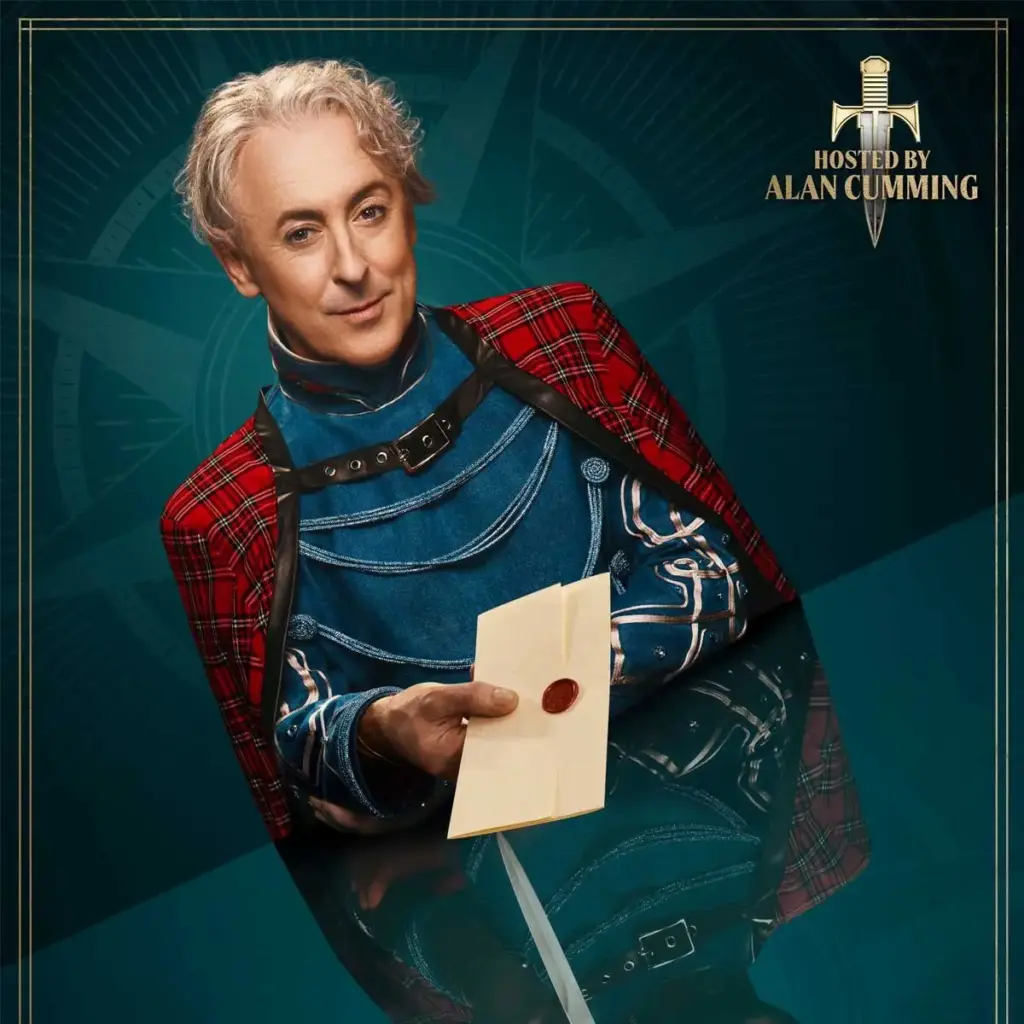
Since its debut on Peacock in early 2023, The Traitors has swiftly ascended to the upper echelon of reality television. Hosted by the inimitable, campy, and sharp-witted Alan Cumming, the Emmy Award-winning reality competition show merges the atmospheric tension of an Agatha Christie murder mystery with the high-stakes strategy of psychological game theory. Set against the majestic, moody backdrop of Ardross Castle in the Scottish Highlands, the series tasks a mixed cast of reality television veterans and everyday newcomers with a singular, cutthroat goal: uncover the secret "Traitors" hiding among them, or be eliminated along the way.
Beyond the cinematic executions, round-table hysterics, and jaw-dropping monetary prizes—such as the $250,000 claimed by season four victor Rob Rausch—the production machinery operating behind the scenes is as fascinating as the gameplay itself. From strict off-camera silences and heavily choreographed nightly murders to psychological evaluations and surprising real-life romances, the making of The Traitors is a masterclass in immersive reality television production. Notably, the show’s cultural footprint extends far beyond the screen, recently punctuated by headlines confirming that season two standout Phaedra Parks is officially dating The Challenge legend CT Tamburello, more than two years after initial romance rumors swirled around the castle.
Detailed Chronology: From Scottish Castles to the Evolution of the Game
The Genesis and Season One Breakthrough
When Peacock first introduced American audiences to The Traitors in January 2023, the format was an immediate critical and commercial darling. Viewers watched as a hybrid cast of television legends (including Survivor icon Cirie Fields, Big Brother mastermind Rachel Reilly, and Olympic swimmer Ryan Lochte) mingled with civilian contestants inside Ardross Castle.
The mechanics were clear: Alan Cumming played the role of a Bond villain come to life, selecting a secret cabal of Traitors. Week by week, these Traitors "murdered" a Faithful under the cover of darkness, while the group at large attempted to sniff them out at the Round Table. Season one culminated in a historic, emotional finale where Cirie Fields outmaneuvered everyone to stand alone and take home the grand prize, laying down tactical blueprints for future players.
Season Two and Three Escalations: Glamour, Betrayal, and Romance
Building on its freshman success, season two upped the ante by leaning entirely into an all-star reality television cast. It was during this cycle that alliances fractured, friendships were tested, and romance quietly blossomed. Among the most talked-about dynamics were those involving lawyer and reality star Phaedra Parks and The Challenge veteran CT Tamburello. Though they played opposite psychological hands within the castle walls, off-screen chemistry sparked a wave of fan fiction and reality gossip that has finally materialized into a confirmed relationship two years later.
Season two also introduced sharper gameplay mechanics, featuring iconic masterminds like Dan Gheesling alongside entertainment figures like Larsa Pippen and Marcus Jordan. By season three—which featured stars such as Chrishell Stause—the production had locked down its rigorous operational structure, leaving zero room for unscripted off-camera strategy.
The Expansion: The Traitors: New Blood
Continuing the franchise’s aggressive expansion, Peacock announced the September 17 premiere of the spin-off series, The Traitors: New Blood. Bringing 22 fresh-faced reality newcomers—ranging from an astrophysicist and an attorney posing as a college basketball coach to a dedicated dog groomer—to Ardross Castle, the spin-off tests whether ordinary people can navigate the same psychological minefield previously reserved for seasoned professional manipulators. As host Alan Cumming playfully warned in the official trailer, "When nobody knows who you are, you can get away with anything."
Supporting Context & Metrics: The Production Machine Behind Ardross Castle
The illusion of a freewheeling, organic house party in the Scottish Highlands is maintained by a remarkably rigid, military-grade production schedule. Behind the cinematic lighting and dramatic editing lies a tightly controlled environment governed by specific metrics and rules.
1. The Casting and Psychological Profiling Process
Contestants do not simply sign up and show up. Casting directors, led by industry veteran Deena Katz, deliberately keep the cast in the dark about who their fellow competitors will be until they physically touch down in Scotland. This preemptive isolation prevents pre-game alliances from forming. Furthermore, before stepping foot in Ardross Castle, prospective players undergo rigorous personality and psychological testing. Executive producer Mike Cotton revealed to Variety that these tests help producers identify specific attributes—such as a natural aptitude for deception, comfort with lying, or high stress tolerance—which inform who might eventually be tapped on the shoulder by Alan Cumming to become a Traitor.
2. The Architecture of Deception: Castle vs. Hotel
While viewers are led to believe the entire cast slumbers within the ancient corridors of Ardross Castle, reality dictates otherwise. Alan Cumming himself confessed to The Daily Beast that neither he nor the contestants actually sleep in the castle overnight. Instead, the cast is housed in a nearby Inverness airport hotel, while Cumming utilizes a designated room within the castle strictly for hair, makeup, and pre-show transformation.
Within the castle, players are restricted to a specific wing. Executive producers designed this boundary deliberately: it is large enough to allow private whispered conversations, yet small enough that a vigilant player can easily spot someone disappearing or hear footsteps outside a door.
3. The Strict Rules of Engagement
Maintaining the integrity of the game requires an ironclad rulebook enforced by production:
- The No-Glamour Policy: As season three star Chrishell Stause shared with Us Weekly, professional hair and makeup teams ("glam squads") are entirely banned by Alan Cumming inside the castle. Players must fend for themselves aesthetically.
- The Off-Camera Gag Order: According to season two player Dan Gheesling (Business Insider), players are strictly prohibited from discussing game strategy when cameras and microphones are not rolling. Any crucial conversation happening off-camera is rendered invalid to prevent manipulated narratives outside the show’s broadcasted scope.
- Controlled Substances: To keep minds sharp and paranoia high, alcohol consumption is heavily restricted. Season two Faithful Ekin-Su Culculoglu noted that contestants are limited to just one drink per night.
- Separation of Real-Life Couples: Even when real-life couples—such as Larsa Pippen and Marcus Jordan during season two—compete together, they are strictly forbidden from sharing a bedroom. Executive producer Sam Rees-Jones noted that allowing couples to room together would grant them an unfair tactical advantage.
Official Statements and Industry Insights
The inner workings of The Traitors have been dissected by the creative minds behind the camera and the players who survived the ordeal.
Regarding the selection of Traitors, executive producer Mike Cotton explained the intricate audition-like atmosphere to Variety:
"That [pleading your case] has a really big bearing on it, as does Alan’s opinion. It’s almost like a job interview to be a Traitor, and we take all of that into account and decide just before the pick who that should be. We want to make sure we’ve got an interesting mix of characters that will bring their unique skill set to it."
Alan Cumming embraced his role not merely as a host, but as a theatrical orchestrator channeling a cinematic villain. Reflecting on his initial casting discussions with The Daily Beast, Cumming recalled:
"I said, ‘It’s sort of like you want me to be like a Bond villain. And I should actually bring my dog and pet her.’ And they went, ‘That’s a good idea.’ And I thought, oh, I want to do this… So I had this flaring-nostril sort of persona. And you’re kind of making stuff up as you go along."
From a strategic standpoint, season one winner Cirie Fields offered enduring advice for future contestants navigating the psychological battlefield:
"For anyone that’s gonna be a future Traitor, best advice I can give them is read the room, see who’s the most trusted person in that game and align yourself with them. I think a lot of people backed off of me because Andie [Vanacore] was so trusting of me."
Future Outlook: The Expanding Universe of Deceit
As The Traitors continues to dominate pop culture conversations, Peacock’s strategy of blending celebrity star power with high-concept psychological gameplay is proving to be a winning formula. The upcoming launch of The Traitors: New Blood signals a willingness to experiment with the format, testing whether everyday people can replicate the theatrical paranoia previously perfected by reality television royalty.
Furthermore, the off-screen personal developments of its cast members—highlighted by Phaedra Parks and CT Tamburello taking their chemistry from speculative fandom to confirmed romance—demonstrate that the emotional bonds and psychological pressures forged within Ardross Castle extend far beyond the final cut.
With multiple international adaptations thriving, an Emmy-winning American flagship, and an increasingly devoted fan base dissecting every whisper, breakfast staggered entry, and Round Table accusation, The Traitors has firmly cemented itself as a permanent fixture of modern television. As long as Alan Cumming continues to prowl the halls of Ardross Castle with his rescue dog and a sharp vocabulary, viewers will faithfully return to watch the ultimate game of deception unfold.