Executive Overview
In the fast-paced, hyper-trend-driven landscape of modern fashion, few brands successfully bridge the gap between nostalgic Y2K heritage and sustainable, contemporary ready-to-wear. Enter Chan Luu, the Los Angeles-born jewelry and apparel label that defined bohemian-luxe accessorizing in the 2000s and is now experiencing a triumphant, modern renaissance. Under the stewardship of artistic director Tessa Tran—niece of the brand’s eponymous founder—the label has evolved from a beloved accessory-first line into a fully realized, artisan-crafted ready-to-wear powerhouse.
In 2023, following nearly a decade of navigating corporate restructuring after private equity acquisition, Tran officially reclaimed full ownership of her family’s business. Since then, she has charted a deliberate, anti-trend course that honors the brand’s quarter-century history while injecting a distinct brand of West Coast ease and uncompromising craftsmanship. Eschewing the frantic seasonal cycle that plagues much of the industry, Tran continues to present during New York Fashion Week via intimate presentations rather than high-octane runway shows, focusing instead on garments designed to endure.
This comprehensive report examines the strategic evolution of Chan Luu: from its humble artisan origins and corporate transition to its current status as a generational family business championing slow fashion, mindful manufacturing, and timeless, effortless sensuality.
Detailed Chronology: From Y2K Icon to Family-Reclaimed Ready-to-Wear
To understand Chan Luu’s current positioning in the contemporary market, one must trace its journey through three distinct evolutionary phases: its inception and peak 2000s fame, the corporate investment era, and the modern family-led revival.

Phase 1: The Artisan Foundation and 2000s Peak
Founded in Los Angeles by designer Chan Luu, the brand originally captured the global fashion consciousness on the back of its signature artisan accessories—most notably, the iconic multi-wrap leather and semi-precious stone beaded bracelets that became a staple of 2000s bohemian chic. Characterized by a tactile, handmade aesthetic that married Eastern manufacturing traditions with Western casualness, the label quickly grew into an international commercial success without losing its dedication to craft.
Phase 2: Corporate Partnership and the Rise of Tessa Tran
As the brand scaled, it faced the classic growing pains of independent labels. In 2014, Chan Luu sold a majority stake in the company to external private equity investors. This transition period brought operational shifts, but it also secured a crucial pipeline for the brand’s future: Tessa Tran.
Having graduated from the Fashion Institute of Technology (FIT), Tran initially entered the company as an intern under her aunt. Rather than departing during the corporate restructuring, Tran remained with the brand, methodically rising through the ranks. Immersed in every facet of the design, production, and business operations, she positioned herself as the natural custodian of the brand’s creative and cultural heritage.
Phase 3: The 2000s Buyback and Ready-to-Wear Expansion
The watershed moment for the brand arrived in 2023, when Tran orchestrated a complete buyback of the family business, returning 100% of the ownership to the founding family. Armed with complete creative and operational autonomy, Tran immediately set to work pivoting the label. While the brand had always dabbled in apparel, Tran transformed Chan Luu into a robust ready-to-wear lifestyle brand. She retained the core artisan-first philosophy established 25 years prior while redefining the silhouette for a modern, sophisticated consumer who values understated luxury over fleeting micro-trends.

Supporting Context & Metrics: The Mechanics of Slow Fashion
In an industry currently reckoning with overproduction and ecological degradation, Chan Luu’s production model serves as a case study in mindful longevity.
Generational Manufacturing Partnerships
Unlike many contemporary brands that frequently switch suppliers in search of the lowest production costs, Chan Luu has maintained unwavering loyalty to its original network of family-owned factories in India and Vietnam. These facilities are the same ones utilized by Chan Luu herself a quarter-century ago.
- Supply Chain Continuity: As the brand has grown under Tran’s leadership, its manufacturing partners have grown alongside it. This mutual expansion has forged a deeply symbiotic generational business model where both brand and factory workers share a vested interest in quality and fair labor practices.
- Artisanal Integrity: The hallmark of a Chan Luu garment or accessory remains its human touch. Hand-embroidery, intricate beading, and delicate stonework require specialized artisan skills that cannot be replicated by automated mass production.
The Anti-Trend Design Philosophy
Tran’s commercial strategy actively defies the algorithmic cadence of fast fashion. While fast-fashion houses push thousands of new styles weekly, Chan Luu operates on a model of continuity and emotional attachment.
- The "Techno Taffeta Pant": A prime example of this philosophy is the brand’s enduring staple, the "techno taffeta pant." Rather than discarding past silhouettes, Tran retains beloved classics in every lookbook, occasionally refreshing them with updated colorways.
- Durability and Emotional Resonance: By focusing on garments that bridge the gap between high-fashion presentation and everyday wearability, Tran aims to cultivate a deep bond between the consumer and the object. "I’m not looking to create anything that you just wear for one season," Tran has noted. "I want my customers to buy something that’s special and beautiful and when you understand the history of it, you can’t let go of it."
Official Statements & Design Ethos: Sensuality Without Effort
During her recent presentations at New York Fashion Week, Tran’s design notes encapsulated the essence of the collection in a single phrase: "sensuality without effort."

The California Sensibility
Born and raised in Los Angeles, Tran naturally infuses her collections with a relaxed West Coast ethos. This philosophy manifests as an effortless blending of disparate elements—pairing heavily embellished, hand-beaded pieces with ultra-casual silhouettes.
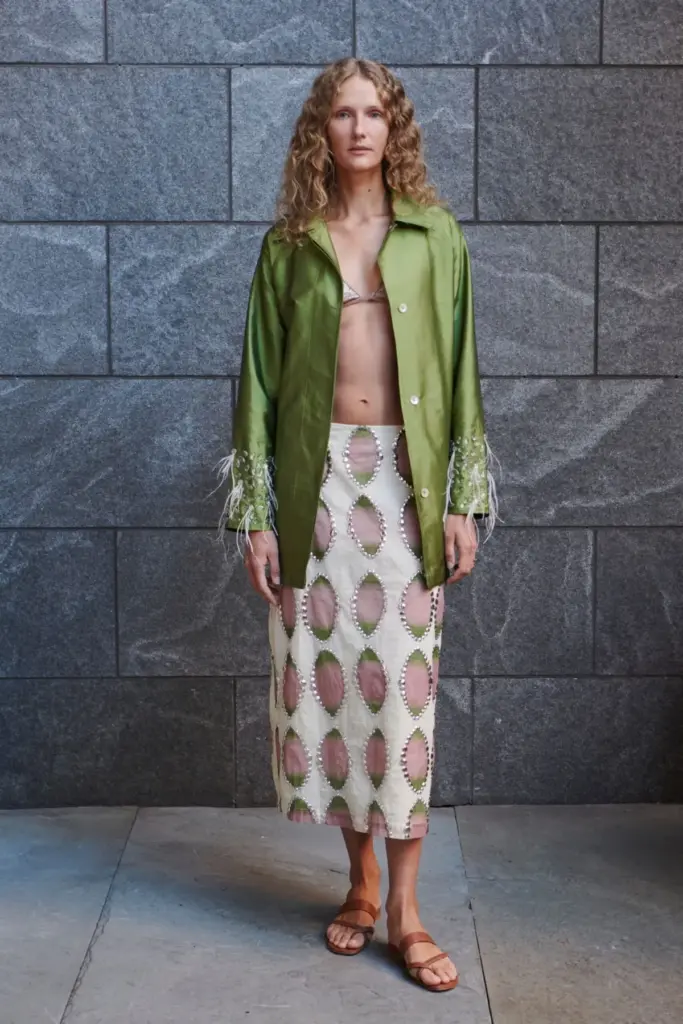
- Elevated Comfort: Despite the intricate hand-embroidery and sequins that make each look inherently dressy, the garments are engineered for supreme physical comfort. Tran utilizes loose yet flattering cuts that drape the body rather than constricting it.
- Reimagining Staples: Take, for instance, the brand’s elevated board shorts. Crafted from sheer, ultra-lightweight cotton organdy, they transform a quintessential beachside garment into a sophisticated, highly polished piece fit for urban environments. Similarly, kaftan-like dresses are rendered with architectural precision, stripping away casual sloppiness to deliver a look that is equally at home in a city gallery or a coastal retreat.
Evolution of the Accessory Line
Accessories remain the beating heart of the Chan Luu ecosystem, though they have matured far beyond the ubiquitous beaded wrap bracelets of the 2000s.
- Natural Motifs: The upcoming collections heavily feature organic elements, including sculpted seashells, mother-of-pearl earrings, and hand-beaded brooches. These items have rapidly become modern trademarks of the label.
- Modular Styling: Tran designs her jewelry and accessories with versatility in mind. Rather than dictating a rigid, all-Chan-Lu-look, she encourages a modular approach to styling. "What I like about the pieces is that you can layer them together, or you can meld them with other things and other brands," Tran explains. "It’s not a singular show."
Future Outlook: Scaling Independently in a Changing Market
As Chan Luu looks toward the horizon, the brand’s trajectory offers valuable insights into the future of independent fashion labels.
- Controlled Growth Over Rapid Expansion: By maintaining a presentation format at New York Fashion Week rather than committing to a massive theatrical runway show, Tran maintains fiscal discipline and creative control. While a full-scale runway show is not entirely off the table for the future, the current strategy prioritizes intimate buyer relationships and direct-to-consumer storytelling.
- Deepening Sustainability Through Heritage: True sustainability in fashion is often found in longevity. By honoring the craftsmanship of her Asian manufacturing partners and designing pieces built to last decades rather than months, Tran is future-proofing the brand against tightening environmental regulations and shifting consumer consciousness.
- A Blueprint for Family Business Success: The successful transition from founder to niece—bolstered by a resilient buyout—demonstrates how heritage brands can reclaim their independent identities in a market dominated by luxury conglomerates.
Ultimately, Chan Luu’s modern renaissance proves that nostalgia, when married to genuine craftsmanship and forward-thinking design, is a powerful commercial engine. Under Tessa Tran’s visionary guidance, the brand is no longer just a relic of 2000s memory, but a vibrant, enduring blueprint for the future of independent American fashion.