
Executive Overview
In the interconnected ecosystem of modern pop music, long-standing friendships and multi-platinum collaborations are typically insulated from the harsher realities of geopolitical conflict. However, the fragile barrier separating international entertainment from global affairs shattered when rapper Macklemore was abruptly dropped from the U.S. leg of Ed Sheeran’s sprawling Loop Tour. The catalyst for this high-profile dismissal was not a dispute over creative direction, scheduling conflicts, or backstage logistics, but rather Macklemore’s outspoken, deeply emotional advocacy for Palestine during a live performance.
For over a decade, Macklemore and Ed Sheeran shared a mutual professional respect and personal rapport. Their creative intersections—such as the 2015 collaborative track "Growing Up" and their powerful shared performances of "Same Love"—spoke to an alliance rooted in progressive ideals and pop-culture unity. Yet, that goodwill dissolved under the immense pressure of the ongoing Israel-Hamas conflict. Macklemore’s onstage rallying cries of "Free Palestine" and his performance of the politically charged protest track "Hind’s Hall" transformed him from a valued touring partner into a lightning rod for controversy.
This fallout extends far beyond a simple tour alteration; it has exposed a widening chasm within the music industry regarding how artists, promoters, and venue stakeholders navigate the ethics of political speech. As key figures ranging from Gillette Stadium owner Robert Kraft to fellow tour openers Finneas and Lukas Graham weigh in, the situation has crystallized into a litmus test for free expression versus corporate caution. This comprehensive report explores the timeline, the compounding geopolitical metrics, and the broader cultural fallout of a fracture that continues to reverberate across the global music landscape.
Detailed Chronology: A Decade of Friendship to Sudden Severance
To understand the weight of Macklemore’s removal from the Loop Tour, one must first examine the deep roots of his relationship with Ed Sheeran. Their professional dynamic spanned well over ten years, marked by high-profile joint appearances that cemented their status as crossover icons capable of bridging rap and acoustic pop.
Phase One: The Foundations of an Alliance (2014–2015)
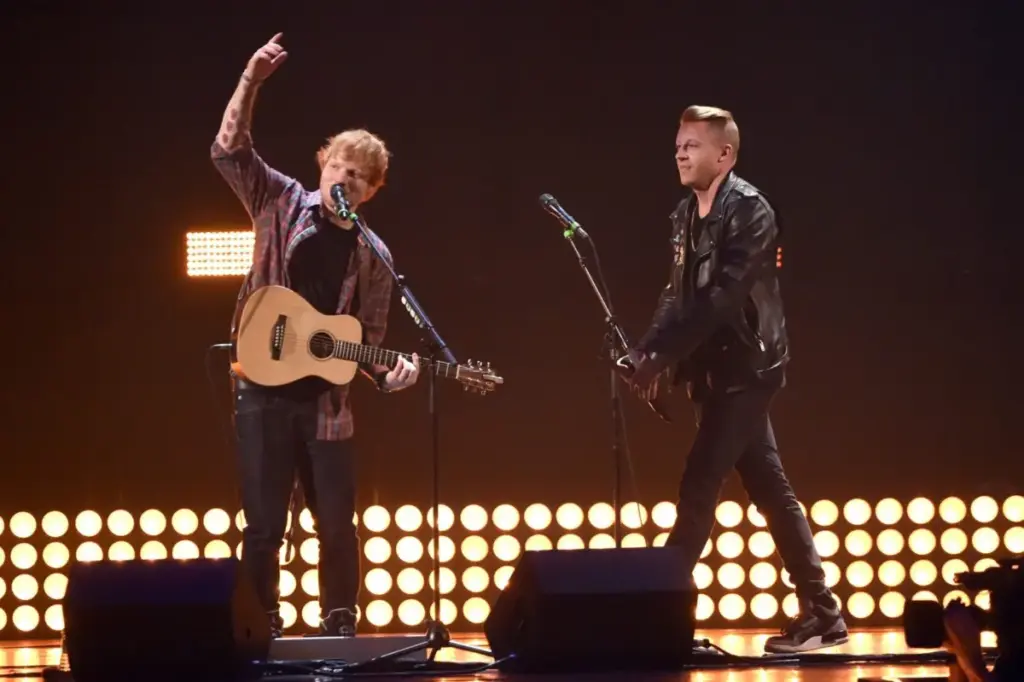
- September 2014: The camaraderie between the two acts became publicly apparent when Macklemore and Ed Sheeran took the stage together at the iHeartRadio Music Festival at the MGM Grand Garden Arena in Las Vegas. Their joint performance of Macklemore’s groundbreaking LGBTQ+ rights anthem, "Same Love," was met with widespread critical acclaim and established a foundation of shared sociopolitical consciousness.
- March 2015: Cementing their bond further, Macklemore (alongside frequent collaborator Ryan Lewis) and Sheeran released the introspective track "Growing Up (Sloane’s Song)." The collaboration showcased a mutual artistic trust, bridging the gap between Sheeran’s melodic sensibility and Macklemore’s narrative-driven hip-hop.
Phase Two: The Escalation of Geopolitical Activism (2023–2024)
- Late 2023: Following the outbreak of the devastating Israel-Hamas war, Macklemore emerged as one of the most vocally active mainstream musicians in the United States regarding the plight of Palestinians. He utilized his massive social media platforms and concert stages to critique military operations in Gaza and call for humanitarian interventions.
- May 2024: Macklemore released "Hind’s Hall," a direct protest track named after Hind Rajab, a six-year-old Palestinian girl killed in Gaza. The song crystallized his hardline stance, featuring lyrics that explicitly accused Israel of committing genocide against Palestinians and criticized institutional silence within the Western political and cultural spheres. The track quickly amassed millions of streams and became a rallying anthem for pro-Palestinian student activists and progressive groups worldwide.
Phase Three: The Loop Tour Debacle (2026)
- The U.S. Leg Integration: Macklemore was initially announced as a high-profile supporting act for the North American dates of Ed Sheeran’s celebrated Loop Tour, a move expected to draw massive crowds and generate significant media synergy.
- The Inciting Incident: During a live performance on the tour, Macklemore doubled down on his public advocacy, directly addressing the audience, calling for a "Free Palestine," and performing "Hind’s Hall."
- The Fallout and Dismissal: The reaction from tour organizers, venue stakeholders, and management was swift. Within days of the inflammatory performance, Macklemore was quietly but firmly dropped from the remainder of the Loop Tour. The sudden nature of the termination sent shockwaves through the industry, transforming a routine concert booking into an international flashpoint concerning artistic censorship and political expression.
Supporting Context & Metrics: The Human Cost Behind the Music
The friction between Macklemore’s activism and the corporate realities of a major stadium tour cannot be understood without examining the stark, compounding statistics of the conflict that inspired his lyrics.
The Human Toll in Gaza
According to data from Gaza’s Health Ministry referenced throughout the controversy, the Palestinian death count resulting from the military campaign had surpassed 73,000 individuals at the time of Macklemore’s performance. The staggering loss of life, displacement of millions, and widespread destruction of civilian infrastructure have turned Gaza into one of the most heavily scrutinized humanitarian crises of the twenty-first century.
International and Legal Perspectives
The geopolitical discourse surrounding the conflict has deeply polarized international bodies and allied nations:
- The United Nations: Various UN experts and human rights bodies have increasingly utilized the framework of genocide to describe the scale and intent of military operations in Gaza, citing the systematic denial of food, water, medicine, and shelter.
- The Official Stance of Allies: Conversely, the government of Israel, alongside key international allies—most notably the United States—has vehemently denied accusations of genocide. These nations maintain that military actions are a necessary defense against Hamas, a designated terrorist organization responsible for the initial attacks of October 2023.
It is precisely this chasm between international human rights advocacy and established Western foreign policy that made Macklemore’s inclusion on a major commercial tour untenable for conservative stakeholders. When an artist sings about genocide on a stage underwritten by multinational corporations and hosted in premier sports stadiums, the friction between art, commerce, and geopolitics becomes immediate and combustible.
Official Statements and Industry Reactions
The decision to oust Macklemore did not happen in a vacuum. It triggered a cascade of reactions from prominent venue owners, fellow musicians, and industry insiders, each interpreting the event through a different lens.
The Venue Owners and Corporate Stakeholders
Prominent figures within the stadium and sports entertainment complex were among the first to signal discomfort with the political turn of the tour. Robert Kraft, the billionaire owner of the New England Patriots and Gillette Stadium—a key venue on major touring circuits—has historically been an outspoken voice against antisemitism and a staunch supporter of Israeli-American cultural ties. While direct corporate statements from tour promoters remained heavily guarded and legally managed, industry insiders noted that venue operators hold immense leverage over touring acts, often possessing contractual clauses regarding public safety, community standards, and political neutrality.
Fellow Supporting Acts
The ripple effects of the dismissal were keenly felt by other artists sharing the bill. Loop Tour opening acts such as Finneas and Lukas Graham found themselves navigating an increasingly tense backstage atmosphere. While neither artist immediately issued a radical manifesto, industry leaks suggested a palpable anxiety among support acts regarding where the boundary now lay between personal artistic expression and corporate liability.
Macklemore’s Defiance
Macklemore himself has shown no indication of walking back his statements. Rather than issuing a corporate apology or attempting to mend relations through backchannels, the rapper has leaned into his role as a dissident voice within pop culture. His continuous promotion of "Hind’s Hall" and his refusal to censor his political beliefs on subsequent independent dates signal a permanent shift in his career trajectory—transitioning from mainstream pop-rap darling to a polarizing political figure.
Future Outlook: The Changing Landscape of Live Music
The fallout between Macklemore and Ed Sheeran serves as a watershed moment for the live entertainment industry, leaving several lingering questions about the future of artist advocacy.
1. The Shrinking Margin for Political Speech
For decades, rock and hip-hop have prided themselves on being countercultural forces, built on the backs of artists who challenged the establishment (from Bob Dylan and John Lennon to Public Enemy and Rage Against the Machine). However, the modern touring landscape—dominated by mega-corporations, stadium conglomerates, and global sponsorships—operates with a much lower risk tolerance. The Macklemore incident demonstrates that when political speech touches upon deeply sensitive, state-sanctioned foreign policy issues, corporate gatekeepers are increasingly willing to sever ties to protect brand equity and venue relationships.
2. Precedent for Future Tours
As booking agents and tour managers draft contracts for upcoming 2026 and 2027 stadium runs, expect to see tightened clauses regarding "disruptive public statements" or "political discourse" during live sets. This chilling effect may force artists to choose between self-censorship to secure lucrative stadium slots or independent routing that bypasses corporate infrastructure entirely.
3. The Polarization of Fandoms
In the digital age, fanbases are no longer passive consumers; they are organized digital communities capable of mobilizing boycotts, trending hashtags, and real-world protests. The schism between Sheeran and Macklemore has split their combined fanbases, transforming concert ticket purchases into proxy votes on foreign policy.
Ultimately, the dissolution of this decade-long creative alliance highlights a sobering reality: in an era of globalized crisis, the music industry can no longer easily compartmentalize art from the geopolitics shaping our world. Whether this incident represents an isolated casualty or the beginning of a broader ideological realignment in live entertainment remains one of the defining questions of the modern cultural era.