Executive Overview
The global fashion and entertainment industries mourn the loss of a true visionary. Bob Mackie, the legendary costume designer and couturier whose name became synonymous with unbridled glamour, breathtaking theatricality, and cultural iconography, passed away on September 14 at the age of 87. Over a career spanning more than six decades, Mackie transformed the landscape of red-carpet fashion, television, and stage performance. He did not merely dress celebrities; he built luminous, unforgettable personas for them, utilizing millions of crystals, feathers, and beads to etch his name into the annals of pop culture history.
In the wake of his passing, tributes have poured in from across the globe, honoring a man whose work defined an era of visual excess and sophisticated showmanship. Among the most deeply personal remembrances came from The Young and the Restless star Tracey E. Bregman. As Mackie’s cousin, Bregman offered a rare, intimate glimpse into the man behind the legendary sketches—a creative prodigy who began his artistic journey dressing dolls and crafting miniature opera stages long before he outfitted icons like Cher, Carol Burnett, and Diana Ross.
Mackie’s influence stretches far beyond the glittering costumes that defined television variety shows and Academy Awards broadcasts. He was a mentor, a barrier-breaking artist, and an architect of modern celebrity culture. This retrospective examines his remarkable life, traces his storied career from the soundstages of Paramount to the hallowed halls of Broadway and Hollywood, contextualizes his staggering array of accolades, and explores the enduring legacy of a designer who taught the world that when it comes to fashion, more is indeed more.
Detailed Chronology: From Miniature Opera Stages to Hollywood Royalty
Early Beginnings and Creative Awakening
Born Robert Gordon Mackie on March 24, 1939, in Monterey Park, California, the future master of shimmer showed an early, relentless compulsion toward design and theatricality. As family lore and accounts from relatives like actress Suzanne Lloyd (shared via Tracey E. Bregman) reveal, Mackie’s artistic impulses manifested in childhood. While living with his grandmother, a young Mackie was not content with standard childhood games; instead, he meticulously constructed a miniature opera stage complete with bespoke costumes and lifelike doll figures of his own creation.
This early fascination with scale, drama, and narrative through textiles foreshadowed his lifelong dedication to visual storytelling. Even then, he was dressing Barbies and conceptualizing theatrical worlds—foreshadowing his later, official collaborations with Mattel and his monumental contributions to stage and screen.
Breaking Into Hollywood: The Paramount Years
Mackie’s formal entry into the professional design world began in the 1960s, a period of immense cultural shift and cinematic experimentation. He secured foundational roles as a sketch artist and assistant at Paramount Studios, working alongside master costume designers such as Edith Head. Immersed in the golden-age machinery of Hollywood, Mackie honed his technical skills while absorbing the precise mechanics of how clothing translates under heavy studio lighting and on the silver screen.
Working within the studio system allowed Mackie to understand the symbiotic relationship between character development and costume design. He realized that a well-crafted garment could communicate a character’s backstory, status, and emotional trajectory before a single line of dialogue was spoken. This foundational philosophy would become the bedrock of his career as he transitioned from cinema to the explosive, fast-paced world of television variety specials.
The Golden Age of Television and Iconic Collaborations
If Hollywood gave Mackie his technical foundation, television made him a household name. His defining professional partnership began when he started designing for The Carol Burnett Show in 1967. Over the entire, legendary run of the variety program, Mackie conceptualized and constructed thousands of costumes. His work on the show was transformative, treating comedy with the same high-fashion rigor usually reserved for European couture houses. From the unforgettable curtain-rod dress in Went with the Wind! to sweeping, feathered showgirl numbers, Mackie proved that comedy and couture could exist in exhilarating harmony.
Simultaneously, Mackie’s footprint in the music industry expanded exponentially. He became the architect of the ultimate pop star aesthetic, crafting legendary looks for Judy Garland, Mitzi Gaynor, Diana Ross, Elton John, Whitney Houston, and, most famously, Cher.
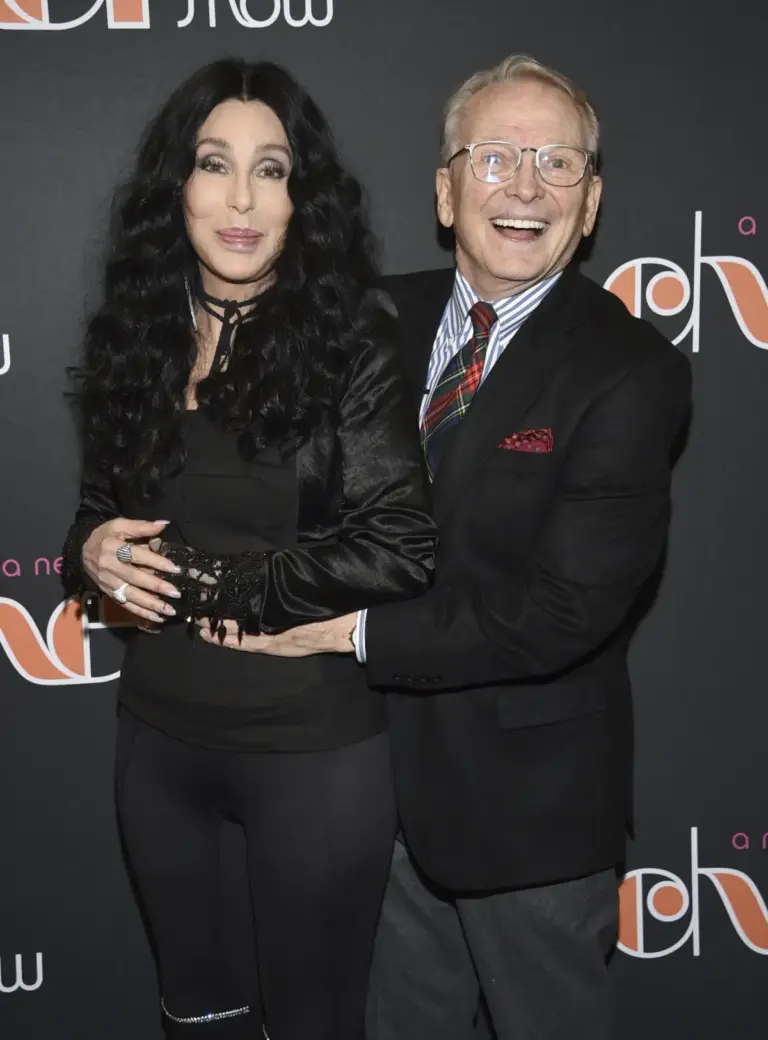
Mackie and Cher forged a creative alchemy that revolutionized red-carpet fashion. From her feathered, semi-sheer "naked dress" at the 1974 Academy Awards to her gravity-defying, headpiece-heavy showgirl ensembles during her Las Vegas residencies, Mackie engineered an aesthetic of sheer audacity. He gave Cher the visual armor she needed to captivate millions, cementing both of them as permanent fixtures in fashion history.
Supporting Context & Metrics: The Architecture of Excess
To fully comprehend the magnitude of Bob Mackie’s impact, one must examine the intersection of his technical mastery, his industry metrics, and his cultural reach. Mackie’s designs were characterized by several distinct signatures:
- The Power of Illusory Transparency: Mackie mastered the art of creating garments that appeared daringly sheer while remaining structurally sound and wearable under intense performance conditions. He utilized invisible netting, strategically placed embroidery, and meticulous beadwork to create illusions that pushed the boundaries of network censors and fashion norms alike.
- Theatrical Scale: Understanding that stage performers needed to communicate emotion to the audience member sitting in the very last row of a 5,000-seat theater, Mackie’s designs relied on exaggerated silhouettes, massive headpieces, sweeping capes, and high-contrast color palettes.
- Hand-Crafted Intricacy: Long before the era of fast fashion and digital prototyping, Mackie’s atelier relied on old-world craftsmanship. Hundreds of thousands of Swarovski crystals, sequins, and feathers were applied by hand to garments that could weigh upwards of thirty pounds yet had to allow performers to dance, run, and sing with absolute freedom.
Industry Accolades and Recognition
Mackie’s peerless contributions were recognized by the highest-tier institutions in entertainment and fashion:
- The Tony Awards: He earned critical acclaim and a Tony Award for his work on Broadway, demonstrating his mastery of live theatrical costuming.
- The Emmy Awards: Across his prolific television career, Mackie secured multiple Emmy Awards for his phenomenal costume design work on television specials and series.
- Academy Award Nominations: He received three Oscar nominations for Best Costume Design (Lady Sings the Blues in 1972, Funny Lady in 1975, and Pennies from Heaven in 1981), proving his technical versatility across different cinematic genres and eras.
- Educational Philanthropy: Beyond his personal achievements, Mackie dedicated decades to nurturing the next generation of creatives, serving as a mentor and active board member at the Otis College of Art and Design, helping to shape the future of American design.
Official Statements and Personal Tributes
The loss of Bob Mackie prompted an outpouring of grief, admiration, and fond remembrance from across the entertainment and fashion landscapes.
Tracey E. Bregman’s touching tribute on Instagram captured the heartbreak of an industry losing one of its brightest lights, while honoring the gentle, nurturing soul behind the theatrical flash:
"The world certainly has less shimmer, glitter and shine today with the loss of my cousin @bobmackie," Bregman wrote, accompanying a vintage photograph of Mackie with her mother, actress Suzanne Lloyd. "I was on the board of Otis for some time and saw what he gave back to the students and up and coming designers. His costumes for @cher and @itscarolburnett go down in history."
Bregman also shared intimate family recollections of Mackie’s childhood creative pursuits, noting her mother’s enduring awe of his ability to construct entire miniature theatrical universes from scratch. Reflecting on her own rare opportunities to wear his creations, Bregman added: "I had the great chance of wearing his costumes a couple of times. I always felt special to be able to put on one of his dresses. Rest in Peace sweet Bobby."
Countless other celebrities, designers, and cultural figures shared their condolences, emphasizing that Mackie’s influence was not confined to the twentieth century. Modern style icons continue to look to his archives for inspiration.
Future Outlook: The Enduring Echo of Mackie’s World
As the fashion world reflects on the life and career of Bob Mackie, his absence leaves a profound void in an industry that has increasingly leaned toward minimalist aesthetics and understated streetwear. Yet, Mackie’s DNA remains vibrantly alive in contemporary culture.
Today’s red-carpet landscape—frequently dominated by bold theatricality, archival fashion revivals, and high-octane glamour—owes an immense debt of gratitude to the path Mackie carved. Modern superstars such as Zendaya, Sabrina Carpenter, and fashion entrepreneur Alix Earle continue to pay homage to his design principles, frequently pulling vintage Mackie silhouettes or commissioning custom pieces inspired by his signature aesthetic. His archival pieces are treated with the reverence of museum-grade fine art, sought after by collectors, fashion historians, and cultural institutions alike.
Furthermore, the educational programs he championed—such as his mentorship initiatives at Otis College of Art and Design—ensure that his commitment to rigorous craftsmanship, technical skill, and imaginative daring will be passed down to future generations of designers. Young creators entering the industry today are continually taught to study Mackie’s balance of structural integrity and fearless showmanship.
Bob Mackie taught us that clothing is an extension of fantasy, a vehicle for empowerment, and a medium for pure joy. While the world may indeed have "less shimmer, glitter and shine" today without him, the stellar constellation of his creations will continue to illuminate the cultural firmament for generations to come. Rest in peace, Bobby.