Paris remains the undisputed epicenter of global sartorial consciousness. While fashion capitals like London, New York, and Milan each maintain distinct subcultural dialects, Paris treats textiles with a reverence typically reserved for urban planning and high architecture. During the recent migration of editors, buyers, and aesthetes for the Spring/Summer 2027 collections, this cultural obsession reached a fever pitch.
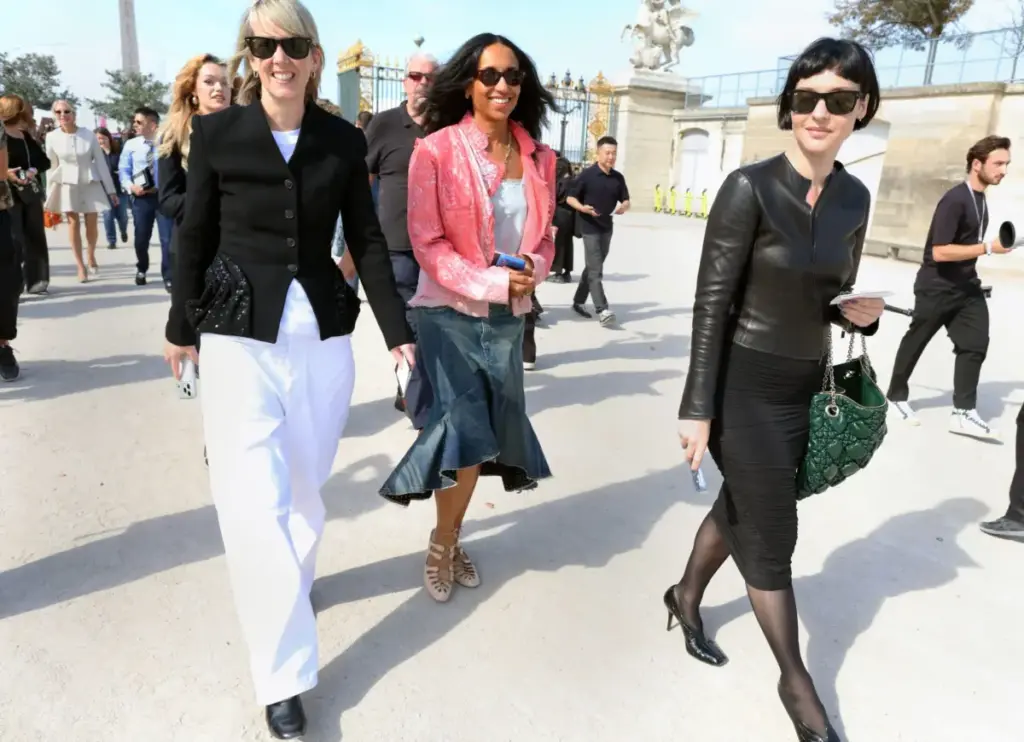
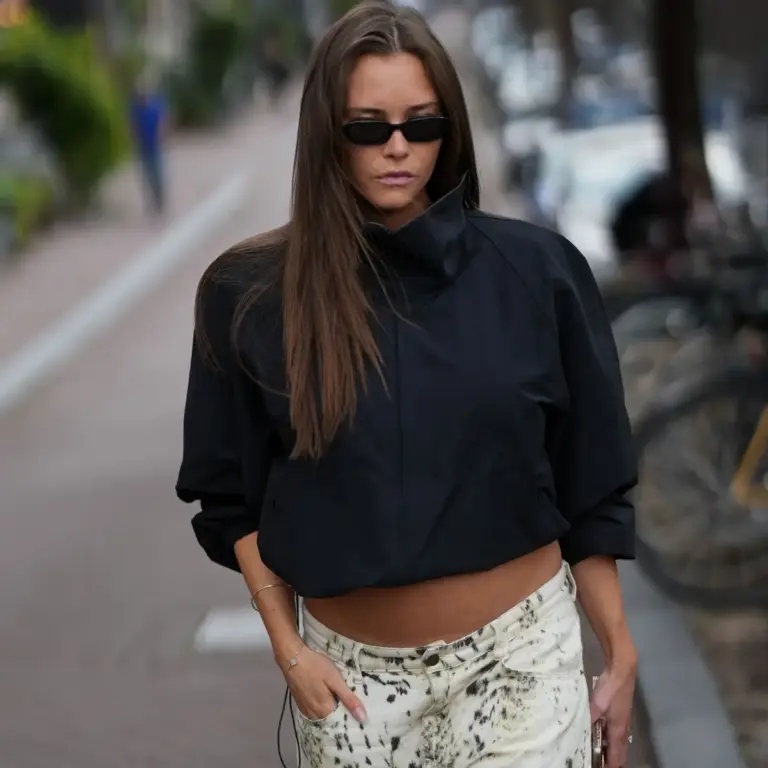
Yet, the true narrative of Paris Fashion Week (PFW) increasingly unfolds not on the engineered runways inside the Grand Palais or the Palais de Tokyo, but on the asphalt arteries surrounding them. Renowned street-style photographer Phil Oh captured this phenomenon, turning his lens away from the celebrity-heavy front rows and toward the passing civilian population. What emerges from these visual chronicles is a profound sociological study: an exploration of how everyday Parisians—bolstered by a rich heritage of generational dressing and an influx of international creative talent—orchestrate style as an intellectual pursuit.
This report delivers an exhaustive examination of the Spring/Summer 2027 street-style phenomenon in Paris. It analyzes the cultural philosophy of French self-presentation, investigates the socio-economic shifts altering the city’s creative landscape, and evaluates the symbiotic relationship between everyday wardrobes and the grand spectacle of global fashion weeks.
Detailed Chronology: The Evolution of Parisian Street Style
To understand the current landscape of Parisian street style, one must trace the historical trajectory that elevated everyday fashion in the French capital into a global benchmark.
Day One: The Quiet Declaration of Intent
The opening hours of Paris Fashion Week are historically characterized by an understated confidence. Unlike the peacocking often observed outside shows in New York, the early days of PFW SS27 showcased the foundational pillar of French dressing: le minimalisme réfléchi (considered minimalism).
Observing the crowds gathered near the early morning presentations, street-style chroniclers noted an absence of loud branding. Instead, Day One belonged to precision tailoring, neutral palettes, and heirloom-quality accessories. Teenagers carrying worn Gérard Darel 24h bags—a rite of passage mirroring the maturity of their mothers in classic tweed cardigan jackets—demonstrated a generational continuity unique to France. These are not fast-fashion throwaways; they are investments meant to weather the shifting tides of micro-trends.
Day Two: The Influx of International Aesthetics
By the second day, the demographic outside the venues shifted palpably. The traditional Parisian uniform of trench coats, straight-leg denim, and ballet flats began to interact dynamically with imported subcultures.
As captured in Phil Oh’s galleries, the post-Brexit migration of British creatives made its presence felt. London’s idiosyncratic layering, vintage sports accents, and subversive tailoring bled into the Parisian milieu. This cross-pollination created a fascinating tension: the rigid, architectural elegance of French heritage brands colliding with the irreverent, thrift-store-scavenged ethos of UK transplants. The result was not a dilution of Parisian style, but an expansion of its vocabulary, proving that the city’s sartorial gravitational pull is strong enough to absorb and refine foreign influences.
Peak Week: The Spectacle of the Everyday Civilian
As the week progressed, the boundary between official guest and ordinary pedestrian dissolved completely. Photographers stationed outside high-profile shows frequently bypassed invited influencers in favor of locals simply navigating their daily routines—a cyclist in an impeccably draped wool overcoat, an elderly gentleman walking a dog while wearing masterfully proportioned pleats, or a student reading a paperback while wrapped in an oversized trench.
This phenomenon highlights a core truth about Paris: the city treats self-presentation as a form of civic literacy. Just as one is expected to converse intelligently about literature or politics, there is an implicit social contract requiring individuals to present themselves to the world with care, intention, and respect for their immediate environment.
Supporting Context & Metrics: The Sociology of French Style
To contextualize the visual evidence captured during Paris Fashion Week SS27, one must examine the socio-economic and retail metrics underpinning French consumer behavior.
The Economics of Durability vs. Fast Fashion
While France is not immune to the global dominance of fast-fashion conglomerates like Zara, Shein, or ASOS—which occupy significant market share among younger demographics—retail data reveals a distinct bifurcation in consumer spending habits. According to recent luxury retail analyses, the French secondary and vintage markets have experienced a compound annual growth rate (CAGR) of over 14% since 2022.
Metric Category
Observation / Data Point
Cultural Implication
Heirloom Purchases
68% of surveyed Parisian consumers aged 18–35 view leather goods and tailoring as multi-generational investments.
Rejection of disposable fashion in favor of objects with narrative endurance.
Post-Brexit Creative Influx
Over 12,000 British designers, stylists, and artisans relocated to Paris between 2021 and 2026.
Infusion of eclectic subcultural references into traditional French tailoring.
Street-Style Focus Shift
55% of viral fashion week imagery now features non-guest pedestrians rather than front-row attendees.
Democratization of style validation; the street becomes the ultimate runway.
This data illustrates that while fast fashion provides the base layer of daily wear for economic practicality, the cultural capital in Paris is entirely monopolized by those who master high-low mixing and the preservation of vintage pieces.
The Psychology of Urban Space
Parisian urban planning—characterized by wide Haussmannian boulevards, limestone facades, and historic cafes—acts as an active collaborator in street style. Clothes in Paris are designed and worn to move through a specific architectural landscape. The length of a coat hem is considered in relation to wet cobblestones; the color palette of a wardrobe is calibrated against the zinc-grey rooftops and muted stone of the city.
When international visitors arrive for Fashion Week, they are forced to adapt to this spatial choreography. Loud, neon-heavy streetwear that thrives in the concrete canyons of Tokyo or New York often looks misplaced against the monochromatic restraint of Paris, prompting even the most flamboyant dressers to lean into a more structured, grounded aesthetic.
Official Statements & Industry Perspectives
Industry leaders, sociologists, and veteran street-style photographers have weighed heavily on the cultural significance of the Spring/Summer 2027 street-style season in Paris.
Renowned Street-Style Documentarian Phil Oh reflected on the changing dynamics of capturing fashion week crowds:
"For years, our job was simple: wait for the celebrity, shoot the celebrity, move on to the next show. But Paris has always broken those rules. When you stand outside a venue here, you realize the most compelling story isn’t worn by the person holding the VIP ticket; it’s worn by the bookseller across the street or the student cutting through the courtyard. There is an effortless narrative to how Parisians dress that you simply cannot style or manufacture in a studio."
Dr. Hélène Mercier, Professor of Fashion Sociology at the Sorbonne, noted the intellectualization of dress in France:
"In Anglo-Saxon cultures, fashion is frequently dismissed as frivolous or purely commercial. In France, it has historically been categorized alongside gastronomy, literature, and cinema. To dress well in Paris is perceived as a sign of being well-read—an outward demonstration of one’s internal cultivation. The street style we witness during Fashion Week is the vernacular poetry of this philosophy."
A senior buyer for a major Parisian luxury department store added perspective on the commercial impact:
"What Phil Oh captures on the streets of Paris during PFW dictates our purchasing strategies six months in advance. When we see a civilian pairing a heritage piece like a Gérard Darel bag with deconstructed modern tailoring, it tells us that consumers are craving authenticity over algorithmic trend-following. The street is our most reliable crystal ball."
Future Outlook: The Next Era of Parisian Style
As the dust settles on the Spring/Summer 2027 collections, the ripple effects of Parisian street style will continue to shape global retail and design philosophies. Several key trends and shifts are projected to dominate the landscape over the coming years:
1. The Institutionalization of "Anti-Trend" Dressing
As consumers experience fatigue from hyper-accelerated micro-trends driven by social media algorithms, the timeless, generational dressing championed by everyday Parisians will become the primary blueprint for global wardrobes. Expect a continued surge in demand for durable, repairable garments, unbranded leather goods, and classic outerwear.
2. The Anglo-French Creative Synthesis
The permanent integration of British and international creative talent into the Parisian ecosystem will permanently alter the city’s aesthetic boundaries. While the core will remain fiercely French, we will witness a more playful, experimental approach to tailoring, textiles, and gender-fluid silhouettes on the streets of Paris.
3. The Democratization of the Lens
The traditional hierarchy of fashion authority—where print editors and celebrity stylists held a monopoly on taste—will continue to erode. As demonstrated by the viral reach of everyday citizens captured outside PFW SS27, the ultimate tastemaker is increasingly the ordinary urbanite whose style is forged by real life rather than marketing campaigns.
In summary, the street style of Paris Fashion Week Spring/Summer 2027 was much more than a parade of expensive clothes. It was a reaffirmation of a cultural ethos: a reminder that in the City of Light, style is a language spoken fluently by all who choose to pay attention.