Executive Overview
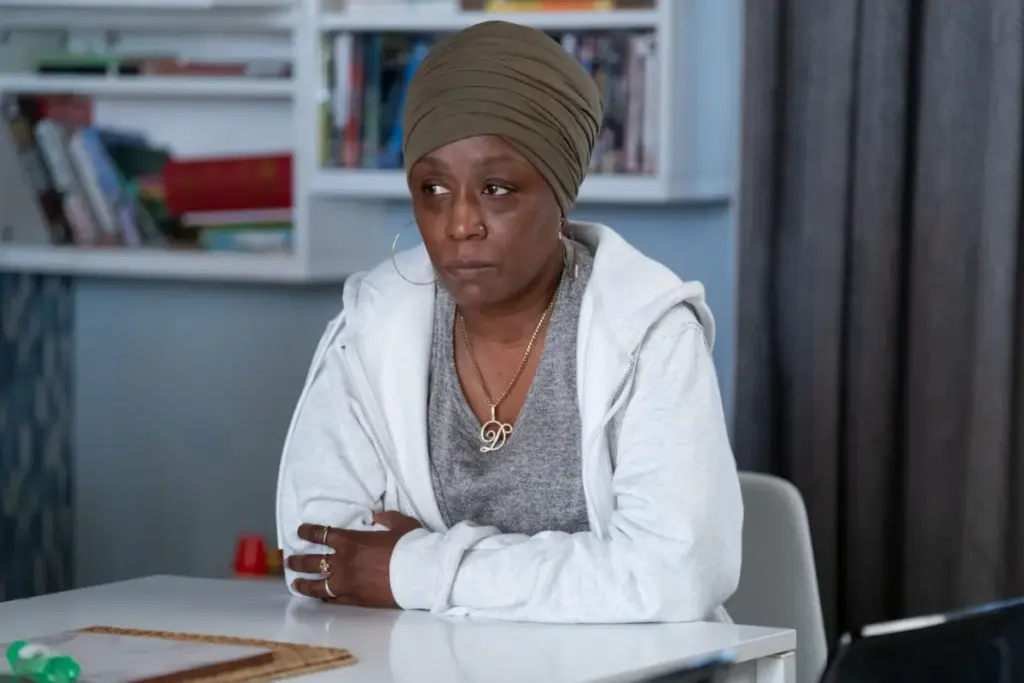
For two decades, actress Diane Parish has been a steadfast pillar of the BBC’s flagship soap opera, EastEnders, captivating millions of viewers with her portrayal of the fiercely independent, resilient, and complex Denise Fox. As Parish marks her remarkable 20-year milestone on the soap, she finds herself at the center of one of the most emotionally grueling and socially significant narratives in the show’s recent history: a harrowing, long-form exploration of acute myeloid leukaemia (AML).
Unlike traditional television dramas or cinematic features that often condense major medical crises into a neat, highly stylized 90-minute runtime or a limited mini-series arc, EastEnders has chosen to unfold Denise’s diagnosis in real-time. This creative decision mirrors the exhausting, protracted reality faced by actual patients and their families. Speaking exclusively to the Radio Times at the National Television Awards, Parish opened up about the immense physical and emotional toll of inhabiting a character undergoing systemic cancer treatment. Beyond the confines of Albert Square, this high-profile storyline has transcended traditional entertainment boundaries, sparking vital public health conversations—most notably regarding the severe underrepresentation of Black donors on the stem cell register. Supported by close colleagues Scott Maslen and Tameka Empson, Parish’s performance has not only redefined her illustrious career but has also elevated the cultural responsibility of contemporary British soap operas.
Detailed Chronology: The Unfolding of a Crisis
The trajectory of Denise Fox’s medical emergency began earlier this year when she received the life-altering diagnosis of acute myeloid leukaemia—a fast-growing cancer of the blood and bone marrow. True to her character’s protective and often self-sacrificing nature, Denise initially kept the earth-shattering news close to her chest. She first confided in Yolande Trueman, played by Angela Wynter, seeking a safe harbor before finding the courage to break the news to her long-term partner, Jack Branning, portrayed by Scott Maslen.
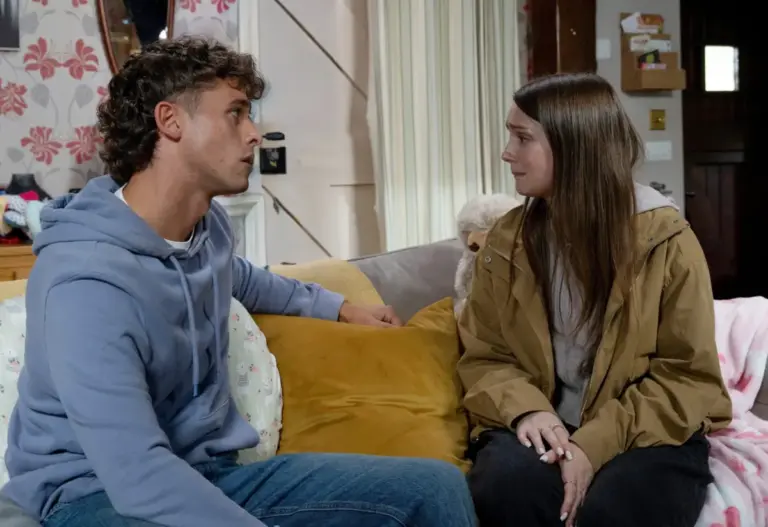
However, Walford is rarely a place where personal grief can be processed in isolation. Before Denise could bring herself to share her diagnosis with Jack, a secondary tragedy struck the family. Her grandson, Jordan (Jahsaiah Williams), was struck by Ian Beale’s (Adam Woodyatt) car in a horrific accident. Thrust instantly into a maternal crisis, Denise abandoned her own medical priorities, rushing to the hospital to support her daughter, Chelsea (Zaraah Abrahams). In classic soap opera fashion, Denise actively ignored urgent phone calls concerning her own failing health markers, delaying critical treatment to ensure her family stayed afloat.
The postponement could not last. As her condition deteriorated, Denise was eventually forced to admit herself onto a specialized cancer ward, initiating months of grueling chemotherapy regimens. The emotional and physical strain of these hospital scenes has resonated deeply with viewers, painting a stark picture of the collateral damage cancer inflicts on a family unit.

Most recently, the narrative reached a critical turning point when medical professionals informed Denise that chemotherapy alone would not be enough; she would require a compatible stem cell donor to secure a long-term recovery. In a dramatic twist typical of the soap’s rich tapestry of secret histories, a recently discovered half-brother, Darnell Larson (played by Christopher Colquhoun), stepped forward to undergo tissue testing, opening a new chapter of hope laced with characteristic tension.
Supporting Context & Metrics: Real-Time Storytelling and Health Advocacy
The decision by EastEnders producers to execute a year-long, real-time cancer storyline highlights a fundamental shift in how continuing drama handles sensitive socio-medical issues. While prestige television series can opt for fast-paced pacing, daily serial dramas possess a unique psychological advantage: longevity.
As Diane Parish noted during her red-carpet interviews, the duration of an illness in the real world cannot be neatly packaged. By forcing both the character and the actress to endure the psychological fatigue of months of treatment, hair loss, institutionalization, and systemic bodily failure, the production team achieved an unprecedented level of authenticity.
The Real-World Impact: Stem Cell Disparities
More importantly, the narrative has functioned as an unprecedented public service announcement. Acute myeloid leukaemia and other blood cancers require precise human leukocyte antigen (HLA) tissue typing for successful stem cell transplants. Statistically, patients from Black, Asian, and minority ethnic (BAME) backgrounds face a disproportionately lower chance of finding a matching donor due to severe historic underrepresentation on global and national registers.
By centering this medical reality on a beloved Black legacy character, EastEnders collaborated closely with health charities and blood cancer organizations. The storyline has directly correlated with a measurable surge in public engagement, driving individuals—particularly within Black and minority communities—to request swab kits, register as donors, and undergo simple blood tests. Parish herself has championed this real-world impact, viewing the off-screen metrics of the storyline as far more important than any award or critical accolade.

Official Statements and Cast Insights
Reflecting on the psychological demands of the role, Diane Parish did not mince words when discussing the sheer weight of the narrative arc.
"It’s been really tough. If you do a film about somebody with this condition, you’d have finished it by now. If you were doing a TV series or drama, it would have been finished by now," Parish shared with the Radio Times. "We do continuing drama, and because of the length of time that this illness goes on for, it has to play out in its real time. So, as an actor going through this illness for the length of time that I have to go through it is tough."
Despite the emotional exhaustion, Parish embraced the professional hurdle: "It’s challenging, and why else did I get into this industry if not to be challenged? Anything you do, you want to be challenged."
Navigating such heavy material requires a robust support network behind the scenes. Parish was quick to praise the collaborative environment on set, specifically singling out her primary scene partners, Scott Maslen and Tameka Empson (who plays Kim Fox).
"I’m supported. I’ve got great scaffolding around me. I literally could not do this story without Scott and Tameka," she emphasized.

Of Maslen’s portrayal of the desperate, grief-stricken husband, Parish offered high praise: "Scott playing my husband is a gift. He’s breaking hearts. He’s a beautiful, intuitive, gifted, wonderful actor, and I’m blessed to not only have him as an actor but a friend."
Touching upon the social resonance of the plot, Parish added: "The fact that we have raised the level of people who have signed up to the stem cell register as blood donors from the Black community and other communities is the most amazing thing to me. And all I’d encourage people to do is take a swab, get a blood test, and potentially save someone’s life."
Future Outlook: What Lies Ahead for Denise Fox?
As EastEnders charges deeper into the autumn and winter schedules, viewers are left wondering whether Denise Fox will secure the life-saving match she so desperately needs. While Darnell Larson’s willingness to test offers a glimmer of light, the path ahead remains fraught with medical uncertainty and narrative suspense.
Parish has been keen to manage audience expectations, reminding fans that soap operas do not always wrap complex medical dramas in neat, fairy-tale bows.
"There are no magical answers to things like this," Parish teased regarding the conclusion of the arc. "What’s been so important and vital to me—not just playing it, but as a Black woman—is the limited access there is to donors. Denise started out thinking she had such a small percentage of opportunity, and hopefully, she makes it through."

Ultimately, the enduring legacy of Denise Fox’s cancer battle will extend far beyond the fictional boundaries of Walford. Whether Denise walks out of the hospital cancer-free or faces further hurdles, the storyline has permanently altered the cultural landscape of British television. By turning a spotlight on medical inequality and the life-saving simplicity of the stem cell register, EastEnders has proven that serialized drama can be both gripping entertainment and a powerful catalyst for societal change.