The convergence of elite athletics and high fashion has defined the cultural landscape of 2026. As the summer months draw to a close, the sporting world has systematically transformed into a runway, bridging the gap between stadium bleachers and the front rows of global fashion capitals. This athletic-aesthetic renaissance began with the New York Knicks’ historic championship run—watched intently by Chrome Hearts-clad tastemakers Timothée Chalamet and Kylie Jenner—and continued through the meticulously styled pitches of the 2026 World Cup. Now, this stylistic marathon reaches its grand finale at the 2026 US Open.
Running from August 30 to September 13 at Flushing Meadows, the year’s final Grand Slam tournament arrives at the ultimate intersection of sport and high-end retail. Because its closing days seamlessly overlap with New York Fashion Week, the tournament acts as a cultural bridge, amplifying the dialogue between court-side attire and designer ready-to-wear. Major heritage labels, independent streetwear brands, fine jewelry houses, and even interior design studios have mobilized to capture the energy of the event.
From official outfitters like Ralph Lauren and legendary trophy creators like Tiffany & Co. to disruptive limited-edition capsules by Sporty & Rich, Frame, and Nordic Knots, the 2026 US Open is not merely a tennis tournament; it is a sprawling, multi-billion-dollar style ecosystem. This report explores how tennis core has matured into a dominant commercial and cultural force, reshaping the way players present themselves on the court, how fans style their game-day wardrobes, and how brands capitalize on the most stylish summer in recent memory.
Detailed Chronology: From the Hardwood to Flushing Meadows
To understand the dominance of tennis aesthetics at the 2026 US Open, one must trace the stylistic trajectory that defined the broader sports and entertainment calendar over the last several months.
The Springboard: High Fashion on the Hardcourt
The spring and early summer set a high bar for athletic-adjacent fashion. When the New York Knicks broke a 53-year championship drought, the courtside seats were filled with heavy-hitting style icons, signaling that sports venues had firmly replaced traditional red carpets as premier culture-setting environments. This energy translated immediately onto the global stage during the World Cup, where international athletes and attendees turned tournament infrastructure into personal runway moments.
The Summer Build-Up: Strategic Capsule Drops
As the calendar turned toward August, the retail market flooded with tennis-specific collections designed to capture the impending fervor of the US Open.
Early August: Cadillac and Sporty & Rich launched their highly anticipated "Cadillac Racquet Club" collaboration. The eight-piece capsule seamlessly blended classic preppy heritage with modern leisurewear, featuring navy sweatsuit coordinates and co-branded logo caps designed to appeal to both automotive enthusiasts and tennis traditionalists.
Mid-July to August: Frame re-released its dedicated tennis collection, targeting the coveted "WAG" (wives and girlfriends) demographic in the stands with versatile pieces engineered to transition effortlessly from the stadium to upscale dining establishments. Meanwhile, Offline by Aerie introduced a specialized tennis capsule tied to its philanthropic initiative with the USTA Foundation, aimed at empowering women coaches and athletes across the country.
Late August: Paige Paul (formerly Lorenze), following her high-profile wedding to American tennis star Tommy Paul in July, brought back her annual Dairy Boy pop-up from August 21 to 23. Complete with a Levain Bakery truck, the activation capitalized on Y2K nostalgia, offering crowds 2000s-inspired track pants and "WAG" capri pants from her new DB Sport line.
The Grand Slam Fortnight (August 30 – September 13)
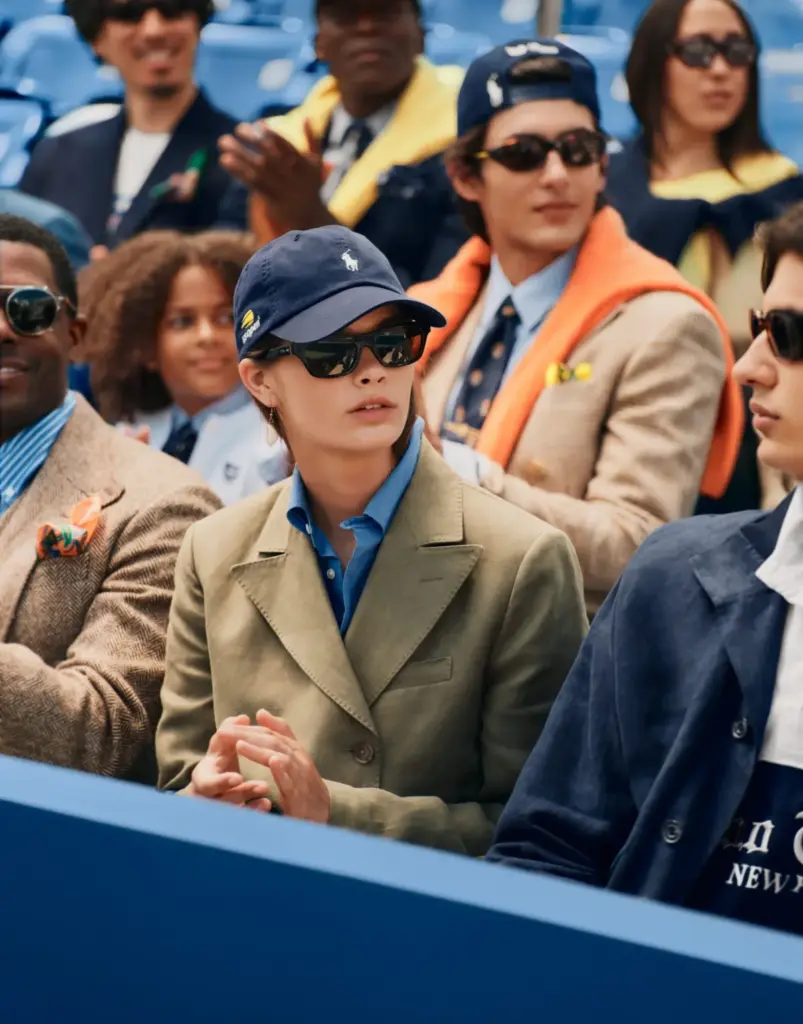
As the main draw commenced at Flushing Meadows, the physical grounds transformed into an experiential marketing haven. Ralph Lauren returned for its 21st consecutive year as the tournament’s official outfitter, unveiling a comprehensive collection of preppy sportswear, tournament-day classics, and brightly color-blocked uniforms for the ball crew. Simultaneously, Tiffany & Co. established its fourth consecutive on-site pop-up, offering fans an immersive look into the rich history of the brand’s master silversmiths crafting the tournament’s iconic championship trophies.
Beyond the baseline, luxury hospitality experiences reached unprecedented heights. The Mark Hotel introduced a staggering $500,000 Grand Slam Extravaganza package, featuring private tennis lessons with legendary champion John McEnroe. Simultaneously, Lacoste executed a massive brand takeover of The Plaza Hotel, further cementing the inextricable link between classic tennis aesthetics and old-world New York luxury.
Supporting Context & Metrics: The Anatomy of "Court-Sure"
The elevation of tennis fashion from functional sportswear to high-concept "court-sure" is underpinned by significant shifts in consumer behavior, player branding, and media visibility.
The Rise of the Tunnel Walk
Much like the NBA and the WNBA—whose "orange carpet" looks have become viral media sensations—tennis has embraced the "tunnel walk." Athletes are no longer arriving at matches in anonymous athletic warm-ups; they are making intentional statements with designer collaborations before stepping onto the court.
Naomi Osaka’s Fashion Evolution: Osaka has consistently pushed the boundaries of on-court self-expression, delivering high-fashion moments throughout the Australian Open, French Open, and Wimbledon.
Coco Gauff’s Trendsetting Influence: Gauff helped institutionalize the pre-match statement look, famously arriving at Roland Garros in striking leather-jacket walk-ons. Furthermore, her ongoing collaboration with New Balance and Miu Miu has blurred the lines between high-end Italian luxury and performance athletic footwear.
High-Carat Competition
Accessories on the court have become just as competitive as the rallies themselves. Women’s world No. 1 Aryna Sabalenka frequently competes while adorned in fine jewelry, including diamonds, emeralds, and her prominent 12-carat engagement ring. Recognizing this trend, fine jewelry brand Gorjana launched its "Sports Club" initiative just ahead of the US Open, appointing American tennis stars Jessica Pegula and Iva Jovic as brand ambassadors to bridge the gap between fine accessories and athletic performance.
Market Integration and Lifestyle Expansion
The influence of tennis core is no longer restricted to apparel and accessories. Home décor brands have seized upon the aesthetic’s clean lines and classic color palettes. Nordic Knots released The Grand Open, a limited-edition rug collection inspired by the precise geometry and color blocking of a tennis court, allowing consumers to bring the visual language of Flushing Meadows directly into their living rooms.
Footwear has also received a major jolt. On September 2, Converse is set to launch the First String JP—a luxury re-release of its legendary Jack Purcell court sneaker—at Kith, ensuring that sneakerheads and tennis purists alike have a designated footwear option for the autumn transition.
Official Statements and Industry Insights
The massive commercial investment in tennis fashion reflects a broader institutional belief in the longevity of athletic-inspired luxury.
Industry analysts note that consumers are increasingly seeking out versatile wardrobes that signal an active, health-conscious lifestyle without sacrificing sophistication. Ralph Lauren’s enduring partnership with the United States Tennis Association (USTA) serves as the gold standard for this philosophy.
"Our relationship with the US Open is a cornerstone of the Polo Ralph Lauren brand identity," notes a brand spokesperson. "Tennis represents a timeless elegance, an inherent sense of fair play, and a classic American aesthetic that resonates across generations. By outfitting the officials, ball crew, and fans, we help curate the visual narrative of one of New York’s most vibrant cultural moments."
Similarly, luxury jeweler Tiffany & Co. emphasizes the heritage aspect of their physical activations at Flushing Meadows:
"The trophies awarded at the US Open are testaments to hand-crafted excellence, forged in our Rhode Island hollowware workshop. Bringing this history to life through our on-site pop-up allows us to connect the passion of the fans with the legacy of craftsmanship that defines both Tiffany & Co. and the sport of tennis."
Independent designers share a similar sentiment regarding the agility of capsule collections. Founders of contemporary lifestyle brands emphasize that modern consumers view tennis gear not as single-use athletic equipment, but as foundational pieces for everyday wear during the late-summer-to-autumn transition.
Future Outlook: Where Sport Meets Style Next
As the 2026 US Open reaches its climax with crowning moments for the sport’s biggest names—including established icons like Coco Gauff, Aryna Sabalenka, Naomi Osaka, and the anticipated presence of tennis royalty like Serena Williams—the implications for the fashion industry extend far beyond mid-September.
Permanent Integration of Sport and Ready-to-Wear: The boundary between activewear and luxury fashion will continue to dissolve. Expect more permanent diffusion lines between haute couture houses and tennis brands, moving beyond temporary tournament capsules into year-round collections.
The Rise of Athlete-Led Design: As seen with Naomi Osaka and Coco Gauff, top-tier athletes are increasingly stepping into creative director roles, collaborating directly with luxury houses to dictate their own visual identities. This autonomy will likely inspire a new generation of players to leverage fashion as a vital component of their professional brand.
Experiential Retail Dominance: Pop-ups, branded bakeries, and immersive hotel takeovers have proven to be exceptionally effective marketing tools. Future Grand Slam tournaments will likely lean even harder into localized, experiential retail environments that turn host cities into festival grounds for fashion and culture.
Ultimately, the 2026 US Open serves as fashion’s final, brilliant serve of the summer. By successfully merging athletic excellence with uncompromising style, the tournament has proven that tennis core is more than a fleeting seasonal trend—it is a permanent fixture in the modern cultural lexicon.