Executive Overview
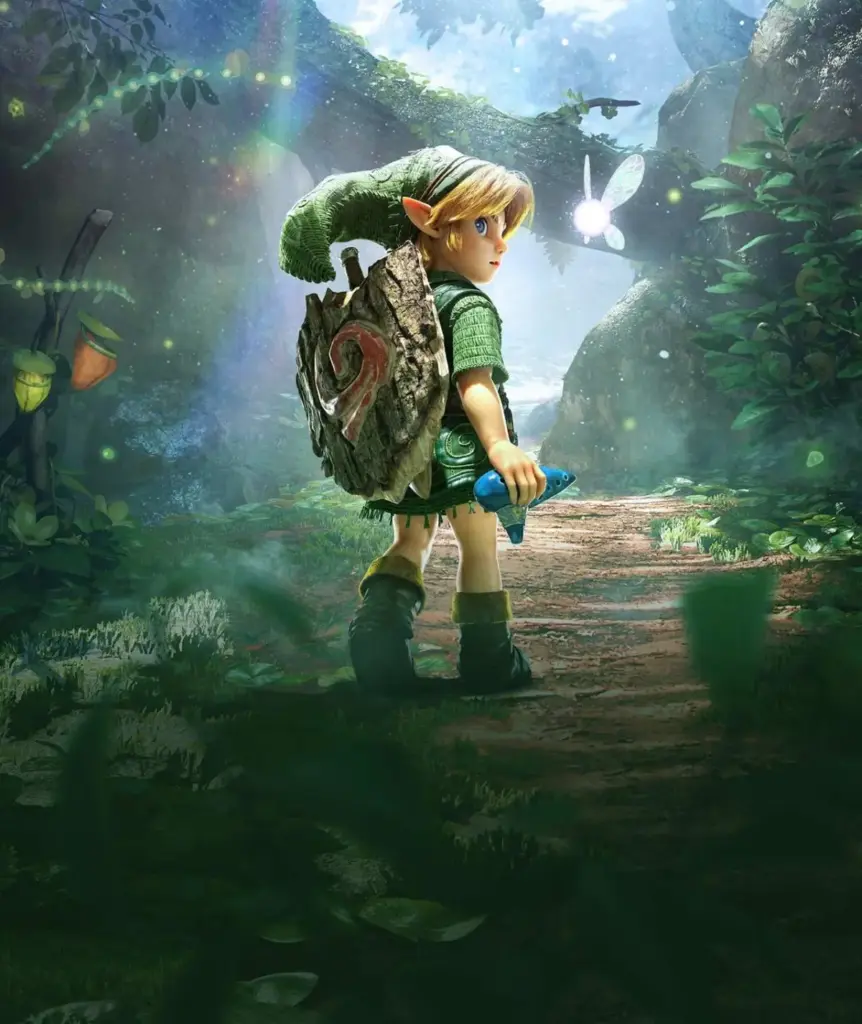
The gaming world has entered a monumental era for franchise preservation and next-generation innovation. Nintendo has officially confirmed that The Legend of Zelda: Ocarina of Time—widely regarded as one of the most influential video games ever created—is receiving a ground-up remake exclusively for the upcoming Nintendo Switch 2 console.
Unveiled during the highly anticipated Legend of Zelda 40th Anniversary Direct presentation on September 8, the announcement serves as the crown jewel in a multi-year celebration honoring four decades of the iconic fantasy franchise. First introduced to the world on the Nintendo Entertainment System (NES) in 1986, the Zelda series has continuously redefined the action-adventure genre. Now, as Nintendo prepares to bridge its storied past with its hardware future, fans are poised for an unprecedented nostalgia trip augmented by modern technology.
Scheduled for release on November 5, 2026, the Ocarina of Time Switch 2 remake promises to honor the structural integrity of the 1998 Nintendo 64 original while leveraging contemporary graphics engines, fully voiced cutscenes, symphonic orchestral arrangements, and innovative console-integrated features like microphone-enabled ocarina playing. Priced at $60 for the digital edition and $70 for the physical release, preorders are currently live, signaling massive consumer demand that has already strained online storefronts.
Detailed Chronology of the Announcement and Reveal
The path toward the Ocarina of Time Switch 2 remake began taking shape long before the September 8 Direct, fueled by decades of fan speculation, modding culture, and continuous technological leaps. However, Nintendo’s meticulous planning for the franchise’s 40th anniversary brought these aspirations into sharp focus.

The September 8 Direct Presentation
The Legend of Zelda 40th Anniversary Direct kicked off with a sweeping retrospective of the franchise, highlighting milestones from the 1986 8-bit original to the modern open-air masterpieces Breath of the Wild and Tears of the Kingdom. Midway through the broadcast, long-time series producer Eiji Aonuma took center stage to discuss the delicate balance of preserving classic game design while adapting to evolving player expectations.
Following updates on the franchise’s expanding multimedia footprint—including the much-discussed live-action film adaptation starring Bo Bragason—Aonuma transitioned to the core gaming announcements. A cinematic teaser featuring sweeping, hyper-realistic vistas of Kokiri Forest and Hyrule Field immediately sent shockwaves through the community, culminating in the formal reveal: The Legend of Zelda: Ocarina of Time for the Nintendo Switch 2.
Hardware Synergy and Launch Timelines
Nintendo’s strategy extends far beyond software. Recognizing the magnitude of the 40th anniversary, the company scheduled a rolling release of commemorative hardware and peripherals leading up to the game’s November 2026 launch:
- October 29, 2026: Limited-edition hardware accessories launch, including a Legend of Zelda 40th Anniversary Edition Switch 2 Pro Controller, a themed carrying case with a screen protector, and physical, playable ocarinas designed to interact directly with the game.
- November 5, 2026: The official global release of The Legend of Zelda: Ocarina of Time for Switch 2.
- 2027: A newly announced Ocarina of Time LEGO building set slated to hit shelves.
Despite the breadth of the merchandise rollout, high-demand items—particularly the special edition hardware bundles listed on official Nintendo platforms—experienced immediate sell-outs, illustrating the enduring commercial viability of the intellectual property.

Supporting Context & Metrics: The Legacy of a Masterpiece
To understand the weight of this remake, one must examine the monumental impact of the original 1998 Nintendo 64 release.
From 2D Pixels to 3D Horizons
The Legend of Zelda: Ocarina of Time was not merely a commercial success; it was a watershed moment for interactive entertainment. As the first title in the series to utilize 3D computer graphics, it established foundational mechanics that modern 3D action-adventure games still rely on today. Most notably, it popularized the "Z-targeting" camera system, which allowed players to lock onto enemies during combat, effectively solving one of early 3D gaming’s most persistent control challenges.
The narrative followed a young Link from the Kokiri Forest as he was tasked by the Great Deku Tree to stop the tyrannical Gerudo leader Ganondorf from acquiring the Triforce. Aided by his fairy companion Navi and wielding the eponymous Ocarina of Time, Link traversed time itself, shifting between his childhood and adult years across a sprawling, interconnected Hyrule.
Critical Acclaim and Sales Milestones
Upon release, Ocarina of Time achieved near-universal critical acclaim, securing numerous "Game of the Year" accolades and maintaining the highest aggregate review scores in video game history for over a decade. Its 2011 Nintendo 3DS remaster proved that the core gameplay loop remained engaging for a new generation, but the jump to the powerful hardware of the Nintendo Switch 2 represents an entirely different tier of modernization.

| Metric / Detail | Original Release (1998 – N64) | 3DS Remaster (2011) | Switch 2 Remake (2026) |
|---|---|---|---|
| Platform | Nintendo 64 | Nintendo 3DS | Nintendo Switch 2 (Exclusive) |
| Visual Style | Low-polygon 3D | Enhanced textures, stereoscopic 3D | Overhauled, photorealistic-adjacent fidelity |
| Audio | MIDI / Synthesized soundtrack | Remastered MIDI/Audio | Fully orchestrated symphonic score |
| Price Point | $59.99 (Standard 90s pricing) | $39.99 | $60 (Digital) / $70 (Physical) |
Official Statements and Gameplay Innovations
During the in-depth gameplay demonstration, Eiji Aonuma emphasized that while the development team has completely rebuilt the game’s assets from the ground up, the underlying level design, puzzle architecture, and narrative pacing remain strictly faithful to the original vision.
What’s New in the Switch 2 Remake?
- Overhauled Visuals and Performance: The angular, low-polygon models of the late ’90s have been replaced with highly detailed, modern asset renderings. Environmental textures, lighting engines, and weather effects have been brought up to modern console standards while maintaining the distinct artistic identity of Hyrule.
- Expanded and Fully Voiced Cutscenes: For the first time, major narrative sequences feature professional voice acting, giving emotional depth to characters like Princess Zelda, Sheik, Saria, and Ganondorf.
- Dynamic Camera and Reworked Controls: Modernized movement controls ensure fluid traversal, paired with dynamic camera options that give players greater freedom while preserving the classic framing of iconic cinematic moments.
- Symphonic Orchestral Soundtrack: The iconic midi compositions by Koji Kondo have been completely re-recorded by a full symphony orchestra, heightening the emotional resonance of exploration and dungeon-crawling.
- Interactive Ocarina Mechanics: Utilizing the Switch 2’s advanced internal microphone capabilities, players can physically hum or play notes directly into the console to perform songs on Link’s ocarina, seamlessly translating real-world input into in-game actions.
Future Outlook: A Golden Age for Zelda Fans
The announcement of the Ocarina of Time remake marks a pivotal turning point for Nintendo’s flagship franchise. Positioned alongside the upcoming live-action film adaptation and ongoing support for the modern era of open-world exploration, Nintendo is effectively catering to both foundational legacy fans and newcomers alike.
However, the exclusive nature of the software has sparked notable industry discussions. As confirmed by Nintendo, The Legend of Zelda: Ocarina of Time for Switch 2 will not be playable on legacy Nintendo Switch hardware. For millions of loyal consumers who have yet to make the generational hardware transition, the release of this landmark title serves as a primary catalyst for upgrading their gaming ecosystems.
As the industry counts down to November 5, 2026, the convergence of past brilliance and future hardware capability positions The Legend of Zelda: Ocarina of Time to once again redefine what a definitive video game remake can achieve.