Executive Overview
For decades, topical Vitamin C has reigned supreme as the undisputed heavyweight champion of the morning skincare routine. Dermatologists, beauty editors, and chemical formulators alike have long championed L-ascorbic acid for its unparalleled antioxidant capabilities. When paired with daily sunscreen application, it acts as a secondary shield, neutralizing the free-radical damage induced by ultraviolet (UV) radiation that can otherwise degrade cellular integrity and accelerate photoaging. Furthermore, Vitamin C is a critical co-factor in collagen synthesis—the structural protein responsible for skin firmness and elasticity—while simultaneously inhibiting tyrosinase, the enzyme responsible for melanin production, thereby fading existing hyperpigmentation and preventing the formation of new dark spots.
Yet, despite its glowing reputation and ubiquitous presence on vanity tables, a frustrating paradox plagues the Vitamin C market: the vast majority of consumers fail to see the transformative results promised on product labels.
The culprit is not a flaw in the ingredient itself, but rather a fundamental law of chemistry. Vitamin C in its most potent, bioavailable form—pure L-ascorbic acid—is notoriously unstable. Highly sensitive to light, heat, and air, traditional liquid formulations begin to degrade, oxidize, and lose their potency from the very moment the bottle is manufactured, let alone opened. By the time a consumer applies a standard liquid serum six weeks into its shelf life, third-party data indicates that up to 40 percent of the active ingredient may have already degraded into ineffectiveness.
Enter the stability revolution: a new wave of skincare engineering spearheaded by science-driven brands challenging the traditional liquid-serum paradigm. By decoupling active ingredients from their liquid bases and delivering them in stabilized, powdered formats until the exact moment of application, companies like Exponent Beauty are rewriting the rules of cosmetic chemistry. This investigative report explores the chemistry of degradation, the clinical data backing powder-delivery systems, and what this paradigm shift means for the future of efficacy-driven skincare.
Detailed Chronology: The Rise, Fall, and Reinvention of Vitamin C
To understand why the beauty industry has spent billions of dollars attempting to stabilize Vitamin C, one must trace the evolution of the ingredient within modern dermatology.
The Liquid Era and Its Inherent Flaws
In the late 20th century, dermatological research solidified L-ascorbic acid as the gold standard for topical antioxidants. Formulators quickly realized, however, that delivering this potent molecule to the skin was an uphill battle. L-ascorbic acid is a water-soluble antioxidant that struggles to penetrate the skin’s lipid-rich stratum corneum unless formulated at a low, acidic pH (typically under 3.5).
To achieve this, brands packaged the ingredient in water-based liquid serums. Unfortunately, water is the primary catalyst for oxidation. When exposed to oxygen, L-ascorbic acid rapidly converts into dehydroascorbic acid and subsequently into diketogulonic acid—compounds that offer zero antioxidant or brightening benefits.
Over the years, formulators attempted numerous band-aid solutions:
- Opaque and Airless Packaging: Utilizing UV-blocking dark glass, metal tubes, and airless pumps to minimize environmental exposure.
- Chemical Derivatives: Swapping pure L-ascorbic acid for gentler, more stable derivatives like sodium ascorbyl phosphate, magnesium ascorbyl phosphate, or tetrahexyldecyl ascorbate. While stable, these derivatives require conversion by the skin enzymes into active L-ascorbic acid, often resulting in diminished potency and delayed results.
- Anhydrous (Water-Free) Formulations: Suspending Vitamin C in silicones or oils to prevent oxidation. While more stable, these formulas often feel heavy, greasy, or cosmetically inelegant, leading to breakouts in acne-prone skin types and poor layering beneath sunscreens and makeup.
Despite these engineering feats, consumer dissatisfaction remained high. Many users reported that while their skin felt temporarily hydrated or soothed by the supporting ingredients in a serum, chronic issues such as stubborn melasma, sun spots, and uneven skin texture remained stubbornly unaddressed. The serums were oxidizing on vanity shelves—and often inside their droppers before a bottle was even halfway finished.

The Paradigm Shift: Powder-to-Serum Technology
The turning point arrived when formulators began to question a fundamental assumption of cosmetics: Why must active ingredients be pre-dissolved in a liquid matrix months before reaching the consumer?
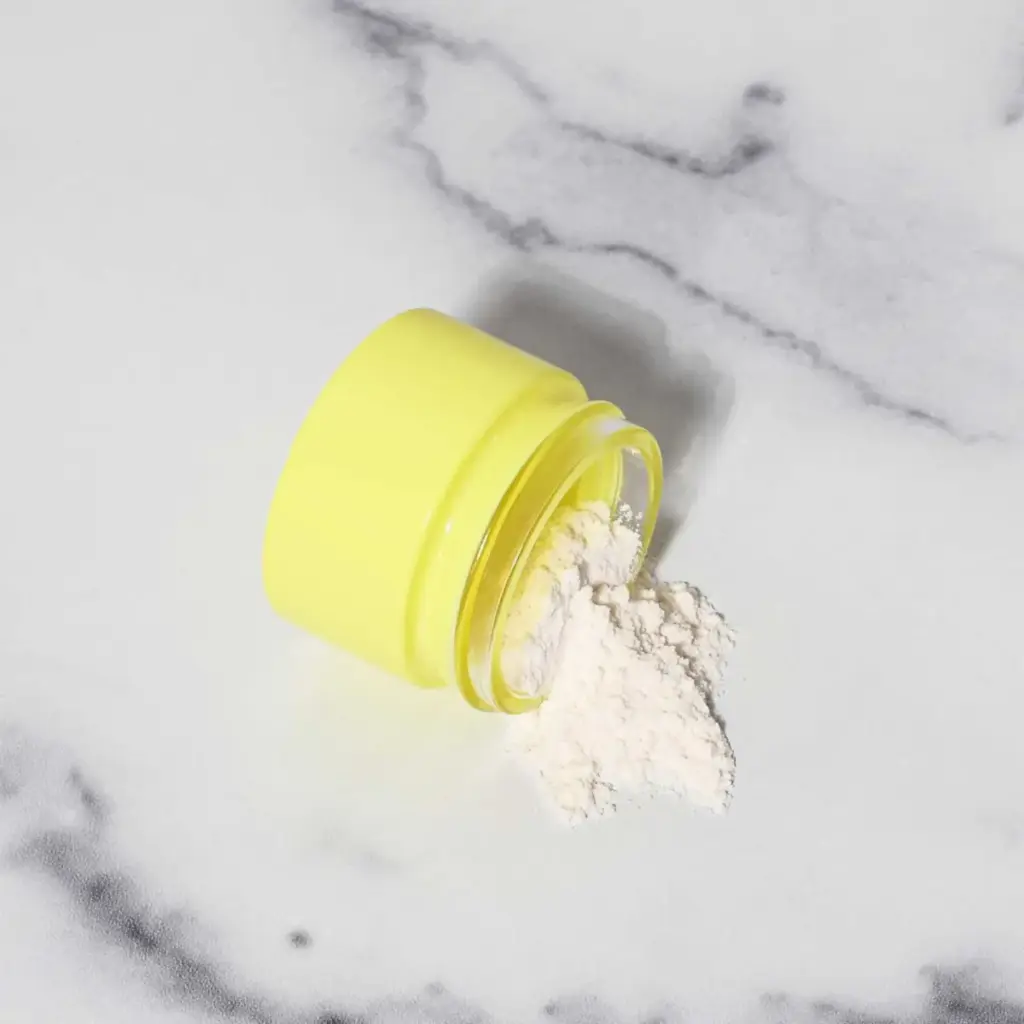
The realization that active ingredients degrade by upwards of 40 percent in just six weeks of traditional liquid storage catalyzed a pivot toward active-powder separation. By keeping L-ascorbic acid in a completely dry, micro-milled powder state, molecular degradation is effectively halted. The ingredient remains dormant, stable, and 100 percent potent until the user activates it in the palm of their hand immediately prior to application.
This breakthrough merges pharmaceutical precision with consumer ritual. Rather than relying on chemical preservatives or complex oil suspensions, the powder-to-serum method utilizes a dual-chamber or separate-vessel delivery system: one component dispenses the precise dose of pure active powder, while the other dispenses a hydrating, barrier-supporting base serum (such as hyaluronic acid). The user combines them seconds before sweeping the freshly forged, highly active treatment across the skin.
Supporting Context & Metrics: The Science of Stability and Clinical Efficacy
The transition from liquid serums to freshly activated powder systems is supported by rigorous analytical chemistry and independent, instrument-measured clinical trials.
The Degradation Timeline
Independent laboratory analyses conducted across the cosmetic chemistry sector reveal a stark reality regarding traditional liquid antioxidants:
- Week 1–2: The formula is freshly opened; pH levels are optimal, and the L-ascorbic acid concentration is at its peak 10 percent to 20 percent.
- Week 4: Oxidation begins to manifest visibly through a gradual yellowing or amber shift in the liquid’s color. Active potency drops by approximately 20 to 30 percent.
- Week 6: Studies indicate an average active degradation rate of 40 percent. By this point, the consumer is applying a significantly weakened formula, requiring higher volumes or longer durations to see marginal results.
- Week 8–12: Complete or near-complete oxidation of unshielded L-ascorbic acid, rendering the product little more than an expensive, highly acidic moisturizer.
By contrast, powdered L-ascorbic acid stored in airtight, moisture-resistant dispensers exhibits negligible degradation over a multi-month period, ensuring that the final application on day 90 is chemically identical in potency to the application on day one.
Clinical Trial Insights
To validate the real-world performance of active-powder systems, independent, instrument-measured clinical trials were conducted on a cohort of 28 women using a 10 percent pure L-ascorbic acid powder system (such as Exponent Beauty’s Brightening Boost Vitamin C Power System). The metrics recorded over a four-week period demonstrated statistically significant improvements across multiple dermatological parameters:
- Immediate Wrinkle Reduction: 100 percent of participants experienced a measurable decrease in the appearance of fine lines and wrinkles within just one week of daily use.
- Enhanced Skin Firmness: 72 percent of participants demonstrated a clinically verified increase in skin firmness and elasticity after four weeks.
- Brightening and Discoloration Correction: 66 percent of participants exhibited an instrument-measured increase in overall skin radiance and a corresponding decrease in localized melanin hyperpigmentation after four weeks.
Crucially, these results were achieved without the hallmark inflammatory side effects—such as stinging, persistent redness, or flushing—frequently associated with oxidized or poorly formulated high-percentage liquid acids.
Official Statements and Industry Perspectives
The shift toward ingredient stability is gaining traction among leading cosmetic chemists, dermatologists, and beauty industry executives who argue that the traditional cosmetic model prioritizes shelf-stable convenience over biological efficacy.

"What is the utility of formulating a product with gold-standard actives like Vitamin C or retinol if those molecules have degraded by nearly half by the time the consumer incorporates them into their daily regimen?" notes a leading cosmetic formulation chemist. "The future of skincare is not about finding better preservatives to slow down decay; it is about eliminating the decay cycle entirely through fresh activation."
Dermatological specialists emphasize that skin sensitivity to Vitamin C is frequently misdiagnosed. Many consumers assume their skin simply "cannot tolerate" L-ascorbic acid when, in reality, their skin is reacting negatively to the degraded byproducts of oxidized ascorbic acid and the harsh stabilizing chemicals required to keep liquid formulas intact in transparent packaging.
Furthermore, industry observers point out that the powder-to-serum movement establishes a new standard of financial and functional transparency. Consumers paying premium prices for active skincare are finally receiving 100 percent of the active dose they paid for, rather than a degraded fraction of it.
Future Outlook: The Expansion of Fresh-Activation Skincare
As consumer awareness regarding ingredient integrity continues to mature, the limitations of traditional liquid serums will likely drive further innovation across the broader beauty landscape.
While Vitamin C remains the poster child for molecular instability, it is far from the only active ingredient plagued by degradation. Retinoids (such as retinol and retinaldehyde), Coenzyme Q10, green tea-derived resveratrol, and various enzymatic peptides suffer from similar chemical vulnerabilities when exposed to light, air, and aqueous environments.
Brands pioneering fresh-activation systems are already expanding their portfolios beyond Vitamin C. Systems incorporating powdered Coenzyme Q10 and green tea resveratrol are currently entering the market, promising the same zero-degradation benefits for antioxidant defense and barrier repair.
What This Means for Consumers
- A Shift in Purchasing Habits: Skincare buyers are increasingly examining manufacturing dates, packaging mechanisms, and delivery systems rather than relying solely on marketing claims of active percentages. A 15% Vitamin C serum that oxidizes within weeks is vastly inferior to a stable 10% powder system that delivers uncompromised potency daily.
- The Rise of Interactive Rituals: The tactile experience of mixing a precise micro-dose of powder into a serum base transforms a mundane daily chore into an intentional, science-backed ritual.
- Higher Standards for Clinical Validation: As brands face mounting scrutiny over efficacy claims, the industry standard is shifting away from subjective consumer questionnaires toward rigorous, instrument-measured clinical trials that objectively verify anti-aging and brightening outcomes.
Ultimately, the skincare industry is undergoing a quiet reckoning. The era of the stagnant, slowly degrading bottle sitting indefinitely on a bathroom shelf is drawing to a close. By honoring the immutable laws of chemistry and embracing fresh-activation technology, brands and consumers alike are discovering a simple, undeniable truth: when it comes to active skincare potency, freshness isn’t just a luxury—it is the entire point.