Executive Overview
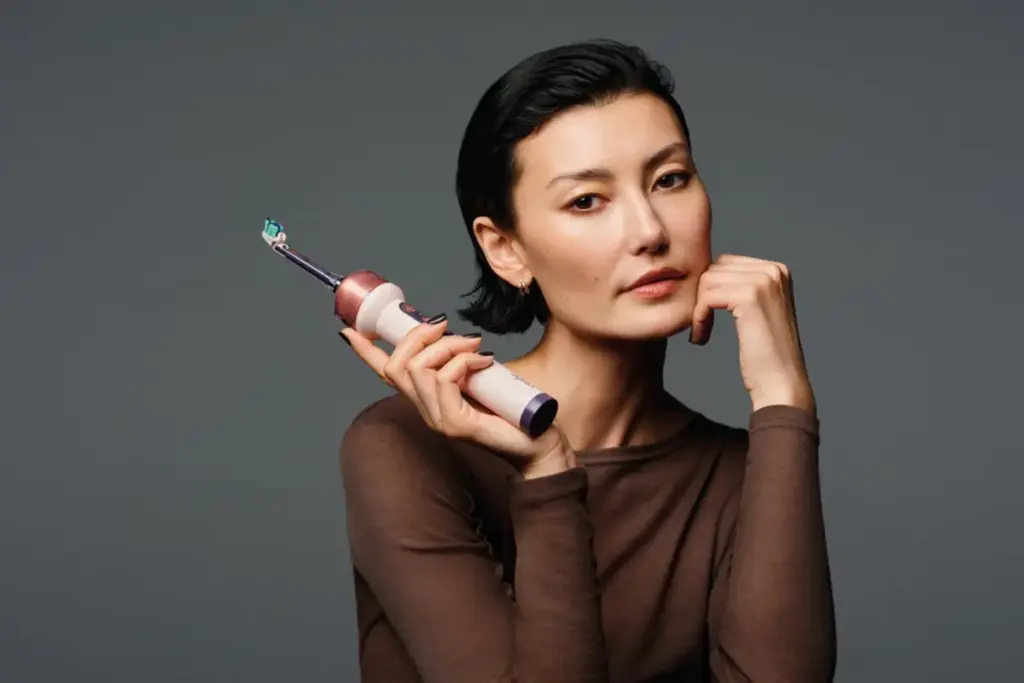
Oral healthcare rarely commands space in the global mainstream news cycle. For decades, the boundaries of dental hygiene innovation have been defined by incremental adjustments: oscillating brush heads, sonic vibrations, smartphone pairing apps, and occasional aesthetic redesigns. However, engineering giant Dyson has shattered this quiet landscape with the debut of the CameraJet—a $499 electric toothbrush that simultaneously brushes and flosses using a synchronized micro-jet system driven by onboard macro-photography.
Unveiled following a shroud of secrecy reminiscent of intelligence agencies, the CameraJet combines high-frequency brush oscillation with a 100mm-pixel macro lens the size of a pencil tip. This microscopic camera captures 28 images per second, mapping the spaces between teeth to direct precision blasts of mouthwash or water precisely where manual strings or standard water-flossers might fail.
Yet, the device has ignited an immediate cultural debate across social media and professional dental circles. Priced at a staggering $500, critics and internet commentators question whether it represents a transformative leap in personal hygiene or an overpriced, privacy-invasive gadget. Dentists, while intrigued by its potential to assist patients who chronically neglect flossing, remain skeptical about its real-world efficacy, cost-to-benefit ratio, and whether it can genuinely replace traditional string floss. As influencers unbox gifted units and brands like Listerine chime in with marketing counter-punches, the global dental community is left asking a fundamental question: Is the most expensive toothbrush in the 5,000-year history of oral hygiene genuinely worth the investment, or is it merely a high-tech luxury fad?
Detailed Chronology: From Secret Labs to Public Scrutiny
The Cloak-and-Dagger Development
Dyson operates its product development cycles with a corporate culture frequently compared to the CIA or NSA. Last spring, editors at Allure received exclusive access to the device in the company’s secure research and development labs in southwest England. Under strict non-disclosure agreements, journalists were forced to refer to the device solely by a secure code name during internal communications.
Because of this rigid secrecy, independent expert opinions could not be gathered prior to the official public launch on September 1. Dyson maintained total control over the narrative, relying on proprietary internal testing data and carefully orchestrated influencer seeding campaigns ahead of the official announcement.
The Launch and Immediate Backlash
When the CameraJet was finally revealed to the public, social media platforms erupted with reactions ranging from awe to cynicism. On Dyson’s official Instagram launch post, consumer sentiment was sharply divided.
- “For $500, it better take X-rays and straighten my hair,” one commenter joked.
- “Oh great, another camera I’ll have to put tape over,” wrote another, highlighting growing consumer anxiety over smart-device privacy.
Even legacy oral care brands joined the fray. Competitor Listerine published a sharp-witted response on Instagram:
"Friendly reminder: Listerine reaches your teeth, gums, tongue, cheeks, and everything in between to complete your oral care routine. No cameras. No fancy tech. Just a simple swish for a whole mouth clean."
While dental professionals quickly noted that mouthwashes like Listerine are antimicrobial adjuncts rather than replacements for mechanical plaque removal, the digital skirmish underscored the disruptive nature of Dyson’s entry into a mature market.
Supporting Context & Metrics: Engineering and Dentistry Collide
How the CameraJet Operates
The engineering behind the CameraJet is undeniably complex. Unlike continuous-stream water-flossers, the CameraJet emits a fan-like spray of mouthwash or water that triggers only when the onboard camera detects an interdental gap.
- The Sensor: Nestled directly beneath the brush head is a 100mm-pixel macro lens capturing 28 images per second.
- The Software Limitation: Users must avoid standard foaming toothpastes. SLS (sodium lauryl sulfate) and other foaming agents obscure the micro-lens, reducing gap-detection precision. Consequently, Dyson has developed its own specialized, SLS-free toothpaste and mouth rinse lines, though availability remains limited.
- The Companion App: The 28 frames per second captured during brushing are processed into a real-time video feed viewable on the user’s smartphone app, offering an unprecedented, microscopic look at the interior of one’s own mouth.
Clinical Data Versus Professional Skepticism
Dyson cites internal and external laboratory testing claiming the CameraJet outperforms market leaders in plaque removal. However, the publicly available clinical data rests on a modest four-week study of 60 subjects comparing a manual toothbrush against the CameraJet.
Dr. Vanna Stone, DMD, of Gentle Caring Dentistry in Livingston, New Jersey, notes the methodological limitations of this data:
"The CameraJet came out on top, but so would an Oral-B or Sonicare electric toothbrush. I want to see a study comparing the results of a Sonicare or Oral-B, plus traditional string floss, to this toothbrush. Are the results equivalent? Better? How much better?"
Furthermore, the CameraJet does not currently hold an American Dental Association (ADA) Seal of Acceptance. While the ADA seal requires independent verification of safety and efficacy—and a substantial manufacturer submission fee starting at $20,000—many highly recommended electric toothbrushes, such as the widely praised Oral-B Pro 1000, also lack the seal despite widespread clinical endorsement.
Official Statements & Expert Perspectives
To understand the true clinical utility of the CameraJet, Allure consulted four leading cosmetic and general dentists who evaluated the device based on its technical specifications and initial performance data.
The Case for Improved Compliance
Many dentists acknowledge that patient compliance is the single greatest hurdle in preventative dental care.
"Anything that can make patients more consistent with their oral hygiene gets my attention," says Brian Kantor, DDS, of Lowenberg, Lituchy & Kantor in New York City. "The idea of combining brushing and interdental cleaning into one routine makes a lot of sense, particularly because one of the biggest problems we see is that patients brush but don’t consistently floss."
Dr. Michael Wei, DDS, a Manhattan-based cosmetic dentist, points to the onboard camera as the device’s greatest asset. By offering real-time visualization, users can identify missed zones instantly. For patients experiencing declining dental health or those with reduced manual dexterity—such as elderly individuals struggling with traditional string floss—the device presents a viable ergonomic alternative.
The Limits of Automation: Can It Replace Floss?
Despite its advanced sensors, every consulted dental professional agreed: The CameraJet cannot replace traditional string floss.
- Crowded Teeth: Dr. Stone emphasizes that tight or crowded teeth require physical mechanical friction. "You really need to snap that floss between the teeth to remove plaque."
- Real-World Trials: Independent tests conducted by international dental professionals, such as Irish dentist Dr. Bronagh Keane, revealed residual plaque and microscopic debris trapped between teeth even after a full cycle with the CameraJet, verified using plaque-disclosing agents and subsequent string-floss tests.
- Periodontal Pockets: Water-flossers like the Waterpik are clinically indicated for clearing deep periodontal pockets, bridges, and crowns where bristles cannot reach. The CameraJet is explicitly calibrated for interdental spaces rather than deep subgingival pocket irrigation.
The Cost-Benefit Equation
At $500, the financial implications are stark.
- For the price of one CameraJet, a consumer could purchase approximately 360 basic manual toothbrushes—enough to last nearly 104 years at standard replacement intervals.
- Premium electric toothbrushes, such as the Philips Sonicare 9900 Prestige or Oral-B iO Series, retail between $99 and $380 and often boast multi-year lifespans supported by robust warranties.
- The CameraJet carries a standard two-year limited warranty, placing the financial risk squarely on the consumer should hardware or optical components fail after 730 days.
Dr. Ivona Igerc, a dentist practicing in London, offers a blunt assessment:
"No toothbrush is worth $500. A standard $10 manual brush or a $70 sonic toothbrush removes plaque just as effectively. High-end tech doesn’t change the laws of friction or fluid dynamics."
Future Outlook: Luxury Gadget or Paradigm Shift?
Dyson’s marketing materials cite a 2025 World Health Organization statistic noting that 3.7 billion people globally are affected by oral diseases. Yet, critics note the profound disconnect between addressing a global public health crisis and marketing a $500 luxury appliance to an affluent demographic. In many developing nations, $500 exceeds the annual per capita income. True public health milestones in dentistry—such as community water fluoridation—remain the undisputed gold standard for cost-effective, population-wide disease prevention.
Nevertheless, industry experts draw a distinct parallel between the CameraJet and the high-end skincare market. Just as dermatologists often argue that the best sunscreen is simply the one the patient is willing to apply daily, dental professionals view luxury oral care technology through a pragmatic lens.
As Dr. Stone concludes: "If it excites you and you want to spend $500, I fully support your oral care journey."
Whether the CameraJet evolves into an enduring staple of high-end personal care or joins the graveyard of over-engineered technological novelties will ultimately depend on one factor: whether users maintain long-term health improvements in the dentist’s chair. Until multi-year clinical trials prove its superiority over a $100 electric toothbrush paired with a $4 spool of string floss, the Dyson CameraJet remains a fascinating glimpse into the future—one carrying a distinctly luxury price tag.