Executive Overview
While seasonal weather forecasts may not yet demand the immediate deployment of heavy-weather footwear, the fashion calendar operates on a predictive timeline that makes the current window the optimal period for strategic sartorial investments. As global luxury houses and contemporary labels debut their autumn collections—with standout arrivals from vanguard brands like Staud, Loeffler Randall, Larroudé, and Sézane—the market is primed to assist consumers in bridging the seasonal divide. Forward-thinking wardrobes are already utilizing these foundational pieces to transition summer dresses, lightweight skirts, and Bermuda shorts into the crisper months of autumn.

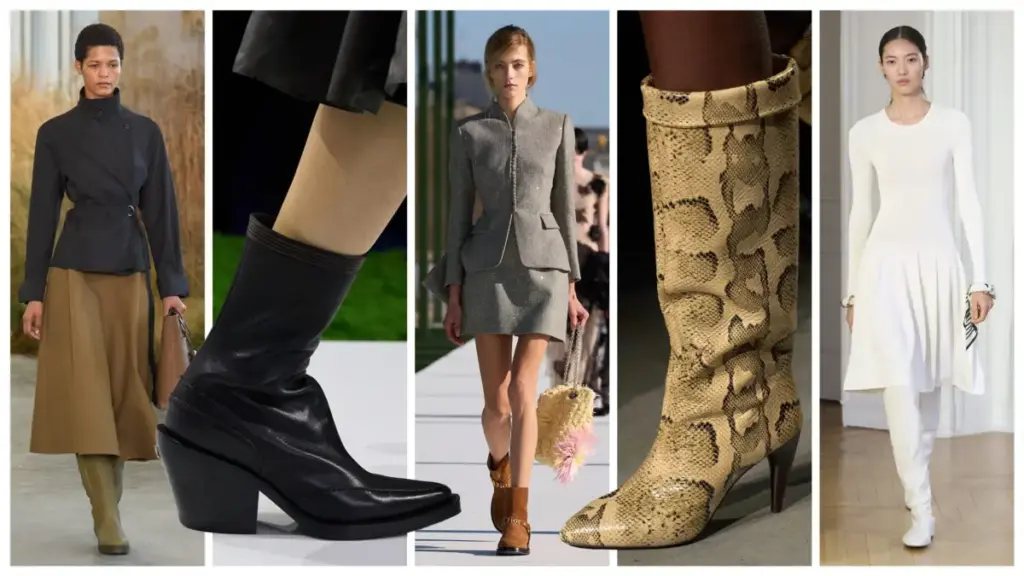
To help consumers make intelligent, long-lasting purchases ahead of the seasonal rush, this report provides an exhaustive, authoritative breakdown of the primary boot trends that dominated the fall and winter runways. Moving away from the hyper-embellished novelties of previous years, the overarching aesthetic for the current cycle leans decidedly toward the utilitarian and the pragmatic. The market is shifting its focus toward functional knee-high leather constructions, paired-back interpretations of traditional Western tropes, and streamlined equestrian silhouettes. In terms of color theory, warm chestnut and rich cognac brown have decisively supplanted deep, dark chocolates as the dominant palette anchors. Meanwhile, while enduring favorites like burgundy and leopard print retain their seasonal relevance, emerging frontrunners such as olive green and sophisticated croc embossing are rapidly capturing market share and redefining luxury footwear.

Detailed Chronology: The Evolution of Autumn Footwear
The trajectory of footwear design over the past several seasons has been characterized by a pendulum swing between avant-garde experimentation and practical, wearable luxury. Tracing this evolution reveals how designers arrived at the current season’s focused, utilitarian landscape.

Phase I: The Shift Away from Excess
In preceding cycles, the footwear market was dominated by hyper-maximalist expressions—heavy platform soles, structural architectural heels, and loud, cacophonous hardware. While these pieces offered striking visual statements on the runway, their translation to day-to-day consumer utility proved limited. Recognizing a growing consumer desire for longevity, versatility, and quiet luxury, designers began recalibrating their collections toward foundational silhouettes. The emphasis moved away from fleeting novelty and toward heritage craftsmanship, premium hides, and wear-anywhere shapes.

Phase II: The Refinement of the Runway
As fashion weeks unfolded across New York, London, Milan, and Paris, a clear consensus emerged across major design houses. Footwear was no longer designed merely to punctuate an eccentric outfit; rather, it was engineered to anchor an entire wardrobe. The runway presentations showcased a distinct lean toward pragmatism. The silhouettes that gained the most critical acclaim were those that merged timeless utility with modern proportions—most notably, the streamlined riding boot, the pared-back Western boot, and the slouchy suede shaft.

Phase III: The Current Market Landscape
Today, the retail landscape reflects this runway-to-street translation. Consumers are increasingly investing in footwear that serves a dual purpose: aesthetic elevation and functional durability. Brands are responding by offering elevated basics that utilize artisanal construction techniques, such as Goodyear welted soles, supple calfskin, and tactile suedes, cementing a new era of intentional consumption.

Supporting Context & Metrics: Key Trends Explored
A granular examination of the season’s core trends reveals how specific aesthetics are manifesting across both high-fashion houses and contemporary retail spaces.

+--------------------------------------------------------------------------+
|                       FALL/WINTER BOOT TREND MATRIX                      |
+----------------------+--------------------------+------------------------+
| Trend Category       | Key Aesthetic Markers    | Notable Designers      |
+----------------------+--------------------------+------------------------+
| Cognac & Chestnut    | Lighter browns, harness  | Dior, Gabriela Hearst, |
|                      | details, vintage Western | Ralph Lauren, Max Mara |
+----------------------+--------------------------+------------------------+
| Reptilian Finishes   | Snakeskin finishes, croc | Gucci, Isabel Marant,  |
|                      | embossing, bold texture  | Dolce & Gabbana        |
+----------------------+--------------------------+------------------------+
| Pared-Back Western   | Snip toes, Cuban heels,  | Chloé, Louis Vuitton,  |
|                      | subtle pull tabs         | Marni, J.Crew          |
+----------------------+--------------------------+------------------------+
| Slouchy Fits         | Suede/leather draping,   | Phoebe Philo, Stella   |
|                      | relaxed shafts           | McCartney, Staud       |
+----------------------+--------------------------+------------------------+
| Utilitarian Riding   | Moto-cross/equestrian    | Hermès, Proenza        |
|                      | hybrid, clean lines      | Schouler, Tory Burch   |
+----------------------+--------------------------+------------------------+
Cognac and Chestnut Brown
The chromatic landscape of the season is defined by a distinct lightening of the traditional autumn palette. While deep, near-black chocolate brown held dominance in previous years, this season belongs firmly to warmer, more luminous variations: cognac and chestnut.

At Christian Dior, chestnut harness boots were ingeniously paired with sharp, architectural gray tailoring, demonstrating the hue’s unexpected versatility when contrasted with cooler tones. Meanwhile, the modern boho demographic is rapidly embracing the vintage Western aesthetics and tonal styling popularized by houses like Gabriela Hearst, Ralph Lauren, and Max Mara. These pieces offer a sun-kissed warmth that softens heavy autumn wools and tweeds.

Reptilian Finishes and Animal Prints
Texture continues to play a critical role in elevating minimalist silhouettes, with animal prints—ranging from zebra and leopard to tiger and deer—making substantial early-fall incursions. However, reptilian finishes remain the undisputed heavyweight within this category.

Designers such as Isabel Marant, Ulla Johnson, and Dries Van Noten heavily favored exotic snakeskin finishes, applying them to ankle-grazing and mid-calf designs to inject an element of untamed sophistication. Simultaneously, dramatic crocodile embossing lent structural gravity and high-gloss polish to knee-high black and brown boots at Gucci, Dolce & Gabbana, Magda Butrym, and Lanvin.

Pared-Back Western Boots
The Western trend has matured significantly, shedding its literal costuming elements in favor of a much more refined, subtle approach. Rather than loud embroidery and aggressive toe caps, contemporary iterations draw gentle inspiration from traditional cowboy heritage.

Houses like Chloé, Louis Vuitton, Marni, and Johanna Ortiz introduced footwear featuring understated details: refined snip toes, modest Cuban heels, and clean, rounded collars accented with functional pull tabs. This minimalist cowboy aesthetic allows the wearer to incorporate a touch of Americana without overpowering a sophisticated, urban wardrobe.

Slouchy Fits
Slouchy boots have successfully broken free from the confines of strict bohemian styling, infiltrating the wardrobes of minimalists and avant-garde dressers alike. Supple suede variations were showcased within rich, monochromatic looks at Alberta Ferretti, offering a masterclass in texture play.

Conversely, sleek leather options from visionaries like Phoebe Philo and Stella McCartney cater directly to the minimalist consumer who prioritizes clean lines even within relaxed volumes. Oversized, slouchy silhouettes were similarly championed by Chloé, Balenciaga, and Rick Owens, proving that ease and elegance are not mutually exclusive.

Utilitarian Riding Boots
Knee-high riding boots formed the backbone of the autumn offerings at Hermès, Proenza Schouler, and Tory Burch. Striking a fine balance between moto-cross edge and classic equestrian heritage, these boots possess an innate versatility. While they would look entirely at home in a paddock, their clean, understated lines make them remarkably well-suited for professional environments and everyday corporate dressing. Even Miu Miu has updated its approach, offering a more subdued, wearable take on its previously viral multi-buckle harness boot phenomenon.

Elegant Cream Leather
Challenging the conventional wisdom that light footwear should be strictly reserved for spring and summer, top-tier luxury labels have firmly embraced winter whites. Toteme, Chanel, Celine, and Prada all integrated pristine white and warm cream colorways into their fall collections. Fitted knee-highs and mod-inspired ankle boots were frequently styled against monochromatic winter whites or used to create stark, high-contrast pairings with all-black ensembles.

Earthy Olive Tones
Building upon last year’s obsession with rich burgundy, the fashion zeitgeist has introduced a compelling new neutral: olive green. These understated suede and leather boots appeared prominently at Tibi, Joseph, Acne Studios, and Paloma Wool. As a versatile earth tone, olive green is quickly establishing itself as a dominant force not only in footwear but across outerwear and handbag design as well.

Classic Wellingtons
The autumn runways of TWP and 6397 delivered a refreshing reminder that inclement weather should never compromise personal style. Tall rubber Wellingtons were deployed as an intentional contrast to polished, tailored workwear. Decades after Princess Diana cemented the Hunter rain boot as a permanent fixture of British cool, classic rubber boots remain an effortless and functionally sound long-term investment.

High-Fashion Hiking Boots
In one of the season’s most intriguing style juxtaposition experiments, delicate fall dresses were styled alongside rugged, "gorpy" hiking boots at Miu Miu and Collina Strada. This unexpected pairing is a direct manifestation of the viral "wrong-shoe theory" currently dominating street style discourse. Consumers looking to lean into this aesthetic have a wealth of options, ranging from luxury designer interpretations to technical outdoor mainstays like Salomon, The North Face, and specialized retailers.

Official Statements and Industry Insights
The strategic shift toward utilitarian luxury and investment dressing has been widely commented upon by leading figures within the design and retail sectors. Industry analysts note that contemporary consumers are shifting away from trend-chasing toward pieces that offer genuine utility and cost-per-wear value.

According to prominent design directors speaking on condition of anonymity during recent fashion trade events, the current footwear market reflects a broader cultural desire for grounding. "We are seeing a collective fatigue with disposable fashion," notes one senior footwear buyer. "When a consumer spends upwards of several hundred—or thousand—dollars on a pair of boots today, they expect those shoes to anchor their wardrobe for the next decade. That is why we see such a massive surge in classic riding boots, refined chestnut leathers, and high-performance weather-resistant materials."

Furthermore, representatives from heritage bootmakers have highlighted the resurgence of traditional craftsmanship. The integration of durable soles, weather-treated suedes, and reinforced stitching points to an industry-wide recognition that luxury must be functional to remain relevant in a rapidly changing economic climate.

Future Outlook: The Longevity of Current Footwear Trends
As the fashion industry looks ahead to upcoming seasons, the foundational shifts observed in the current boot market are projected to have lasting implications. The emphasis on practicality, heritage silhouettes, and versatile color palettes is not merely a temporary reaction to macroeconomic pressures, but a fundamental realignment of consumer values.

1. The Death of Disposable Footwear
The rapid turnover of micro-trends—once fueled by fast-fashion knockoffs of overly eccentric runway pieces—is facing a severe contraction. Consumers are demonstrating a preference for "buy-better, buy-less" philosophies. Consequently, footwear designs that prioritize timelessness, such as the classic equestrian riding boot and the pared-back Western silhouette, will continue to dominate retail sales well into future seasons.

2. Material Innovation and Sustainability
As environmental consciousness increasingly dictates purchasing decisions, the footwear sector is under mounting pressure to innovate. Future iterations of luxury boots are expected to rely more heavily on responsibly sourced leathers, vegetable tanning processes, and high-performance recycled synthetics—particularly within the burgeoning technical and hiking boot categories. Brands that successfully marry ecological responsibility with luxury craftsmanship will capture the loyalty of the next generation of consumers.

3. The Blurring of Formal and Functional
The traditional boundaries separating outdoor utility wear from high-fashion urban dressing have irrevocably dissolved. The success of waterproof Wellingtons styled with tailored suiting and technical hiking boots paired with ethereal evening dresses signals a permanent evolution in styling norms. Consumers now demand versatility that transcends traditional dress codes, ensuring that practical footwear remains a cornerstone of high fashion.

Why Trust Harper’s Bazaar?
For more than 150 years, Harper’s Bazaar has stood as the preeminent authority on fashion, beauty, and lifestyle for women across generations. Our editorial mission is to document what is new and forecast what is next in global style by partnering directly with the world’s leading authorities in ready-to-wear, footwear, and accessories. Every editorial piece, trend report, and product curation we publish undergoes a rigorous research and vetting process led by our seasoned team of editors and industry experts. We remain committed to delivering independent, authoritative, and sophisticated guidance to help our readers navigate the ever-evolving landscape of luxury fashion.