Executive Overview
The contemporary beauty industry finds itself suspended in a fascinating state of structural tension. On one side of the ledger stands a chorus of prognosticators, runway visionaries, and retail executives who have spent the better part of the past two years predicting a dramatic, high-octane return to maximalism. They envisioned the definitive burial of the ubiquitous “clean girl aesthetic,” heralding an era defined by high-voltage color, theatrical statements, and unapologetic artistic experimentation. On the other side sits hard economic reality: the quarterly earnings reports, POS (point-of-sale) data, and conglomerate balance sheets from industry heavyweights like L’Oréal Group and E.l.f. Beauty. These financial markers tell a remarkably resilient, opposing story—consumers are continuing to vote with their wallets for the low-maintenance mainstays of the minimalist movement.
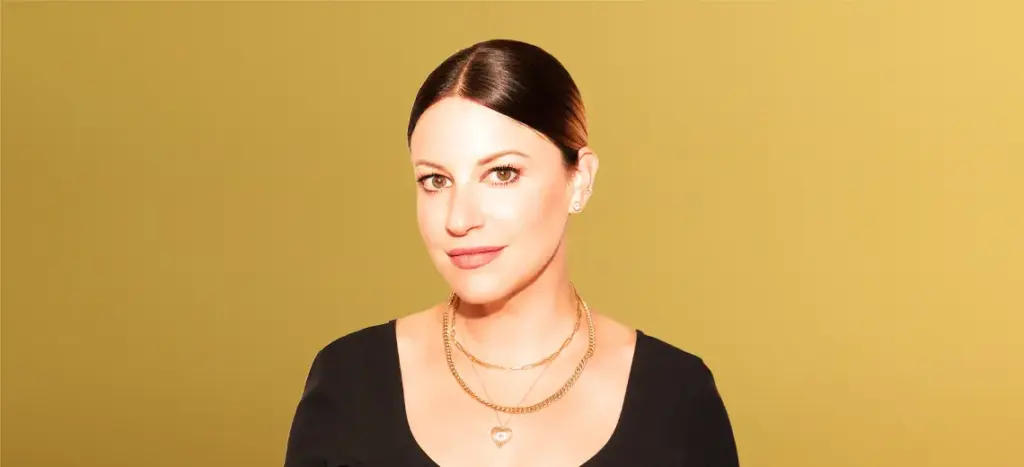
This friction between high-fashion aspiration and everyday consumer behavior exposes a deeper evolution in how modern shoppers approach cosmetics. To untangle this paradox, Glossy Beauty Podcast host Lexy Lebsack recently sat down with veteran celebrity makeup artist and beauty entrepreneur Jamie Greenberg. With a career spanning over two decades, Greenberg’s toolkit has touched the faces of Hollywood elite including Rashida Jones, Kaley Cuoco, Chelsea Handler, Tracee Ellis Ross, and Kristen Stewart. Beyond her red-carpet pedigree, Greenberg brings a multi-faceted perspective to the conversation as the founder of DTC brand Jamie Makeup—famed for its "Blighlighter" and "B.F.M.R. Mist"—and a digital creator reaching over 700,000 followers across TikTok and Instagram.
This deep-dive feature examines the chasm between industry forecasts and commercial reality, analyzes the underlying consumer psychology shifting makeup from a correction tool to a form of personal accessorization, and charts the actual roadmap for where beauty is heading next.
Detailed Chronology: From the Peak of Minimalism to the Maximalist Prophecy
To understand the current tension in the beauty market, one must trace the timeline of how the industry arrived at this crossroads.
2021–2023: The Iron Grip of the "Clean Girl"
The aesthetic landscape shifted dramatically around 2021. Emerging from the pandemic era, global consumer consciousness pivoted sharply toward wellness, skin health, and perceived effortless beauty. This gave rise to the "clean girl aesthetic"—a masterclass in minimalist illusion characterized by brushed-up soap brows, dewy "glass skin," slicked-back buns, neutral lip balms, and the strategic omission of heavy foundation.
During this multi-year run, conglomerates re-engineered their product pipelines. The focus shifted away from traditional color cosmetics palettes, heavy foundations, and matte lipsticks toward complexion hybrids. Tinted sunscreens, lightweight skin tints, liquid blushes, bronzer drops, and clear brow gels became the undisputed cash cows of the industry.
Late 2024–2025: The Rumblings of Rebellion
As consumers grew fatigued by the rigid homogenization of the "clean girl" look—where individuality was frequently flattened into an identical, algorithmically favored aesthetic—beauty editors and trend forecasters sensed an impending pendulum swing. Industry publications began publishing bold predictions for the future of cosmetics, arguing that consumers would soon crave disruption, theatricality, and self-expression.
2026: The Anticipated Rebirth of Maximalism
By early 2026, industry expectations hit a fever pitch. Executives from retail giants including Sephora and Ulta Beauty, alongside legacy cosmetics players like Revlon, publicly shared their multi-million-dollar bets on a renaissance of expressive, maximalist makeup for 2026. Runway shows in Milan, Paris, and New York leaned heavily into graphic eyeliners, stained lips, and vibrant color stories. The stage was set for a massive cultural pivot.
Supporting Context & Metrics: The Reality of Conglomerate Earnings
Despite the confident declarations of retail executives and trend forecasters, the macro-economic data tells a more nuanced story about consumer habits at scale.
The Disconnect Between Runway and Register
When publicly traded beauty conglomerates report their financial results, they offer an unvarnished look at what is actually moving off shelves globally. In early 2026 reports from giants like L’Oréal Group and digital-native disruptors like E.l.f. Beauty, a clear pattern emerges: the top-performing categories remain firmly anchored in the minimalist playbook.
- The Complexion Core: Tinted moisturizers, lightweight skin tints, liquid highlighters, and setting sprays continue to dominate units sold.
- The Everyday Enhancement: Lip glosses, nourishing tinted balms, and precision lip liners remain the fastest-moving stock-keeping units (SKUs) across mass and prestige retail channels.
- The Low-Effort Staples: Mascara and brow products retain their crown as non-negotiable daily purchases for the average consumer.
Why the Lag?
Market analysts attribute this lag not to a failure of imagination among consumers, but to financial caution and habituation. The "clean girl" regimen is efficient, cost-effective, and fast—requiring fewer specialized tools and less technical skill than a complex, graphic editorial eye look or a precision red lip. While shoppers may be inspired by maximalist runway trends on social media, their daily routines are dictated by the realities of hybrid work, time constraints, and inflation-adjusted discretionary spending.
Official Statements: Insights from Jamie Greenberg
To bridge the gap between financial spreadsheets and artistic vision, industry veteran Jamie Greenberg offered critical perspective during her appearance on the Glossy Beauty Podcast. Rather than viewing the current market stasis as a rejection of creativity, Greenberg views it as a transitional incubation period.
On the Evolution of Trends: The "Next Twist"
Addressing the apparent conflict between minimal and maximal styles, Greenberg notes that trends rarely die; they simply evolve.
"We’ve been [wearing the] ‘clean girl aesthetic’ for a minute. But everything comes back around, you know? It’s just always with a little twist on it. So I think, based on all of the fashion shows and what we’re seeing on the runways, which usually indicates where the trends are going, we’re seeing a lot more color. A lot more eyeshadow. We’re seeing bold lips, but blurred — not so much with pencil anymore. We’re seeing blush again… Skin is going to take a backseat, whereas, for the past year or two, I feel like skin has taken a front seat. [But now] skin is just going to be part of the show, but we’re not going to pay attention to it [as much]. It’s not going to be glassy, it’s not going to be matte; it’s just going to be skin."
On Makeup as an Accessory and the Gen Z Vanguard
Greenberg highlights a fundamental shift in how younger consumers view cosmetics. No longer utilized solely as a tool for correction or perceived perfection, makeup has transformed into a wearable fashion accessory.
"People are not afraid to wave their personality a little bit, so whether that is as simple as learning how to do fake lashes on yourself, or put on a blue eyeshadow, or a green liquid liner, or whatever it is, people are excited to experiment. They’re looking at makeup as an accessory now. … That’s especially [true of] the younger generation. They are all over the place. You’re getting your California girls wearing, like, the ‘clean girl aesthetic’. You’re getting your anime furry girls putting on crazy [makeup], and you’re just seeing such a creative movement from the youth. … They’re the trendsetters now."
Future Outlook: Navigating the Bifurcated Beauty Market
As the beauty industry looks toward the remainder of the decade, brands, retailers, and consumers must navigate a bifurcated marketplace where minimalist efficiency and maximalist expression coexist in permanent tension.
1. Hybrid Product Innovation
Brands can no longer afford to choose an ideological camp. The most successful product launches will bridge the gap between high-performance color and low-maintenance application. Consumers want the playful pigment of a maximalist era delivered through the foolproof, user-friendly formulations perfected during the minimalist boom (such as Greenberg’s own blush-highlighter hybrid model).
2. The Decentralization of Trend Cycles
Gone are the days of a single, monolithic trend dictating global beauty standards for half a decade. As Greenberg points out through her observations of younger demographics—ranging from coastal minimalists to internet subculture enthusiasts—the future belongs to hyper-fragmented personal style. Social media algorithms have fractured consumer attention into micro-communities, each curating its own distinct rules of engagement.
3. Skin as the Canvas, Not the Masterpiece
As the obsession with hyper-manicured "glass skin" begins to cool, skin is destined to return to its rightful biological role: a living, breathing canvas rather than the central exhibition. This opens up creative bandwidth for consumers to experiment freely with color, texture, and shape without the intense pressure of achieving flawless, poreless perfection.
Conclusion
The tension between maximalist aspirations and minimalist sales figures is not a contradiction; it is the natural growing pain of an industry in transition. While conglomerate balance sheets show that everyday consumers still rely on the comforting predictability of tinted balms and setting sprays, the cultural vanguard—led by Gen Z experimenters and championed by working artists like Jamie Greenberg—is already playing with the next wave of self-expression. When the commercial market finally catches up to the runway, it won’t look like a simple carbon copy of past maximalist eras. Instead, it will be a personalized, highly accessorized movement born from years of restraint.