Executive Overview
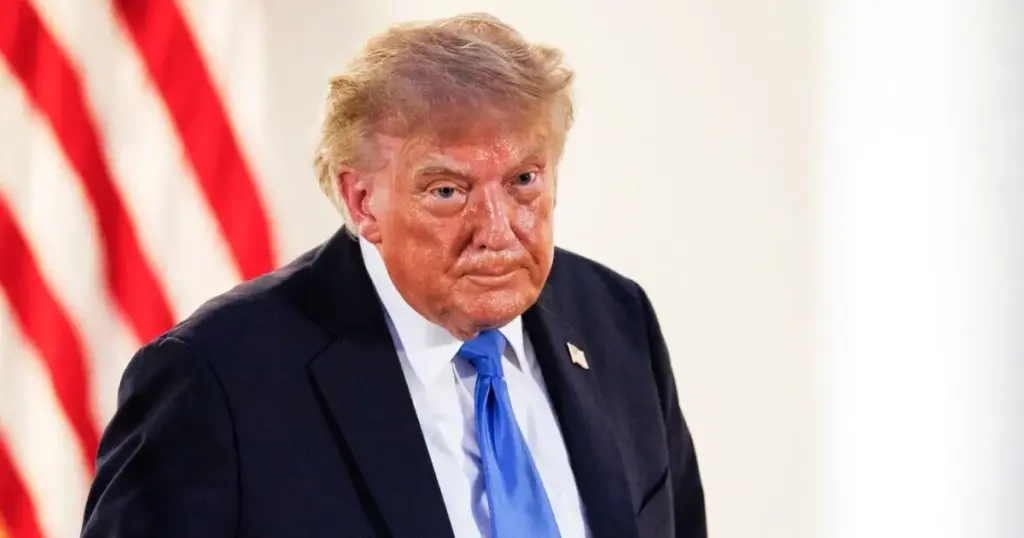
Relations between Washington and Westminster have entered a turbulent new phase following a series of explosive remarks by US President Donald Trump during a high-profile television interview. Speaking to GB News amid an intensifying military and geopolitical standoff in the Middle East, the American leader launched a wide-ranging critique of British foreign policy, immigration controls, and urban governance.
At the center of the verbal crossfire is London Mayor Lord Sadiq Khan, whom President Trump dismissed as "a nasty guy" and a "very bad mayor." The US president doubled down on controversial claims regarding the security and demographic makeup of the British capital, asserting that parts of London have transformed into lawless "no-go" areas where local police forces are "afraid" to patrol.
Beyond domestic municipal politics, the interview exposed deep fractures in the traditional Anglo-American alliance. President Trump openly criticized the United Kingdom’s reluctance to join Washington and Israel in their military campaign against Iran, framing his administration’s aggressive actions in the Strait of Hormuz as a protective measure for Europe. He even hinted at potential geopolitical retaliation, casting uncertainty over future US backing for British sovereign interests, such as the Falkland Islands.
As aides to Lord Khan hit back, characterizing the US President’s fixation as an obsession, policy experts warn that these recurring public spats risk undermining decades of diplomatic cooperation and intelligence-sharing between the two historical allies.
Detailed Chronology: The Escalating Diplomatic Rift
The latest escalation in transatlantic friction is rooted in a complex timeline of converging military actions in the Persian Gulf and longstanding ideological clashes between conservative US leadership and progressive British municipal figures.
The Middle East Standoff and the Strait of Hormuz
The immediate catalyst for President Trump’s frustration lies in the naval choke point of the Strait of Hormuz—a vital maritime corridor responsible for a substantial percentage of the global oil and liquefied natural gas supply. Historically open to international commercial shipping, the channel became the epicenter of a major international crisis following a coordinated US and Israeli offensive targeting Iranian military installations. The stated objective of Washington’s campaign is to dismantle Tehran’s alleged nuclear weapons program and secure critical trade lanes.
However, the military escalation has sent shockwaves through global markets, triggering immediate spikes in international energy costs and petrol prices across the United Kingdom. Despite the direct economic fallout impacting British consumers, the UK government—under former Prime Minister Sir Keir Starmer—chose to maintain a measured distance, refusing to commit British military assets to the offensive. This reluctance provoked acute irritation in the White House.

The GB News Interview and Direct Accusations
During his broadcast interview, President Trump made it explicitly clear that he expected robust military backing from traditional partners who rely heavily on Gulf energy imports. "Don’t forget, you get a big percentage of your oil from the Strait of Hormuz, and you weren’t there to help me," the US leader remarked.
Shifting from military strategy to broader security themes, Trump asserted that his administration’s intervention in the Middle East was essentially an act of altruism toward Europe. He claimed that a nuclear-armed Iran would pose a disproportionate missile threat to European nations rather than the United States. "I’m saving your country from the threat too," Trump stated. "Because if Iran had a nuclear weapon, they’re more likely to use it in Europe… than they are in America, where they don’t have missile capability."
The rhetoric quickly escalated toward domestic British policy when the conversation turned to immigration and internal security. Warned that the UK was hurtling toward a socioeconomic "disaster," the President asserted: "If you don’t stop people pouring into your country from all over the world, you’re not going to have a country left."
Supporting Context & Metrics: London’s Realities vs. Rhetoric
President Trump’s characterization of London as a city overrun by crime and ungoverned by law enforcement stands in sharp contrast to official municipal data and independent security assessments.
Examining the "No-Go Area" Claims
The assertion that major Western capitals harbor active "no-go zones" where emergency services fear to tread is a recurring theme in right-wing populist discourse. British law enforcement agencies, including the Metropolitan Police, have repeatedly refuted these claims. Independent policing watchdogs and local authorities confirm that while London, like any major global metropolis, faces acute challenges regarding knife crime, gang activity, and urban policing resources, there are no geographic regions shielded from the rule of law or beyond the operational reach of the Metropolitan Police Service.
Comparative Crime Statistics
To contextualize the debate over urban safety, policy researchers frequently look at comparative violent crime metrics between London and major metropolitan areas in the United States:
- Homicide Rates: Statistically, London’s homicide rate per 100,000 residents remains significantly lower than those recorded in many major US urban centers, including Washington D.C., Chicago, Atlanta, and New York.
- Property and Gang Crime: While urban policing in the British capital has faced severe budgetary constraints and public scrutiny over response times, overall violent crime trends compiled by the Office for National Statistics (ONS) indicate that key categories of violent offenses have experienced downward trajectories across numerous boroughs over recent reporting periods.
- Multicultural Success: Demographic shifts over the past two decades have cemented London’s status as one of the world’s preeminent multicultural hubs. Over 30% of the city’s population was born abroad, contributing to a vibrant economy spanning finance, technology, arts, and international trade.
Official Statements and Political Reactions
The fallout from the President’s televised remarks drew swift and sharp rebuttals from allies and associates of the London Mayor, reflecting a defensive posture among British political figures eager to protect the capital’s reputation.

The Mayor’s Office Responds
Lord Sadiq Khan’s inner circle offered a blistering critique of the US President’s continuous public commentary regarding the British capital. Speaking on condition of anonymity, a senior source close to the Labour peer did not mince words:
"Sadiq is still living rent free in Trump’s head. The guy is obsessed with him. Crime rates are down all across London, with violent crime lower than every major US city. London is a diverse, multicultural, and thriving global city—the best city in the world. Trump just can’t comprehend our success."
The Mayor’s office has consistently maintained that personal attacks from international political figures are politically motivated distractions designed to stoke culture-war narratives rather than engage in constructive dialogue about urban policy or international security.
Silence and Strategy in Westminster
Official channels within the British government exercised diplomatic caution in the immediate wake of the interview. Foreign Office officials are acutely aware of the delicate balancing act required to maintain a functional "special relationship" with the United States while managing divergent foreign policy objectives—particularly regarding Middle East interventions and international nuclear diplomacy.
However, political analysts have expressed alarm over President Trump’s thinly veiled threats regarding the Falkland Islands. By weaponizing historical defense commitments as leverage against British non-participation in Middle Eastern skirmishes, the White House risks eroding the foundational trust upon which transatlantic intelligence and military pacts are built.
Future Outlook: The Fragility of the Special Relationship
As geopolitical alignments shift in an increasingly multipolar world, the ongoing friction between the White House and British municipal and national leadership highlights a structural strain within Western alliances.
Implications for Transatlantic Diplomacy
- Intelligence and Defense Cooperation: While foundational military structures like NATO and bilateral intelligence-sharing agreements remain operational, public disagreements over strategic theaters—such as Iran and the broader Middle East—demonstrate a widening divergence in threat perception.
- Domestic Political Fallout: For British politicians, aligning too closely with an unpredictable US administration carries significant domestic electoral risks. Conversely, openly rebuffing American policy directives can invite economic and diplomatic retaliation.
- The Urban Leadership Dynamic: The personal animosity between Donald Trump and Sadiq Khan is unlikely to abate. As both figures operate within highly polarized political ecosystems, utilizing one another as political foils serves mutual domestic utility, even as it strains formal diplomatic decorum.
Ultimately, the latest verbal clash underscores a sobering reality: the historic bond between the United States and the United Kingdom is increasingly tested by divergent national interests, competing ideological visions of global security, and the volatile dynamics of modern political communication. Whether traditional diplomatic channels can successfully insulate foundational institutional cooperation from these recurring public storms remains one of the defining geopolitical questions of the decade.