Executive Overview
Bath & Body Works, the ubiquitous American fragrance and body-care staple, is standing at a crucial crossroads in its corporate history. On Wednesday, the Ohio-based retailer released its financial results for the second quarter of fiscal 2026, posting net sales of $1.5 billion—a modest 2.3% year-over-year decline. While headline revenue figures point to a contraction, executive leadership has framed the quarter not as a setback, but as an encouraging validation of their ongoing, multi-year revitalization effort known as the "Consumer First Formula."
Introduced roughly nine months ago, the Consumer First Formula was designed to drag a heritage mall brand into the modern omnichannel retail ecosystem without losing the whimsical, sensory charm that defined its 1990s and 2000s heyday. Under the stewardship of CEO Daniel Heaf, the company is systematically overhauling everything from its distribution map to its product architecture. This includes high-stakes expansions onto Amazon and into Ulta Beauty stores, the recruitment of mainstream star power like Hilary Duff for high-profile marketing campaigns, and a ruthless pruning of underperforming inventory categories.
This report offers an in-depth analysis of Bath & Body Works’ Q2 2026 performance, dissecting the foundational shifts taking place behind the scenes. By evaluating the mechanics of the Consumer First Formula, the strategic calculus behind third-party marketplace expansions, and the broader portfolio rationalization underway, we examine how a retail giant is fighting to reclaim sustainable growth in an increasingly volatile beauty market.
Detailed Chronology of the Q2 2026 Turnaround
To understand where Bath & Body Works is heading, one must trace the deliberate, methodical steps the company has taken over the past year to execute its turnaround blueprint.
Phase One: Laying the Groundwork (Late 2025)
When Daniel Heaf and his executive team rolled out the Consumer First Formula late last year, they inherited a business facing structural headwinds. Mall traffic patterns had fundamentally shifted post-pandemic, and digital-native competitors were nibbling away at market share. The core diagnostic was clear: Bath & Body Works needed to stop relying solely on its traditional brick-and-mortar fleet and proprietary e-commerce portal. It needed to meet digitally savvy consumers on the platforms where they spent their time.
Phase Two: The Digital and Specialty Retail Push (Early to Mid-2026)
The first major domino fell in February 2026 with a carefully curated product launch on Amazon. Industry watchers initially viewed the move with skepticism, questioning whether a brand built on tactile, in-store sensory experiences could maintain its premium positioning on an online mass-market platform. However, Q2 results proved the skeptics wrong. Amazon sales tripled during the second quarter compared to the first, acting as a powerful customer-acquisition engine.
Building on that momentum, Bath & Body Works executed its next major distribution play in July 2026, landing on shelves at Ulta Beauty stores nationwide. This partnership was specifically engineered to capture the "trial and discovery" segment of the beauty consumer base—shoppers who might not ordinarily walk into a dedicated Bath & Body Works strip-mall storefront, but who frequently browse the aisles of a prestige beauty specialty retailer.
Phase Three: High-Profile Product Debuts and Portfolio Pruning (July–August 2026)
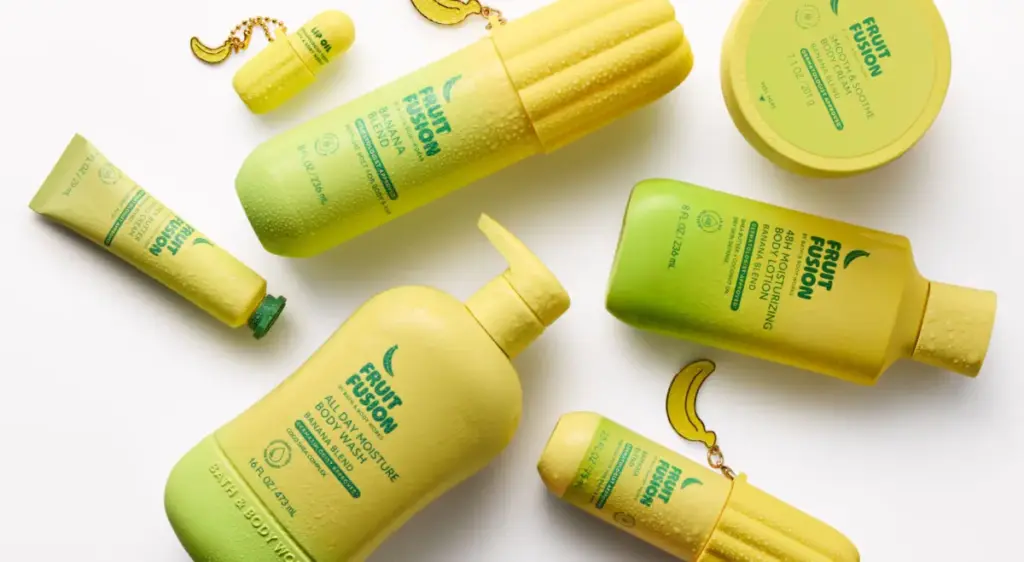
Simultaneously, the brand overhauled its product marketing. In July, the company launched its "Fruit Fusion" body-care franchise, fronted by actress and pop culture icon Hilary Duff. Representing the brand’s first major celebrity ambassador partnership in recent memory, Fruit Fusion was rolled out with a synchronized playbook combining social media creator marketing and Amazon integration.
Most recently, in a sweeping move to streamline operations, the company announced the discontinuation of its home category—including laundry and kitchen products—while simultaneously doubling down on high-performing segments like its luxury fragrance "dupe" line, Everyday Luxuries, and the upscale Reserve Candle Collection.
Supporting Context & Metrics: Decoding the Numbers
While a 2.3% drop in net sales to $1.5 billion might cause short-term panic among reactive shareholders, a deeper dive into the metrics reveals a more nuanced, strategic narrative.
The Amazon Engine and Demographic Shifts
The standout metric of Bath & Body Works’ Q2 earnings report was the explosive performance of its Amazon storefront. According to CEO Daniel Heaf, sales on the platform tripled quarter-over-quarter. More importantly, the channel is fundamentally altering the brand’s customer demographics.
+-------------------------------------------------------------------+
|               Q2 2026 Amazon Demographic Impact                   |
+-------------------------------------------------------------------+
|  • Customer Mix: Attracting a higher volume of "new-to-brand"     |
|    buyers.                                                        |
|  • Age & Income: Skewing noticeably younger and more affluent.    |
|  • Average Unit Retail (AUR): Delivering a higher AUR than        |
|    legacy proprietary channels.                                   |
+-------------------------------------------------------------------+
This data invalidates the fear that third-party marketplaces would drag down the brand’s perceived value. Instead, Amazon is functioning as a top-of-funnel discovery tool that commands healthy margins and introduces affluent, younger consumers to the ecosystem.
Footprint Realignment: Off-Mall vs. Traditional Malls
Physical retail remains a cornerstone of the Bath & Body Works strategy, but the geography of that footprint is evolving. During the second quarter:
- The Company opened 24 new stores, strategically positioned primarily in accessible, high-traffic off-mall locations.
- The Company closed 10 stores, primarily underperforming legacy locations situated inside traditional enclosed malls.
- International partners opened 17 additional stores, expanding the brand’s global footprint.
This measured contraction of mall real estate coupled with off-mall expansion reflects a broader real estate optimization strategy designed to improve store-level productivity and lower overhead costs.
The Math Behind Category Elimination
Perhaps the most telling metric regarding operational efficiency is the decision to shutter the home category (laundry and kitchen products). Despite taking up valuable cognitive, supply chain, and operational bandwidth, the entire home category represented less than 1% of the company’s annual sales. By eliminating these slow-moving SKUs, Bath & Body Works is removing disproportionate product and operating complexity, allowing logistics teams to focus entirely on high-yield body-care and fragrance franchises.
Official Statements: Leadership Perspectives on the Turnaround
Navigating a multi-year retail transformation requires clear communication and unflinching realism. Throughout the Q2 earnings call, CEO Daniel Heaf maintained a balanced, authoritative tone that acknowledged current business pressures while expressing absolute confidence in the company’s trajectory.
"While the underlying business remains pressured and our performance is not yet where we want it to be, we are where we expect it to be," stated CEO Daniel Heaf. "We have been clear since introducing the Consumer First Formula nine months ago that returning Bath & Body Works to sustainable growth is a multi-year transformation."
Heaf was also keen to address concerns regarding potential channel cannibalization—the risk that shoppers buying body sprays on Amazon or trial sets at Ulta would simply abandon the brand’s proprietary e-commerce site and physical storefronts. According to Heaf, the opposite is occurring because each channel serves a distinct psychological and logistical need for the consumer:
"At the end of the day, we’re not expanding our distribution to just add more doors. We’re really going after new consumers, and each partnership has a distinctive strategic need. Amazon is about convenience, and Ulta is about trial and discovery within a specialty beauty environment," Heaf explained. "If you want the full Bath & Body Works experience, you want all of our seasonal products, you want our collabs, our own channels are still the places to go and get that."
On the product development front, Heaf highlighted the lessons learned from the Hilary Duff-fronted Fruit Fusion launch, emphasizing a return to disciplined brand stewardship:
"The other important point about Fruit Fusion, which is a big learning and I think a return to what Bath & Body Works does so well, is franchise management," Heaf noted. "Fruit Fusion isn’t in this door and out the next. We are really getting back to that disciplined franchise management that the business was known for."
Future Outlook: What Lies Ahead for Bath & Body Works
As Bath & Body Works moves into the second half of fiscal 2026 and looks toward 2027, the roadmap for the Consumer First Formula is coming into sharper focus. The company’s leadership team has laid out several strategic initiatives designed to lock in long-term, sustainable growth.
1. Scaling the Fruit Fusion Playbook
Following the successful summer rollout of Fruit Fusion, the brand plans to introduce two new seasonal scents to the franchise in the third quarter. Because this line was developed hand-in-hand with social media creators and launched simultaneously across Amazon and proprietary channels, it serves as the definitive blueprint for future product rollouts. Expect to see more celebrity-backed, digitally integrated campaigns moving forward.
2. Expanding Everyday Luxuries and Upgrading Fragrance Loads
Consumer demand for complex, long-lasting, high-concentration scents has skyrocketed. Capitalizing on this trend, Bath & Body Works will expand its wildly popular Everyday Luxuries franchise—known for offering accessible "dupes" of high-end designer fragrances—in the back half of the year. These new offerings will feature "higher fragrance loads" to satisfy consumer cravings for potency and longevity.
3. Elevating the Home Fragrance Experience
While utilitarian home care products like laundry detergent have been permanently cut from the catalog, core home fragrance remains a titan of the brand’s revenue model. The recent Monday launch of the Reserve Collection—a more elevated, premium tier of candles—signals that the company is trading up within its core competencies rather than abandoning the home scent market altogether.
4. Continued Omnichannel Refinement
The retail landscape will undoubtedly continue to shift, but Bath & Body Works has armed itself with a diversified distribution matrix. By balancing the mass-market convenience of Amazon, the prestige discovery environment of Ulta Beauty, and the immersive experiential design of its off-mall retail flagships, the brand is successfully shielding itself against shifting foot-traffic trends.
Conclusion
Bath & Body Works’ second-quarter earnings report is not a narrative of sudden resurgence, but rather a progress report on a carefully managed corporate metamorphosis. By shedding dead weight—such as the sub-1% performing home cleaning category—and leaning into strategic, high-margin partnerships with Amazon and Ulta, CEO Daniel Heaf and his team are proving that heritage brands can successfully reinvent themselves. If the disciplined franchise management demonstrated by the Fruit Fusion line and the Everyday Luxuries expansion continues to hold, Bath & Body Works is well-positioned to complete its multi-year journey and emerge leaner, more agile, and deeply connected to a new generation of fragrance lovers.