Executive Overview
In the hyper-saturated landscape of modern beauty marketing, cutting through the digital noise requires a rare alchemy of wit, heritage, and conceptual audacity. When a promotional email landed in editorial inboxes bearing the headline, “Max Mara is launching its first-ever invisible coat that wears like a second skin,” it momentarily blurred the boundaries between haute couture and olfactory art. Was this a mistargeted dispatch from the ready-to-wear ateliers in Reggio Emilia, or an entirely new frontier in sensory storytelling?
As it turns out, it was the latter. The legendary Italian luxury fashion house—globally revered for its uncompromising tailoring and timeless outerwear—has officially unveiled Le Parfum ($180). This landmark release marks Max Mara’s triumphant return to the fragrance category and serves as the inaugural fruit of a high-stakes, multi-year global licensing partnership forged with Japanese beauty behemoth Shiseido in 2024.
Priced at $180 for the traditional 3.3-ounce iteration and available across four distinct sizing formats, Le Parfum does not merely smell pleasant; it seeks to replicate the physical and emotional sensation of donning Max Mara’s crown jewel: the legendary 101801 Icon Coat. Retailing at $4,490, this camel-hued wool and cashmere wrap coat has remained an immutable symbol of quiet luxury, female empowerment, and architectural purity since its debut in 1981. By translating the tactile weight, enveloping warmth, and structural integrity of a four-figure garment into an invisible, skin-hugging fragrance, Max Mara and Shiseido have executed a masterclass in brand translation.
Anchored by a star-studded global campaign featuring Academy Award-nominee Florence Pugh and formulated around a complex olfactory pyramid of woody musks, creamy florals, and rich resins, Le Parfum is poised to redefine how legacy fashion houses stake their claim in the prestige beauty market.
Detailed Chronology: From the 1981 Runway to the Shiseido Partnership
The Birth of an Icon: 1981
To understand the conceptual DNA of Le Parfum, one must first examine the garment that inspired it. In 1981, French couturier and designer Anne Marie Beretta collaborated with Max Mara to create a masterpiece of modern outerwear: the 101801 Icon Coat.
Designed with a generous, enveloping silhouette, kimono sleeves, and a rich camel hair-and-wool composition, the coat was an immediate departure from the restrictive, heavily structured tailoring of preceding decades. It offered women a radical proposition: true luxury could be simultaneously authoritative and effortless. Over the subsequent four decades, the 101801 coat transcended seasonal trends to become a blank-canvas uniform for artists, executives, royalty, and fashion editors alike. It is a garment designed to protect, comfort, and project unshakeable confidence—qualities that Max Mara’s creative directors were determined to bottle.
The Fragrance Hiatus and the Shiseido Alliance
Despite its immense global footprint in ready-to-wear, leather goods, and accessories, Max Mara’s presence in the prestige fragrance market had remained largely dormant for years. In the luxury ecosystem, scent is arguably the most intimate and accessible entry point for consumers, yet managing a global fragrance portfolio requires specialized manufacturing, distribution muscle, and technological innovation.
Enter Shiseido Co., Ltd. In 2024, Max Mara and the Japanese beauty conglomerate announced a strategic long-term global licensing agreement for the development, production, and distribution of Max Mara fragrances. For Shiseido—a company renowned for its rigorous scientific approach to skincare, cutting-edge cosmetic formulation, and storied fragrance portfolio (including Serge Lutens, Narciso Rodriguez, and Issey Miyake)—partnering with Max Mara represented a golden opportunity to infuse Italian sartorial elegance into its prestige division. Le Parfum stands as the first concrete manifestation of this alliance, signaling a meticulously calculated renaissance for Max Mara beauty.
Supporting Context & Metrics: Architecture, Sourcing, and the Scent Pyramid
The Architecture of Scent: Translating Wool into Notes
Translating the physical sensation of heavy camel hair and enveloping cashmere into liquid form required a sophisticated balancing act between structure and softness. Perfumers tasked with the creation of Le Parfum drew a direct parallel between the garment’s tailoring and the fragrance’s compositional pyramid:
- Top Notes (The Structure): The fragrance opens with a commanding, architectural woody introduction. Musky sandalwood and crisp cedarwood provide an immediate sense of grounding and dry sophistication, mimicking the clean, tailored lines of the coat’s lapels and shoulders.
- Heart Notes (The Enveloping Fit): As the initial woody sharpness softens, a rich, creamy tuberose heart emerges. Tuberose is notoriously opulent and narcotic, yet here it is rendered supple and fluid, capturing the drape of the fabric as it wraps seamlessly around the body.
- Base Notes (The Warmth and Sillage): The dry-down settles into an intimate, skin-hugging embrace of warm vanilla and resinous benzoin. This lingering base provides the comforting, long-wear psychological warmth that inspired the press release’s poetic "invisible coat" moniker.
The Flacon Design and Ancillary Line
In alignment with Max Mara’s minimalist yet architectural aesthetic, the bottle for Le Parfum is an objet d’art in its own right. The heavy glass flacon is cinched at the center by a lacquered camel-colored belt, meticulously embellished with the exact signature top-stitching found along the seams of the 101801 coat. Demonstrating a modern commitment to sustainability and consumer longevity, the bottle is fully refillable.
Furthermore, Max Mara and Shiseido recognized that modern fragrance rituals extend far beyond the traditional pulse-point spray. The launch collection is supported by a curated line of ancillary body products:
- Le Parfum Shower Gel: Designed to gently cleanse while depositing a preliminary layer of the woody-floral aroma.
- Le Parfum Body Lotion: Formulated to deeply hydrate the skin, locking in moisture and serving as an ideal base for layering.
Beauty experts note that wearing these products à la carte offers a subtle, daytime-appropriate aura, whereas layering the shower gel, body lotion, and eau de parfum sequentially creates an extended, high-sillage scent trail capable of lasting from morning boardroom meetings to evening galas.
Official Statements and Campaign Narrative: Florence Pugh’s Vision
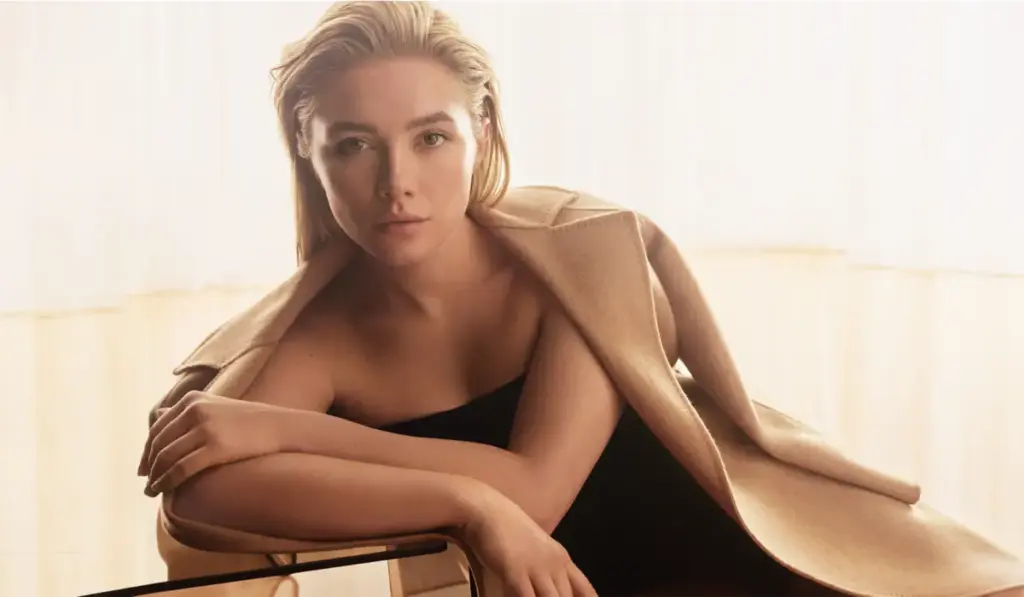
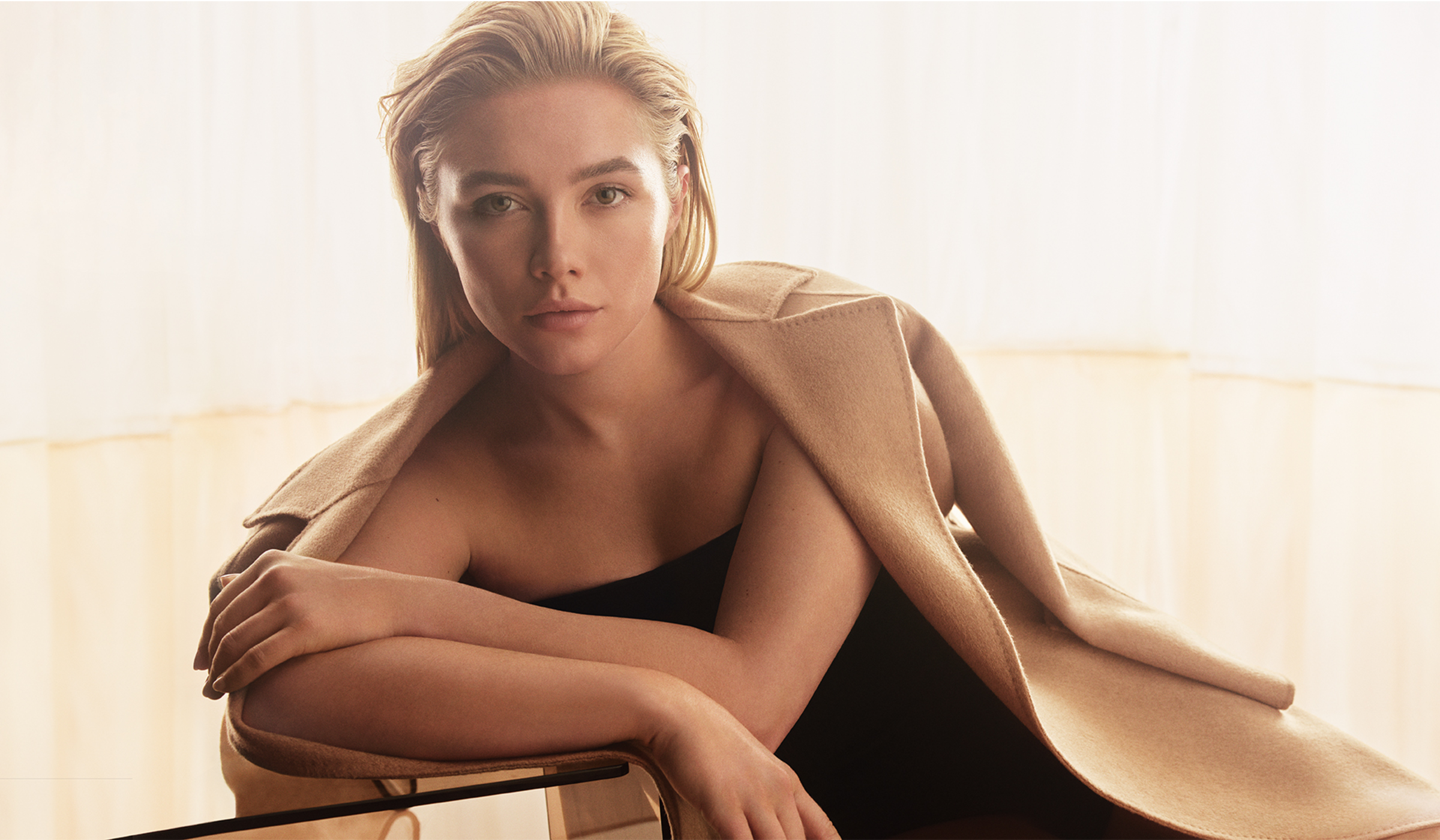
To bring the emotional resonance of Le Parfum to life, Max Mara tapped British actress Florence Pugh as the global ambassador for the campaign. In the accompanying visual imagery, Pugh is captured draped in the iconic 101801 camel coat, her expressive gaze communicating a potent blend of vulnerability and unassailable strength.
In exclusive interviews surrounding the launch, Pugh articulated the visceral, psychological impact of wearing both the garment and the scent:
"I feel calm, warm, and instantly more confident—like I’m standing a little taller without even thinking about it," Pugh shared with Harper’s Bazaar.
"A sense of readiness comes with it, as if everything has fallen quietly into place. You feel composed and present, ready to embrace whatever comes next without hesitation or struggle."
This narrative of "effortless readiness" forms the psychological bedrock of the marketing campaign. In an era defined by consumer burnout, decision fatigue, and the relentless velocity of modern life, Max Mara is not merely selling a luxury good; it is offering an emotional suit of armor. The concept appeals directly to high-achieving consumers seeking tactile and olfactory anchors that restore internal equilibrium amidst external chaos.
Future Outlook: What Le Parfum Signals for the Future of Fashion Fragrances
The launch of Max Mara’s Le Parfum is more than a seasonal beauty drop—it is a bellwether for the evolving dynamics of the luxury goods market. As traditional fashion houses increasingly bring their beauty and fragrance operations in-house or partner with specialized giants like Shiseido, the expectation for conceptual continuity between ready-to-wear and cosmetics has never been higher.
Key Industry Implications:
- Sartorial Storytelling: Consumers no longer accept generic celebrity endorsements or disconnected scent profiles. Fragrances must tell an authentic, heritage-backed story that reinforces the core brand pillars established over decades of design history.
- Sustainability and Longevity: The inclusion of a refillable bottle design in Le Parfum aligns with growing regulatory pressures and consumer demand for eco-conscious luxury packaging without compromising on aesthetic weight or vanity-display appeal.
- The Layering Economy: By launching with an integrated ecosystem of body wash, lotion, and multiple sizing tiers (ranging from portable travel formats to the substantial 3.3-ounce bottle), Max Mara and Shiseido are capturing multi-touchpoint consumer spend, catering to both impulsive digital purchasers and dedicated fragrance connoisseurs.
As the retail calendar shifts toward the demanding autumn and winter seasons, Le Parfum stands ready to test whether an invisible coat can achieve the same legendary status as its tangible predecessor. If early critical reception and Florence Pugh’s poetic endorsement are any indication, Max Mara has successfully woven its timeless Italian heritage into a bottle—proving that true luxury is something you not only see, but profoundly feel.